Defence Minister Hails ICRC’s Humanitarian Role, Seeks Stronger Support Against Terrorism

By Emmanuel Daudu

The Federal Government has applauded the International Committee of the Red Cross (ICRC) for its expanding humanitarian interventions in Nigeria’s conflict-ridden North-East and North-West regions, as authorities intensify efforts to tackle insurgency and restore stability in affected communities.

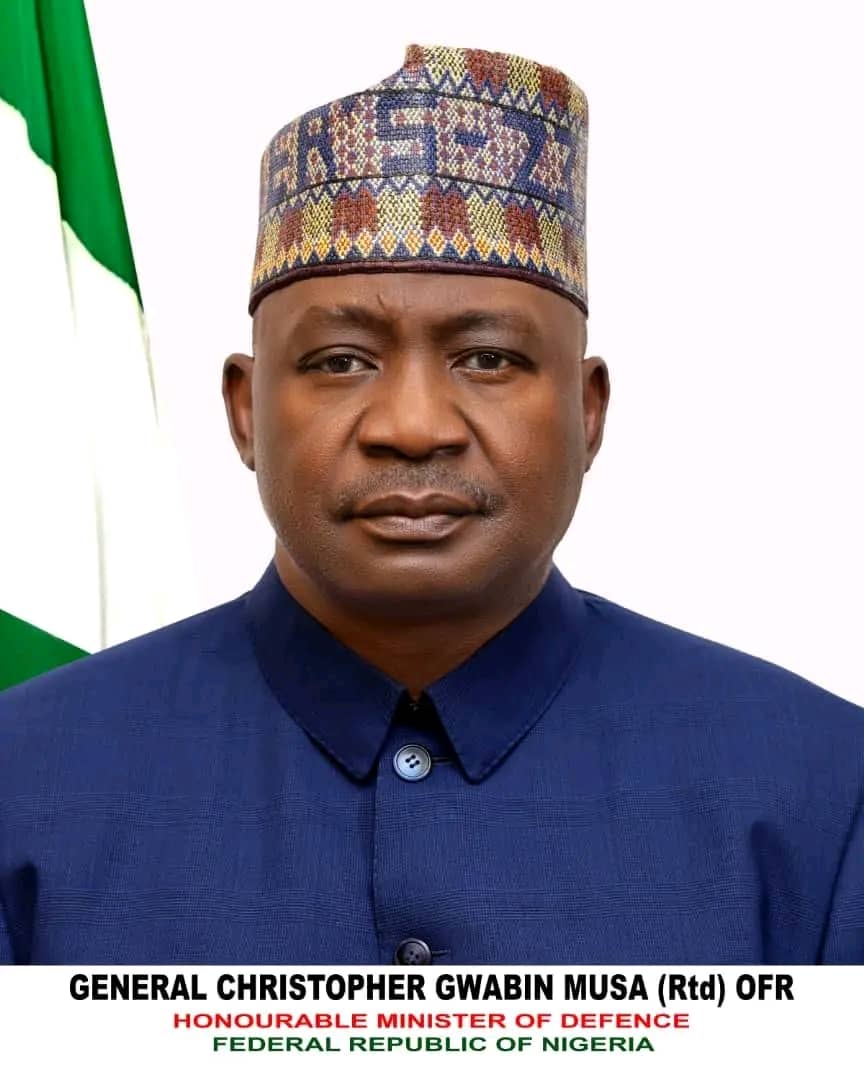
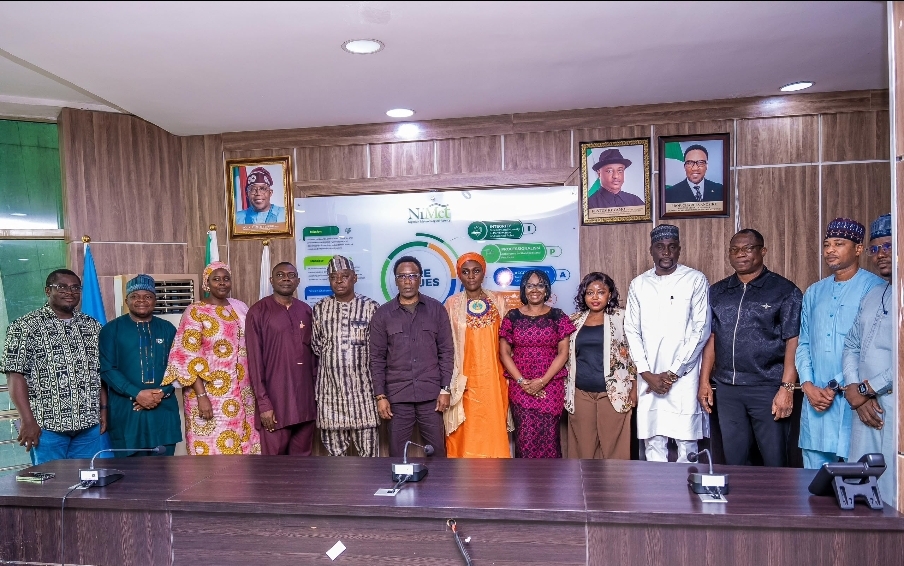
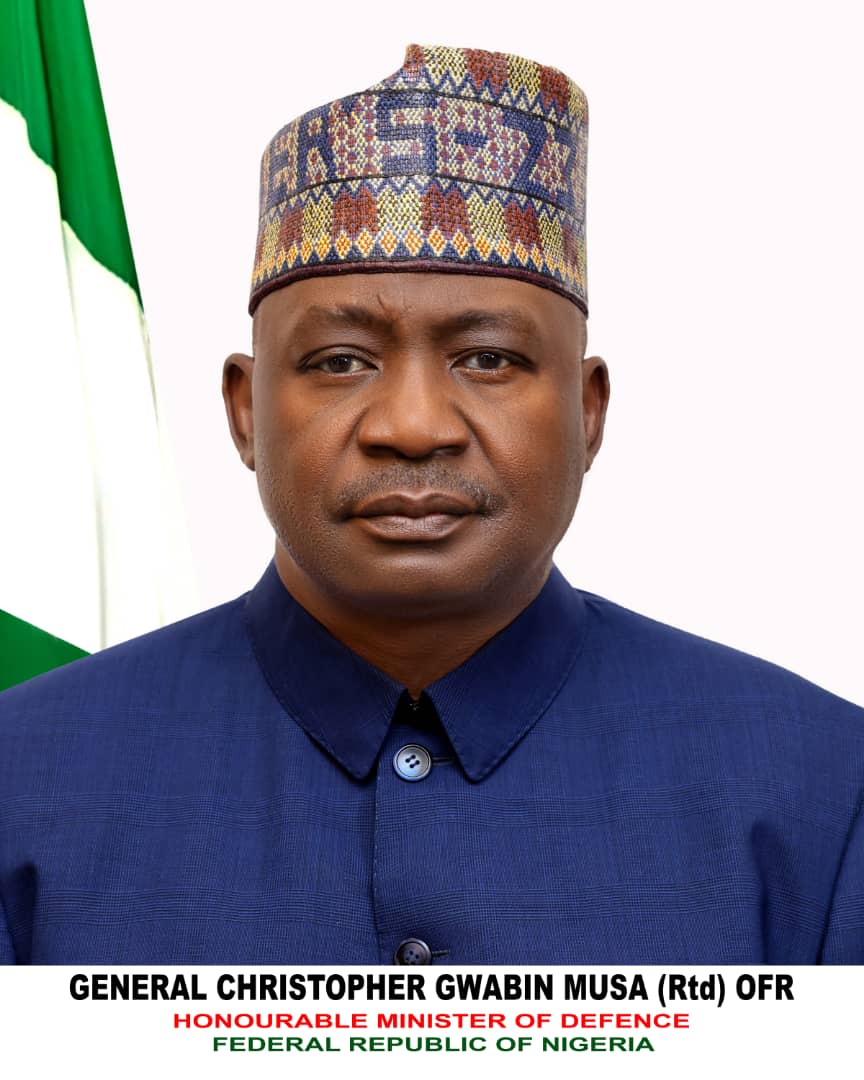
The Honourable Minister of Defence, Christopher Musa, gave the commendation while receiving a delegation of the ICRC at the Ministry of Defence headquarters in Abuja, stressing that Nigeria remains committed to promoting human rights and adhering to international best practices in civil-military relations.

The Minister, according to a statement signed by Moses Yare for the Director of Information and Public Relations, lamented the persistent insurgency in parts of the North-East and North-West and called on all stakeholders to support ongoing military operations against terrorism.


“Security is everybody’s business and all must unite against terrorism,” Musa stated, while urging stronger collaboration among security agencies, humanitarian organisations and local communities in addressing the country’s security challenges.

Earlier, the Head of Delegation of the ICRC in Nigeria, Doris El Doueihy, expressed appreciation for the continued cooperation between the humanitarian organisation and the Nigerian military, describing the partnership as crucial to delivering aid to conflict-affected populations.

She also commended the Federal Government for the recent launch of a new training programme for military police in Zaria and reaffirmed the ICRC’s commitment to expanding humanitarian operations across Borno, Adamawa and Yobe states.

El Doueihy, however, appealed to the government to discourage prolonged detention without family access, urging authorities to allow Red Cross officials access to detainees to facilitate communication with their relatives.

She further lauded progress made in detainee hearings and called for faster coordination with the Ministry of Justice to ease overcrowding in detention facilities.

FG Targets 50,000 Youths for Global Digital Jobs in Fresh Empowerment Drive

Maryam Aminu

The Federal Government has unveiled an ambitious plan to train 50,000 young Nigerians in digital skills as part of a sweeping youth empowerment strategy aimed at tackling unemployment and positioning Nigeria’s workforce for global opportunities.

Minister of Youth Development, Comrade Ayodele Olawande, disclosed this during a media interview with African Independent Television (AIT), where he outlined the administration’s renewed focus on large-scale, impact-driven youth development programmes.

According to the Minister, the initiative is anchored on a strategic partnership with The Digital School (TDS), supported by the Government of the United Arab Emirates, and is expected to produce at least 5,000 internationally certified and job-ready youths within the first six months.

He explained that the programme forms part of broader efforts by the Federal Ministry of Youth Development to expand access to digital jobs, entrepreneurship opportunities, and sustainable livelihoods for young Nigerians across the country.

Olawande said the Ministry is also deepening sector-based collaborations, including a partnership with the International Institute of Tropical Agriculture (IITA), to boost youth participation in agriculture and agribusiness.

He added that government is scaling up internship schemes, gig economy opportunities, startup support initiatives, and digital literacy programmes through collaborations with the National Information Technology Development Agency (NITDA) and the National Youth Service Corps (NYSC).

To improve transparency and ensure merit-based access to opportunities, the Minister said the Ministry has introduced a digital engagement platform known as “Nigerian New Tech.”
“We are moving away from fragmented and tokenistic approaches to youth development. Our focus is to build sustainable systems that empower young Nigerians at scale and with real impact,” Olawande stated.

He added: “Through our partnership with The Digital School and the UAE Government, we are not just training youths; we are preparing them for global opportunities, whether they choose to work remotely or internationally.”

The Minister stressed that the administration remains committed to inclusive youth development, particularly for young people in underserved and informal sectors who have long been excluded from structured opportunities.

He further assured that youth development would remain central to Nigeria’s economic growth agenda, noting that the Ministry would continue to expand strategic partnerships and implement sustainable empowerment frameworks nationwide.

Regional Unity Emerges As Critical Weapon Against Rising Security Threats

Emmanuel Daudu

As insecurity continues to test the resilience of nations across West and Central Africa from terrorism to cross-border criminal networks, leaders are increasingly turning to collective action as the most potent response. The growing complexity of threats in the Lake Chad Basin has reinforced a simple but urgent truth: no country can tackle these challenges alone.

It is against this backdrop that Nigeria’s Minister of Defence, Christopher Gwabin Musa, reaffirmed the country’s unwavering commitment to regional cooperation and collective security during a high-level meeting in N’Djamena, Chad.

The meeting, convened under the framework of the Multinational Joint Task Force (MNJTF) and the Lake Chad Basin Commission (LCBC), brought together Defence Ministers and top security officials from troop-contributing countries including Nigeria, Chad, Cameroon, and Benin. The gathering served as a strategic platform to assess ongoing military operations and recalibrate joint efforts aimed at dismantling terrorist networks and restoring stability in the region.

During deliberations, General Musa stressed that sustained collaboration among member states remains crucial to degrading insurgent groups and addressing the fluid security landscape in the Lake Chad Basin. He noted that intelligence sharing, coordinated military strategies, and unified political will are indispensable in confronting threats that transcend national borders.

The high-level talks also featured detailed briefings from Chiefs of Defence Staff and heads of intelligence agencies, who presented reports on the operational performance of the MNJTF and emerging security dynamics. Behind closed doors, Ministers engaged in frank discussions on pressing challenges, including force deployment logistics, funding limitations, and the ever-evolving tactics of insurgent groups.

In his remarks, the Nigerian Defence Minister commended the government and people of Chad for hosting the meeting and acknowledged their leadership within the MNJTF framework.

Participating Ministers also expressed appreciation to the Chadian leadership for its continued support in advancing regional peace and security initiatives.

The N’Djamena meeting marks yet another step in strengthening regional alliances, reinforcing a shared understanding that unity, rather than isolation, holds the key to overcoming one of Africa’s most persistent security crises.

Defence Minister Bags Rare NIS Fellowship, Sets New Benchmark in National Recognition

Emmanuel Daudu

The Honourable Minister of Defence, Christopher Gwabin Musa, has reached a significant personal and professional milestone following his conferment with a prestigious Honorary Fellowship an honour rarely bestowed and reserved for individuals with exceptional national impact.

The fellowship, awarded by the Nigerian Institution of Surveyors (NIS), was formally presented on May 4, 2026, at the Ministry of Defence headquarters, Ship House, Abuja, in recognition of General Musa’s outstanding leadership, dedicated service, and notable contributions to national security.

Confirming the development, the Ministry of Defence, in a statement signed by Enderline Chukwu, Deputy Director of Information and Public Relations, described the recognition as both historic and well-deserved.

The Ministry noted that the award underscores the Defence Minister’s unwavering commitment to professionalism and his strategic role in strengthening Nigeria’s security architecture.

According to the NIS, the ceremony was initially slated for December 2025 but was rescheduled to an earlier date due to pressing service demands, ensuring timely acknowledgement of the Minister’s exceptional performance.

The institution further highlighted that this marks only the second time in its history that such a distinguished honour has been conferred, underscoring the rarity and significance of the recognition.

The Ministry also emphasized that the honour reflects not just General Musa’s individual accomplishments but the collective resilience and dedication of the Armed Forces of Nigeria in safeguarding the country’s territorial integrity and supporting national development.

Reaffirming its commitment to collaboration, the Ministry pledged to deepen partnerships with professional bodies like the NIS, recognizing their critical contributions to national growth.

Founded in 1934 as the Licensed Surveyors Association under the leadership of nationalist Herbert Heelas Macaulay, the NIS has evolved over the decades into one of Nigeria’s oldest and most respected professional institutions, playing a key role in land administration and development planning.

GEN. MUSA URGES NIGERIAN STUDENTS TO PLAY ACTIVE ROLE IN NATIONAL SECURITY

“Students Have a Role to Play in Fighting Insecurity” — Gen. Musa

The Honourable Minister of Defence, General Christopher Gwabin Musa (Rtd), OFR, has called on Nigerian students to actively contribute to the country’s security, emphasizing that safeguarding national unity is a collective responsibility.

According to
Queenet Iheoma-Hart Chief information officer (CIO ), For: Director, Press and Public Relations
Gen. Musa made the call on Monday, 4 May 2026, while addressing students from the Department of Political Science and Diplomacy, Veritas University, Abuja, during an educational visit to the Ministry.

“Students, as youths and future leaders, have a vital role to play in fighting insecurity. See and report everything happening around you. The nation’s unity is not for government alone; everyone has a role to play in the peace and security of the nation,” he said.

The Minister fielded questions on technological gaps, food and human security, and Nigeria’s recent Memorandum of Understanding with Turkey. He noted that the Ministry is working to deepen collaboration with the Ministry of Agriculture and the Ministry of Science, Technology and Innovation to address technological shortfalls. He added that the Ministry is also leveraging its land holdings to support food production through mechanized agriculture.

On local defence production, Gen. Musa disclosed that technologically skilled Nigerians are being integrated with the Defence Industries Corporation of Nigeria (DICON) to produce military equipment such as drones. He stated that local production is the most sustainable solution to equipment shortages, particularly given the difficulties in procuring arms due to the ongoing Iran crisis.

He further urged students to shun cybercrime and instead harness local resources and creativity for national development. The Minister also expressed the view that military training should be accessible to all Nigerians, as it instills discipline, commitment, and a balanced perspective on life. “Military training is not punishment. It challenges you, expands your view about life, and builds resilience. Too much comfort can stifle creativity and leave people unchallenged,” he said.

On Nigeria’s partnership with Turkey, Gen. Musa observed that Turkey has over 40 years’ experience combating terrorism and that Nigeria intends to draw from the technology and strategies that have helped Turkey address the threat.

Earlier in his welcome address, the Permanent Secretary, Mr. Richard Pheelangwah, received the 54 students and their lecturer. He explained that the visit was designed to give students practical insight into Nigeria’s defence architecture and to provide guidance on careers in strategic studies, intelligence, and national security.

Speaking on behalf of the delegation, the group leader described the visit as an enlightening experience that has strengthened the students’ understanding of the Ministry’s critical role in ensuring peace, stability, and national development.

Directors from the Ministry were present at the event and the Press.

RMAFC Pushes Urgent Reforms to Fast-Track Investments, Boost Nigeria’s Competitiveness

Maryam Aminu

Nigeria’s bid to attract both local and foreign investors has received fresh momentum as the Revenue Mobilisation Allocation and Fiscal Commission (RMAFC) calls for sweeping reforms to eliminate bureaucratic delays and modernise the country’s investment processes.

The call was made during a high-level engagement in Abuja where a delegation led by Hon. Enefe Ekene, Chairman of RMAFC’s Investment Monitoring Committee, met with the Minister of Industry, Trade and Investment, Dr. Jumoke Oduwole.

Speaking at the meeting, Ekene warned that Nigeria risks losing critical investment opportunities if it fails to match global standards, particularly in business registration and investor onboarding timelines.

He noted that waiting two to three weeks to register a company is no longer competitive in today’s fast-moving global economy.

According to him, investors now gravitate toward jurisdictions offering faster, predictable, and seamless systems. “The global investment landscape has evolved. Investors expect efficiency systems where processes are completed within days, not weeks,” he said, stressing that delays could push investors toward more responsive economies.

Ekene further highlighted a strategic shift in RMAFC’s role, noting that the Commission is increasingly focused on driving revenue growth, not just sharing it.

He explained that improving the investment climate is key to expanding Nigeria’s revenue base and achieving sustainable economic growth.

Responding, Oduwole acknowledged existing gaps within Nigeria’s investment ecosystem but assured that reforms are underway to enhance coordination and service delivery across government institutions.

She revealed that the administration of Bola Ahmed Tinubu is prioritising stronger institutional synergy to improve investor experience.

The Minister pointed to ongoing collaboration with agencies such as the Corporate Affairs Commission to streamline business registration and related services, adding that while progress has been recorded, deeper reforms are still required to achieve efficiency and transparency.

She reaffirmed the Ministry’s commitment to working closely with RMAFC and other stakeholders to strengthen Nigeria’s investment landscape in line with the government’s economic agenda.

Other members of the RMAFC delegation also contributed to the discussions, raising key issues including enhanced support for domestic investors, clearer operational frameworks for Export Free Zones, and improved inter-agency coordination to simplify investor processes.

The meeting underscores a growing push within government circles to dismantle structural barriers to investment, improve ease of doing business, and position Nigeria as a more attractive destination for capital inflows.

She Voted. He Won: The Quiet Struggle Behind Women’s Political Dreams In Nigeria

Maryam Aminu

On election day in many Nigerian communities, women arrive early. They form long, patient queues under the sun, babies strapped to their backs, fingers crossed for change. They vote in large numbers often more than men. But when the results are declared, the winners are, more often than not, men.

This quiet contradiction sits at the heart of Nigeria’s democratic journey and for many women, it is both frustrating and deeply personal.

For Nenadi Usman, National Chairman of the Labour Party, it is a reality she has not only observed but lived. Having contested and won elections in the past, she understands both the triumph and the invisible barriers that make such victories rare for women.

“Most women don’t have the financial muscle to contest,” she said during a recent meeting in Abuja. It’s a simple statement, but behind it lies a complex web of challenges campaign costs, party structures, and a system where political tickets often go to the highest bidder.

In Nigeria’s delegate-based primaries, candidates are expected to mobilise resources to win over a small group of party insiders. For many women especially those without access to wealth or political godfathers this is where ambition quietly ends.

But money is only part of the story.

There is another, more subtle struggle one that unfolds in homes, markets, and even at polling units.

Despite their numbers, many women do not vote for female candidates. Sometimes, it is loyalty to party lines. Other times, it is something more personal decisions shaped within households, where husbands or male figures influence who gets their vote.

It is a dynamic that continues to tilt the balance.

“There are more women voters,” Usman noted, “but when they come out, they mostly vote for men.”

For women like Amina, a trader in a bustling Nyanya market, politics feels distant yet immediate. She votes every election cycle, hopeful that things will improve. But when asked if she has ever voted for a woman, she pauses.

“I just vote who my family supports,” she says quietly.

That hesitation repeated across millions of households has become one of the least discussed barriers to women’s political advancement.

Advocates say the consequences go far beyond representation.

The Africa Faith and Justice Network, programme coordinator Eucharia Madueke believes women’s absence in leadership directly affects governance outcomes.

“When women are not at the table, policies don’t fully reflect society,” she explains.

“It’s not about optics it’s about impact.”
From healthcare to education and community welfare, women often bring lived experiences that shape more inclusive decision-making. Yet, their voices remain underrepresented where it matters most.
There are, however, glimmers of possibility.

Usman believes reforms like direct primaries where all party members vote instead of a select few could open doors for women with strong grassroots support but limited financial backing.

In communities where women are known, trusted, and respected, such a system could shift the narrative allowing popularity, not money, to decide candidacy.

Still, others argue that deeper structural changes are needed.

Aniedi Okure of the Dominicans for Justice and Peace has called for enforceable quotas to guarantee women a fair share of political positions. Without such measures, he warns, progress may remain slow and uneven.

Back at the polling units, though, the story remains the same for now.

Women will continue to show up. They will vote. They will hope.
But until financial barriers are lowered, party systems reformed, and voting patterns shift, many of them will keep watching from the sidelines as others take the seats they helped secure.

And so, the paradox endures: in Nigeria’s democracy, women are powerful at the polls but still searching for power beyond them.

Nigeria Moves To Streamline Emergency Response With Single 112 Hotline

Maryam Aminu

Nigeria has taken a major step toward overhauling its emergency response system with the adoption of a unified hotline, 112, aimed at improving rapid intervention and saving lives across the country.

The decision was approved at the 157th meeting of the National Economic Council, presided over by Vice President Kashim Shettima, who described the move as critical to strengthening public safety infrastructure.

Under the new directive, the Nigerian Communications Commission will spearhead the rollout of the system, working closely with the Office of the Vice President.
Both bodies will jointly coordinate a multi-agency committee responsible for aligning emergency communication processes nationwide.

The committee is expected to bridge existing gaps among federal, state, and local emergency services, ensuring a seamless and faster response mechanism. The initiative is designed to replace the current fragmented system of multiple emergency numbers with a single, easy-to-remember contact point.

Shettima, while addressing council members, stressed that inefficiencies in emergency response have often resulted in avoidable casualties.

He noted that the reform goes beyond technology, describing it as a reflection of the government’s commitment to protecting lives.

Although the 112 emergency line already exists within Nigeria’s telecom structure, authorities acknowledge that its effectiveness has been limited by poor coordination, lack of standardisation, and low public awareness.
The NCC is therefore expected to drive nationwide integration and sensitisation efforts.

Telecommunications providers will also play a key role in the implementation, particularly in linking the number to call centres, deploying geolocation capabilities, and connecting first responders such as police, fire services, and medical teams.

Experts say the initiative could significantly improve response times if properly executed, positioning Nigeria closer to global standards in emergency communication systems.

The council also reviewed ongoing reforms in police training institutions and commended progress made by a committee led by Peter Mbah. It directed the Ministry of Finance to fast-track the release of pending funds while ensuring fair distribution across the country.

With the policy now in place, attention shifts to execution, where stakeholders say effective coordination and public awareness will determine the success of the 112 emergency system.

Foundation Opens New Pathways For Persons With Disabilities

By Maryam Aminu

In a determined effort to shift people with disabilities from the margins of survival to the centre of economic participation, the Emerald Humanitarian Foundation has launched an empowerment initiative in Enugu, offering practical skills aimed at fostering independence and sustainable livelihoods.

The programme, which commenced on April 19 – 20, 2026, brought together persons living with disabilities (PLWDs) and underprivileged students for an intensive training covering the production of household essentials such as soap, bleach, and disinfectants, alongside basic shoe-making techniques. The intervention is designed to tackle unemployment and social exclusion, particularly among vulnerable populations who often lack access to structured opportunities.

At the opening session, the programme coordinator, Kingsley Mba, described the initiative as a deliberate response to the growing challenge of street begging among persons with disabilities. He noted that beyond economic hardship, the practice exposes individuals to serious risks including road accidents, exploitation, and abuse.

Mba explained that the foundation’s approach is centred on equipping beneficiaries with practical, income-generating skills that can enable them to build stable sources of livelihood. He added that the initiative extends beyond training, as participants will also receive starter materials and guidance on accessing markets for their products.

He further disclosed that the foundation is already planning to expand the initiative nationwide, with a vision to establish empowerment hubs across the six geopolitical zones of the country, beginning with the South-East.

Participants at the training expressed optimism about the opportunities the programme presents. One of the beneficiaries, Jennifer Ezeme, described the experience as impactful and timely, noting that it offers a pathway to self-reliance for many individuals facing similar challenges.

Another participant, Chukwuebuka Emeka, said the initiative could significantly reduce dependence on street begging by providing practical alternatives for income generation, especially at a time when many persons with disabilities are grappling with economic hardship.

Also contributing to the training was Anthony Chukwu, a shoe-making entrepreneur and founder of Golden Boy Ventures, who shared insights drawn from his personal journey. Living with a disability, Chukwu emphasised that skill acquisition remains one of the most effective tools for achieving financial independence.

He pointed out that while charity may offer temporary relief, empowerment through enterprise provides long-term stability. Drawing from his experience, he highlighted the importance of resilience and opportunity, noting that he has successfully built a business in Enugu despite mobility challenges, mentoring over 15 apprentices, many of whom are also persons with disabilities.

Across Nigeria, persons with disabilities continue to face structural barriers that limit access to education, employment, and social inclusion. As a result, many are forced into street begging, often in unsafe environments such as busy highways and public markets, where they are exposed to exploitation and violence.

Against this backdrop, the Emerald Humanitarian Foundation’s intervention represents more than a training exercise. It signals a strategic effort to dismantle cycles of poverty, promote inclusion, and restore dignity by enabling beneficiaries to harness their potential and participate meaningfully in the economy.

Troops Kill 216 Terrorists, Rescue 188 Hostages In Sweeping Nationwide Offensive

Emmanuel Daudu/Maryam Aminu

Nigeria’s military on Thursday declared a decisive escalation in its war against terrorism and criminality, announcing the killing of 216 insurgents, the arrest of 284 suspects, and the rescue of 188 kidnapped victims in coordinated operations across the country in April 2026.

Briefing journalists in Abuja, the Director of Defence Media Operations, Major General Michael Onoja, stated that troops of the Armed Forces of Nigeria recorded “significant operational successes” during the period, noting that the offensives cut across all theatres and targeted terrorists, bandits, and other criminal elements threatening national security.

He said the military, within the month under review, “neutralised over 200 terrorists in multiple engagements, rescued 188 abducted civilians comprising women, children, the elderly, farmers, and worshippers, and restored them to their families,” while also dismantling several terrorist strongholds.

The defence spokesman added that troops “stormed and destroyed terrorist camps, criminal enclaves, improvised explosive device (IED)-laden hideouts, and illegal armament production facilities,” stressing that the operations also led to the arrest of “284 key ring leaders, logisticians, and collaborators who had hitherto operated with impunity.”

Providing a regional breakdown, he disclosed that in the North-East, troops killed 136 terrorists, arrested 144 suspects, rescued 18 victims, while nine insurgents surrendered, noting that sustained offensives continued to weaken insurgent capabilities in the region.

He further stated that in the North-West, troops neutralised 24 terrorists, arrested 32 suspects, rescued 70 kidnapped victims, and recorded the surrender of one terrorist, adding that operations in the zone were intensified to curb banditry.

Onoja explained that in the North-Central, troops under Operation Savannah Shield killed 21 terrorists, arrested 17 suspects, and rescued 10 victims, while troops of Operation Enduring Peace “eliminated 18 terrorists, arrested 48 suspects, and rescued 53 kidnapped victims.”

Observing one minute silence for fallen heroes

He added that troops of Operation Whirl Stroke also “neutralised 14 terrorists, arrested 40 suspects, and rescued 35 victims,” describing the combined efforts as a major boost to security in the region.

According to him, in the South-South, troops of Operation Delta Safe arrested 17 suspects, destroyed two illegal refining sites, and recovered 101,443 litres of petroleum products, noting that the operations dealt a blow to oil theft and economic sabotage.

He said in the South-East, troops of Operation Udo Ka killed three terrorists, arrested 16 suspected criminals, and rescued two kidnapped victims, maintaining that security forces remained resolute in tackling emerging threats in the zone.

The defence spokesman emphasised that the achievements recorded were “not abstract statistics,” explaining that “behind every rescued victim is a family made whole, and behind every destroyed enclave is a community reclaimed.”

He reaffirmed that the Armed Forces remained committed to professionalism and accountability, stating that all operations were conducted “in strict compliance with the Rules of Engagement, the Laws of Armed Conflict, the Rome Statutes, and relevant provisions of International Humanitarian Law.”

Onoja assured Nigerians that the military would sustain the tempo of operations nationwide, stressing that troops remained determined to protect civilians and dismantle all criminal networks threatening the country’s peace and stability.

One minute Prayer section for fallen heroes