Optiva Partners NiDCOM To Advance Diaspora Investment

Maryam Aminu

Optiva Capital Partners Ltd has expressed the need to work with the Nigerians in Diaspora Commission (NiDCOM) to boost diaspora investments in the Country

Receiving the delegation, on Thursday 21st March, 2024 in Abuja, the Chairman/CEO, Nigerians in Diaspora Commission, Hon. Abike Dabiri-Erewa, Informed them that the commission serves as a link between Nigerians living abroad and the country by way of opening them up to investment opportunities in the country.

“NiDCOM serves as the bridge connecting Nigeria and its Diasporans, facilitating mutual growth and development.” She said

At NiDCOM, we are passionate about encouraging the diaspora to invest back in the country as it will go a long way toward contributing to the Gross Domestic Product of the country by generating employment opportunities in many sectors of the economy.

“I am glad and proud that in the past couple of years, we have seen the investment that Nigerians in the diaspora have made back home.

We have them investing in the healthcare, education, agri-business, real estate, and ICT sectors, among others.

The NiDCOM Boss briefed the delegations on the Nigeria Diaspora Investment Summit (NDIS) which had been hosted six editions

She assured that the Commission will continue to build that bridge between Nigerians in Diaspora and their home country and build trust which I think is very important

Dabiri- Erewa who expressed willingness of NiDCOM to collaborate with Optiva Capital Partners Ltd set up a committee to work with Optiva for a strong strategic engagement to unlock greater investment in Nigeria,

Earlier speaking, the CEO of Optiva Capital Partners, Dr. Jane Kimemia, who led some members of the management from the company on a visit to the headquarters of the Nigerians in Diaspora Commission (NIDCOM) used the opportunity to brief the Chairman about activities of Optiva Capital Partners Ltd saying our mission is to improve lives by protecting, enhancing and optimizing our clients’ wealth through our rich network of global partners, our experience, and integrity of our process.

Kimemia said the company
Optiva Capital Partners is a wealth management company specializing in investment immigration, investment advisory and insurance services and it provides a wide range of investment solutions across geographies and asset classes

“ this could serve as a platform that would provide the bridge through which diaspora investments would flow to the country using the vast network of international partners it is working with”

She added that Optiva is consistent with its drive to support Nigerians to grow their wealth.

Kimemia further stated that Nigerians, being the most global of Africans, seek global opportunities to meet the need for their children’s education, healthcare, access to more economies and markets to expand their trade and business.

She explained that, through second citizenship, Optiva Capital assists discerning Nigerians to save scarce foreign exchange because they pay a fraction of what non-citizens pay for education, healthcare, property, amongst other social benefits.

She disclosed that Optiva Capital currently has 23 branches across the country in Lagos, Enugu, Port Harcourt, Warri, Kano, Abuja, Onitsha etc

Our clients are global citizens, which we see Nigeria with her population of over 200 million people who can key into it.

“Also Nigeria has a viable market in various sectors of the economy that can thrive and that is where we come in,’’ she said.

“At Optiva we help Nigerians in the Diaspora bridge the gap of trust and dishonest third parties” she added

NiDCOM Committee Set Up To Work With Optiva Partners Ltd

Environmental Security is essential, we can achieve it with our collective efforts

By Emmanuel Daudu

Environmental security refers to the protection of communities and individuals from potential environmental threats and risks that may arise from both natural and human-induced causes. These threats can arise due to various factors, including lack of knowledge, accidents, improper management, or intentional actions, and can occur within a specific nation or transcend national borders.

These environmental dangers can take many forms, such as natural disasters like hurricanes, floods, earthquakes, or wildfires. They can also include human-induced hazards like industrial accidents, pollution, deforestation, climate change, or the release of harmful substances into the environment. These environmental risks can have significant negative impacts on public safety, health, and wellbeing.

To address environmental security concerns, governments, international organizations, and communities work to develop policies, regulations, and practices focused on preventing and mitigating environmental risks. This may involve implementing measures to reduce pollution, promoting sustainable land and resource management, developing early warning systems for natural disasters, improving emergency response capabilities, and fostering international cooperation to address transboundary environmental challenges.

By prioritizing environmental security, societies aim to ensure the sustainability and resilience of their communities, minimize potential harm, and protect public health. The understanding and management of environmental risks are crucial for maintaining a safe and secure environment for present and future generations.

Environmental security is the relative public safety from environmental dangers caused by natural or human processes due to ignorance, accident, mismanagement or  design and originating within or across national borders.

Environmental security is the state of human–environment dynamics that includes restoration of the environment damaged by military actions, and amelioration of resource scarcities, environmental degradation, and biological threats that could lead to social disorder and conflict.

Environmental security is the proactive minimization of anthropogenic threats to the functional integrity of the biosphere and thus to its interdependent human component.

By ensuring environmental security we mean guarding against environmental degradation in order to preserve or protect human, material, and natural resources at scales ranging from global to local.

The term environmental security refers to a range of concerns that can be organized into three general categories:

1. Concerns about the adverse impact of human activities on the environment.

2. Concerns about the direct and indirect effects of various forms of environmental change (especially scarcity and degradation) which may be natural or human-generated on national and regional security.

3. Concerns about the insecurity individuals and groups (from small communities to humankind) experience due to environmental change such as water scarcity, air pollution, global warming, and so on. Combining these we might conclude that the condition of environmental security is one in which social systems interact with ecological systems in sustainable ways, all individuals have fair and reasonable access to environmental goods, and mechanisms exist to address environmental crises and conflicts.

Environmental security is the maintenance of the physical surroundings of society for its needs without diminishing the natural stock.

Environmental security is protectedness of natural environment and vital interests of citizens, society, the state from internal and external impacts, adverse processes and trends in development that threaten human health, biodiversity and sustainable functioning of ecosystems, and survival of humankind. Environmental security is an integral part of Russia’s national security.

Environmental security is the state of protection of vital interests of the individual, society, natural environment from threats resulting from anthropogenic and natural impacts on the environment

Traditionally, there are two main definitions of security according to the two main points of view:

Environmental security. The major challenge concerns the global environmental change, focusing on the interactions between ecosystems and mankind, the effects of global environmental change on environmental degradation, the effects of increasing social request for resources, ecosystem services, and environmental goods.

Human security. This item addresses different security aspects like social or political security. In this context, values at risk are the survival of human beings and their quality of life.

The relevant objects of environmental security are complex, adaptive systems with two main components – the social, characterized by human intent, and the ecological, rising without intent; these have interacted historically, and society strongly determines the landscape ecological components of such systems.

To introduce environmental security with reference to SESs, it is useful to refer to the definition provided by Arnold Wolfers in 1962, stating “Environmental security, in an objective sense, measures the absence of threats to acquired values, in a subjective sense, the absence of fear that such values will be attacked.”

Basically, it is necessary to consider that

security of SELs must be assessed both objectively and subjectively, because security is meaningless unless there is somebody perceiving it;

security is value laden, and what we consider values is related to our normative systems that nowadays recognize concepts like ecosystem functions and services, ecosystem integrity, and sustainability as fundamental values for the survival and well-being of mankind; and


humans have been historically providing threats to those values from local to global scale, but there are also threats coming from natural hazards and disasters.

Minister of Steel Development mourns Chief Gabriel Adukwu, says an icon has been lost

The Honourable Minister of Steel Development, Prince Shuaibu Abubakar Audu, has expressed his heartfelt condolences to the entire Igala nation, Kogi indigenes, and family over the death of Chief Gabriel Adukwu, who passed away in the early hours of March 11.

Lizzy Okoji, Special Assistant Media to the Honourable Minister of Steel Development,
Prince Shuaibu Abubakar Audu disclosed that
Prince Audu, in his condolence message made available by his Special Assistant on Media, Lizzy Okoji, on Monday in Abuja, stated that the Igala elder statesman is an icon that will be greatly missed by all.

The Honourable Minister stated that the late Adukwu’s demise was a great loss not only to the people of Kogi State but to the nation at large, having served in several capacities at the national level, including as former Minister of Health (State), immediate past Chairman of the Arewa Consultative Forum (ACF), amongst other portfolios.

He described the late Adukwu as a man of peace and a great intellectual who brought the “Igala Kingdom” to the top pedestal at the national level through his able representation. “He made us proud at every point he had the opportunity to serve,” Audu stated.

“It is with deep sadness that I received the news of the passing of our father and Elder Stateman, and former Minister of the Federal Republic, Chief Gabriel Adukwu.

“His commitment to service and nation building has set a remarkable precedent for people like myself and other illustrious sons of the Igala and Arewa kingdoms.

“Unfortunately, his call to answer Almighty Allah came at a time when we needed him the most to help foster love and unity among us as an Igala Nation, but we would continue to look up to him as an embodiment of peace for the development and progress of our land.

“My immense commiseration to his wife and my aunty, Mrs Lydia Aduku and the immediate family, as I admonish them to take solace in the fact that he lived a fulfilled life, with positive impacts on the lives of so many.

“May Almighty Allah, in his infinite mercies, grant the late Chief Gabriel Adukwu Aljannah Firdaus, as we use this period of Ramadan to pray for the repose of his soul,” Audu stated.

Steel Development Minister lauds Nigerian Army as it  flags off CNG operational vehicles

…says FG committed to transitioning to sustainable, cost-effective energy

The Honourable Minister of Steel Development, Prince Shuaibu Abubakar Audu, has commended the Nigerian Army on the flag off of Compressed Natural Gas (CNG) vehicles for its operation geared at promoting CNG as an alternative fuel for mobility within the Nigerian Army Fleet.

According to Lizzy OKoji, S.A Media to the Honourable Minister of Steel Development in a press release,  Prince Audu made this known while attending the inaugural ceremony of the Nigerian Army Fleet Auto Switch Kick-off Programme on Tuesday in Abuja.

The Nigerian Army Fleet Auto Switch pilot programme is spearheaded by the Presidential Compressed Natural Gas Initiative (P-CNGi), the Ministry of Transportation through the Nigerian Institute of Transport Technology (NITT), and the Nigerian Army in Abuja, as the Federal Government intensifies efforts to transition to a more sustainable and cost-efficient source of energy.

The Minister of Steel Development stated in his remarks that the initiative is a fulfilment of commitments of the’renewed hope’ administration of President Bola Ahmed Tinubu GCFR to cushion the effect of fuel subsidy on Nigerians.

“I want to commend the Nigerian Army, the Presidential Compressed Natural Gas Initiative (P-CNGi), the Ministry of Transportation, and the Nigerian Institute of Transport Technology (NITT) on the laudable initiative.

“This goes to demonstrate the commitments of President Bola Ahmed Tinubu to easing the plights of citizens as a result of the removal of fuel subsidy, and to join the rest of the world in transitioning towards green, sustainable, and cost-effective sources of energy.

“As stakeholders in P-CNGi, the Ministry of Steel Development also has plans for a proposed CNG park within the territories of the Ajaokuta Steel Company. 

“The CNG Park to be located in ASCL will benefit from existing infrastructure, like the natural gas line from Warri to Ajaokuta, the Metallurgical Training Centre, the engineering workshops, and the 10,000 housing estates in Ajaokuta environs, amongst other amenities,” Audu stated.

Also speaking, the Honourable Minister of Transportation, Sen. Saidu Alkali, stated that the objective of the event was to promote the adoption of CNG as an environmentally friendly, and cost-effective alternative to fuel for mobility, particularly within the Nigerian Army.

Alkali stated that “I am optimistic that the outcomes of this event will boost the operational spirit of the Nigerian Army in all its formations and commands within the country.

“As part of the broader objectives of the initiative, it is designed to drive down and manage transportation costs for Nigerians by utilising the cheaper gas alternative that is abundant, but currently underutilised in Nigeria’.

Director-General of the NITT, Dr. Bayero Farrah, noted that the gradual switch by the Nigerian Army is a very significant step that will ultimately boost the security situation in the country, as well as inspire other agencies of government to gradually start converting their operational vehicles to CNG.

“Let me assure you that NITT will continue to do its best towards the realisation of the Nigerian auto gas project,” Farrah said.

The Chief of Army Staff, Lt. Gen. Toareed Lagbaja in his address expressed the full support of the Army to Mr. President on the CNG initiative, noting  that the conversion of 30 operational vehicles in the Army Fleet to CNG was just the pilot phase. 

Lagbaja stated that subsequently, the Army Engineers and Technicians who have been trained at NITT would continue the process to ensure that over 50% of their fleet will be CNG based.

SEN. AKUME NOT YOUR PROBLEM,BENUE SUFFOCATING UNDER YOUR WATCH– YOUTHS KNOCK GOV. ALIA

Following the deepening crisis in Benue State, and the reported breakdown of the relationship between Gov. Hyacinth Alia and Sen. George Akume, over the leadership of the ruling All Progressive Congress (APC), a continentally renowned Youth platform known as the NEPAD Youth for Democracy, has knocked Gov. Alia for repeatedly blaming his woes on Sen. Akume.

Addressing a cross section of the Press, the spokesperson of the Group, Oscar David Kalu, said the group has been following what he described as the ugly and avoidable crisis in Benue with keen interest and discovered that Gov. Alia was guilty of inciting the political crisis that is now further fuelling violence across Benue.

The spokesperson posited that leadership of APC in Benue has never been in contention as Sen. George Akume has always stood tall and become more like a father figure and leader of APC in Benue State, in same manner as President Bola Ahmed Tinubu, GCFR was named the National Leader of APC, during the Administration of President Muhammadu Buhari, GCFR and equally viewed as political leader and father of democracy in Lagos State.

“President Buhari during his Government wisely and rightfully declared and worked with Bola Ahmed Tinubu as the National Leader of APC, despite the fact that President Buhari was the sitting President and Tinubu was not even in Government then. You see, leadership is earned over time and not by force. One’s roles and impact in a system and lives of the people for a sustained period determine your acceptability as a leader. Hence, anyone undermining or controverting the towering leadership of Sen. George Akume in Benue is simply offending both God and man, which is the woes of Gov. Alia”. Comr. Oscar David Kalu explained.

“The NEPAD Youth for Democracy frowns at and totally condemns the avoidable crisis in Benue State and bluntly demand that the Governor faces his self-generated crisis and solve them accordingly, and stop seeking undue sympathy and inciting the people against one another by blaming his ordeals on Sen. Akume, who is busy with his national responsibility as the Secretary to the Government of the Federation. As it stands today, Benue State is suffocating under the watch of Gov. Alia with continuous crisis, violence and distruction of innocent lives and valuable property, which the Governor promised to put to an end during his campaigns. We are beginning to doubt the competence and capacity of the Governor to satisfactorily manage the political interests and affairs of the State, which requires remarkable skills and tact”. He continued.

“How can a democrat and clergy leader completely place a ban on political activities in a state and promote primitive and divisive agenda within a Party that he rode onto power. The unwarranted and unconstitutional removal of one of the youngest and vibrant Party Chairman in Nigeria today, in person of Comr. Austin Agada, was a major contributor to the crisis in the State. As a youth-serving organisation, we firmly stand by our own and out-rightly condemn that action by the Governor in its totality and urgently demand the immediate remediation of the Chairmanship of APC in Benue to the rightful occupant, else we shall mobilize a national protest at the State House Abuja and National Assembly to demand restoration of constitutional order and peace in Benue State.”. The spokesperson went on to declare.

The NEPAD Youth group threatened a 72-hour ultimatum to Gov. Alia to retract all actions that have led to the crisis, pointing out the Chairmanship tussle and dictatorial attitude, with gross disregard of laid down conventions, traditions and relevant laws as the crux of the matter, and not the accusing fingers being pointed at Sen. Akume by the Governor.

“Benue is sinking daily and suffocating in violence and crisis under Gov. Alia, and the Governor is busy chasing rats while his house is on fire. We are aware of the rising discontent across the country over the situation in the State, and the increasing opinion for a call for State of Emergency in Benue. The hundreds of thousands of our membership will be forced to join this call and national mass action within next three days, if we do not see positive and remedial actions by Gov. Alia. This is no longer about Benue alone, but now a matter of national emergency”. Comr. Oscar David Kalu concluded.

YOU ARE ARCHITECT OF BENUE CRISIS– CSO GROUP TELLS GOV ALIA, THREATENS CALL FOR STATE OF EMERGENCY IF CRISIS PERSISTS

The Coalition for Civil Society Organisation for Justice and Equity (CCSO-JE) has on Wednesday in Abuja issued a Press Release accusing the Benue State Governor, Rev. Fr. Hyacinth Alia of being the architect of the political crisis rocking the State in recent time.

In a text signed by the National Convener, Comr. Olayemi Success, the group blamed the Governor for high-handedness and political immaturity in managing affairs in Benue. The Organisation cited the case of removal of the State Party Chairman, Austin Agada, and replacement by a mere pronouncement of the Governor, against the Constitution of the All Progressive Congress (APC) as both undemocratic and provocative.

“it is surprising that a clergyman of the pedigree of Rev. Fr. Alia would condescend so low as purportedly supporting thuggery and violence, and handling governance in the way he is going. For the removal of an elected State Chairman of a Party to be sponsored by the Governor in such a callous manner is worrisome.” The text read in part.

“There has been serious outcries by our members from across the country, especially from Benue State, calling for the Civil Society intervention before the situation in Benue explodes into a full blown national crisis and emergencies, considering recent killings in the State that has affected both indigenes and non-indigenes as well, while drastically disrupting economic activities, even victimizing travellers along Federal Roads within the State. The political crisis now orchestrated by the actions and inactions of Gov. Alia has further heightened tension in the State and promoting armed banditry and thuggery”. The text Continued.

“Benue rightfully prides as Food Basket of the Nation. However, today lives in shadow of itself as a result of endless violence, thereby affecting farming activities and production of essential food commodities to other parts of the country. The nation is in critical shape and cannot afford further reduction in National Productivity. Hence, our determination to raise our organisational voice against the Administration of Gov. Alia for plunging Benue into this crisis through undemocratic decisions and dictatorial tendencies”. The text further read.

The group went on to accuse the Governor of flaunting and disobeying court order and disregarding the Rule of Law, stating the instances of Order by an Industrial Court stopping the dissolution of duly elected Local Government Chairmen whose tenures had not expired, and that of another court faulting the unconstitutional removal of the APC Chairman of Benue State, Austin Agada.

“This tendencies of discountenancing rulings of the Court is a very bad omen, especially for a Governor that is less than a year in office. Our organisation has read and received all manners of allegation of financial misconducts levelled against the Governor on several media outlets and petitions even to the EFCC involving Billions of Naira and contract frauds, which is unbecoming for a clergyman. We wish not to even delve into moral accusations as those are personal lifestyle that is between him and God Almighty. However, we cannot fold our hands and watch Benue languishing on daily basis in crisis and violence. Enough is enough for all these”. Continued the Press text from the organisation.

“We hereby call on the President and Commander-In-Chief of the Armed Forces, President Bola Ahmed Tinubu, GCFR and the National Assembly to look into Benue as a matter of urgent national importance, and call Gov. Alia to order before it is too late. We equally issue a 7-day ultimatum to Gov. Alia to put his house in order and end the crisis in Benue and restore peace and unity in the State, else we shall mobilize a massive nationwide action calling for a State of Emergency in Benue, so that a competent Administrator be appointed to take charge of the situation”. The text concluded.

The organisation said it had at its disposal both verified and yet to be verified information on Administrative misconducts and anti-party activities of the Governor that are contributing to the escalation of crisis in the State.

Olawande Commends NASS Over Passage of NYSC Trust Fund Bill

Maryam Aminu

The Minister of State for Youth Development, Mr. Ayodele Olawande has applauded the National Assembly over the passage of the NYSC Trust fund Bill.

The Commendation was contained in a statement made available to journalists by the
Head, Press and Public Relations, Maryam Umar Yusuf on Wednesday 20th March, 2024 in Abuja

The Minister expressed that the lawmakers have given a significant boost to the efforts to enhance skill acquisition, training and generally empower graduates who take part in the national youth service programme.

Minister of State for Youth Development Mr Ayodele Olawande

Olawande, who noted the painstaking legislative process that culminated in the eventual passage of the bill since it was first presented over two years ago, said it was a huge relief that the 10th National Assembly has now made history with the passage of the game-changing bill that promises to speed up efforts to productively engage Nigeria’s graduate youths.

According to the Minister, the NYSC Trust fund Bill is a great milestone achievement for which everyone who took part in its actualization deserve a great deal of commendation.

Olawande expressed with delight that It is refreshing and heartwarming to receive the news of the passage of this important Bill.

“I congratulate the NYSC family in particular and extend a special appreciation to the sponsor of the Bill, Senator Yemi Adaramodu, for his dogged commitment.”

“Now, we have a good pedestal upon which to stand in our efforts to improve camp facilities, enhance the welfare of corps members and staff of the scheme; as well as reinvigorate the Skill Acquisition and Entrepreneurship Development (SAED) initiative of the NYSC,” the Minister said.

He called on stakeholders in the youth development sector to continue to partner with the youth ministry to evolve ingenious ways to address the challenges of unemployment and skill gap bedeviling the youths, stating that the NYSC trust fund bill could be the beginning of other lofty initiatives aimed at harnessing resources for holistic youth empowerment.

Plastic pollution is an eyesore to our environment,  way forward

By Emmanuel Daudu

Affordable, durable, and flexible, plastic pervades modern life, appearing in everything from packaging to clothes to beauty products. But it is thrown away on a massive scale: every year, more than 280 million tonnes of short-lived plastic products become waste.

This excessive plastic waste has severe consequences for the environment and human health. Plastic takes hundreds of years to break down, leading to the accumulation of landfill waste and pollution of the oceans. Marine animals often mistake plastic debris for food, leading to ingestion and entanglement. Moreover, when plastic does break down, it releases harmful chemicals into the environment, further damaging ecosystems.

The production of plastic also contributes to greenhouse gas emissions, exacerbating climate change. Plastic is primarily made from fossil fuels, such as crude oil and natural gas, leading to the release of carbon dioxide and other greenhouse gases during extraction, refining, and manufacturing processes.

Reducing plastic waste requires a multi-faceted approach. Firstly, there is a need for improved waste management systems. Many countries lack proper infrastructure to collect and recycle plastic waste effectively. Investments in recycling facilities and public awareness campaigns are crucial in encouraging responsible plastic disposal.

Secondly, there is a need for sustainable alternatives to single-use plastics. Many disposable plastic items, such as straws, bags, and cutlery, have readily available alternatives made from more eco-friendly materials like paper, bamboo, or biodegradable plastics. Encouraging the use of these alternatives can help reduce the demand for virgin plastic production.

Furthermore, governments and businesses should consider implementing policies and regulations to limit the use of unnecessary plastics. This could include banning certain single-use plastic items or introducing taxes on plastic products to discourage their use. Additionally, promoting the concept of a circular economy, where products are designed for reuse and recycling, can significantly reduce plastic waste.

Individuals also have a role to play in reducing plastic waste. By adopting sustainable habits like using reusable bags, water bottles, and utensils, as well as properly segregating and recycling plastic waste, individuals can significantly contribute to the reduction of plastic pollution.

To tackle the plastic waste crisis, it requires collective efforts from governments, businesses, and individuals. By prioritizing sustainable practices and promoting responsible consumption, we can work towards a future with less plastic waste and a healthier environment for all.

Overall, 46 per cent of plastic waste is landfilled, while 22 per cent is mismanaged and becomes litter. Unlike other materials, plastic does not biodegrade. It can take up to 1,000 years to break down, so when it is discarded, it builds up in the environment until it reaches a crisis point. This pollution chokes marine wildlife, damages soil and poisons groundwater, and can cause serious health impacts.

Is pollution the only problem with plastic?

No, it also contributes to the climate crisis. The production of plastic is one of the most energy-intensive manufacturing processes in the world. The material is made from fossil fuels such as crude oil, which are transformed via heat and other additives into a polymer. In 2019, plastics generated 1.8 billion metric tonnes of greenhouse gas emissions – 3.4 per cent of the global total.

Where is all this plastic coming from?

The packaging sector is the largest generator of single-use plastic waste ­in the world. Approximately 36 per cent of all plastics produced are used in packaging. This includes single-use plastic food and beverage containers, 85 per cent of which end up in landfills or as mismanaged waste.

Farming is another area where plastic is ubiquitous: it is used in everything from seed coatings to mulch film. The fishing industry is another significant source. Recent research suggests more than 100 million pounds of plastic enters the oceans from industrial fishing gear alone. The fashion industry is another major plastic user. About 60 per cent of material made into clothing is plastic, including polyester, acrylic and nylon.

I have heard people talk about microplastics. What are those?

They are tiny shards of plastic measuring up to 5mm in length. They come from everything from tires to beauty products, which contain microbeads, tiny particles used as exfoliants. Another key source is synthetic fabrics. Every time clothing is washed, the pieces shed tiny plastic fibres called microfibres – a form of microplastics. Laundry alone causes around 500,000 tonnes of plastic microfibres to be released into the ocean every year –the equivalent of almost 3 billion polyester shirts.

What is being done about plastic pollution?

In 2022, UN Member States agreed on a resolution to end plastic pollution. An Intergovernmental Negotiating Committee is developing a legally binding instrument on plastic pollution, with the aim of having it finalized by the end of 2024. Critically, the talks have focused on measures considering the entire life cycle of plastics, from extraction and product design to production to waste management, enabling opportunities to design out waste before it is created as part of a thriving circular economy

While this progress is good news, current commitments by governments and industry are not enough. To effectively tackle the plastic pollution crisis, systemic change is needed. This means, moving away from the current linear plastic economy, which centres on producing, using and discarding the material, to a circular plastic economy, where the plastic that is produced is kept in the economy at its highest value for as long as possible.

How can countries make that a reality?

Countries need to encourage innovation and provide incentives to businesses that do away with unnecessary plastics. Taxes are needed to deter the production or use of single-use plastic products, while tax breaks, subsidies and other fiscal incentives need to be introduced to encourage alternatives, such as reusable products. Waste management infrastructure must also be improved. Governments can also engage in the Intergovernmental Negotiating Committee process to forge a legally binding instrument that tackles plastic pollution, including in the marine environment.

What can the average person do about plastic pollution?

While the plastic pollution crisis needs systemic reform, individual choices do make a difference. Such as shifting behaviour to avoid single-use plastic products whenever possible. If plastic products are unavoidable, they should be reused or repurposed until they can no longer be used – at which point they should be recycled or disposed of properly. Bring bags to the grocery store, and if possible, striving to purchase locally sourced and seasonal food options that require less plastic packaging and transport.

Should I lobby governments and businesses to address plastic pollution?

Yes. One of the most important actions individuals can take is to ensure their voice is heard by talking to their local representatives about the importance of the issue and supporting businesses that are striving to reduce single-use plastic products in their supply chains. Individuals can also show their support for them on social media. If people see a company using unnecessary plastic (such as single-use plastics covering fruit at a grocery store) they can contact them and ask them to do better.

END

Project sponsored by Zenith Global Media Services & Consultancy

Causes, Effects and Solutions to Environmental Degradation

By Emmanuel Daudu

Environmental degradation is an increasingly pressing issue that affects us all. It is caused by a variety of factors, ranging from human activities to natural disasters, and its effects can be devastating. Many of these effects can cause further degradation, which means that this impact works as a downward cycle. Fortunately, there are solutions, and we can all work together to mitigate its impacts. Plant With Purpose exists to help reverse this cycle and create a more sustainable future for communities all around our planet.

By empowering rural communities to restore their environment, Plant With Purpose is addressing the root causes of environmental degradation and promoting long-term solutions.

One of the main causes of environmental degradation is deforestation. Trees play a crucial role in maintaining the balance of ecosystems, yet they are often cut down for various reasons such as agriculture, timber, and fuel. This not only leads to the loss of biodiversity but also disrupts vital ecological processes. Plant With Purpose works with local communities to promote sustainable land management practices that help conserve forests, such as agroforestry. Through agroforestry, farmers can grow crops alongside trees, which not only prevents soil erosion but also provides additional income sources and improves food security.

Another significant factor contributing to environmental degradation is unsustainable agricultural practices. Many smallholder farmers rely on traditional methods that deplete soil nutrients, leading to decreased productivity over time. Plant With Purpose trains farmers in sustainable farming techniques such as terracing, contouring, and composting, which help to improve soil health and increase crop yields. By promoting sustainable agriculture, Plant With Purpose not only improves the livelihoods of farmers but also reduces the need for further deforestation for agriculture expansion.

Furthermore, Plant With Purpose tackles the issue of water scarcity, which is a result of environmental degradation. With the destruction of forests and the alteration of natural landscapes, water resources become depleted and polluted. By implementing watershed restoration projects, Plant With Purpose helps communities restore and protect their water sources, improving both water quality and availability. These projects often involve tree planting near rivers and lakes, which helps maintain water levels and filters pollutants before they reach water sources.

In addition to these on-the-ground projects, Plant With Purpose also advocates for sustainable policies and decision-making at the local and national levels. By raising awareness about the importance of sustainable practices and educating communities and policymakers, Plant With Purpose aims to create lasting change on a larger scale.

Mitigating environmental degradation is a collective effort that requires the involvement of individuals, communities, and governments. Plant With Purpose provides the tools and knowledge necessary to empower communities and reverse the cycle of environmental degradation. By restoring forests, promoting sustainable agriculture, and protecting water sources, Plant With Purpose is working towards a more sustainable future for communities all around the world.

Causes

Poverty: Poverty is a major contributor to environmental degradation. People living in poverty often experience hunger and food insecurity, which leads to over-exploitation of natural resources. For example, trees are frequently harvested to turn into charcoal, a product that can be sold for quick cash. This can lead to deforestation, air pollution, and other unsustainable practices that have a negative impact on the environment.

Poverty also affects environmental degradation in other ways. People living in poverty may not have access to education about environmental issues or the resources to invest in sustainable practices. They may also be more likely to engage in activities that are harmful to the environment, such as burning wood for fuel or dumping waste into rivers and streams. These activities can have long-term negative impacts on the environment, including air and water pollution, soil erosion, and loss of biodiversity.

Deforestation: Deforestation is the permanent destruction of forests in order to make the land available for other uses. It is one of the leading causes of environmental degradation because it reduces biodiversity, disrupts the water cycle, and contributes to climate change.

Trees also play an important role in the water cycle by absorbing water from the ground and releasing it into the atmosphere. Without trees, the water cycle is disrupted, leading to droughts and floods. Deforestation also contributes to climate change by releasing carbon dioxide into the atmosphere. Additionally, deforestation can lead to soil erosion, which can lead to desertification and other land degradation issues. All of these effects of deforestation can have long-lasting impacts on the environment.

Climate Change:
Climate change is a major contributor to environmental degradation because it can cause soil erosion, which is the process of wearing away the land surface by the action of natural forces such as wind, water, and ice. Climate change can cause an increase in the intensity and frequency of storms, worsening erosion. This can be especially damaging in areas that are already prone to soil erosion due to their topography or land use.

Additionally, climate change can cause an increase in the intensity and frequency of floods. Floods can carry away large amounts of sediment, which is then deposited elsewhere, leading to changes in the landscape. Furthermore, climate change can cause an increase in the intensity and frequency of droughts, which can lead to soil erosion due to wind and water. In other cases, climate change can create longer periods of drought, which results in insufficient plant growth.

Soil Damage: Soil erosion can have serious consequences for the environment, as it can lead to a decrease in soil fertility, an increase in sedimentation in waterways, and an increase in the risk of flooding. In addition, soil erosion can lead to the loss of valuable topsoil, which is essential for plant growth and food production.

Soil erosion can also contribute to environmental degradation in other ways. Soil erosion can lead to increased air pollution, as the dust particles are carried away by wind and deposited in other areas. Finally, soil erosion can lead to a decrease in biodiversity, as it can reduce the amount of habitat available for plants and animals. All of these effects can have serious consequences for the environment and should be taken into consideration when developing land management strategies.

Effects

Poverty In many rural areas, people rely on the environment for their livelihood. Right now, 8 in 10 people living in poverty are rural, reflecting the severity of our environmental crisis. Environmental degradation is a major contributor to poverty. Deforestation, overgrazing, pollution, and climate change all contribute to environmental degradation and can lead to decreased crop yields and water shortages. These factors can all contribute to poverty, as people are unable to produce enough food to feed their families.

As extreme weather events damage crops and reduce crop yields across Eastern Africa, people have grown increasingly unable to produce enough food to feed their families.

Deforestation: As environmental degradation worsens poverty, it drives people towards overharvesting of resources, namely, trees. When land is degraded, people are more likely to deforest an area in order to access the fertile forest soil for agricultural and other uses. Deforestation can also occur when land is cleared for agricultural or industrial purposes, or when forests are burned to create space for urban development. All of these activities can lead to a decrease in the amount of forested land available, which can have a devastating impact on the environment.

Soil Damage: Environmental degradation damages soil in a variety of ways. It furthers erosion, which removes topsoil and reduces the fertility of the soil. It can also cause an increase in salinity, which affects the ability of plants to absorb water and nutrients. Environmental degradation can lead to compaction, which reduces the amount of air and water that can be held in the soil. Finally, it can lead to a decrease in organic matter, which affects the ability of the soil to retain nutrients and water and to support plant growth.

Climate Change: Environmental degradation is a major contributor to climate change. Deforestation, overfishing, and other unsustainable practices lead to the destruction of habitats, the release of greenhouse gasses, and the disruption of natural carbon sinks. As habitats are destroyed, fewer plants are available to absorb carbon dioxide from the atmosphere, leading to an increase in atmospheric concentrations of the gas. The destruction of coral reefs and other marine ecosystems also leads to a decrease in the amount of carbon dioxide that is absorbed by the ocean, further contributing to climate change. Additionally, unsustainable practices such as overfishing can lead to a decrease in the number of organisms that consume carbon dioxide from the atmosphere, further exacerbating the problem.

Further Vulnerability When people living in rural areas experience environmental degradation and increasing poverty, they resort to desperate actions. Many times, children are taken out of school to work on their farm, and this disproportionately applies to girls. As a result, gender equality and education suffer.

Many people resort to migration, either to more urban areas or other countries, in search of sufficient work opportunities. Unfortunately these journeys are often dangerous, and displaced rural people in new cities or countries are especially vulnerable to exploitation. Environmental degradation is a significant contributor to human trafficking and violent activity.

Solutions

Challenges like poverty, soil erosion, and climate change are both causes and effects of environmental degradation. This means that when one of these problems grows out of control, it sets off the other problems, and they all grow more severe together. It can lead to a very difficult life for someone living in a rural area that has been degraded.

END

Project sponsored by Zenith Global Media Services & Consultancy

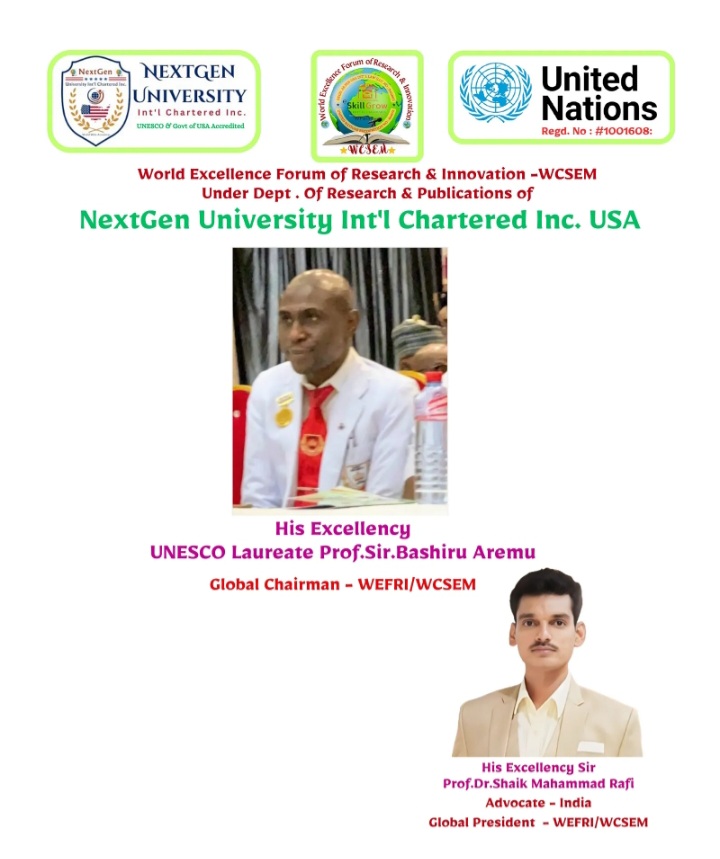
Championing Change: Bashiru Aremu’s Contributions to African Tech- Abubakar Balarabe

In the annals of African academia and technological advancement, few names shine as brightly as Professor Bashiru Aremu. With a career spanning decades, Professor Aremu has not only made remarkable strides in computer science but has also left an indelible mark on the continent through his legacy and academic contributions.

Born and raised in Nigeria, Professor Aremu’s journey into the realm of computer science began with a passion for innovation and a steadfast commitment to harnessing technology for the betterment of society. Armed with determination and a thirst for knowledge, he pursued higher education both locally and internationally, earning degrees and accolades that would serve as the foundation for his illustrious career.

Throughout his tenure as an academician, Professor Aremu dedicated himself to pushing the boundaries of computer science research and education in Africa. His pioneering work in areas such as artificial intelligence, data science, and cybersecurity has not only garnered international recognition but has also paved the way for countless aspiring technologists across the continent.

One of Professor Aremu’s most enduring legacies lies in his role as a mentor and educator. Recognizing the importance of nurturing the next generation of African innovators, he has played a pivotal role in establishing and leading numerous academic programs and institutions focused on computer science and technology. Through his mentorship and guidance, countless students have been inspired to pursue careers in STEM fields, further fueling Africa’s technological renaissance.

In addition to his academic endeavors, Professor Aremu has also been a vocal advocate for the integration of technology into various sectors across Africa. Recognizing the transformative power of digital innovation, he has tirelessly campaigned for increased investment in ICT infrastructure, digital literacy programs, and technology-driven entrepreneurship initiatives. His efforts have not only contributed to economic growth and development but have also empowered African countries to compete on the global stage in an increasingly digital world.

As Professor Aremu’s illustrious career continues to evolve, his impact on African computer science and technology remains undeniable. Through his groundbreaking research, unwavering dedication to education, and visionary leadership, he has cemented his status as a true pioneer and champion of technological progress across the continent. As we reflect on his achievements and contributions, let us celebrate Professor Bashiru Aremu as a beacon of inspiration and a driving force behind Africa’s journey towards a brighter, more digitally empowered future.

Abubakar Balarabe, Research Scholar at Department of Computer Science Information and Communication Technology ( ICT),Cyber Security Unit, Crown University Intl Chartered Inc in the USA