Jaga Slams former VP Yemi Osinbajo over remarks on ‘the prosperity gospel’

Nigerian music sensation Testimony Jaga has slam former vice president, Yemi Osinbajo over his remarks about the gospel.

The former Vice-President Yemi Osinbajo has drawn criticism from gospel artist Testimony Jaga and several others over his recent comments on the “prosperity gospel” doctrine.

Osinbajo, a pastor, had earlier rejected the notion that wealth and physical well-being are guaranteed outcomes of faith, stating that such teachings do not form part of core Christian doctrine.

He made the remarks during a live discussion at Rock of Ages Christian Assembly International, where he responded to arguments raised by Pastor Korede Komaiya.

Reacting in a widely circulated video, Testimony Jaga disagreed with the former vice-president, maintaining that the message of the gospel encompasses both spiritual and material dimensions.

“There’s no such thing. There’s only a gospel, the gospel of Jesus Christ, sir,” he said.

The singer also expressed reservations about the incident distinction drawn between prosperity teachings and the broader Christian message, emphasising the need for a more holistic interpretation.

The exchange has sparked renewed debate within Nigeria’s Christian community over differing perspectives on the interpretation of the gospel and the place of prosperity teachings in modern ministry.

Observers say the discussion reflects broader conversations on theology and the role of church leaders in shaping doctrinal understanding

ALLEGATIONS AGAINST MINISTER MATAWALLE ARE FALSE, MISLEADING, AND INFLAMMATORY — UNITED FRONT FOR RELIGIOUS TOLERANCE IN NIGERIA

The United Front for Religious Tolerance in Nigeria strongly condemns recent online publications alleging that the Honourable Minister of State for Defence, H.E. Dr. Bello Mohammed Matawalle, MON, attempted to bribe a United States official to suppress reports on Nigeria’s security situation.

These claims, reportedly attributed to a member of the Florida House of Representatives Kimberly Daniels during a Facebook live broadcast, are entirely false, unfounded, and lack credibility.

We state unequivocally that the Honourable Minister has never engaged in, nor would he condone, any act of bribery or misconduct. The allegations are baseless and do not reflect his conduct or public service record.

We are concerned about the damaging impact of such unsubstantiated claims at a time when Nigeria is confronting complex security challenges. Insinuations that the Minister sought to influence American officials through “coordinated messaging” are not only misleading but risk heightening tensions in an already fragile environment.

Dr. Matawalle has consistently maintained that insecurity affects all Nigerians; Christians, Muslims, men, women, young and old, and is not targeted at any single religious group or region. The violence perpetrated by non-state actors cuts across the country and requires collective, not divisive, responses.

While we welcome genuine international interest in Nigeria’s security, we reject attempts to politicize the crisis or undermine the sovereignty of our democratic institutions. Calls to overhaul Nigeria’s security architecture based on misinterpretation of events are inappropriate. Concerns should be channeled through proper diplomatic and investigative processes, not inflammatory public broadcasts.

The Honourable Minister remains focused on his mandate. He has been at the forefront of strategic engagements with domestic and international partners to restore peace, particularly in Northern Nigeria. He will not be distracted by campaigns of calumny or malicious propaganda.

  According to a press release signed by Barrister Okie Okechukwu For: United Front for Religious Tolerance in Nigeria, These campaigners of calumny are trying to drag his name to the mud because of his support for Mr. President, which is unshakable, he has refused to join the conspiracy against the re-election of our amiable jagaban. Furthermore in his home state politics, his growing influence and loyalty to President Tinubu is unsettling them and also a threat to the political class who feels they will not get his support in the upcoming elections.
It is absurd, malicious, preposterous and naive for the woman ( kimberly Daniels) the American legislator who claims to know Nigeria more than us. She should channel her bitterness against Nigeria to somewhere else as Nigeria is moving towards greatness and economic independence under President Bola Ahmed Tinubu GCFR.

We urge the public and media to disregard these misleading reports and to verify information before amplification. Reckless allegations of religious bigotry and corruption only serve to heat up the polity and distract from the urgent task of securing our nation.

UNIVERSITIES CENTRAL TO NATIONAL SECURITY AND STRATEGIC RESILIENCE, SAYS DEFENCE MINISTER

The Honourable Minister of Defence, General Christopher Gwabin Musa (Rtd), OFR, has affirmed that Nigeria’s university system is central to strengthening national defence and building long‑term strategic resilience. He made the remarks while delivering the Convocation Lecture at the Combined Convocation Ceremony of Akwa Ibom State University, held at the university’s main campus in Ikot Akpaden, Mkpat Enin Local Government Area.

Highlighting the changing character of contemporary threats, General Musa said that terrorism, cyber warfare and other asymmetric challenges have redefined national defence in the 21st century. He told graduands, academics and dignitaries that modern national security must be knowledge‑driven and anchored in education, innovation, technology and human capacity.

 According to the chief information officer (CIO) For: Director Information and PR “National defence today is not solely the preserve of the armed forces,” General Musa said. “It requires a whole‑of‑nation approach in which our universities play a strategic role; producing skilled manpower, advancing research and innovation, and cultivating the values that underpin stability and cohesion.”

Key points from the Minister’s address included; the imperative of deepening collaboration between the defence establishment, government and the academic community to respond to evolving security challenges, the need for sustained investment in education and the deliberate alignment of academic programmes with national security priorities, particularly in cybersecurity, artificial intelligence and data systems, the importance of structured partnerships between universities and defence institutions to build a modern, self‑reliant and responsive national security architecture and a reminder that national defence is a collective responsibility extending beyond the Armed Forces to all sectors of society, especially the education sector.

General Musa charged the graduating students to embrace their responsibilities as future leaders and nation builders, urging them to uphold discipline, pursue innovation and demonstrate a strong sense of duty in contributing to Nigeria’s stability, progress and prosperity.

Nigeria Moves To Recalculate Revenue Sharing With Fresh Nationwide Data Audit

Maryam Aminu

Nigeria is set for a potential shake-up in how public funds are shared, as the Revenue Mobilisation Allocation and Fiscal Commission (RMAFC) kicks off a sweeping nationwide data verification exercise targeting the country’s revenue allocation system.

The move signals a strategic push to align the sharing formula with current socio-economic realities, amid growing concerns that outdated data may no longer reflect population shifts, infrastructure growth, and widening development gaps across states and local governments.

Chairman of the Commission, Mohammed Bello Shehu, described the exercise as a defining moment for Nigeria’s fiscal structure, noting that accurate and credible data remains the cornerstone of fairness in resource distribution.
“This initiative is about restoring confidence in the system. When the data is right, the outcomes are fair, transparent, and capable of supporting national cohesion,” he said.

The nationwide audit will see RMAFC teams deployed across all states and the Federal Capital Territory to gather, validate, and harmonise critical data used in determining revenue allocation indices. These include population figures, internally generated revenue, infrastructure development, as well as access to education and healthcare.

According to the Commission, the exercise will be conducted in phases, with a region-by-region rollout designed to ensure thorough coverage and data integrity. Field teams are expected to work closely with Ministries, Departments and Agencies (MDAs), local councils, and community stakeholders to capture accurate, up-to-date information.

Beyond data collection, the Commission plans to host stakeholder engagement sessions nationwide, aimed at deepening transparency, strengthening public trust, and encouraging collaboration throughout the process.

RMAFC noted that Nigeria has undergone significant socio-economic changes in recent years ranging from rapid urbanisation to shifting population patterns making periodic validation of revenue allocation indices not just necessary, but urgent.

The Commission further revealed that the broader review of the revenue allocation formula is already at an advanced stage, positioning the verification exercise as a critical step in ensuring the credibility of the final framework.

With the outcome expected to influence fiscal policy, national planning, and equitable development, the exercise is being framed as a major milestone in Nigeria’s effort to build a more responsive and data-driven governance system.

MISPLACED BLAME, MISSED PRIORITIES: WHY TARGETING MATAWALLE WON’T FIX NIGERIA’S SECURITY CRISIS

The recent call by a U.S.-based lawmaker, Kimberly Daniels, for the removal of Nigeria’s Minister of State for Defence, Bello Matawalle, has stirred predictable reactions across political and media spaces. Yet, beneath the headlines lies a more important question: is Nigeria’s deepening insecurity the failure of one man—or the consequence of entrenched systemic weaknesses?

Reducing a complex, multi-layered national security crisis to the performance of a single officeholder is not only analytically flawed—it risks distracting from the structural reforms Nigeria urgently needs.

A CRISIS DECADES IN THE MAKING

Nigeria’s insecurity did not begin with Matawalle, nor with the current administration of Bola Ahmed Tinubu. From the Boko Haram insurgency in the North-East to banditry in the North-West and communal conflicts cum farmers/herders clashes in parts of the Middle Belt, the country’s security challenges are rooted in long-standing governance gaps.

These include:
I. Weak policing structures and chronic underfunding of the Nigeria Police Force
II. Poor intelligence coordination across security agencies
III. Proliferation of small arms and porous borders
IV. Socioeconomic drivers such as poverty, unemployment, and rural marginalisation
V. Over-reliance on the military for internal security duties

Any serious diagnosis must begin here—not with a politically convenient scapegoat.

MATAWALLE’S RECORD: A MORE BALANCED VIEW

Since his appointment as Minister of State for Defence in 2023, Matawalle has operated within a highly centralised and historically constrained security architecture. Yet, within these limitations, his contributions have been tangible and deserve objective recognition.

First, he has been instrumental in supporting expanded military operations against bandit enclaves in the North-West, particularly through enhanced coordination between ground forces and air components. These operations have disrupted several criminal networks and led to the neutralisation of key warlords.

Second, Matawalle has consistently advocated for kinetic and non-kinetic approaches, recognising that force alone cannot resolve insurgency. His experience as a former governor of Zamfara State informed initiatives that combined military pressure with local engagement strategies aimed at de-escalating violence.

Third, under his watch, there has been increased emphasis on troop welfare and logistics support, including improved supply lines and operational readiness—critical factors often overlooked in public discourse but essential to battlefield effectiveness.

Fourth, he has played a role in strengthening Nigeria’s defence diplomacy, engaging regional and international partners to support intelligence sharing and counterterrorism cooperation.

None of these efforts suggest perfection. But they do indicate active engagement with the problem—not complicity in it, as some narratives have implied without substantiated proof.

THE DANGER OF SIMPLISTIC NARRATIVES

The recommendation by Kimberly Daniels reflects a broader tendency in international commentary: the urge to personalise systemic failures. While such positions may be well-intentioned, they often lack the contextual depth required to understand Nigeria’s unique security environment.

Security sector reform is not achieved through symbolic dismissals. In fact, abrupt leadership changes without structural adjustments can disrupt continuity, weaken morale, and create further instability within the ranks.

Blaming Matawalle alone risks creating a false sense of action while leaving the real problems untouched.

THE REAL ISSUE: A DISTORTED SECURITY ARCHITECTURE

At the heart of Nigeria’s security crisis lies a fundamental misalignment: the military has been overstretched with internal security responsibilities that should primarily belong to the police.

The Nigeria Police Force, constitutionally mandated to handle internal law enforcement, has been weakened over decades by inadequate funding, poor training, and limited operational capacity.

As a result:
I. Soldiers are deployed for routine policing duties
II. Military resources are stretched thin across multiple internal theatres
III. Response times and intelligence gathering suffer
IV. Civil-military relations become strained

This is neither sustainable nor strategically sound.

A WAY FORWARD: REBALANCING SECURITY RESPONSIBILITIES

Rather than focusing on individual removals, the administration of Bola Ahmed Tinubu should prioritise a phased and deliberate restructuring of Nigeria’s internal security framework.

This must include:
I. Gradual re-equipping and modernisation of the Nigeria Police Force—with emphasis on mobility, communications, forensic capacity, and community policing
II. Comprehensive retraining programmes to enhance professionalism and intelligence-led policing
III. Decentralisation of policing structures, allowing for more responsive state and local security mechanisms
IV. Strategic withdrawal of the military from routine internal operations, reserving its deployment for specialised interventions and external defence roles
V. Strengthening inter-agency coordination, ensuring seamless collaboration between police, intelligence services, and the armed forces

Only through such systemic reforms can Nigeria build a security architecture capable of addressing both current threats and future risks.

CONCLUSION: BEYOND BLAME TO SOLUTIONS

Nigeria stands at a critical juncture. The temptation to assign blame to individuals may offer short-term political satisfaction, but it does little to resolve long-standing structural deficiencies.

Dr Bello Matawalle is not above scrutiny—no public official should be. However, any fair assessment must be grounded in evidence, context, and a clear understanding of institutional constraints.

The path to lasting security lies not in scapegoating, but in bold, systemic reform. It lies in rebuilding institutions, redefining roles, and restoring balance within Nigeria’s security ecosystem.

Above all, it requires leadership that is willing to confront complexity—not reduce it.

Until then, calls for removal—no matter how loudly amplified—risk being nothing more than noise in place of necessary action.

Comrade James Ezema is a journalist, political strategist, and public affairs analyst. He serves as National Vice-President (Investigation) of the Nigerian Guild of Investigative Journalists (NGIJ) and National President of the Association of Bloggers and Journalists Against Fake News (ABJFN). He writes from Abuja, Nigeria.

Charles Chima Chukwu Honoured By CONYSSA For Youth Empowerment And Community Development

Maryam Aminu

Renowned businessman and philanthropist, Charles Chima Chukwu, has been honoured with the Youth Empowerment & Community Development Leadership Award of Excellence by the Coalition of Nigerian Youth on Security and Safety Affairs (CONYSSA) in recognition of his outstanding contributions to youth development, entrepreneurship and humanitarian service.

The award, presented during the North-East Youth Multi-Stakeholders’ Security Summit on April 2, 2026, celebrated Chukwu’s consistent efforts in creating opportunities for young people, supporting vulnerable communities and driving grassroots development across Nigeria.

Charles Chima Chukwu, a native of Okposi, Ohaozara Local Government Area of Ebonyi State, was born on January 15, 1995. He began his educational journey at Jehovah Shammah Nursery and Primary School, Ojo, before proceeding to Kristal Secondary School, Ojo for his secondary education.

Driven by a passion for learning and excellence, he later gained admission into Tansian University, Umunya, Anambra State, where he studied Accounting.

He also furthered his academic pursuit in 2017 by studying Economics at the University of Nigeria, Nsukka (UNN).

Today, Charles Chima Chukwu is a thriving entrepreneur with interests in furniture production, home interior designs and importation business. He is the Founder and Chief Executive Officer of Shiptanec Ventures Furniture Company and also serves as the Vice President of GSP @ Horeb Constructions Limited, a leading engineering and construction company in Nigeria.

Beyond business, Chukwu has earned admiration for his generous philanthropic footprint, especially in Ebonyi State and Lagos State, where he resides. In his hometown of Isikerenu, Okposi, and within communities in Alimosho, Lagos, he has spearheaded several impactful projects.

These include road rehabilitation, construction of boreholes, installation of streetlights and community support programmes aimed at improving living standards.

He is also known for providing yearly assistance to the poor and less privileged, extending support to orphanage homes around Iba Local Government Area, and offering employment opportunities to youths to help them become financially independent.

Many residents and beneficiaries describe him as a man with a heart for service whose actions continue to transform lives and inspire hope.

With this latest recognition from CONYSSA, Charles Chima Chukwu has further cemented his reputation as a business leader committed not only to profit, but to people, progress and community advancement.

FG Unveils Youth-Shaped Open Governance Plan As Youth Minister Hands Over OGP Leadership

Maryam Aminu

Nigeria has launched a new youth-driven roadmap for transparency and accountability, as the Federal Government unveiled National Action Plan IV (NAP IV) under the Open Government Partnership (OGP), marking the end of the leadership tenure of Minister of Youth Development, Comrade Ayodele Olawande.

The unveiling took place during the 22nd National Steering Committee Meeting in Abuja, where Olawande formally handed over as State Actors Co-Chair of the Nigeria OGP National Steering Committee after overseeing key reforms aimed at promoting openness in governance.

Describing the moment as one of gratitude, reflection and renewed hope, the minister praised stakeholders across government institutions, civil society organisations, the private sector, academia, development partners and citizens for supporting the open governance agenda.

He noted that since 2024, broad consultations were carried out across Nigeria and beyond, giving citizens greater opportunities to shape governance processes.

According to him, the implementation of National Action Plan III recorded notable gains in transparency, accountability, access to information and citizen participation, while also strengthening Nigeria’s voice on the global OGP platform.

Olawande said the newly launched NAP IV represents the aspirations of a younger generation demanding more trust, openness and responsive governance.

The plan contains 12 commitments spread across six strategic areas, including digital governance, justice and human rights, anti-corruption, civic space and climate action.

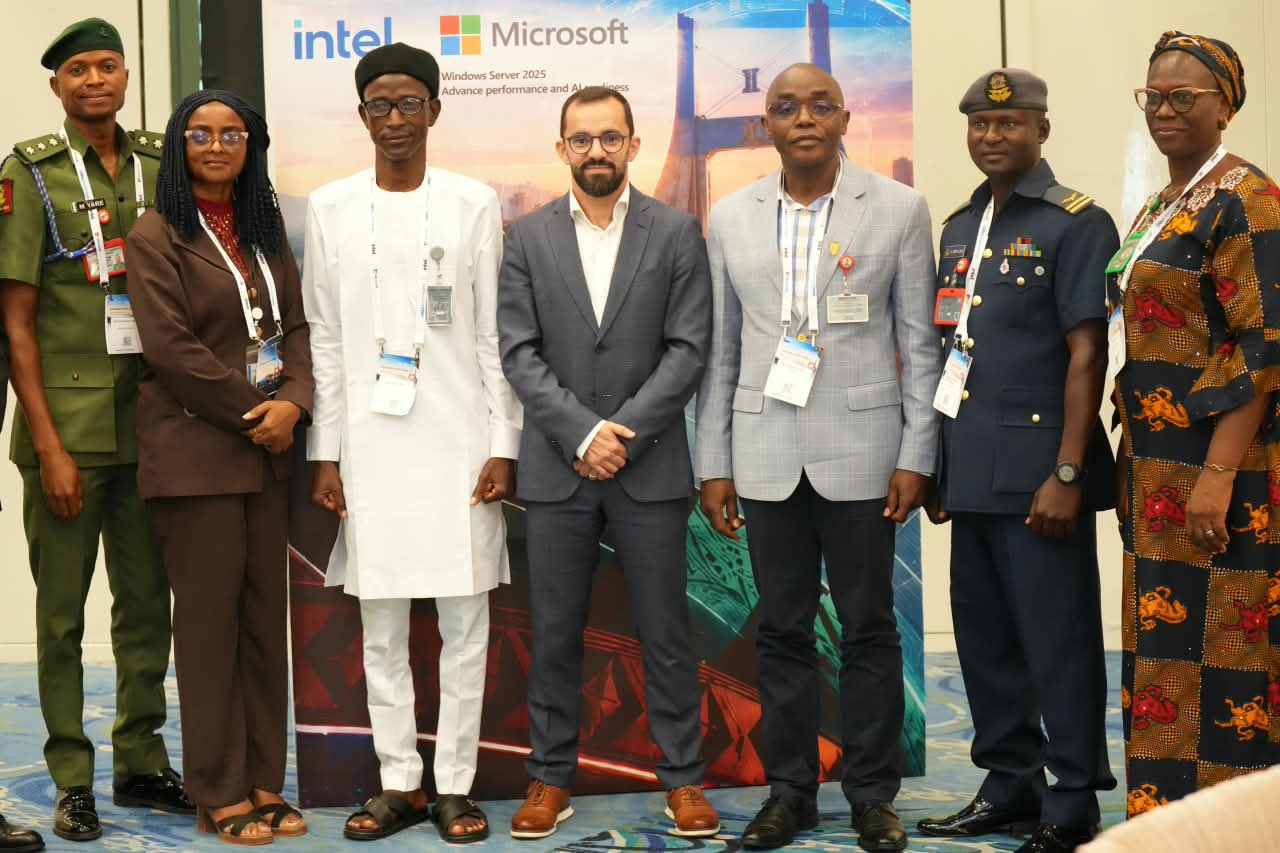
Group Picture: The Honourable Minister, Federal Ministry of Youth Development, Comrade Ayodele Olawande, the Honourable Minister for Budget and Economic Planning, Senator Abubakar Atiku Bagudu, and members of the Steering Committee, during the handover ceremony at the 22nd Meeting of the Nigeria Open Government Partnership (OGP) National Steering Committee held in Abuja on Friday, 17th April, 2026.

He, however, stressed that the success of the initiative would depend on collective commitment and effective implementation by all stakeholders.

The outgoing co-chair also commended his counterpart, Obialunanma Nnaobi-Ayodele, as well as members of the OGP Secretariat and the 3rd National Steering Committee for their support and dedication.

In his inaugural remarks, the new State Actors Co-Chair and Minister of Budget and Economic Planning, Senator Abubakar Atiku Bagudu, pledged to consolidate on the achievements already recorded.

Bagudu reaffirmed the government’s commitment to stronger collaboration between state and non-state actors, adding that OGP reforms must translate into better governance and improved service delivery for Nigerians.

He identified fiscal transparency, anti-corruption, access to information and efficient public service delivery as priority areas requiring sustained momentum.

Also speaking, the incoming Non-State Actors Co-Chair, Olusoji Apampa, hailed progress made in financial transparency, open contracting, open budgeting and access to information.

He described the reforms as proof that openness in governance delivers practical benefits to citizens and promised to work with the new leadership to deepen reforms nationwide.

RMAFC, Interior Ministry Move To Boost Investment, Revenue Drive

Maryam Aminu

The Revenue Mobilisation Allocation and Fiscal Commission (RMAFC) and the Federal Ministry of Interior on Thursday opened high-level talks in Abuja aimed at unlocking fresh investment opportunities, strengthening revenue generation and improving Nigeria’s business environment.

The strategic meeting, led by RMAFC Chairman, Dr. Mohammed Bello Shehu, and Minister of Interior, Dr. Olubunmi Tunji-Ojo, focused on collaboration in investment facilitation, migration governance and national development.

Dr. Shehu said the visit was to seek stronger partnership with the ministry in attracting foreign investors into the country, disclosing that the commission was planning a major oil and gas summit to draw investments into the upstream and downstream sectors.

He noted that RMAFC, as one of the 14 constitutional commissions, is mandated to monitor revenue inflows into the Federation Account, ensure lawful disbursement of funds, review revenue allocation formulas and determine remuneration for political, executive and judicial office holders.

According to him, all legitimate revenue due to the Federation must be properly accounted for and distributed in line with the law.

The chairman also commended agencies under the Ministry of Interior for their support during inter-agency verification exercises and other official assignments, describing such cooperation as vital to accountability and effective governance.

He further praised the reforms being implemented by the ministry, particularly in immigration, civil defence and related agencies.

Responding, Tunji-Ojo welcomed the delegation and described inter-agency collaboration as essential to national progress.
“Collaboration is the soul of governance. No institution can succeed in isolation, and our doors remain open to every agency committed to national development,” the minister said.

A cross-section of the RMAFC Members together with the Hon. Minister during the meeting. 

He explained that the ministry had prioritised migration management and immigration documentation as tools for economic growth, investor confidence and ease of doing business.

According to him, key processes have been digitised, visa systems simplified, transparency improved and bottlenecks reduced to make Nigeria more attractive to investors.

The minister added that while citizenship matters are strictly guided by the Constitution, investor-friendly residency pathways and long-term lawful stay options could be explored within existing legal provisions to support economic growth.

Earlier, Chairman of RMAFC’s Investment Monitoring Committee and Federal Commissioner representing Anambra State, Hon. Enefe Ekene, said the committee was responsible for oversight of government investments and initiatives targeted at attracting foreign direct investment.

He stressed that a stable, transparent and investor-friendly environment was critical to attracting investors, noting that the Ministry of Interior remained central to efficient migration, residency and business entry systems capable of boosting confidence and national revenue.

Other members of the RMAFC delegation included Hon. Kolade Daniel Abimbola, Federal Commissioner representing Oyo State and Chairman, Inland Revenue Monitoring Committee, as well as Hon. Hauwa Umar Aliyu, Federal Commissioner representing Jigawa State and member of the Investment Committee.

Permanent Secretary of the Ministry of Interior, Dr. Magdalene Ajani, alongside senior officials of the ministry, also attended the meeting.

Both institutions ended the talks with a commitment to deepen cooperation and pursue innovative policies aimed at enhancing revenue generation, attracting investment and advancing national development priorities.

When Service Is Overshadowed: Rethinking The Narrative On Nigeria’s Armed Forces

Maryam Aminu/Emmanuel Daudu

At a time when public opinion is increasingly shaped by viral headlines and fragmented reports, Nigeria’s Armed Forces find themselves battling not only security threats, but also a growing tide of negative perception. In the court of public opinion, isolated incidents are often magnified, while sustained efforts and hard-earned gains fade quietly into the background. The result is a narrative that risks being incomplete and, at times, unfair.

Yet, beyond the criticism and controversy lies a force that continues to shoulder one of the most complex security burdens in Africa.
Across multiple theatres of operation, Nigeria’s military remains actively engaged in counterinsurgency, anti-banditry, maritime security, and peace support roles. These are not abstract assignments; they are daily, high-risk engagements that demand courage, discipline, and endurance.

In the North-East, for instance, troops have recorded measurable progress in degrading insurgent capabilities. Several communities once under the control of extremist groups have been reclaimed, allowing displaced residents to begin the difficult journey back to normalcy. While attacks and security breaches still occur and rightly attract concern the broader trajectory reflects sustained pressure on terrorist networks and a gradual restoration of state authority.

Equally significant are the efforts in the maritime domain. The Nigerian Navy has intensified patrols and strengthened surveillance across the country’s territorial waters, contributing to a notable decline in piracy incidents in recent years. This has not only enhanced national security but also improved Nigeria’s standing in global maritime safety rankings an achievement with direct economic implications.

Air power has also become a critical component of Nigeria’s security architecture. The Nigerian Air Force has expanded its operational reach, conducting precision strikes and reconnaissance missions that support ground operations. Investments in new platforms and training have begun to yield results, enabling quicker response times and improved coordination across the services.

Still, these operational successes rarely dominate public discourse. Instead, narratives tend to focus on allegations, setbacks, or institutional challenges issues that, while important, do not represent the entirety of the Armed Forces’ performance. This imbalance has contributed to a perception that often overlooks context and progress.

It is important to be clear: scrutiny of the military is both necessary and healthy in a democratic society. Transparency, accountability, and respect for human rights must remain central to military conduct. However, there is a difference between constructive criticism and a narrative that consistently amplifies the negative while ignoring the positive. The former drives reform, the latter risks eroding trust and undermining morale.

Beyond the battlefield, the Armed Forces continue to play a vital role in supporting civil authorities. From disaster response to election security and public health interventions, military personnel are frequently called upon to assist in times of national need. Their presence in these situations often provides stability and reassurance, particularly in areas where civilian capacity is stretched.

There is also the human dimension one that is too often absent from public conversations. Military service in Nigeria comes with significant personal sacrifice. Soldiers operate in difficult terrains, endure long separations from their families, and face constant exposure to danger. For many, the line between duty and survival is razor-thin. Yet, their stories rarely make headlines unless tragedy strikes.

Internally, the Armed Forces have not remained static. Efforts to improve personnel welfare, upgrade training standards, and strengthen institutional accountability are ongoing. While challenges persist as they do in any large organization there is evidence of gradual reform and adaptation. Recognizing these efforts does not excuse shortcomings; rather, it provides a more balanced understanding of an institution in transition.

The role of the media in shaping perception cannot be overstated. In a fast-paced information environment, the pressure to break news often favours stories that are dramatic or controversial. While such reporting is essential, it should not come at the expense of depth and balance. A more rounded approach one that highlights both achievements and challenges would better serve the public interest.

Public trust in national institutions is not built on silence or blind praise, but on informed engagement. For the Armed Forces, this means telling a more complete story one that acknowledges failures, celebrates successes, and situates both within the broader context of national security realities.

As Nigeria continues to confront evolving threats, the importance of a capable and motivated military cannot be overstated. The men and women in uniform operate under intense pressure, often with limited resources, yet remain committed to their mandate. Their efforts, while not flawless, are far from insignificant.

Reframing the narrative is not about image management; it is about fairness. It is about ensuring that public discourse reflects the full spectrum of reality not just the most visible fragments. In doing so, Nigerians can foster a more constructive relationship with their Armed Forces one grounded in accountability, respect, and a shared commitment to national security.

In the end, the story of Nigeria’s Armed Forces is still being written. It is a story of challenge and change, of setbacks and strides. But above all, it is a story that deserves to be told in full.

ANPA Brings Life-Saving ‘Stop The Bleed’ Training to Imo Residents

Maryam Aminu

In a bid to equip residents with critical emergency response skills, the Association of Nigerian Physicians in the Americas (ANPA) is set to host a STOP THE BLEED Training in Owerri, Imo State, aimed at reducing preventable deaths caused by severe bleeding.

The training, scheduled for April 16, 2026, at 9:00 AM, will take place at the Swiss International Beland Hotel, Owerri. It is designed to empower participants with practical knowledge on how to control life-threatening bleeding in emergency situations before professional medical help arrives.

According to organizers, uncontrolled bleeding remains one of the leading causes of preventable deaths in accidents and trauma cases. The STOP THE BLEED initiative teaches simple but effective techniques such as applying pressure, wound packing, and the use of tourniquets.


Participants will gain hands-on experience and confidence to act decisively during emergencies, potentially saving lives in their communities.

ANPA emphasized the importance of community involvement, urging residents, students, professionals, and community leaders across Imo State to take advantage of the training.

Interested participants are encouraged to register via http://www.anpa.org⁠� as spaces are limited.