By Maryam Aminu
Religious leaders have urged Nigerian youths to resist attempts by politicians to exploit their economic vulnerability and recruit them for electoral violence ahead of the 2027 general elections, warning that no young person should have to die for another person’s political ambition.
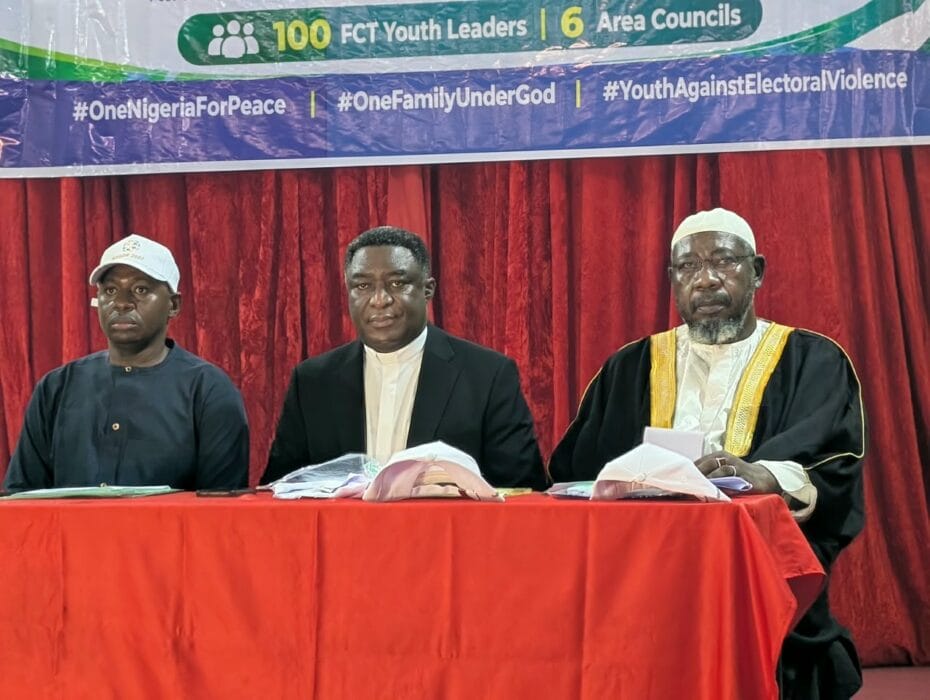
The clerics gave the warning on Tuesday in Abuja at the National Youth Assembly for Democratic Resilience, organised by the Global Peace Foundation Nigeria to mobilise young people against electoral violence and promote peaceful democratic participation.
Speaking at the assembly, Rev. Fr. Canice Enyiaka, Director of Africa Peace Initiative and Engagement, Global Peace Foundation USA, said young Nigerians must recognise their worth and refuse to become disposable instruments in the struggle for political power.
He questioned why youths should be expected to kill, intimidate opponents or risk their lives during elections while the children of political elites enjoy educational opportunities and other privileges abroad.
Enyiaka stressed that the life and dignity of a young Nigerian from a poor family were no less valuable than those of the children of a president, governor or wealthy political figure.
He cited research indicating that about 2,444 Nigerians died in election-related violence between 1999 and 2023, noting that young people constituted a significant proportion of the casualties.
“If it is important to win election through violence, why don’t we see their children fighting for it?” he asked.
According to him, political manipulation often begins with seemingly attractive inducements, including alcohol, drugs, motorcycles, cash and promises of protection, before young people are drawn into activities such as intimidating opponents, disrupting political meetings and snatching ballot boxes.
He urged youths to look beyond these immediate incentives and consider the long-term consequences of allowing themselves to be used to advance political interests.
Enyiaka also called on young Nigerians to use social media to promote human dignity and peaceful coexistence rather than spread hate speech, propaganda and messages capable of inciting violence.
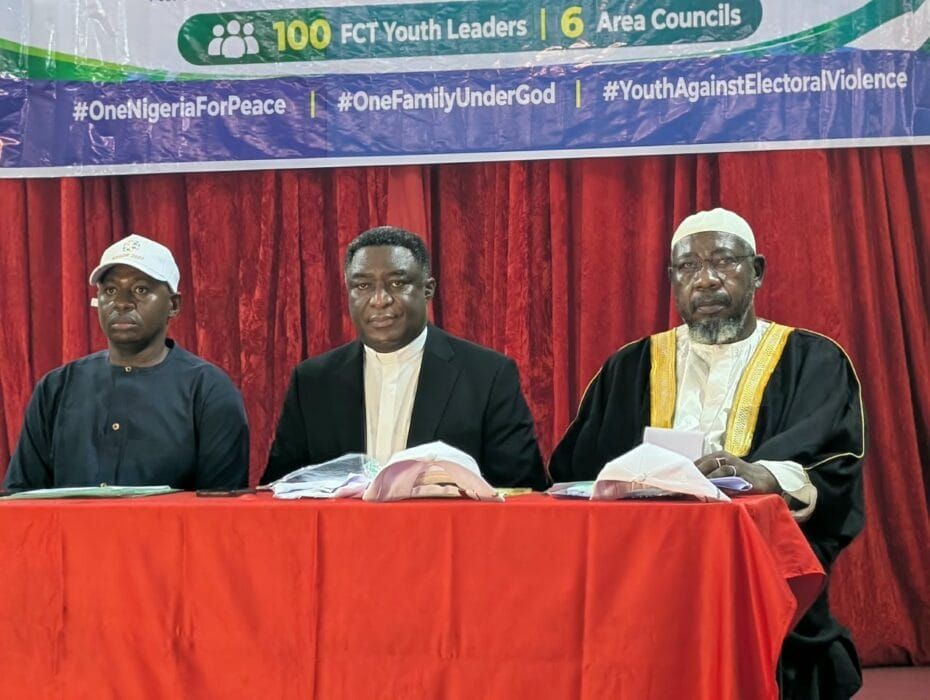
In his keynote address, Sheikh Nuru Khalid challenged young people to question the inequality that allows the children of some political officeholders to enjoy educational opportunities abroad while many Nigerian youths struggle to access quality education and other basic necessities.
He argued that public resources meant to serve citizens should not be diverted for private interests, only for politicians to offer young people food items and small sums of money in exchange for their support during elections.
“What constitutes difference between you and them? Their parents personalised resources meant for your education,” Khalid said.
He criticised the practice of using food items, including spaghetti and instant noodles, alongside cash to influence voters, urging young people to recognise that their votes represent an important civic responsibility.
Khalid further urged youths to demand accountability from political leaders and assess candidates based on their competence, commitment to public service and plans for improving their lives.
He also called on young Nigerians to understand the legal implications of vote buying and resist attempts to trade their electoral choices for temporary benefits.
Also speaking, Rev. Joseph Hayab, Country Director of Global Peace Foundation Nigeria, said no child from a poor family should die because of political ambition, thuggery or ballot-box snatching.
He maintained that elections should be peaceful civic processes in which citizens freely choose their leaders and accept the outcome without destroying lives, property or relationships within their communities.
According to Hayab, politicians who attain power through violence are less likely to feel accountable to the people because their emergence is not founded on public trust.
He urged political leaders to seek electoral mandates through credible engagement with citizens and a demonstrated commitment to public service rather than intimidation and manipulation.
Hayab explained that the assembly was organised to sensitise, educate and mobilise young people to reject electoral violence and take greater responsibility for protecting Nigeria’s democratic process.
He also called on youths to resist recruitment into political attacks and other activities capable of endangering lives or undermining peaceful coexistence.
Goodwill messages were delivered by Muhammad Abubakar, President of the National Association of Muslim Youth Organisations, and Ven. Ademola Arowolo, President of the Youth Wing of the Christian Association of Nigeria (YOWICAN).
Both speakers urged Christian and Muslim youths to unite against electoral violence, stressing the need for peaceful participation in the 2027 general elections.
They called for functional citizenship in which voters assess political candidates based on competence, good governance, accountability and commitment to peace rather than religious or ethnic affiliation.
The youth leaders also pledged to extend peace campaigns to communities, religious centres and campuses to discourage electoral violence and encourage responsible political participation ahead of the 2027 polls.


