By Dr Emmanuel Daudu Ph.D
The Economic Community of West African States (ECOWAS) Business Council (EBC) is set to prioritise energy sufficiency as a key driver of industrialisation in West Africa, with plans to develop regional power corridors and mobilise private-sector investment in the energy sector.
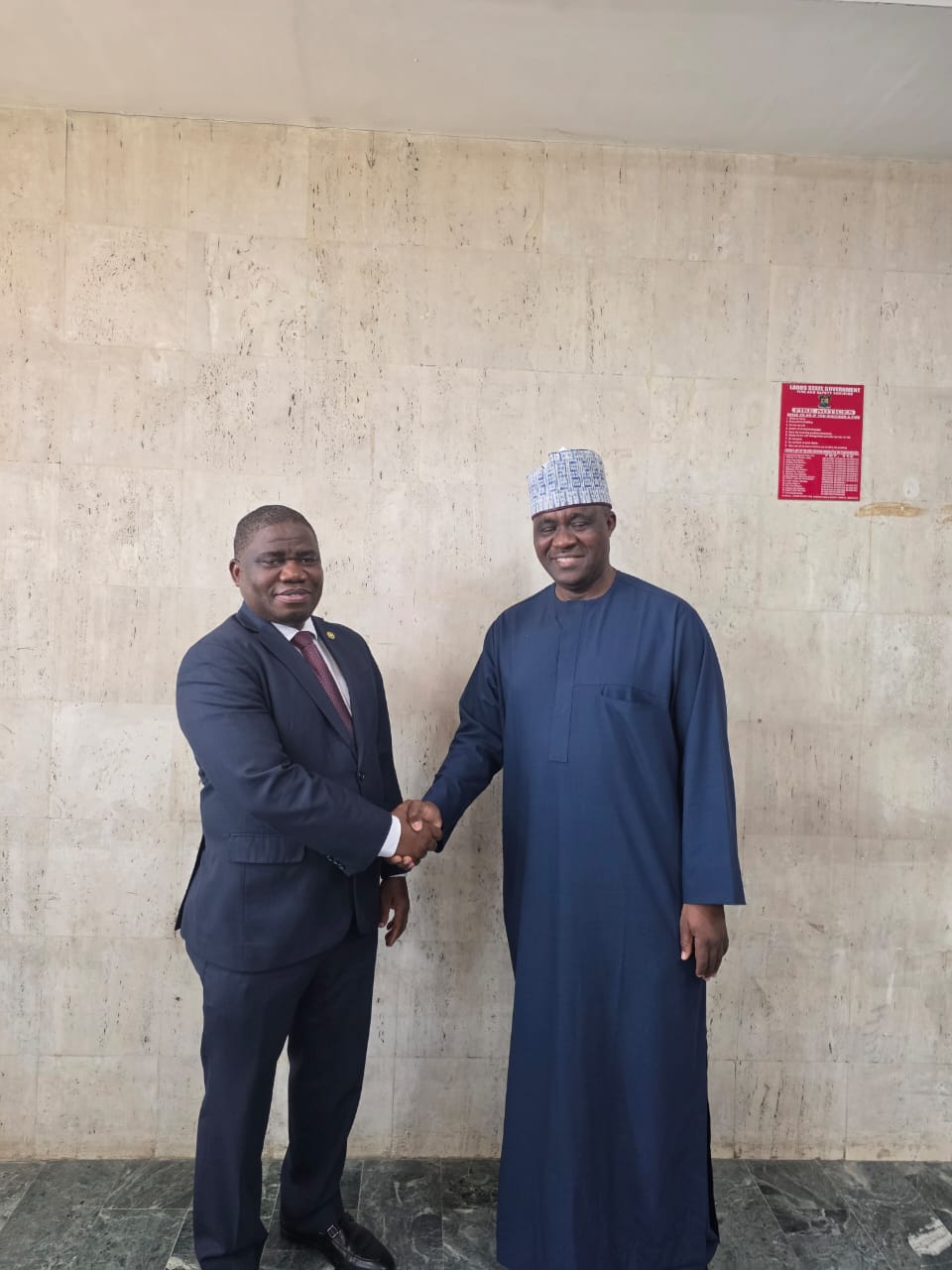
The initiative, tagged “Power W.A. for Industrialisation,” was unveiled during a meeting between the ECOWAS Commissioner for Economic Affairs and Agriculture, Mr. Dehpue Yenpea Zuo, and the Chief Economist of Dangote Group and EBC Chairman’s focal person, Prof. Hassan Mahmud, at the Dangote Industries headquarters in Ikoyi, Lagos.
The meeting took place on the sidelines of the Budget Arbitration meeting held on Friday the 2nd of October, 2026 in Lagos.
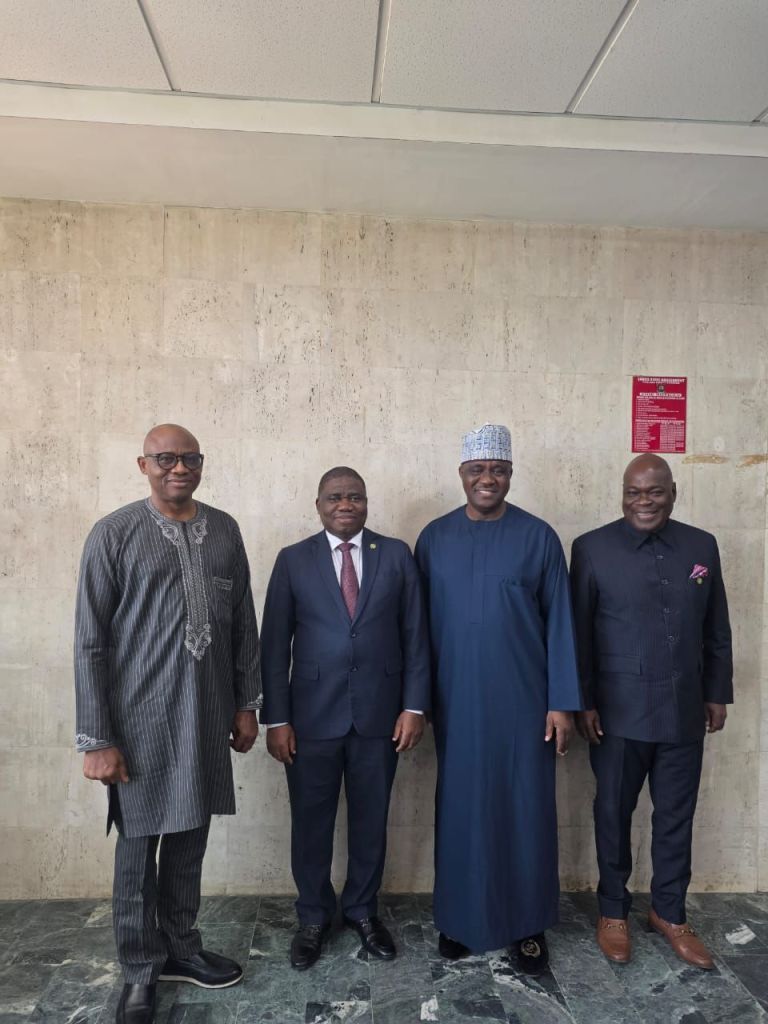
The Commissioner was accompanied by the Acting Director of Private Sector and Industry, Mr. Oluonye Peter O. Chukwudi, and the Executive Assistant to the Commissioner, Mr. Benedict D. Robert.
Discussions focused on the new ECOWAS management priorities, the vision and role of the EBC in advancing regional integration, and measures to operationalise the council.
During the meeting, Zuo referenced decisions taken at the 69th Ordinary Session of the ECOWAS Council of Ministers held in Freetown, Sierra Leone, in July 2026. He highlighted key priorities, including the operationalisation of the EBC, implementation of the ECOWAS Trade Liberalisation Scheme (ETLS), the planned launch of the single currency, ECO, in 2027, and the promotion of agriculture and food security.
The Commissioner also sought clarification on the EBC Chairman’s vision for regional economic integration, particularly against the backdrop of persistent infrastructure challenges, including inadequate road networks and unreliable electricity supply, which continue to constrain the West African business environment.
Responding, Mahmud said the Chairman of Dangote Group, Alhaji Aliko Dangote, recognised the region’s broader development challenges but had chosen to prioritise energy sufficiency as a foundation for industrial growth.
He explained that the Chairman intended to focus his two-year tenure on developing regional energy project corridors rather than the institutional and managerial structure of the council, which he said should be handled by the ECOWAS Commission to ensure sustainability.
Under the “Power W.A. for Industrialisation” initiative, the EBC plans to establish power corridors capable of supporting industrial development across the region. A major component of the initiative will be a study to determine the gap between electricity demand and supply in West Africa, providing a basis for identifying investment opportunities and priority projects.
Mahmud said the council would pursue the initiative through two principal pillars: capital mobilisation and the development of a strong membership base comprising influential business leaders capable of attracting investment into the regional energy sector.
He identified institutions such as the African Export-Import Bank (Afreximbank), the Africa Finance Corporation (AFC) and the International Finance Corporation (IFC) as potential partners in mobilising the capital required to implement the proposed projects.
According to him, the projects would be driven strictly by the private sector, while governments and the ECOWAS Commission would be expected to provide the necessary guarantees and an enabling policy environment to attract investment.
On the operationalisation of the EBC, Mahmud disclosed that members representing ECOWAS member states had been identified and formally invited to accept their nominations. The council is expected to have one representative from each member state, with two additional representatives from Nigeria.
At the time of the meeting, five nominees had formally accepted their appointments, while two other representatives from Nigeria had also indicated their commitment to membership.
Both parties agreed that the inaugural meeting of the EBC should hold in the last week of October or, at the latest, the first week of November 2026. The meeting is expected to bring together council members and advance discussions on the proposed energy initiative.
They also agreed that a meeting should be arranged between Dangote, the EBC Chairman, and the President of the ECOWAS Commission before the council’s inaugural session to secure alignment on the initiative and its implementation framework.
Zuo welcomed the convergence between the EBC Chairman’s priorities and the ECOWAS Commission’s strategic objectives, stressing the importance of establishing the necessary alignment early enough for the initiative to feature on the agenda of the next Council of Ministers meeting scheduled for December 2026.
As part of the agreed next steps, Mahmud is expected to share the Power W.A. concept note, the list of EBC members and the proposed calendar for the inaugural meeting.
The ECOWAS Commission is also expected to establish a joint coordination team and a communication platform to facilitate collaboration between both parties and ensure effective preparation for the inaugural meeting.
Given the scale of funding required for the proposed energy projects, the parties further agreed to explore engagement with the IFC and the Multilateral Investment Guarantee Agency (MIGA) to support financing and risk mitigation.
In addition, the ECOWAS Commission will review existing literature and study reports available within its Energy and Solid Minerals Directorates to establish baseline information for the proposed electricity demand-and-supply assessment.
The proposed initiative is expected to provide a framework for stronger public-private collaboration in addressing West Africa’s energy challenges, attracting investment and creating the conditions necessary to accelerate regional industrialisation.


