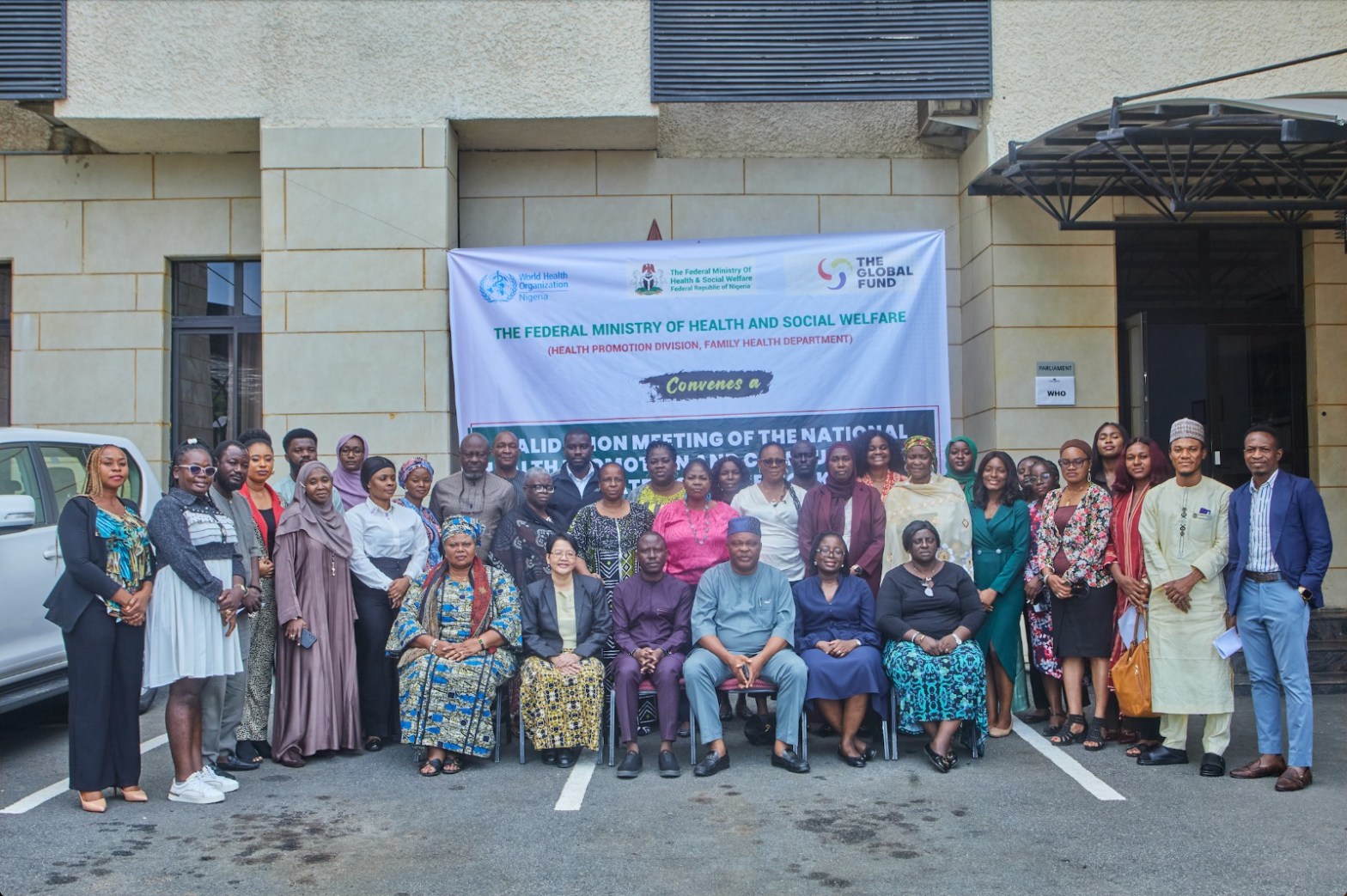
ABUJA — Nigeria has validated a new National Health Promotion and Communication Strategic Framework aimed at establishing a coordinated, evidence-based approach to health communication and ensuring that Nigerians have access to reliable and consistent health information.
The framework was validated by the Federal Ministry of Health and Social Welfare, with technical support from the World Health Organization (WHO) Nigeria, following extensive consultations and engagement with stakeholders across the health sector.
The initiative is designed to bring various national health programmes under a single coordinated communication framework, with the aim of improving the quality, consistency and effectiveness of health messages delivered to citizens.
Health stakeholders said access to accurate and timely health information is critical to enabling individuals and communities to make informed decisions about their health and wellbeing.
The new framework is expected to promote clearer and more consistent health messaging across the country while strengthening public confidence in official health information.
It will also provide guidance for health workers, government institutions and community stakeholders on effective health promotion and communication practices.
According to stakeholders, the framework will help address challenges associated with fragmented health messaging by ensuring that health communication efforts are better coordinated across national programmes and levels of government.
The initiative is supported by WHO Nigeria, with funding from the Global Fund, as part of broader efforts to strengthen Nigeria’s health system and improve access to credible health information.
The framework is expected to play an important role in supporting public health campaigns, disease prevention initiatives and community engagement, particularly during health emergencies and disease outbreaks.
Stakeholders expressed optimism that the coordinated approach would strengthen public understanding of health issues, encourage healthier behaviours and improve the ability of communities to make informed decisions.
The validation marks another step in Nigeria’s efforts to strengthen health promotion and communication as essential components of universal health coverage and the broader goal of Health for All.


