Maryam Aminu
Across newsrooms, some of the most impactful investigative reports are rarely produced in isolation, yet many lose momentum once published, weakening the opportunity to sustain public pressure and drive accountability.
It was against this backdrop that the Wole Soyinka Centre for Investigative Journalism organised the virtual Collaborative Media Engagement for Development, Inclusivity and Accountability (CMEDIA) Collaborative Investigations Training, where journalists were urged to embrace partnerships that strengthen investigative reporting and deepen democratic accountability.
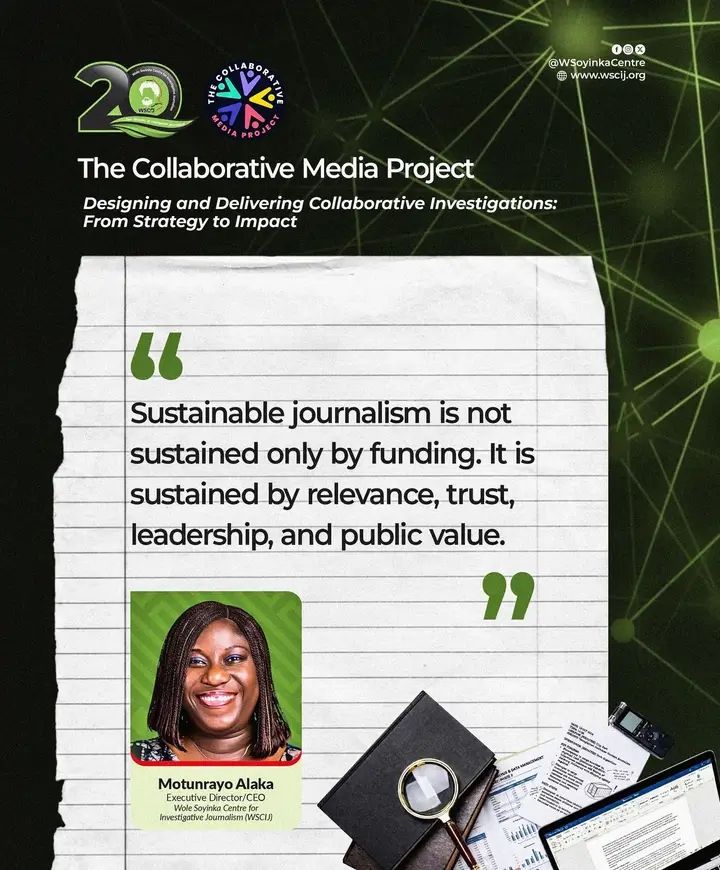
Facilitating a session titled “From Idea to Impact,” the Chief Executive Officer of the Wole Soyinka Centre for Investigative Journalism, Motunrayo Alaka, said successful collaborative investigations must be built on shared public interest values, strategic partnerships and ethical leadership.
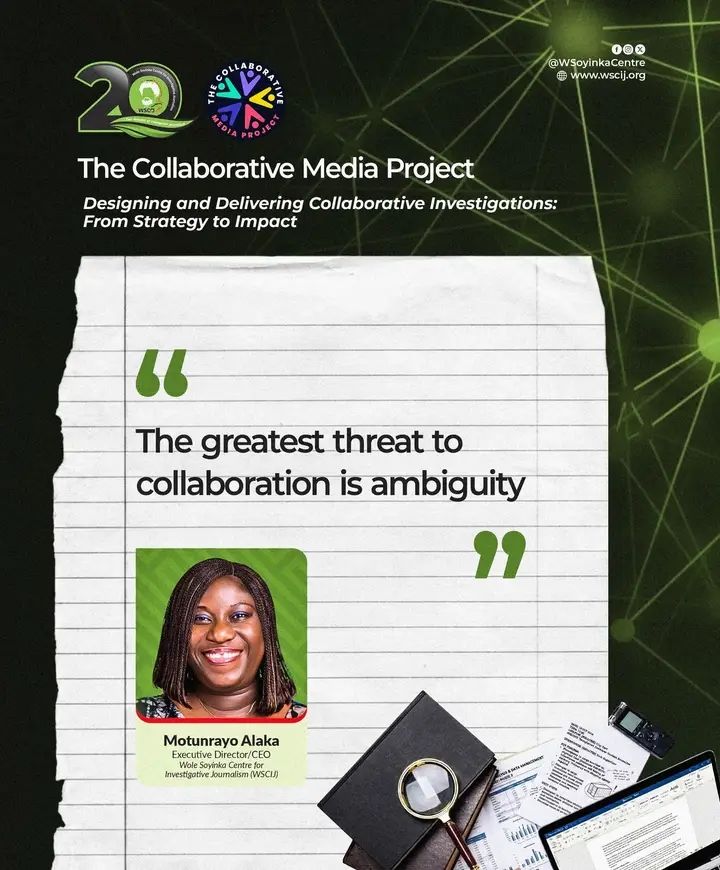
“The greatest threat to collaboration is ambiguity,” Alaka stated, stressing the need for clear governance structures, trust infrastructure and agreed operational guidelines among partners.
She explained that impactful collaborative journalism involves risk mapping, stakeholder mapping, language considerations and strategic timelines to ensure credibility, safety, audience reach and long-term impact.
According to her, “Collaborative investigations are ultimately about democratic responsibilities.”
Alaka also encouraged journalists to collaborate beyond traditional newsroom spaces in order to amplify investigative stories and expand audience engagement.
“Protect people rigorously, lead ethically,” she added.
Also speaking, Haruna Babale urged journalists to move beyond competition and prioritise partnerships capable of advancing public interest journalism.
“If the goal of journalism is to make society better, then we should grow past competition,” he said.
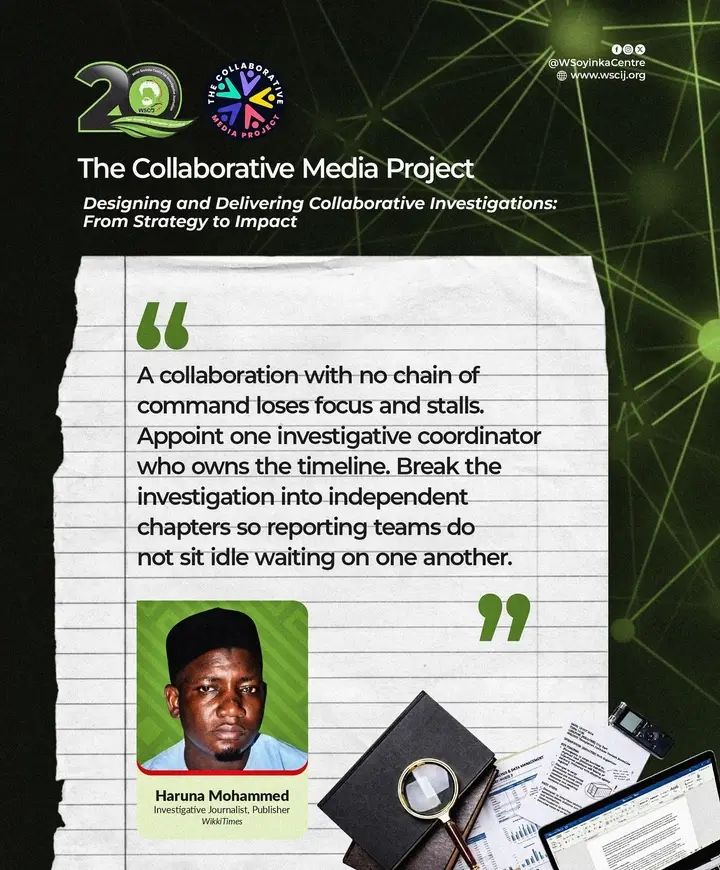
Babale further questioned the reluctance among journalists to collaborate despite the organised nature of corruption and abuse of public resources.
“What is stopping us from collaborating if those stealing our resources collaborate?” he asked.
The training focused on strengthening collaborative investigative journalism as a tool for accountability, inclusivity and sustained civic engagement in Nigeria.


