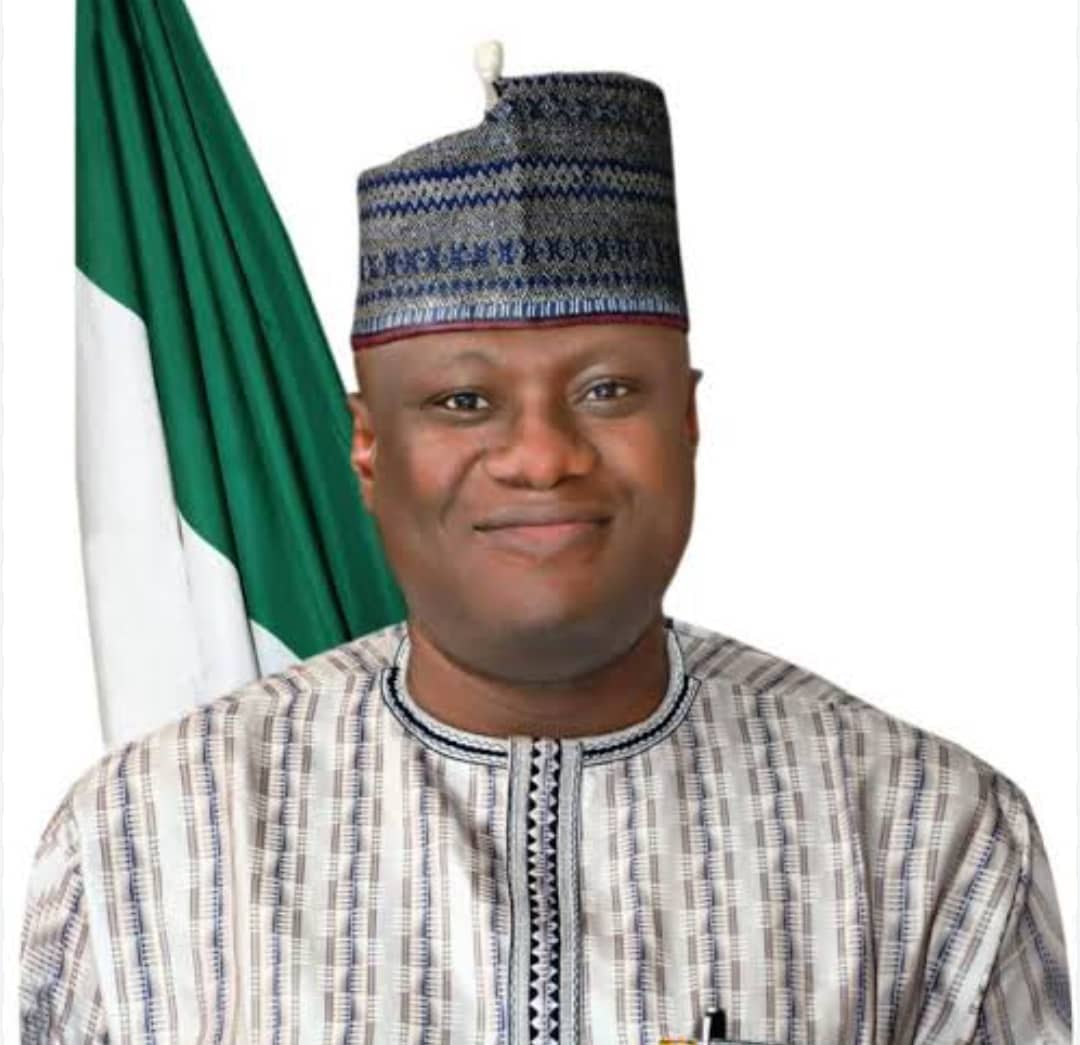
The Minister of Women Affairs, Hon. (Dr.) Imaan Sulaiman-Ibrahim, has called on Nigerians to embrace music as a unifying force that transcends religion, culture, and social boundaries.
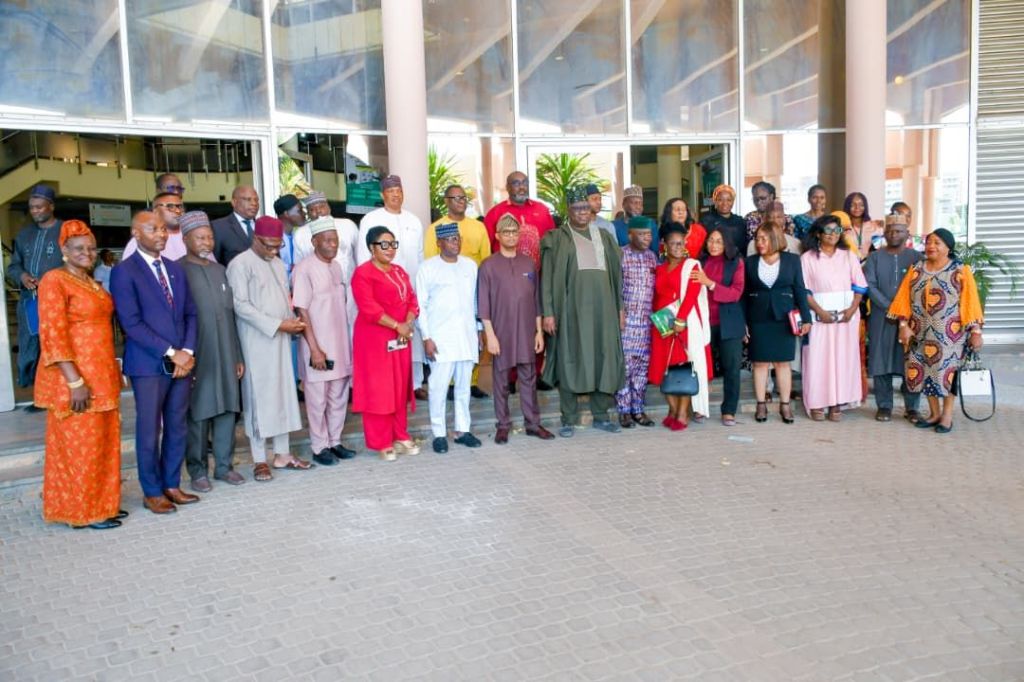
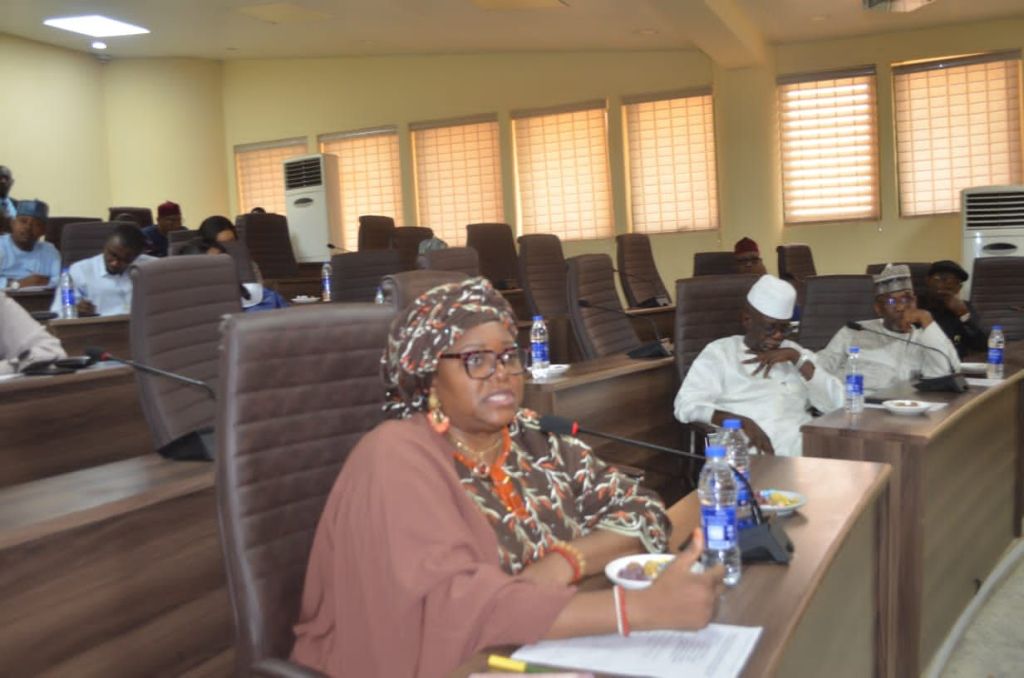
She made the call in Abuja on today while attending the First All-Female Choir Conference organised by the Christian Association of Nigeria (CAN), where she served as the Special Guest of Honour.
Dr. Imaan, who was warmly received by the Christian community despite being of a different faith, described the event as a powerful symbol of interfaith unity and mutual respect.
In her remarks, the Minister emphasised the importance of music as a bridge for peace and understanding, noting that it remains one of humanity’s greatest instruments for fostering unity.
“Music has no boundary and no religion. It is one of the strongest instruments that bridge differences and unite hearts,” she said.
She commended CAN for hosting the event and urged the association to sustain the initiative, describing music as “a measurable instrument for building unity and healing divisions.”
Dr. Imaan also spoke on the need for women empowerment, family harmony, and social cohesion, urging women to see themselves as partners in progress with their husbands rather than competitors.
“Women are natural builders. When we work together with our husbands and not against them, we strengthen the foundation of our families and, by extension, our nation,” she added.
Impressed by her humility and message of peace, CAN described the Minister as “the Mother Teresa of our time,” in recognition of her compassion and unwavering commitment to the welfare of women and vulnerable groups.
The conference featured soul-lifting choral renditions and prayers, commended CAN for creating a platform that promotes inclusivity and
The event concluded with renewed calls for women across the country to be champions of peace, unity, and moral strength in their homes and communities.
The Global Alliance for Peace and Unity (GAPU) has showered glowing commendations on the Honourable Minister of Women Affairs , Dr. Imaan Sulaiman-Ibrahim, for her remarkable empowerment initiative that has directly benefited over 1,200 women across the country.
In a statement issued by its President, Honorable Solomon Pevkyaa, GAPU described Dr. Sulaiman-Ibrahim as “a beacon of hope and an inspiring example of purposeful leadership.”
He lauded her tireless commitment to advancing gender equity, social inclusion, and national cohesion through impactful policies and people-centred programmes.
According to Comrade Pevkyaa, Dr. Imaan Sulaiman-Ibrahim’s consistent focus on empowering women reflects her deep understanding that sustainable peace and national development begin with giving women the tools to thrive. He noted that her leadership style embodies compassion, vision, and strategic foresight qualities that have made her a role model to countless young Nigerians.
“Dr. Imaan Sulaiman-Ibrahim has continued to distinguish herself as one of the most visionary leaders of our time,” Pevkyaa stated. “Her empowerment of over 1,200 women is not just a statistic; it is a legacy of transformation, hope, and resilience. She has proven that leadership, when driven by empathy and purpose, can change the narrative of communities and uplift generations.”
He further emphasized that the Minister’s drive to create opportunities for women aligns with GAPU’s mission of fostering peace and unity through inclusive growth. The organization, he said, stands firmly behind her efforts and is ready to partner with her ministry in promoting sustainable initiatives that strengthen families and communities across Nigeria.
GAPU also called on other government officials and development actors to emulate Dr. Sulaiman-Ibrahim’s exemplary model of leadership one anchored on service, accountability, and empowerment.
“Her name has become synonymous with progress, compassion, and impact,” Pevkyaa added.
“Nigeria needs more leaders like Dr. Imaan Sulaiman-Ibrahim leaders who not only speak of change but actively create it.”
The Executive Chairman of the Fiscal Responsibility Commission (FRC), Barrister Victor Muruako, has called for deeper institutional collaboration among public agencies to enhance transparency, accountability, and prudent financial management in Nigeria. He made this call during a courtesy visit to the Comptroller-General of the Nigerian Correctional Service (NCS), Comptroller Sylvester Ndidi Nwakuche, at the Service Headquarters in Abuja on Thursday.
In a demonstration of the Commission’s commitment to fostering inter-agency cooperation and promoting fiscal prudence, Barr. Muruako said the visit was aimed at strengthening institutional systems that support financial discipline and efficient resource utilization across the public sector.
“The purpose of this visit is not merely about oversight,” Muruako stated. “It is about building institutional systems that strengthen financial discipline, prevent waste, enhance transparency, and improve the quality of service delivery to Nigerians. The Fiscal Responsibility Commission remains committed to ensuring that every naira of public funds is judiciously applied for the benefit of citizens.”
He commended the NCS leadership for ongoing reforms that enhance correctional administration and rehabilitation, describing them as vital to national development. Muruako also underscored the role of the Correctional Service in improving non-oil revenue through its enterprises and vocational initiatives, which contribute to economic productivity and national stability.
Responding, Comptroller-General Nwakuche expressed appreciation for the FRC’s engagement, acknowledging the importance of fiscal responsibility in public administration. He highlighted ongoing reforms within the Service, including measures to strengthen internal revenue systems and improve operational efficiency despite fiscal constraints.
“We recognize the importance of fiscal responsibility in achieving our mandate,” Nwakuche said. “The Nigerian Correctional Service is determined to uphold the principles of accountability and efficient resource utilization in line with the objectives championed by the Fiscal Responsibility Commission.”
The visit concluded with the signing of the visitors’ register and a group photograph with senior officers of the NCS. Both leaders reaffirmed their commitment to sustaining collaboration that promotes fiscal discipline, institutional efficiency, and sustainable national development.
The World Health Organization (WHO) has reaffirmed its commitment to strengthening Nigeria’s mental health system, especially in conflict-affected regions, as the country joined the global community to mark the 2025 World Mental Health Day under the theme “Access to Services: Mental Health in Catastrophes and Emergencies.”
The WHO Nigeria Country Representative, Dr Pavel Ursu, made this known in a speech delivered on his behalf by Dr Mary Dewan, Technical Officer for Noncommunicable Diseases, during the Ministerial Press Conference held in Abuja to commemorate the Day.
Dr Ursu expressed delight at being part of this year’s event, which began with a two-day advocacy and stakeholder engagement in Maiduguri, Borno State, from October 6 to 7, culminating in the press briefing organized by the Federal Ministry of Health and Social Welfare.
He commended the Coordinating Minister of Health and Social Welfare, Professor Muhammad Ali Pate, and the team from the National Mental Health Programme for their leadership and commitment to the prevention and management of mental health conditions in Nigeria.
“I must begin by commending Professor Ali Pate and his team for their leadership and commitment on the prevention and management of mental health conditions in Nigeria,” he stated, while acknowledging the tireless efforts of all stakeholders working to advance mental health services across the country.
Speaking on this year’s theme, Dr Ursu noted that the commemoration serves as a powerful reminder that mental health must be safeguarded before, during, and after crises.
He explained that emergencies including conflicts, disease outbreaks, and natural disasters disrupt lives, fracture communities, and often leave long-term psychological scars.
“While nearly everyone affected by such crises experiences emotional distress, one in five will face a mental health condition requiring professional care,” he observed, adding that mental health and psychosocial support (MHPSS) services remain inadequately integrated into emergency preparedness and response across much of the African Region.
He also referenced the World Health Assembly’s landmark resolution of May 2024, which called for MHPSS to be embedded in all phases of emergency response, alongside the WHO Regional Framework guiding member states to strengthen mental health systems and disaster risk reduction.
Highlighting WHO’s continued support to Nigeria, Dr Ursu stated that the Organization has worked with the Federal Ministry of Health and Social Welfare and partners to develop policies and frameworks for the prevention and management of mental health disorders.
In the North-East, where humanitarian challenges persist, WHO collaborated with the governments of Borno, Adamawa, and Yobe States, as well as the Federal Neuropsychiatric Hospital and other stakeholders, to build the capacity of healthcare workers and integrate mental health services into primary and secondary healthcare systems.
Through these interventions, WHO also supported outreach programmes, the procurement of essential psychotropic medicines, and facilitated the renovation of the State Psychiatric Hospital in Maiduguri.
Additionally, the Organization supported the development of the Borno State Mental Health Strategic Framework, a key document guiding coordinated mental health response in the region.
“These efforts exemplify how targeted investment in mental health can build resilience and restore hope,” Dr Ursu remarked.
In conclusion, the WHO Country Representative urged stakeholders to renew their commitment to building stronger and more resilient health systems capable of delivering mental health services, especially in times of crisis.
“Let us continue to advocate for increased investments, coordinated action, and the full integration of mental health into every phase of emergency preparedness and response,” he said. “Together, we can ensure that mental health support is not only available but truly accessible when it is most needed offering hope, healing, and dignity to all communities.”
The 2025 World Mental Health Day commemoration underscores the urgent need for sustained partnerships, adequate funding, and system-wide reforms to make mental health care accessible to all, especially those affected by emergencies.
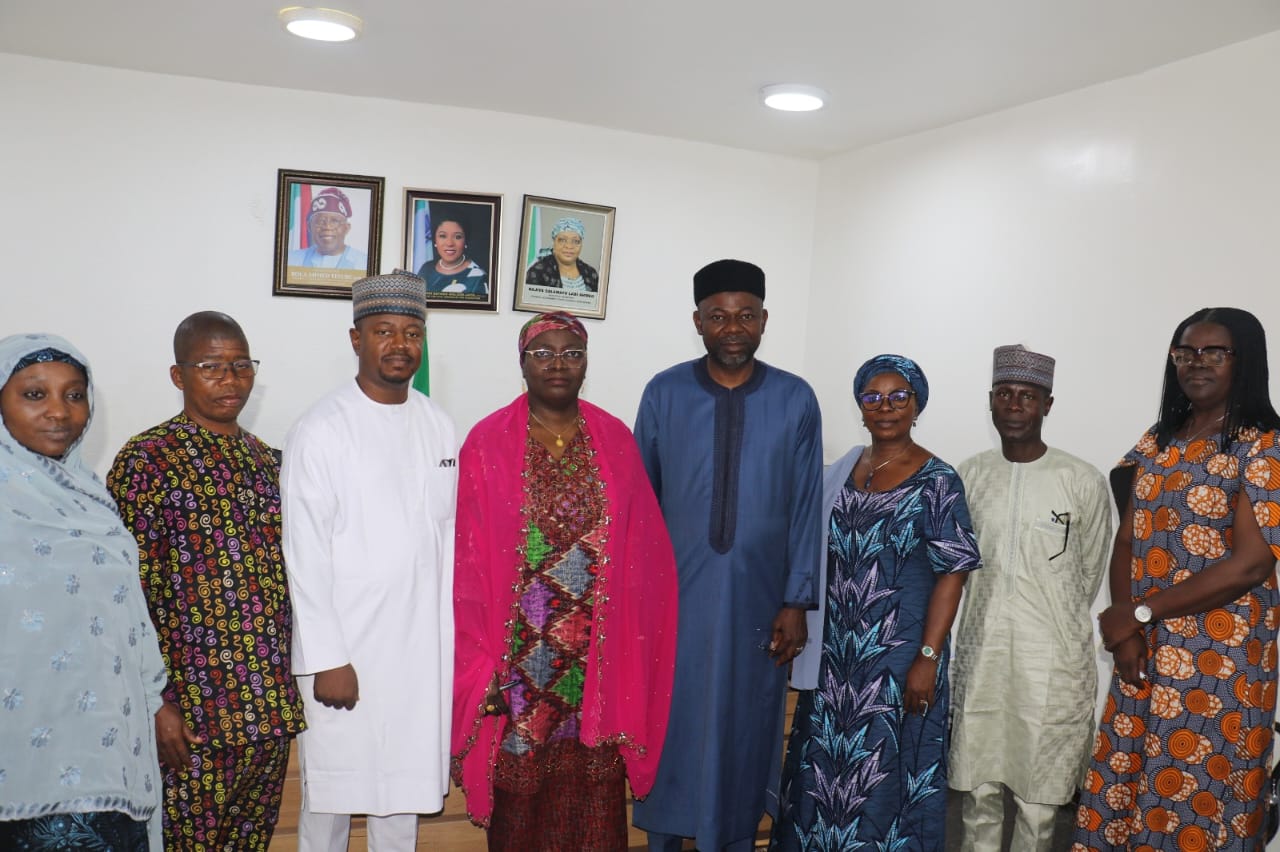
The President of the Christian Association of Nigeria (CAN), His Eminence Archbishop Daniel Chukwudumebi Okoh, alongside his wife, Lady Ngozi Okoh, who also serves as the Director of the Women’s Choir, has paid a courtesy visit to the Honourable Minister of Women Affairs, Dr. Imaan Sulaiman-Ibrahim, at her office in Abuja.
During the visit, Archbishop Okoh praised the Minister for her exceptional leadership, noting that her passion for women’s advancement and social development is evident in the remarkable progress being recorded by the Ministry.
He said Dr. Sulaiman-Ibrahim carries out her duties with grace and ease because she is deeply passionate about her work and genuinely committed to improving the lives of women and children across the country.
The CAN President highlighted the Minister’s initiatives on gender inclusion, family welfare, and empowerment as shining examples of purposeful public service that align with the moral and social values upheld by the Christian community.pl
L-R: CAN Team and Staff of the Ministry of Women Affairs
Lady Ngozi Okoh, in her remarks, commended the Minister’s consistent advocacy for women’s voices in leadership and nation-building.
She also extended an official invitation as Special Guest of Honour to Dr. Sulaiman-Ibrahim to attend the forthcoming National All Women Choir Conference scheduled to take place in Abuja on Saturday 11th of October, 2025 at NAF Conference Center a gathering designed to celebrate women’s unity, spirituality, and contribution to national harmony through music and service.
In response, the Honourable Minister expressed deep appreciation for the visit and kind words of encouragement from the CAN leadership.
She reaffirmed her ministry’s commitment to building partnerships that promote the empowerment, dignity, and progress of Nigerian women.
Group photograph
L-R His Eminence Archbishop Daniel Chukwudumebi Oko and Dr. Imaan Sulaiman-Ibrahim
The Revenue Mobilization Allocation and Fiscal Commission (RMAFC) has unveiled a new solid minerals data rendition template to strengthen monitoring, enhance transparency, and improve revenue generation from Nigeria’s mining sector.
The initiative, developed in collaboration with the Federal Ministry of Solid Minerals Development, was officially introduced during a one-day sensitization workshop held in Abuja.
Speaking at the event, the Chairman of RMAFC, Dr. Muhammed Bello Shehu, OFR, represented by the Chairman of the Solid Minerals Monitoring Committee, reaffirmed the Commission’s commitment to diversifying Nigeria’s revenue sources in line with President Bola Ahmed Tinubu’s Renewed Hope Agenda.
“The new data rendition template could not have come at a better time. Nigeria must urgently diversify its revenue base beyond oil, given the volatility of the global oil market and challenges such as crude theft and pipeline vandalism,” Dr. Shehu stated.
He explained that the Commission, in line with its constitutional mandate, had previously conducted nationwide solid mineral revenue monitoring exercises in 2016 and 2022, which significantly boosted revenue from the sector. However, he expressed concern that despite increased mining activities, only a small fraction of expected earnings reaches the Federation Account due to weak oversight mechanisms.
L-R: Hon. Rakiya Ayuba Tanko-Haruna (FC Kebbi State); Hon. Aruviere Egharhevwa (FC Delta State and Vice Chairman of the Committee); Hon. B B Shettima (FC Niger State and Chairman, Solid Minerals Committee); Prof. Ibrahim Garba and Hon. Prof. Steve Davies Ugbah (FC Benue State) at the Sensitization Exercise on the Implementation of a New Solid Mineral Data Rendition Template for Effective Revenue Monitoring by RMAFC.
“The Commission under my leadership will ensure that all revenues due from the mining sector are fully and promptly remitted,” he assured.
Dr. Shehu noted that the new template was designed to collect critical data such as production volumes, company details, license fees, permits, and royalties, enabling more accurate tracking of mining operations and revenues. He emphasized that its adoption would promote transparency, accountability, and fiscal discipline in the sector.
Also speaking, Hon. Ibrahim Shettima, Chairman of the Solid Minerals Monitoring Committee and Federal Commissioner representing Niger State, said the sensitization exercise was aimed at bridging data gaps and ensuring timely and accurate revenue reporting across all states.
“This platform will serve as a reliable, independent source of data for the Commission and a tool for informed policy decisions,” Shettima said.
Stakeholders at the event including Engr. Imam Ganiu, Director of Mining Inspectorate at the Ministry of Solid Minerals; Engr. Obadiah Nkom, Director-General of the Mining Cadastre Office; and Mr. Segun Ayanleke, President of the Miners Association of Nigeria commended RMAFC’s initiative. They emphasized that Nigeria could become a major player in the global mining industry if the sector is effectively regulated and supported by sound policies and stronger government-private sector collaboration.
The workshop also featured expert presentations on global and national mining trends, revenue assessment through data rendition, and the functions of key government institutions driving the sector, including the Federal Ministry of Solid Minerals Development and the Mining Cadastre Office.
The event concluded with a demonstration of the new data rendition template, highlighting its role in achieving accurate, timely, and transparent reporting of solid mineral revenues nationwide.
The World Health Organization (WHO) has called on African governments to intensify efforts to expand access to quality and affordable eye care services, as the world commemorates World Sight Day 2025 today.
The WHO Regional Director for Africa, Dr. Mohamed Yakub Janabi, made the call in a message marking the annual observance, which highlights the importance of healthy vision and the urgent need to prevent avoidable blindness across the continent.
Dr. Janabi said that while the African Region has made commendable progress in reducing blindness caused by vitamin A deficiency, onchocerciasis, and trachoma, new challenges such as aging populations, poor diets, sedentary lifestyles, and the rise of noncommunicable diseases have led to an increase in preventable vision problems like refractive errors and cataracts.
“Good eyesight is not just about seeing clearly; it impacts learning, employment, and overall quality of life. Millions still live with preventable vision impairment, and the numbers will rise unless we act decisively,” Dr. Janabi stated.
According to WHO, effective coverage for cataract surgery in Africa currently stands at just 26%, while coverage for refractive error correction such as eyeglasses is only 30%. Furthermore, only one in three countries in the Region has developed a national policy on eye health a situation that underscores the need for greater political will and investment.
To tackle these gaps, WHO highlighted several global and regional frameworks already guiding eye health efforts. Among them are Vision 2020: The Right to Sight, the World Health Assembly Resolution WHA74(12) adopted in 2021, and the SPECS 2030 initiative launched in 2024.
The SPECS 2030 initiative seeks to ensure that by the year 2030, everyone who needs vision correction can access quality, affordable, and people-centred eye care. Eight African countries have already begun implementing the plan, engaging stakeholders and developing national workplans.
Dr. Janabi urged Member States to align with WHO guidance by developing and funding national eye health strategies, integrating assistive technologies into health benefit packages, and expanding the eye health workforce.
He also emphasized the importance of including eye and sensory health indicators in national data systems to improve evidence-based policymaking.
The WHO Regional Director encouraged governments to leverage World Sight Day and other global platforms to raise public awareness, promote early detection, and combat stigma associated with vision impairment. He further called on citizens to adopt preventive habits such as regular eye examinations and timely medical care.
“Healthy vision means a better future for every person, every community, and every nation,” he said.
World Sight Day is observed annually on the second Thursday of October to draw attention to blindness and visual impairment. This year’s observance underscores the collective responsibility of individuals, policymakers, and health institutions to protect and promote eye health across Africa.
Politics, they say, is local. But for too long in Langtang North and South Federal Constituency, our politics has been stuck in the same old routines, the same familiar faces, the same recycled promises, and the same outcomes that leave the people behind.
Each election season brings renewed hope, yet after the ballots are counted, that hope often fades into frustration. Our young people still wander the streets without jobs, our health system remains in comatous, and our infrastructures continue to tell the story of neglect. The truth is simple: we need a new direction. We need a breath of fresh air. With Dr. Jemchang Yildam Fabong, a name that has become synonymous with leadership, competence, and compassion.
Dr. Fabong is not your typical politician. He’s a medical doctor, a policy expert, and a visionary administrator who has shown that governance can truly work when driven by purpose and sincerity.
As the then Director-General of the Plateau State Contributory Healthcare Management Agency (PLASCHEMA), he turned a new agency into one of Plateau State’s most efficient public institutions. In just under three years, over 87,000 residents, including civil servants, market women, artisans, and students were enrolled in health insurance programs.
Through the Equity Health Plan, he ensured that even the most vulnerable citizens, those who could barely afford a hospital visit, had access to medical care without paying from their pockets. He didn’t stop there. Recognizing the struggles of young people in higher institutions, Dr. Fabong pioneered the Student Health Insurance Programme, helping students access affordable healthcare coverage across Plateau State.
In a system where many leaders only talk, he delivered measurable results. That’s not politics, that’s leadership.
Before his public service career, Dr. Fabong was already a household name among young people in Plateau State. As the Chairman of the Plateau Youth Council, he led from the front, advocating for peace, unity, and inclusion. At a time when youth engagement in governance was fading, he revived the spirit of participation and mentorship.
He didn’t rise through godfatherism or patronage. He rose through service, ideas, and community credibility. Today, when people speak of leaders who listen who truly understand the struggles of their people his name consistently comes up.
Dr. Fabong’s story is one of grit, grace, and grounded leadership as with ordinary people who simply want someone who cares.
Let’s be honest: representation in our constituency has fallen short of expectations. We deserve leaders who don’t vanish after elections, leaders who can translate influence into impact. For years, Langtang North and South has produced strong voices in national politics, but the question remains: how much of that influence has truly improved the lives of our people? And that is why it is time to rethink what leadership means. It should no longer be about who has been there the longest, but who can deliver the most. It should no longer be about connections in Abuja, but about impact in Kwampe, Bapkwai, Sabongida, and Gani.
In all sincerity, Dr. Jemchang Fabong represents a paradigm shift, from politics of entitlement to politics of performance.
As the race for who will represent Langtang North and South at the National Assembly will soon begin, Dr. Fabong is bringing a refreshing tone. His movement isn’t about trading insults or spreading division. It’s about ideas, integrity, and inclusion.
He envisions a constituency where federal representation translates to real development, where our infrastructures are fixed, our schools funded, and our youths empowered. It is in my hopes that his legislative agenda will focus on healthcare reforms, education access, youth development, and economic inclusion, the very areas he has already impacted as a public servant.
And as a data-driven leader, for me he understands that accountability begins with transparency. It’s no wonder that even outside government, he has championed evidence-based leadership and open governance.
Of course, unseating an incumbent in Nigerian politics is no small task. The sitting member has held the position and will undoubtedly leverage his influence. But politics is not just about incumbency; it’s about performance and trust.
Across Langtang North and South, the conversation is changing. From Mabudi to Jos Road, from Kuffen to Gani, people are beginning to say: we want something new in itarok. There’s a quiet but powerful movement, a desire for representation that is both youthful and competent.
Fellow constituents of Langtang North and South, We can either continue with business as usual or choose a new path of innovation and service. The 2027 elections will test whether we, as a people, are ready to move from politics of promises to politics of progress and real legislative agenda, anchored on capacity, character, and competence.
Dr. Jemchang Yildam Fabong has served Plateau State with excellence. He has led young people with courage. And now, without an iota of doubt he is ready to serve Langtang North and South with integrity.
Our constituency doesn’t just need a politician, it needs a patriot, a breath of fresh air. Nga pyal na byet.
Nankpak Cirfat is a communications and governance professional, advocate for youth participation, social accountability, and good governance. He writes from Abuja, Nigeria.
In a move aimed at strengthening advocacy for the welfare of older persons in Nigeria, the National Senior Citizens Centre (NSCC) has appointed the Honourable Minister of Humanitarian Affairs and Poverty Reduction, Professor Natawe Goshwe Yilwatda, as its official Ambassador.
The appointment, which took place on October 6, 2025, in Jos, Plateau State, coincided with the commemoration of the National Day of Older Persons.
According to the NSCC, the recognition reflects Professor Yilwatda’s consistent dedication to humanitarian service, poverty reduction, and the protection of vulnerable populations, especially senior citizens.
As the newly appointed NSCC Ambassador, Professor Yilwatda is expected to champion the rights, dignity, and well-being of older persons nationwide. His leadership, the Centre noted, would help drive initiatives that promote healthy, active, and inclusive aging in line with NSCC’s national mandate.
The Centre expressed optimism that the partnership with Professor Yilwatda would further advance policies and programmes aimed at uplifting and empowering the elderly across communities in Nigeria.
The Federal Government has announced plans to collaborate with Innoson Vehicle Manufacturing (IVM) to strengthen youth industrial training, apprenticeship, and enterprise development across Nigeria, with a focus on the automotive and allied sectors.
This was revealed during a working visit by the Honourable Minister of Youth Development, Comrade Ayodele Olawande, to the Innoson Vehicle Manufacturing factory in Nnewi, Anambra State, on Monday, October 7, 2025. The Minister was accompanied by the Permanent Secretary of the Ministry, Mr. Olubunmi Olusanya, and other senior officials.
The delegation was received by Chief Innocent Chukwuma (OFR), Chairman and CEO of the Innoson Group, whom the Minister described as a symbol of innovation, resilience, and patriotism.
He praised Innoson’s contributions to Nigeria’s industrial growth, highlighting its pioneering efforts in Compressed Natural Gas (CNG) vehicle production, tractor assembly, and local manufacturing initiatives that continue to create sustainable employment for young Nigerians.
During the factory tour, Comrade Olawande interacted with several young Nigerians undergoing technical training and apprenticeship under the Innoson Skills Programme.
He particularly commended two young women who have excelled as auto-technicians, describing their success stories as “proof that youth empowerment through skills acquisition is a powerful tool for national transformation.”
Following the visit, the Ministry and Innoson agreed to deepen collaboration to scale up industrial skills programmes, promote enterprise development, and expand access to practical training opportunities for young people nationwide.
In Anambra, the Minister also held discussions with the State Commissioner for Youth Development, Hon. Patrick Agha Mba, on strengthening cooperation between federal and state governments under the “1 Youth, 2 Skills” initiative. Both leaders reaffirmed their shared commitment to equipping young Nigerians with the technical and entrepreneurial capacities needed to drive innovation, productivity, and self-reliance.