Women Affairs Minister Marks 100 Days in Office, Outlines Bold Reforms for Women and Children

By Adejoh Bilkisu

The Honourable Minister of Women Affairs, Hon. Imaan Sulaiman-Ibrahim, has marked her first 100 days in office with the unveiling of a series of transformative initiatives aimed at empowering women, strengthening child protection laws, and ensuring the inclusion of vulnerable groups in Nigeria’s development agenda.

Speaking at a press briefing in Abuja, the Minister stressed the need for a results-driven approach to addressing gender inequality, economic exclusion, and child welfare concerns.

She emphasized that the Ministry was committed to shifting from policy development to measurable impact, ensuring that Nigerian women and children were not left behind.

The Minister disclosed that the Ministry had set a target to economically empower 10 million women by 2027 in alignment with President Bola Ahmed Tinubu’s vision of a $1 trillion economy. She explained that to achieve this, several initiatives had been launched, including the Nigeria for Women Scale-Up Project, a World Bank-supported program aimed at equipping 4.5 million women across all 36 states and the FCT with financial literacy and business development skills.

She further revealed that the MOWA-SARA Accelerated Skills Acquisition Programme, in partnership with WEMA Bank, had been introduced to train 500,000 women in vocational skills, entrepreneurship, and financial inclusion. She noted that the first phase of the program was already underway in Kano State, where 2,500 women were currently receiving training.

The Minister also stated that plans were in place to establish a National Microfinance Framework for Women Entrepreneurs, which would provide affordable credit and investment opportunities for women-led businesses.
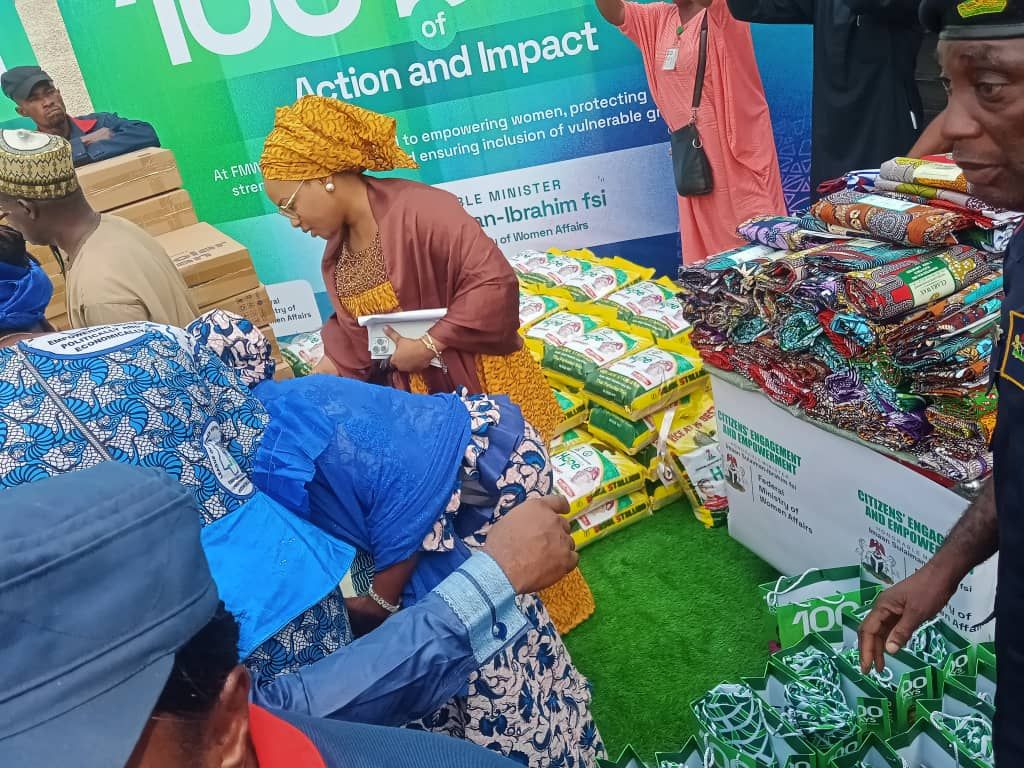
Cross session of the distribution

Acknowledging the economic hardship faced by many families, she announced that the Ministry had launched a Food Intervention Program to support women and vulnerable groups, ensuring that no woman or child was left behind.

Addressing child welfare concerns, the Minister revealed that efforts were being made to strengthen Nigeria’s child protection framework.

She announced that a Child Rights Act Review Committee had been set up to harmonize and modernize child protection laws, with a focus on implementing stricter penalties for child abuse, trafficking, and early marriage.

She added that nationwide consultations were being conducted to develop a National Child Protection Framework, which would provide a coordinated approach to safeguarding children.

She also disclosed that plans were underway for the establishment of a dedicated institution for Child Protection and Development, which would focus on implementing child welfare policies, strengthening protection services, and providing holistic support for vulnerable children.

As part of efforts to promote menstrual hygiene among young girls, the Minister revealed that the Ministry had launched a nationwide campaign targeting 10,000 girls with free hygiene kits to help them stay in school and maintain their dignity.

Speaking on Nigeria’s commitment to ending gender-based violence, she highlighted the country’s pledge at the Global Ministerial Conference on Ending Violence Against Children in Bogotá, Colombia, where it committed to providing comprehensive support services to two million children at risk of violence, abuse, and exploitation by 2030.

She added that Nigeria also aimed to deliver evidence-based parenting programs to 10 million families within the same period.

Sulaiman-Ibrahim further disclosed that Nigeria would take a leading role at the Commission on the Status of Women (CSW69) in New York, where the country would host six high-impact sessions on women’s leadership and empowerment, financial inclusion for women, and child protection rights.

She noted that this marked a shift from passive participation to active leadership in global gender advocacy.

Additionally, the Minister revealed that Nigeria was set to participate in COP29 in Azerbaijan, where it would advocate for gender-responsive climate action and work towards transitioning one million households to clean energy solutions.

The Minister underscored the importance of collaboration in achieving gender and social development goals, stating that the Ministry had strengthened engagement with state governments, particularly the Women Affairs Commissioners across the 36 states, to ensure better synergy and policy alignment. She also mentioned the formation of the High-Level Presidential Advisory Council on Women and Girls (HLAC), which would drive and coordinate gender-focused programs at the national level.

She highlighted that in the past 100 days, the Ministry had deepened partnerships with development organizations, civil society, and the private sector, fostering a multi-stakeholder approach to advancing gender equality, child protection, and social inclusion.

Hon. Sulaiman-Ibrahim called for stronger partnerships, faster implementation, and a unified approach to addressing gender and social development challenges.

She emphasized that the time for incremental progress was over and that bold action was required.

To commemorate the 100-day milestone, the Ministry distributed essential items, including wrappers, bags of rice, solar-powered devices, and other relief materials, to women and vulnerable groups.

The Minister noted that these donations were aimed at alleviating the economic burdens faced by many families and reinforcing the government’s commitment to improving the welfare of Nigerian women and children.

Reaffirming the administration’s commitment to gender equality, women’s empowerment, and child protection, the Minister described these initiatives as fundamental pillars of Nigeria’s economic and social development.

She called on government agencies, private sector partners, civil society organizations, and the international community to support efforts in accelerating gender-responsive policies, strengthening child protection mechanisms, and ensuring that no Nigerian woman or child was left behind.

With these reforms, she asserted that Nigeria was set to take a leadership role in global gender advocacy, ensuring that women and children remained at the center of national development efforts.

As the Ministry embarked on the next phase of its agenda, the Minister assured Nigerians that the government remained fully committed to delivering tangible results that would improve the lives of women, children, and vulnerable groups across the country.
Women Affairs Minister Marks 100 Days in Office, Outlines Bold Reforms for Women and Children

By Adejoh Bilkisu

The Honourable Minister of Women Affairs, Hon. Imaan Sulaiman-Ibrahim, has marked her first 100 days in office with the unveiling of a series of transformative initiatives aimed at empowering women, strengthening child protection laws, and ensuring the inclusion of vulnerable groups in Nigeria’s development agenda.

Speaking at a press briefing in Abuja, the Minister stressed the need for a results-driven approach to addressing gender inequality, economic exclusion, and child welfare concerns.

She emphasized that the Ministry was committed to shifting from policy development to measurable impact, ensuring that Nigerian women and children were not left behind.

The Minister disclosed that the Ministry had set a target to economically empower 10 million women by 2027 in alignment with President Bola Ahmed Tinubu’s vision of a $1 trillion economy. She explained that to achieve this, several initiatives had been launched, including the Nigeria for Women Scale-Up Project, a World Bank-supported program aimed at equipping 4.5 million women across all 36 states and the FCT with financial literacy and business development skills.

She further revealed that the MOWA-SARA Accelerated Skills Acquisition Programme, in partnership with WEMA Bank, had been introduced to train 500,000 women in vocational skills, entrepreneurship, and financial inclusion. She noted that the first phase of the program was already underway in Kano State, where 2,500 women were currently receiving training.

The Minister also stated that plans were in place to establish a National Microfinance Framework for Women Entrepreneurs, which would provide affordable credit and investment opportunities for women-led businesses.

Cross session of the distribution

Acknowledging the economic hardship faced by many families, she announced that the Ministry had launched a Food Intervention Program to support women and vulnerable groups, ensuring that no woman or child was left behind.

Addressing child welfare concerns, the Minister revealed that efforts were being made to strengthen Nigeria’s child protection framework.

She announced that a Child Rights Act Review Committee had been set up to harmonize and modernize child protection laws, with a focus on implementing stricter penalties for child abuse, trafficking, and early marriage.

She added that nationwide consultations were being conducted to develop a National Child Protection Framework, which would provide a coordinated approach to safeguarding children.

She also disclosed that plans were underway for the establishment of a dedicated institution for Child Protection and Development, which would focus on implementing child welfare policies, strengthening protection services, and providing holistic support for vulnerable children.

As part of efforts to promote menstrual hygiene among young girls, the Minister revealed that the Ministry had launched a nationwide campaign targeting 10,000 girls with free hygiene kits to help them stay in school and maintain their dignity.

Speaking on Nigeria’s commitment to ending gender-based violence, she highlighted the country’s pledge at the Global Ministerial Conference on Ending Violence Against Children in Bogotá, Colombia, where it committed to providing comprehensive support services to two million children at risk of violence, abuse, and exploitation by 2030.

She added that Nigeria also aimed to deliver evidence-based parenting programs to 10 million families within the same period.

Sulaiman-Ibrahim further disclosed that Nigeria would take a leading role at the Commission on the Status of Women (CSW69) in New York, where the country would host six high-impact sessions on women’s leadership and empowerment, financial inclusion for women, and child protection rights.

She noted that this marked a shift from passive participation to active leadership in global gender advocacy.

Additionally, the Minister revealed that Nigeria was set to participate in COP29 in Azerbaijan, where it would advocate for gender-responsive climate action and work towards transitioning one million households to clean energy solutions.

The Minister underscored the importance of collaboration in achieving gender and social development goals, stating that the Ministry had strengthened engagement with state governments, particularly the Women Affairs Commissioners across the 36 states, to ensure better synergy and policy alignment. She also mentioned the formation of the High-Level Presidential Advisory Council on Women and Girls (HLAC), which would drive and coordinate gender-focused programs at the national level.

She highlighted that in the past 100 days, the Ministry had deepened partnerships with development organizations, civil society, and the private sector, fostering a multi-stakeholder approach to advancing gender equality, child protection, and social inclusion.

Hon. Sulaiman-Ibrahim called for stronger partnerships, faster implementation, and a unified approach to addressing gender and social development challenges.

She emphasized that the time for incremental progress was over and that bold action was required.

To commemorate the 100-day milestone, the Ministry distributed essential items, including wrappers, bags of rice, solar-powered devices, and other relief materials, to women and vulnerable groups.

The Minister noted that these donations were aimed at alleviating the economic burdens faced by many families and reinforcing the government’s commitment to improving the welfare of Nigerian women and children.

Reaffirming the administration’s commitment to gender equality, women’s empowerment, and child protection, the Minister described these initiatives as fundamental pillars of Nigeria’s economic and social development.

She called on government agencies, private sector partners, civil society organizations, and the international community to support efforts in accelerating gender-responsive policies, strengthening child protection mechanisms, and ensuring that no Nigerian woman or child was left behind.

With these reforms, she asserted that Nigeria was set to take a leadership role in global gender advocacy, ensuring that women and children remained at the center of national development efforts.

As the Ministry embarked on the next phase of its agenda, the Minister assured Nigerians that the government remained fully committed to delivering tangible results that would improve the lives of women, children, and vulnerable groups across the country.

ECOWAS Deepens Human Development Drive in 2024 Through Health, Education, Gender Equality

By Emmanuel Huleji Daudu

The Economic Community of West African States (ECOWAS) intensified efforts to improve human development across the subregion in 2024, with initiatives targeting healthcare, education, youth empowerment, gender equality, digital inclusion and community resilience.

The initiatives formed part of the regional body’s broader strategy to strengthen human capital and promote inclusive development, amid persistent challenges of poverty, unemployment, insecurity and unequal access to essential social services across West Africa.

Beyond its traditional focus on economic integration, trade liberalisation and regional security, ECOWAS continued to emphasise the importance of investing in people as a foundation for sustainable economic growth and social stability.

A major component of this approach was the Regional Integrated Human Capital Development Strategy 2020–2030, which provides a framework for member states to improve healthcare and nutrition, strengthen education and skills development, increase labour-force participation and expand opportunities in entrepreneurship, financial inclusion and the digital economy.

In June 2024, the ECOWAS Human Capital Development Secretariat conducted consultation visits to Côte d’Ivoire, Senegal, Liberia, Benin and The Gambia to assess national implementation of human capital development strategies.

The consultations also examined findings from the 2024 ECOWAS Human Capital Development Index exercise and encouraged countries to establish dedicated delivery units to improve coordination and translate policy commitments into measurable results.

The initiative underscored the organisation’s determination to make human development a central consideration in national planning, while encouraging member states to strengthen accountability for social and economic outcomes.

Healthcare remained another important area of ECOWAS’s human development interventions in 2024, particularly in improving access to essential services for women, girls and other vulnerable groups.

Through the West African Health Organization (WAHO), an ECOWAS specialised institution, the regional body continued to promote cooperation in public health, maternal healthcare, nutrition and access to medical services.

A notable intervention was the launch of a project by WAHO and the Cape Verdean Association for the Protection of the Family, VERDEFAM, on September 20, 2024, to improve healthcare for young people, particularly girls, in Cabo Verde.

The project covered Praia, Santa Catarina and Tarrafal on Santiago Island, with activities designed to improve access to sexual and reproductive health services, including family planning, pregnancy testing, prevention and treatment of sexually transmitted infections, and specialised gynaecological and obstetric consultations.

ECOWAS also supported efforts to address obstetric fistula, a serious childbirth-related condition that can cause long-term physical and social difficulties for affected women.

In 2024, the organisation provided funding support to eight member states for programmes involving surgical treatment, public awareness, rehabilitation of referral centres and the social reintegration of survivors.

The interventions highlighted the connection between healthcare, human dignity and economic development, particularly in communities where inadequate medical facilities and limited access to specialised services remain significant challenges.

ECOWAS also sustained efforts to promote gender equality and expand opportunities for women and girls, recognising that unequal access to education, healthcare, employment and productive resources continues to affect inclusive development across the region.

Through gender-focused programmes and institutional initiatives, the organisation sought to strengthen policy development and improve the availability of information for addressing gender disparities.

Its support for obstetric fistula programmes also demonstrated the importance of combining medical treatment with social reintegration to help affected women regain their confidence and participate in community life.

The regional body’s approach reflects a wider development principle that empowering women contributes to household welfare, stronger livelihoods and improved economic participation.

However, significant challenges remain, including unequal access to finance, limited economic opportunities and the underrepresentation of women in some decision-making structures.

With young people constituting a substantial proportion of West Africa’s population, ECOWAS continued to promote education, skills acquisition and youth participation as essential components of its human development agenda.

The organisation’s regional strategy prioritises education and skills development, alongside increased labour participation, entrepreneurship and access to opportunities in emerging economic sectors.

One notable activity was a training programme for women leaders from ECOWAS member states on education for a culture of peace, held at the Commission’s headquarters in Abuja from June 27 to 29, 2024.

The programme strengthened participants’ capacity to promote peace, citizenship, gender awareness and community development.

Although the training focused on women leaders, it also reflected the broader importance of community-based education and peaceful participation in addressing the social conditions that affect young people and vulnerable populations.

Nevertheless, unemployment, inadequate vocational training and the mismatch between educational qualifications and labour-market requirements continued to present challenges.

Subsequent reporting on the ECOWAS Human Capital Development Index identified weaknesses in education, skills development and labour participation, reinforcing calls for stronger investment in schools, vocational institutions and employment-oriented training.

In another significant development, ECOWAS ministers adopted the Regional Resilience Strategy for West Africa 2024–2050 at a high-level meeting in Abidjan, Côte d’Ivoire, on November 28 and 29, 2024, with support from the United Nations Development Programme.

The strategy established a long-term framework for addressing regional vulnerabilities and strengthening communities’ ability to withstand economic, environmental and security-related shocks.

Its priorities included sustainable livelihoods, social protection, gender sensitivity, social inclusion, climate change adaptation, disaster risk reduction, good governance, peace and security, and macroeconomic resilience.

The strategy recognised that poverty, conflict, displacement, food insecurity and climate-related emergencies are interconnected challenges that require coordinated responses.

For example, communities affected by conflict may experience simultaneous disruptions to healthcare, education, employment and food supplies, making recovery more difficult without sustained institutional support.

By promoting regional coordination, ECOWAS and its partners sought to strengthen the capacity of governments and communities to anticipate crises, manage risks and recover from disruptions.

However, the effectiveness of the strategy will depend on adequate financing, implementation by member states and the establishment of mechanisms for measuring progress.

ECOWAS also continued to promote entrepreneurship, financial inclusion and digital development as important drivers of human development.

The organisation’s human capital strategy recognises that access to digital technology and financial services can expand economic opportunities for young people, women and small-business owners.

Digital connectivity can help entrepreneurs reach wider markets, improve access to business information and facilitate financial transactions, while also supporting access to educational resources and employment opportunities.

The ECOWAS Human Capital Development Report, published in 2025, subsequently reported an overall improvement of 12 per cent in the regional Human Capital Development Index compared with the 2022 report. Its entrepreneurship, financial inclusion and digital economy component recorded a reported 50 per cent improvement.

The figures require qualification because the underlying indicators drew on data collected between 2020 and 2022. They therefore reflect broader progress under the regional strategy rather than achievements attributable exclusively to 2024.

Nevertheless, the findings highlighted the growing importance of digital infrastructure and financial inclusion in expanding opportunities across the region.

ECOWAS faces the continuing challenge of ensuring that these benefits reach rural communities and underserved populations, rather than remaining concentrated in major urban centres.

Despite the initiatives, ECOWAS’s human development agenda continued to face significant challenges in 2024.

Unequal access to quality healthcare and education, youth unemployment, gender disparities, poverty, food insecurity and insecurity remained major obstacles to improving living standards across the subregion.

The organisation’s experience also demonstrated that adopting regional strategies does not automatically produce improvements in people’s lives. Effective implementation requires adequate funding, national ownership, reliable data and accountability.

Regional cooperation remains particularly important because many of West Africa’s development challenges transcend national borders and require collective responses.

ECOWAS’s work in human capital development, healthcare, gender equality, peace education and community resilience also supports the broader objectives of the United Nations Sustainable Development Goals, including those relating to poverty reduction, health, education, gender equality, decent work and reduced inequalities.

ECOWAS’s human development initiatives in 2024 demonstrated the regional organisation’s continuing effort to place people at the centre of regional integration.

Through its human capital development framework, healthcare programmes, gender-focused interventions, peace education activities and long-term resilience strategy, the organisation sought to strengthen the foundations for a healthier, more inclusive and productive West Africa.

However, the ultimate measure of these efforts will be their impact on ordinary citizens, particularly those facing poverty, unemployment, inadequate healthcare and limited educational opportunities.

For ECOWAS, the task ahead is to ensure that regional commitments translate into functional healthcare facilities, better educational outcomes, employable skills, stronger livelihoods and greater protection for vulnerable populations.

As West Africa pursues deeper integration, the region’s long-term prosperity will depend not only on the strength of its institutions and economies, but also on its ability to improve the quality of life of its people.

CISLAC Raises Alarm Over ₦54.2 Trillion Budget Adjustment, Cites Constitutional Violations

Adejoh Bilkisu

The Civil Society Legislative Advocacy Centre (CISLAC) has strongly criticized President Bola Tinubu’s proposal to adjust the 2025 national budget from ₦49.7 trillion to ₦54.2 trillion, citing constitutional and legislative breaches.

In a statement signed by CISLAC’s Executive Director, Auwal Ibrahim Musa (Rafsanjani), the organization expressed concern that the proposed adjustment bypasses constitutional requirements. Citing Section 81(4) of the 1999 Constitution, CISLAC noted that any additional expenditure must be presented to the National Assembly as a supplementary estimate. Instead, the executive reportedly informed lawmakers through a letter, a move the organization deems procedurally flawed and unconstitutional.

CISLAC argues that the budget increase, though attributed to additional revenues from government agencies, should have been properly introduced through a supplementary appropriation bill. The organization warns that sidestepping due process undermines the sanctity of the budgetary system and could set a dangerous precedent for fiscal governance.

The cited additional revenues were not sudden; failing to account for them in the initial budget highlights poor fiscal foresight,” the statement read.

Furthermore, CISLAC criticized the lack of prior consultation with National Assembly leadership, asserting that the executive’s unilateral approach erodes the principle of checks and balances and sidelines the legislature’s constitutional role in fiscal oversight.

Highlighting Nigeria’s mounting debt crisis, CISLAC pointed out that the 2025 budget allocates ₦16.32 trillion for debt servicing, a sharp rise from ₦712 billion in 2014. The organization warned that despite accumulating debt, several government projects—such as the Kaduna-Abuja Highway—remain incomplete or abandoned.

To address fiscal concerns, CISLAC recommended prioritizing internally generated revenue (IGR) over loans, advocating for smaller, realistic projects that deliver tangible benefits to citizens rather than ballooning Nigeria’s debt burden.

Concerns Over Wasteful Allocations

CISLAC also raised red flags over budgetary allocations to non-existent or defunct agencies, warning that such practices waste public funds and compromise the integrity of the budget process. The organization called for rigorous scrutiny of all budgetary provisions to ensure they align with national priorities.

“The National Assembly holds a constitutional mandate to oversee and approve federal expenditures. Lawmakers must rigorously exercise their authority in this matter,” CISLAC urged.

While expressing support for national development and economic growth initiatives, CISLAC emphasized that all fiscal decisions must adhere to constitutional legality, transparency, and responsible governance.

Given the unprecedented nature of running two concurrent budgets, CISLAC strongly advised the executive to reconsider its approach and strictly adhere to constitutional provisions. It also called on lawmakers to assert their oversight role and ensure transparency, accountability, and democratic governance in budgetary adjustments.

CISLAC reaffirmed its commitment to advocating for a transparent, accountable, and participatory governance framework in Nigeria.

NASENI Boss Honored as Young Global Leader

Maryam Aminu

The National Agency for Science and Engineering Infrastructure (NASENI) has celebrated its Executive Vice Chairman/Chief Executive Officer, Khalil Suleiman Halilu, for receiving the Young Global Leader Award from ThisDay Newspaper.

The recognition was part of the media house’s 30th-anniversary celebrations held on January 27, 2025, in Lagos.

The award acknowledges Halilu’s transformative leadership and visionary contributions to Nigeria’s technology and manufacturing sectors, as well as his commitment to sustainable development through innovation.

Since assuming leadership at NASENI, Halilu has spearheaded groundbreaking initiatives, leading to the development of 35 market-ready products and securing 44 key projects with the agency’s partners, many of which are set for launch or commissioning.

Expressing his gratitude, Halilu dedicated the award to the entire NASENI team, emphasizing their collective efforts in driving innovation.

“This award is a testament to the dedication of the NASENI family in advancing technology and engineering infrastructure in Nigeria. It inspires us to work even harder toward creating solutions that empower industries and communities,” he said.

Under his leadership, NASENI has implemented landmark projects, including the development of sustainable green technologies, the establishment of world-class manufacturing facilities, and strategic partnerships with local and international organizations to accelerate Nigeria’s industrial growth.

As ThisDay marked three decades of excellence in journalism, Halilu was honored alongside other distinguished leaders recognized for their impact on societal development and innovation. The award ceremony, held at Eko Hotel and Suites, Lagos, brought together notable figures from Nigeria’s public and private sectors to celebrate excellence in leadership.

NASENI, under Halilu’s guidance, reaffirmed its commitment to driving industrialization, fostering innovation, and advancing sustainable growth in Nigeria. The recognition serves as further motivation for the agency to continue breaking new ground in science, engineering, and technology for national development.

FG, Germany Partner on Innovative Dual Vocational Training for Nigerian Youth

Maryam Aminu

The Federal Government is set to collaborate with Germany on an innovative dual vocational training program aimed at equipping Nigerian youth with critical skills, enhancing their employability, and driving economic growth.

The Honourable Minister of Youth Development, Comrade Ayodele Olawande, disclosed this during a meeting with a delegation from the IHK Giessen-Friedberg Chambers of Commerce and Industry of Germany, led by its President, Dr. Matthias Leder, in Abuja.

Highlighting the Ministry’s vision, Comrade Olawande reiterated the government’s commitment to creating an enabling environment for young people to thrive.

He unveiled an ambitious plan to equip seven million Nigerian youth with essential vocational skills over the next two years.

“Many young people prioritize obtaining certificates, yet without practical experience, success in the job market remains uncertain. To bridge this gap, the Ministry is organizing an intensive three-day skills training program across 50 revitalized Youth Centres, culminating in a central event. This initiative will significantly boost employability and prepare youth for a competitive global workforce,” Olawande stated.

Dr. Matthias Leder described Germany’s Dual Vocational Training system as a potential game-changer for Nigeria, emphasizing that structured on-the-job training has proven successful in meeting public and private sector needs in Germany.

He suggested that granting Nigerian chambers of commerce greater authority by making company membership mandatory would significantly enhance their ability to support economic development.

“Dual Vocational Training presents a win-win opportunity for both countries. While Nigeria grapples with high youth unemployment, German companies are experiencing a shortage of skilled workers. This program proposes sending young Nigerians to receive free vocational training in Germany. If they pass the required exams, they will receive multiple job offers from the companies where they trained, gaining internationally recognized qualifications and promising career prospects,” Dr. Leder explained.

L-R The Honourable Minister, Federal Ministry of Youth Development, Comrade Ayodele Olawande and the former Minister of Information and Culture, Alhaji Lai Mohammed during a meeting with a delegation from the IHK Giessen-Friedberg Chambers of Commerce and Industry of Germany.

Former Minister of Information and Culture, Alhaji Lai Mohammed, who is also the Managing Partner of the initiative, reaffirmed the commitment to strengthening economic cooperation between Germany and Nigeria.

He highlighted that the partnership builds on a longstanding relationship dating back to 2005, with the first visit to Nigeria in 2011. In 2012, IHK Giessen-Friedberg initiated the Dual Vocational Education Project, aimed at transferring key aspects of Germany’s world-class vocational training system to Nigeria.

The collaboration between both nations is expected to play a pivotal role in reducing youth unemployment, fostering skill acquisition, and expanding economic opportunities for Nigerian youth.

IGP Kayode Egbetokun’s Strategic Leadership in Crime Fighting

Maryam Aminu

The Nigeria Police Force (NPF) under the leadership of Inspector General of Police (IGP) Dr. Kayode Egbetokun has intensified efforts to combat crime, making significant strides against armed robbery, kidnapping, cultism, and cybercrime. His leadership, characterized by strategic policing and proactive crime prevention, has reinforced public confidence in law enforcement.

Since assuming office, Egbetokun has demonstrated an unwavering commitment to strengthening the NPF’s operational efficiency. His tenure has seen major successes in tackling violent crimes, with the arrest of 30,313 suspects in 2024 alone for offenses including kidnapping, murder, rape, armed robbery, and illegal firearms possession.

The Force has also recovered 1,984 assorted firearms, 23,250 rounds of ammunition, and 1,438 stolen vehicles, while successfully rescuing 1,581 kidnapped victims.

One of the notable achievements of the NPF under Egbetokun was the daring rescue of one Nigerian and three Indian nationals in Ogun State on June 30, 2024. The operation, despite an ambush by kidnappers, resulted in the safe rescue of the victims and the neutralization of two kidnappers in a follow-up raid. This, among other successes, underscores the IGP’s resolve to dismantle criminal syndicates across the country.

Despite these achievements, Egbetokun acknowledges the complexities of policing in Nigeria, describing it as “an endeavor fraught with challenges, from insurgent activities and armed banditry to organized criminal syndicates and communal clashes.

” The dangers faced by officers were tragically highlighted on February 26, 2024, when six police personnel were abducted and killed during a special operation in the “Evil Forest” of Ughelli North, Delta State. Such incidents underscore the sacrifices made by law enforcement officers daily to ensure public safety.

Beyond tackling violent crime, Egbetokun has led an aggressive crackdown on cybercrime, which has surged with advancements in technology. In a high-profile operation in November 2024, police detectives dismantled a major fraud ring, recovering N3.9 billion and arresting 130 suspects including 113 foreign nationals linked to an international cybercrime syndicate.

This operation highlighted the NPF’s ability to adapt to evolving criminal tactics.

Recognizing that effective crime-fighting requires a motivated police force, Egbetokun has prioritized the welfare of officers. A key initiative in this regard is the establishment of the Nigeria Police Insurance Company, which has facilitated over N12 billion in insurance payouts to 4,223 beneficiaries under the NPF Group Life Insurance Scheme.

Additionally, widows of fallen officers continue to receive compensation, ensuring financial stability for their families.

Egbetokun’s leadership is also marked by merit-based appointments within the Force, placing officers in key positions based on competence rather than ethnic or regional considerations. His tactical deployments have strengthened crime-fighting strategies nationwide, particularly with the appointment of experienced commanders to elite squads.

As IGP Egbetokun continues to push for excellence in law enforcement, his policies of strategic positioning, proactive crime prevention, and officer welfare improvements have laid a strong foundation for long-term security gains. With sustained commitment and minimal political interference, his administration has the potential to significantly alter Nigeria’s security landscape and improve the nation’s global security rating.

His leadership is not just about fighting crime but also about redefining the effectiveness of the Nigeria Police Force in ensuring law and order across the country.

World Cancer Day 2025: Nigerians Urged Not to Ignore “Blood in Their Stool” as Colorectal Cancer Claims Over 5,900 Lives in 2022

Maryam Aminu

In a bid to raise awareness about colorectal cancer, Project PINK BLUE – Health & Psychological Trust Centre, in collaboration with the Global Colorectal Cancer Association, premiered the documentary Blood in My Stool at Transcorp Hilton Abuja on World Cancer Day 2025.

Nigerians have been urged to pay closer attention to symptoms of colorectal cancer, particularly the presence of blood in their stool, as the disease continues to claim thousands of lives annually.

Participants watching the documentary

The documentary, which highlights the devastating impact of colorectal cancer in Nigeria, features survivor stories and expert insights, emphasizing the importance of early detection and equitable access to cancer care.

The Minister of Youth Development, Comrade Ayodele Olawande, officially opened the film premiere and used the occasion to urge young Nigerians to become health champions in their communities.

“Do not ignore any blood in your stool rectal bleeding is a symptom of colorectal cancer,” he warned. “Avoid smoking, eat organic foods, limit alcohol, and maintain a healthy lifestyle.”

He emphasized that the renewed hope administration of President Bola Ahmed Tinubu is committed to improving youth health, citing initiatives such as the National Youth Investment Fund (NYIF), Nigerian Youth Academy (NIYA), and the Youth Confab.

“Health is wealth. If we want young Nigerians to succeed in business, governance, and leadership, we must first invest in their well-being,” he added.

Speaking also, Runcie C.W. Chidebe, Executive Director of Project PINK BLUE, revealed that colorectal cancer is the fourth leading cause of cancer-related deaths in Nigeria, with 5,912 out of 8,114 diagnosed patients succumbing to the disease in 2022.

“These deaths are not just statistics; they are people parents, brothers, sisters, and breadwinners. They are preventable if detected and treated early,” Chidebe stated.

He lamented that while cancers such as breast, cervical, and prostate receive significant attention, colorectal cancer remains largely neglected, leaving many patients unseen and unheard.

Candace Henley, Director of Equity and Partnerships at the Global Colon Cancer Association, stated that the film serves as a call to action, ensuring that patients’ voices are heard and that the disease receives the attention it deserves.

Mr. Ejike Ugwu, a Clinical Psychologist with Project PINK BLUE,

Mr. Ejike Ugwu, a Clinical Psychologist with Project PINK BLUE, emphasized the organization’s commitment to driving action for improved cancer care in Nigeria and across Africa.

He highlighted the harsh realities faced by many cancer patients in Nigeria, who often struggle with the difficult choice of using their limited funds to buy food or pay for treatment. “Many cancer patients, upon diagnosis, are more concerned about how to raise money for their medications rather than focusing on recovery,” he noted.

Ugwu called for the establishment of an accessible Cancer Health Fund to ease the financial burden on patients. “If we had the power, we would make cancer treatment free. But until then, we will continue to push for initiatives that improve the well-being of cancer patients,” he added.

A colorectal cancer survivor, Mrs. Yemisi Daodu, shared her journey, recalling how noticing blood in her stool prompted her to seek medical attention.

“My diagnosis was early, and I started treatment immediately. Today, I am doing well. But I was privileged to get treatment abroad how many Nigerians can afford that?” she asked, stressing the urgent need for equitable access to cancer care.

Another survivor, Elizabeth Awoejeh, urged the government to drastically reduce the cost of cancer medications, which she described as “too expensive and unaffordable.”

She reassured attendees that cancer is not a death sentence and encouraged early screening.

The documentary Blood in My Stool serves as a wake-up call for policymakers, healthcare professionals, and the general public to prioritize colorectal cancer awareness and prevention.

As Project PINK BLUE and the Global Colon Cancer Association continue their advocacy, they call on the government, donors, and civil society to invest in early detection, affordable treatment, and patient-centered care.

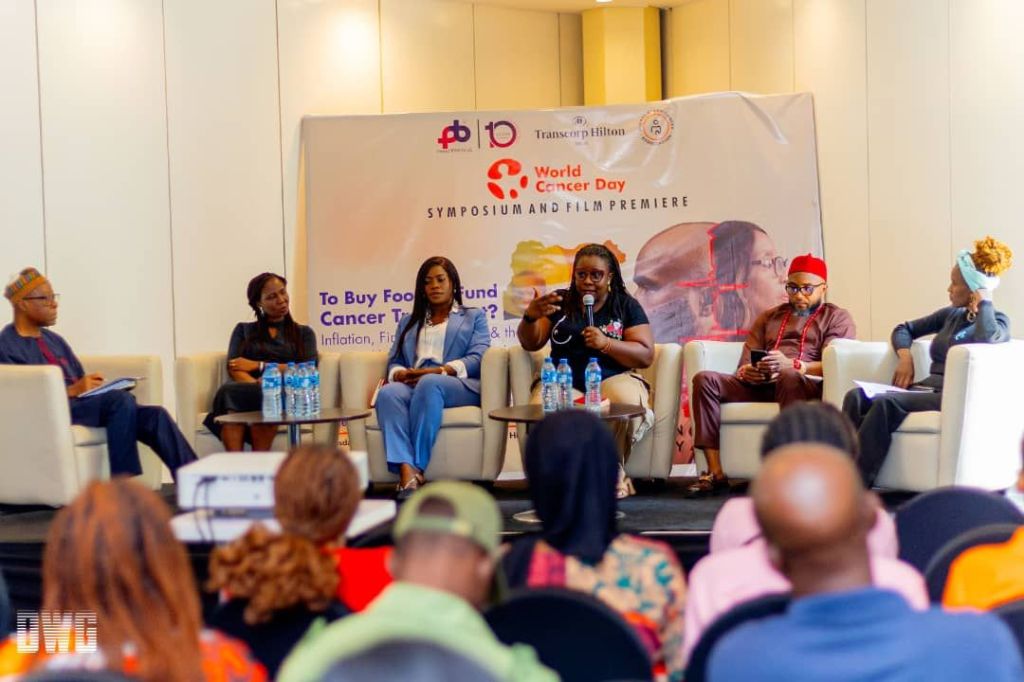
Panel discussion

RMAFC Director, Dr. Tanimu Adamu Aliyu, Honored for Excellence in Fiscal Management

Maryam Aminu

The Director of the Fiscal Efficiency Department at the Revenue Mobilisation Allocation and Fiscal Commission (RMAFC), Dr. Tanimu Adamu Aliyu, has been recognized for his outstanding leadership and contributions to national development with a prestigious award from the Wudil Commercial Old Boys Association (WUCOBA).

The award, conferred in Kano on Saturday, February 1, 2025, celebrates Dr. Tanimu’s dedicated service, fiscal expertise, and unwavering commitment to the advancement of Nigeria’s economic and financial sector.

In a show of humility and institutional pride, Dr. Tanimu presented the award to RMAFC Chairman, Dr. Muhammed Bello Shehu, at the Commission’s headquarters on Wednesday, February 5, 2025.

Commending Dr. Tanimu, Dr. Shehu described the recognition as well-deserved, lauding his diligence, professionalism, and selfless service to the nation.

He further expressed confidence that Dr. Tanimu’s contributions will continue to shape fiscal policies and drive national progress.

World Cancer Day: Supporting Cancer Victims Is a Collective Responsibility – Women Affairs Minister

Maryam Aminu

The Honourable Minister of Women Affairs, Hajiya Imaan Sulaiman-Ibrahim, has reaffirmed her commitment to supporting cancer patients and survivors, emphasizing that caring for those affected by cancer is a shared responsibility.

In a statement released on Tuesday by her Special Adviser on Media & Publicity, Mr. Jonathan Eze, the Minister joined the global community in commemorating World Cancer Day 2025, expressing solidarity with patients and celebrating the resilience of survivors.

Themed “United by Unique”, this year’s observance underscores the importance of individualized, patient-centered care in the fight against cancer, ensuring that treatments are tailored to each patient’s unique needs.

The Minister highlighted the disproportionate impact of cancer on women, particularly in low- and middle-income countries, where breast and cervical cancers remain leading causes of death.

“To the women and families affected by cancer, I want to assure you that you are not alone. We stand with you in this fight and will continue to work tirelessly to ensure that you receive the support and care you deserve,” she said.

She stressed the need for increased awareness, early detection, and access to quality healthcare services, calling for collaborative efforts among stakeholders to improve screening programs, research, and innovative treatments.

“As we mark World Cancer Day, on behalf of the Federal Ministry of Women Affairs, I want to assure women across Nigeria that we are committed to supporting your health and well-being. We will continue working with relevant stakeholders to enhance cancer prevention and treatment,” she added.

Hajiya Imaan Sulaiman-Ibrahim urged government agencies, private organizations, and civil society to unite in ensuring that every woman has access to quality cancer care and no one faces the disease alone.

“Let us unite to create a world where every woman has access to quality cancer care, and where no woman has to face cancer alone,” she concluded.

World Cancer Day, observed annually on February 4, serves as a global platform to raise awareness, encourage early detection, and advocate for better treatment and support systems for cancer patients worldwide.