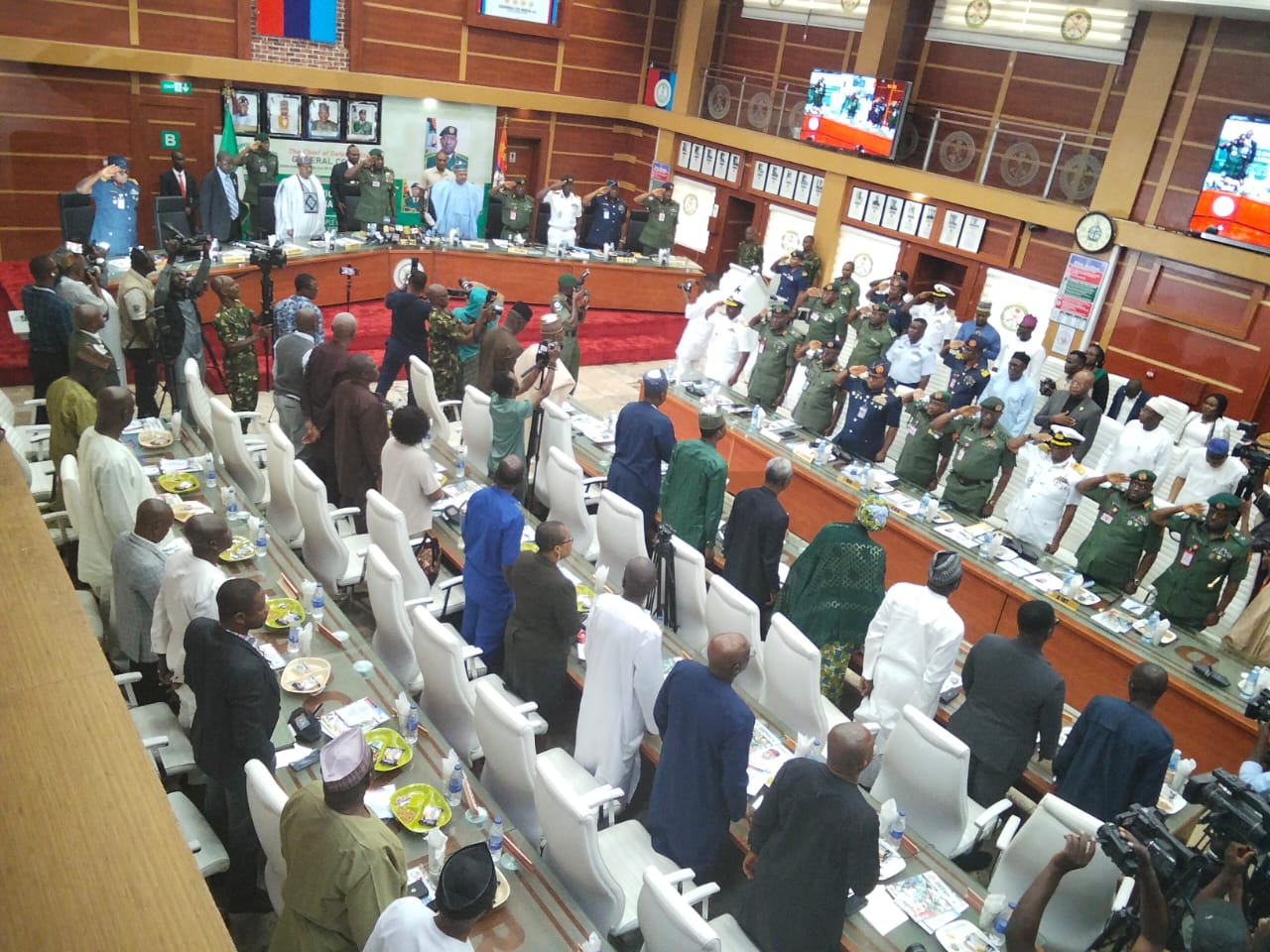
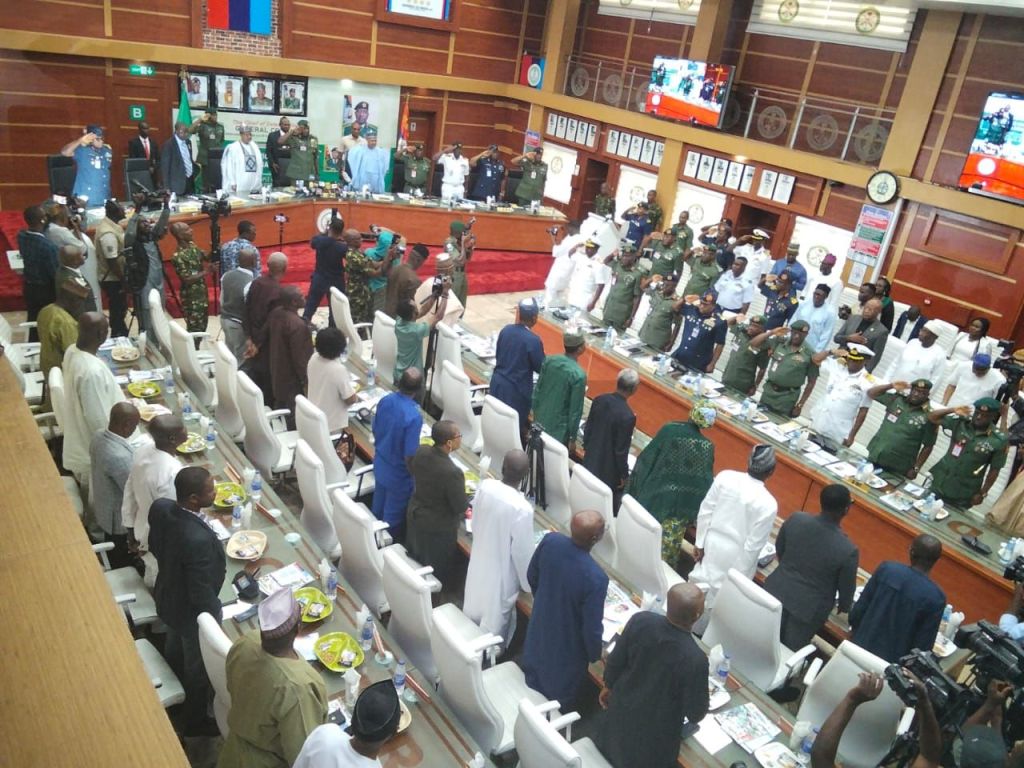
In a landmark engagement with top media professionals in Abuja, Nigeria’s Chief of Defence Staff (CDS), General Christopher Gwabin Musa, has reiterated the unwavering dedication of the Armed Forces to national security, transparency, and inclusive collaboration with the media.
The expanded media chat, which coincided with the CDS’s two-year anniversary in office alongside other service chiefs, provided a platform for direct dialogue between military leadership and media stakeholders.
It was attended by prominent dignitaries, including federal ministers, security agency heads, and influential media executives.
Welcoming participants, General Musa described the session as a crucial moment for reflection, transparency, and unity. “It’s not just a milestone, it’s a reaffirmation of our shared responsibility in the pursuit of peace and national cohesion,” he said.
He stressed that this interaction aimed to foster public trust, present operational scorecards, and enhance cooperation with information gatekeepers.
Paying tribute to victims of violence in states like Yobe and Benue, General Musa expressed deep condolences and reaffirmed the Armed Forces’ commitment to peace restoration and national healing.
“These attacks are not just numbers to us they are personal losses,” he stated.
Looking back at the military’s journey under his leadership, the CDS highlighted the significant challenges the Armed Forces have navigated, from insurgency and terrorism to secessionist threats and banditry.
He acknowledged the passing of former Chief of Army Staff, Lt. Gen. Taoreed Lagbaja, as a great loss and praised his successor, Lt. Gen. Olufemi Oluyede, for sustaining progress.
General Musa emphasized that modern security challenges demand a multi-stakeholder approach. “Today’s battlefield is also psychological. Perception shapes reality, and in this regard, the media plays a decisive role,” he noted.
He urged journalists to promote national interest by reporting responsibly and truthfully, reminding them that their narratives can either boost or break morale.
He revealed that over 70% of current military efforts rely on non-kinetic strategies, further underlining the importance of media partnership in shaping narratives. “We want the media to ask the hard questions, but also to understand the broader context. We are open, accountable, and united in purpose,” Musa added.
Thanking President Bola Ahmed Tinubu for his “unprecedented support,” the CDS praised the administration’s commitment to security, referencing the President’s recent visit to Benue for an on-the-ground assessment.
He also commended the Defence and Information ministries for backing the Armed Forces’ transparency efforts.
The Honourable Minister of Information and National Orientation, Mohammed Idris Malagi, also addressed the gathering, appealing to journalists to align with national priorities. “Our media must no longer amplify the messages of terror,” he said firmly.
The Minister applauded the Armed Forces’ strategic engagement with the press, especially for creating platforms for honest dialogue and information exchange.
He shared an emotional response to footage of wounded soldiers shown during the event, highlighting the courage and sacrifice of a female officer who lost a leg yet continued to serve with pride.
“These are the real heroes,” he said. “And it’s time we shift our editorial lens to reflect that. Celebrating terrorists on front pages not only demoralizes our troops but emboldens enemies of the state.”
He reminded media professionals of their ethical duty in preserving national unity. “Words have power. Headlines matter. We must choose what we amplify wisely,” he added.
The Minister commended the Armed Forces for their gallantry and resilience, urging continued synergy between the media and security institutions.
He affirmed the Federal Government’s unwavering support for peace-building efforts, calling the engagement a symbolic step toward a safer, stronger Nigeria.
AIR MARSHAL HASAN BALA ABUBAKAR: TRANSFORMING THE NIGERIAN AIR FORCE FOR A NEW ERA
The President and Commander-in-Chief of the Armed Forces of Nigeria, His Excellency President Bola Ahmed Tinubu, GCFR, on 19th of June 2023 appointed Air Marshal Hasan Bala Abubakar as the 22nd Chief of the Air Staff (CAS) of the Nigerian Air Force (NAF).
Upon assuming office on the 22nd of June 2023, Air Marshal HB Abubakar immediately introduced a new blueprint and leadership direction for the NAF. In recognition of the weight of his mandate, the CAS brought to bear his wealth of experience, knowledge and expertise to shape a new leadership guidance, anchored on effective command and control mechanism to drive in initiatives and foresights in order to attain strategic goals.
The CAS subsequently undertook a comprehensive assessment of the NAF, analyzing past achievements, current challenges, and future prospects. Informing his decision to overhaul all aspects of the NAF, particularly areas such as administration, operations, training, and logistics, in order to eliminate inherent systemic gaps, while streamlining operations and realigning with dynamic demands of modern warfare.
The strategic leadership style became imperative given the NAF’s central role in countering diverse security challenges occasioned by acts of terrorism, banditry, militancy, and other forms of criminality. According to Air Marshal Abubakar, restructuring was intended to reposition and re-strategize the NAF to effectively adapt to the dynamic and complex nature of modern operational environments. He emphasized that maximizing jointness and operational synergy whether in combined or independent operations is critical for a successful mission. The comprehensive overhaul of the Service’s operations laid the foundation for Air Marshal HB Abubakar’s command philosophy which is christened, “To transform the Nigerian Air Force into an agile and resilient force that effectively meets the airpower demands of national security in all operational environments.” The command philosophy mirrors Jeff Davis's postulation that transformational leadership is a leadership style which foster professionalism, innovation and commitment
to inspire others to achieve their full potential while fulfilling organizational goals. He further affirms that transformational leadership is practical and effective approach in driving excellence within an institution.
Worthy to admit that Air Marshal HB Abubakar’s command philosophy centres on transformation which is moving beyond outdated methods, techniques, and objectives to embrace innovative concepts aligning with the NAF’s mission: “To ensure the integrity of the airspace by gaining and maintaining control of the air while retaining a credible capacity to fulfill other airpower tasks demanded by national defence and security imperatives.”
Pertinently, the CAS possesses the right leadership vision, charisma, and determination needed to elevate the NAF to new heights. His integration of transformational leadership principles across all aspects of the NAF underscores his commitment to maximizing the capabilities of personnel in order to enhance the force’s operational performance. As a seasoned military leader, Air Marshal HB Abubakar brings more than three decades of expertise to foster a more mission oriented and mission ready Air Force . So far, his leadership style has demonstrated a strong sense of purposeful and strategic focus, enabling the NAF to evolve into a regional model in the effective deployment of air power. In the light of these developments, this article seeks to highlight key milestones in Air Marshal HB Abubakar’s journey to transform the NAF into an agile and resilient force. It is two years down the lane, since Air Marshal HB Abubakar took-over the mantle of leadership as the 22nd Chief of the Air Staff. Thus, the scorecard takes a critical evaluation of the transformational leadership approach of Air Marshal HB Abubakar, with specific focus on the five key enablers of his command philosophy. These enablers include: optimizing force structure and establishment for enhanced operational effectiveness; deliberate training and mission-oriented force development; proactive logistics support and a strong maintenance culture; prioritizing research and development leveraging cutting-edge technology, strategic partnerships and lessons learnt; and maintaining a highly motivated force by enhancing welfare and infrastructural renewal. These enablers are evident in the numerous achievements recorded under the transformational leadership of Air Marshal HB Abubakar, aimed at strengthening the NAF’s capabilities to address current and emerging security challenges. Being a seasoned strategic leader and executor, Air Marshal HB Abubakar's impact is already evident across the five strategic pillars of his command philosophy, which some of these notable achievements are enumerated as follows:
Optimizing Force Structure and Enhancing Operational Effectiveness
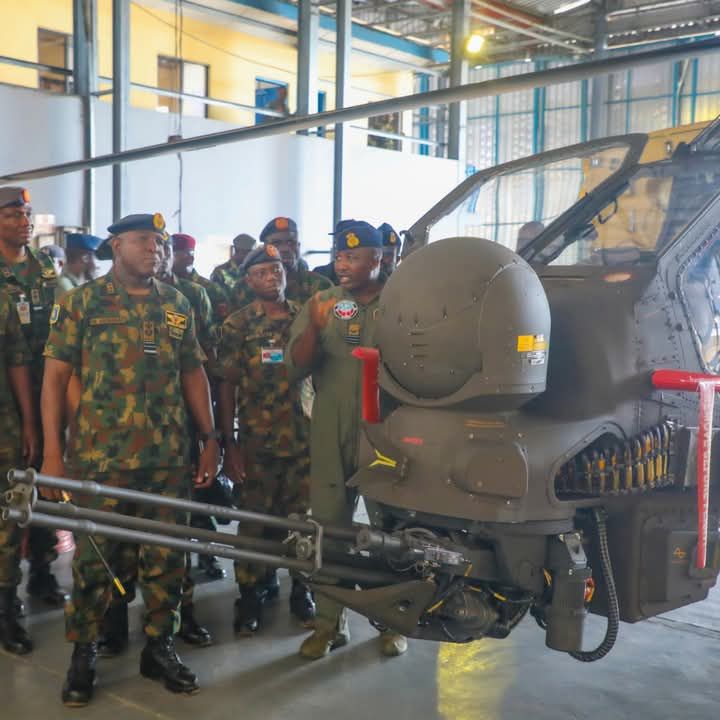
Under his watch, the NAF expanded its airpower capabilities with the acquisition and induction of several key platforms: 2 King Air 360i light transport aircraft, 6 T-129 ATAK helicopters, 2 AgustaWestland 109 Trekker helicopters, 4 Diamond-62 surveillance aircraft, and many others. Further acquisitions between 2025 and 2026 will include: 24 M-346 Fighter Aircraft, 12 AH-1Z Viper Helicopters, 9 AgustaWestland 109 Trekker Helicopters, and additional CASA 295 transport aircraft.
Establishment of the Transformation and Innovation Branch was created to drive technological adaptation and maintain Nigeria’s aerial dominance, while the Civil-Military Relations Branch strengthens public trust through medical outreaches and humanitarian efforts across communities. Also the Directorate of Land Administration, Airworthiness and Certification, and Peace Support Operations, reflects a strategic shift toward specialized oversight of personnel deployment, airworthiness, and multinational missions. The establishment of Base Defence Coordination Centres further enhances intelligence integration and rapid response capability at all NAF bases.
Deliberate Training and Mission-Oriented Force Development
In just 24 months, over more than 217 pilots and 237 officers have been trained at home and abroad. Additionally, more than 3,200 engineers and technicians have graduated from the Air Force Institute of Technology (AFIT), significantly boosting technical proficiency. The NAF’s training institutions have also updated their curricula to reflect new technologies and modern warfare tactics. These efforts, including sustained recruitment, are building a mission-ready force prepared to face today’s and tomorrow’s security challenges.
Proactive Logistics and Maintenance Culture
Air Marshal Abubakar has championed a culture of self-reliance in aircraft maintenance. NAF engineers successfully restored and maintained multiple aircraft, including: C-130H (NAF 918), Super Tucano (NAF 850) and DO-228 aircraft. By sourcing aircraft spares locally and prioritizing in-house technical expertise, the NAF has improved aircraft serviceability while reducing reliance on external contractors yielding cost savings and enhanced readiness.
Research, Development, and Technological AdvancementThe Abubakar's led NAF places premium on Research and Development (R&D), empowering its units to compete and innovate independently. The installation of Martin-Baker ejection seats in Alpha jets and ongoing UAV development projects are clear evidence of this technological shift. Hosting the 3rd and 4th African Air Forces Forums in Abuja and Lagos respectively, the NAF welcomed over 20 African Air Chiefs and international aerospace leaders. These forums centered on aerospace innovation and regional security, cemented Nigeria’s leadership in regional air power strategy. Further consolidating Nigeria’s regional role, Air Marshal Abubakar was recently elected Chairman of the Association of African Air Forces (AAAF). His agenda includes fostering Africa-led humanitarian aid, disaster relief, and enhanced multinational air operations.
Welfare and Infrastructure RenewalWelfare is a cornerstone of the CAS’s vision. From the launch of the Group Personnel Accident Insurance Policy to the NAF Microfinance Bank, efforts have been made to support financial and health security for personnel. Infrastructure upgrades have also been widespread. Office complexes and living quarters have been built and renovated across all NAF Bases. The Post-Service Housing Scheme has been expanded, ensuring personnel can retire into comfortable homes nationwide. Significant renovations in NAF schools and hospitals further demonstrate the CAS’s commitment to holistic personnel welfare. Air Marshal Hasan Bala Abubakar’s leadership is transforming the Nigerian Air Force into a modern, mission-driven professional fighting force. By investing in the workforce, platforms and strategic partnerships, the CAS is building a resilient force that is ever prepared to counter complex threats at home and across the continent. With visionary leadership, strategic foresight, and an unrelenting drive for excellence, Air Marshal Abubakar is not just leading and redefining the NAF to meet the dreams and aspirations of its founding fathers. As we celebrate the second anniversary of the 22nd Chief of the Air Staff, Air Marshal Hasan Bala Abubakar, it is germane to add that his leadership style has been marked by a strong focus on enhancing operations, training, logistics, infrastructure, and personnel welfare. These efforts are testament of his unwavering commitment to transforming the capabilities of the Nigerian Air Force (NAF) to effectively project air power in response to defence and security of the country. Under the transformational leadership of Air Marshal Abubakar, the NAF has continue to soar to greater heights. We celebrate Air Marshal Hasan Bala Abubakar for leading with precision, excellence and innovation, while fostering strategic approach to partnerships towards navigating the evolving challenges and opportunities within the aviation, defence, and security landscape of our nation. No doubt, the NAF is being transformed into a new era.
END
WRITTEN BY: Michael. A., a member of the Nigerian Institute of Public Relations and a Public Relations practitioner.
According to the Letter that was received by the First African UNESCO Laureate Prof Sir Bashiru Aremu through Organizing Committee of the Kapsule MedChem Summit 2026– International Conference on Medicinal Chemistry, Drug Discovery & Drug Delivery as stated below:
Dear First African UNESCO Laureate Prof Sir Bashiru Aremu,
Greetings from the Organizing Committee of the Kapsule MedChem Summit 2026– International Conference on
Medicinal Chemistry, Drug Discovery & Drug Delivery. It is with great pleasure that we extend to you an official invitation to join us as a featured Key note speaker and Special Guest of Honor at our upcoming international conference, scheduled to take place from February 15–17, 2026, in Zurich, Switzerland.
Our Scientific Committee has carefully reviewed your recent work in the field of medicinal chemistry and is highly impressed by your contributions. We believe your participation will greatly enrich the academic depth of the summit and provide valuable insights to fellow clinicians, researchers, and public health professionals in attendance.
As a token of our appreciation, we are pleased to offer you the following speaker benefits:
Full waiver of registration fees
Complimentary accommodation during the conference dates
Round-trip airfare coverage
To confirm your participation and allow us to proceed with the necessary arrangements, we kindly ask you to activate your complimentary conference pass via our event portal. which grants full access to all scientific sessions, networking opportunities, and hospitality services throughout the event.
To proceed, please submit the following:
A short professional biography (100–150 words)
A high-resolution headshot (preferred format: JPG or PNG)
Activate your conference pass via the secure link:
We sincerely hope you will consider this invitation, and we look forward to the opportunity of welcoming you to Zurich for this distinguished global gathering.
Warm regards, Manichandhana Program Manager Kapsule Medchem Summit 2026
About The First African UNESCO Laureate Prof Sir Bashiru Aremu Prof. Sir Bashiru Aremu is recognized as the First African UNESCO Laureate. He’s a renowned Nigerian professor of computer science and information technology who has made significant contributions to his field. Some of his notable achievements include ¹ ² ³:
UNESCO Laureate Award: He’s a First African UNESCO Laureate Ratified by The United Nations Educational, Scientific and Cultural Organization (UNESCO) Centre Central and South America with Reg. Arg. 22/LT-19 and published with ISBN 978-1571-7412-6 along with Global Golden Medal and Global Golden Certificate with other support as Prizes from UNESCO for His Outstanding Global Contribution on Education, creative, intellectual achievements and other activities world wide Seeking For Quality Assurance in Higher Education both National and International The First African UNESCO Laureate Prof Sir Bashiru Aremu has been appointed as a Chairman Accreditation Panel of some of Universities in Nigeria and Also appointed as Chairman Board of Trustees of World Accreditation Commission USA an official partner of United Nations, UNESCO, Association of Universities of Asia and Pacific and others world wide
Academic Leadership: Serves as the Vice Chancellor of Crown University International Chartered Inc., USA, and Chairman of the Board of Trustees, Kings & Queens Medical University College, Ghana and others offers world wide
Global Recognition: Has been involved with various international organizations, including the Unity of Nations Action for Climate Change Council (UNACCC), where he was appointed Chairman, Board of Trustees, and Chief Patron and others offers world wide
Research and Partnerships: Focuses on promoting research, intellectual development, and community service through partnerships with institutions worldwide.
*Minaret University Ikirun, Nigeria *: Also involved with Minaret University in Ikirun, Nigeria as a Professor and Founding member Board of Trustees , which aims to provide quality education with an Islamic and Western education model as well in others Universities in Nigeria.
Prof. Sir Bashiru Aremu’s work has been widely acknowledged, and he continues to contribute to academia and global initiatives.
First African UNESCO Laureate Prof Sir Bashiru Aremu appreciate the Organizing Committee of the Kapsule MedChem Summit 2026– International Conference on
Medicinal Chemistry, Drug Discovery & Drug Delivery of upcoming international conference, scheduled to take place from February 15–17, 2026, in Zurich, Switzerland. And he promised to continue contributing his quata to the higher education world wide
The Executive Chairman of the Fiscal Responsibility Commission (FRC) and member of the Presidential Committee on Fiscal Policy and Tax Reforms, Victor Muruako Esq., was among the high-level dignitaries who attended the 50th birthday celebration and public lecture in honour of Mr. Taiwo Oyedele, Chairman of the Presidential Fiscal Policy and Tax Reform Committee.
Held at the Abuja Continental Hotel, the milestone event featured a thought-provoking lecture themed “Designing Tomorrow: Policy Blueprint and Lessons for the Future- Bold Moves That Transform and Inspire.” The event brought together prominent figures in Nigeria’s fiscal and economic governance space.
Bede Ogueri Anyanwu, Deputy Director and Head of Strategic Communications Directorate at the Fiscal Responsibility Commission, confirmed Chairman Muruako’s participation, noting that his presence “demonstrates the FRC’s steadfast commitment to transparency, accountability, and long-term fiscal reform in Nigeria.”
Also present were the Honourable Minister of Finance, Chief Wale Edun; Executive Chairman of the Federal Inland Revenue Service (FIRS), Zacch Adelabu Adedeji, Chairman of the Financial Reporting Council, Dr. Rabiu Onaolapo Olowo, Special Adviser to the President on Policy Coordination, Hadiza Usman, and National President of the Nigerian Institute of Public Relations, Dr. Ike Neliaku.
In his keynote address, Mr. Oyedele reflected on his leadership journey and praised President Bola Ahmed Tinubu for granting the committee full autonomy in policy design.
He stressed the importance of tax compliance, stating, “The system cannot function without taxes.”
The lecture celebrated Nigeria’s policy and civic legends, including Obafemi Awolowo, Nnamdi Azikiwe, Ahmadu Bello, Gani Fawehinmi, MKO Abiola, Queen Amina of Zazzau, Margaret Ekpo, and Funmilayo Ransome-Kuti, highlighting their bold ideas and transformative legacies.
The event concluded with a ceremonial cake-cutting led by Mr. Oyedele, his wife, the Minister of Finance, and the FIRS Chairman symbolizing a united front in shaping Nigeria’s fiscal future.
Connected Development (CODE), Africa’s leading advocacy organisation for transparency and good governance, has officially launched its 2024 Annual Report titled “The Year of Active Citizen”, unveiling a trailblazing year of citizen-driven advocacy, community empowerment, and transformative policy impact across 12 African countries.
At the press briefing held today in Abuja, Hamzat Lawal, Chief Executive of CODE and Founder of the acclaimed Follow The Money initiative, presented a striking review of the past year marked by bold action and measurable progress in areas spanning climate justice, education, civic engagement, and anti-corruption campaigns.
“In 2024, we made giant strides mobilising citizens, confronting injustice, and demanding change,” Lawal declared. “Each campaign, each number, each community touched represents a story of progress and hope.”
With over 40 campaigns across 12 African countries, CODE hosted 57 town hall meetings, 40 community outreach events, and 30 specialized workshop empowering over 3,000 citizens in climate justice, education rights, and democratic accountability.
CODE CEO Hazmat Lawal
CODE tracked over ₦4 billion in public spending, conducting rigorous audits and grassroots engagements in 20 Nigerian communities while developing a year-long advocacy blueprint for Sierra Leone.
One of the year’s landmark achievements was the expansion of the Follow The Money initiative into Sierra Leone.
In Kano State, CODE’s Galvanizing Mass Action Against Gender-Based Violence campaign recorded a legislative victory with the successful passage of the Child Protection Bill, now in implementation stages with special attention to underserved rural communities.
The organisation’s education-focused advocacy, in partnership with the Malala Fund, led to the launch of the Girl-Child Education Project in Bauchi State confronting structural barriers to girls’ education and securing government commitments to increased education funding and teacher recruitment.
Simultaneously, CODE’s collaborations with USAID and the Adolescent Girls Initiative for Learning and Empowerment (AGILE) strengthened early literacy in Adamawa, Bauchi, and Sokoto, and introduced conditional cash transfers to encourage girls’ school attendance in 18 states.
CODE’s data-rich analysis of 553 schools and 784 primary healthcare centers in 520 communities across 34 states paints a troubling picture of Nigeria’s public infrastructure. Despite nearly ₦894 billion invested in education by state governments, challenges such as overcrowded classrooms, untrained teachers, and inadequate water and sanitation facilities persist.
Plateau State recorded an average of 280 students per class, far exceeding the national standard of 40. The North West follows with an average of 129 students per classroom, while the North East and North Central regions recorded 114 and 97 respectively.
While zones like North Central (58.9%) and South South (54.8%) saw higher female enrollment, the North East and North West continue to show male-dominated ratios.
Also over 50% of teachers in Sokoto and Zamfara have never received professional development training, and teacher absenteeism in several states is below 90%.
The report showed that only 20% of schools in Benue, 18% in Cross River, and a shocking 7% in Enugu have access to clean water. Shared toilet facilities between boys and girls remain prevalent in Kebbi and Ekiti, raising safety and hygiene concerns.
CODE’s 2024 Annual Report doesn’t just highlight gaps it offers a roadmap for progress.
Lawal called on government agencies, civil society, and international partners to move beyond budgetary allocations and focus on execution, infrastructure, and community-based solutions.
“We owe it to Nigeria’s future to transform billions of naira into real change into functional classrooms, safe toilets, trained teachers, and equal opportunities for every child,” he asserted.
With an unrelenting spirit, CODE affirms its mission to empower Africa’s most vulnerable through data, grassroots mobilisation, and legislative engagement. “We’re just getting started,” Lawal concluded. “The fight for justice, equity, and transparency continues and we invite every citizen to take an active role.”
Connected Development (CODE), Africa’s leading advocacy organisation for transparency and good governance, has officially launched its 2024 Annual Report titled “The Year of Active Citizen”, unveiling a trailblazing year of citizen-driven advocacy, community empowerment, and transformative policy impact across 12 African countries.
At the press briefing held today in Abuja, Hamzat Lawal, Chief Executive of CODE and Founder of the acclaimed Follow The Money initiative, presented a striking review of the past year marked by bold action and measurable progress in areas spanning climate justice, education, civic engagement, and anti-corruption campaigns.
“In 2024, we made giant strides mobilising citizens, confronting injustice, and demanding change,” Lawal declared. “Each campaign, each number, each community touched represents a story of progress and hope.”
With over 40 campaigns across 12 African countries, CODE hosted 57 town hall meetings, 40 community outreach events, and 30 specialized workshop empowering over 3,000 citizens in climate justice, education rights, and democratic accountability.
CODE CEO Hazmat Lawal
CODE tracked over ₦4 billion in public spending, conducting rigorous audits and grassroots engagements in 20 Nigerian communities while developing a year-long advocacy blueprint for Sierra Leone.
One of the year’s landmark achievements was the expansion of the Follow The Money initiative into Sierra Leone.
In Kano State, CODE’s Galvanizing Mass Action Against Gender-Based Violence campaign recorded a legislative victory with the successful passage of the Child Protection Bill, now in implementation stages with special attention to underserved rural communities.
The organisation’s education-focused advocacy, in partnership with the Malala Fund, led to the launch of the Girl-Child Education Project in Bauchi State confronting structural barriers to girls’ education and securing government commitments to increased education funding and teacher recruitment.
Simultaneously, CODE’s collaborations with USAID and the Adolescent Girls Initiative for Learning and Empowerment (AGILE) strengthened early literacy in Adamawa, Bauchi, and Sokoto, and introduced conditional cash transfers to encourage girls’ school attendance in 18 states.
CODE’s data-rich analysis of 553 schools and 784 primary healthcare centers in 520 communities across 34 states paints a troubling picture of Nigeria’s public infrastructure. Despite nearly ₦894 billion invested in education by state governments, challenges such as overcrowded classrooms, untrained teachers, and inadequate water and sanitation facilities persist.
Plateau State recorded an average of 280 students per class, far exceeding the national standard of 40. The North West follows with an average of 129 students per classroom, while the North East and North Central regions recorded 114 and 97 respectively.
While zones like North Central (58.9%) and South South (54.8%) saw higher female enrollment, the North East and North West continue to show male-dominated ratios.
Also over 50% of teachers in Sokoto and Zamfara have never received professional development training, and teacher absenteeism in several states is below 90%.
The report showed that only 20% of schools in Benue, 18% in Cross River, and a shocking 7% in Enugu have access to clean water. Shared toilet facilities between boys and girls remain prevalent in Kebbi and Ekiti, raising safety and hygiene concerns.
CODE’s 2024 Annual Report doesn’t just highlight gaps it offers a roadmap for progress.
Lawal called on government agencies, civil society, and international partners to move beyond budgetary allocations and focus on execution, infrastructure, and community-based solutions.
“We owe it to Nigeria’s future to transform billions of naira into real change into functional classrooms, safe toilets, trained teachers, and equal opportunities for every child,” he asserted.
With an unrelenting spirit, CODE affirms its mission to empower Africa’s most vulnerable through data, grassroots mobilisation, and legislative engagement. “We’re just getting started,” Lawal concluded. “The fight for justice, equity, and transparency continues and we invite every citizen to take an active role.”
7th International Conference on Robotics and Artificial Intelligence (ISTPRAI 2026) Paris in France : First African UNESCO Laureate invited as Special Guest of Honor and Keynote Speakers
According to the Letter that was received to the First African UNESCO Laureate Prof Sir Bashiru Aremu through Organizing Committee of the7th International Conference on Robotics and Artificial Intelligence (ISTPRAI 2026) that was written by Margaret Joyce
as stated below: Dear First African UNESCO Laureate Prof Sir Bashiru Aremu, I trust this message finds you in good health and high spirits. On behalf of the organizing committee, it is with great pleasure that I extend an invitation for you to serve as a Special Guest of Honor and Keynote Speakers at the upcoming International Robotics and Artificial Intelligence Conference in Paris.
Event Details: Conference Name: 7th International Conference on Robotics and Artificial Intelligence (ISTPRAI 2026)
Date: April 23-24, 2026
Location: Paris, France
Your expertise in Robotics and Artificial Intelligence and your notable contributions to the field make you an ideal candidate to share insights and inspire fellow researchers, academics, and industry professionals attending the conference. Your plenary session will be a focal point, providing a comprehensive overview of the latest advancements and trends in Robotics and Artificial Intelligence.
We believe that your presence will significantly enhance the conference, contributing to the intellectual richness and fostering meaningful discussions among participants. If you are available and willing to accept our invitation, kindly confirm your participation by submitting the abstract and register your slot ASAP.
We look forward to the possibility of welcoming you as a distinguished speaker at this premier event.
Best regards, Margaret Joyce ISTPRAI 2026| Paris, France Team
About the Frist African UNESCO Laureate Prof Sir Bashiru Aremu UNESCO Laureate, Prof. Sir Bashiru Aremu is a renowned Nigerian academic, professor of computer science, and information technology expert. He’s a distinguished UNESCO Laureate, Ratified by The United Nations Educational, Scientific and Cultural Organization (UNESCO) Centre Central and South America with Reg. Arg. 22/LT-19 and published with ISBN 978-1571-7412-6 along with Global Golden Medal and Global Golden Certificate with other support as Prizes from UNESCO, recognized for his outstanding contributions to education, research, and innovation. Here are some key highlights about him
Awards and Honors: Prof. Aremu has received numerous awards, including the International Shakespeare Award for Literary Achievement, Outstanding Scientist of the 21st Century, and World Acclaimed Distinguished Professor Emeritus both from UNESCO South and Central America and University of Nigeria, Nsukka, Nigeria (UNN) and other universities world wide
Academic Appointments: He serves as the Vice-Chancellor of Crown University International Chartered Inc., Vice Chairman International Affairs of Board of Trustees at West Coast University, and Chairman of various governing councils and boards.
Published Works: Prof. Aremu has authored several books, including “Environmental Information Sciences With an Allied Areas & other emerging interdisciplinary Environmental Concern” and “Virtual Education System For Next Generation of Learners”.
Leadership Roles: He’s the Global Secretary of the World Sustainable Development Goals Organization, an official partner of the United Nations, and holds various other leadership positions in international organizations.
Recognition: Prof. Aremu has been recognized as the First African UNESCO Laureate and has received accolades for his contributions to education, research, and innovation, including a royal title as His Royal Highness Duke of Kingdom of Atlantis, Singapore.
Some of his notable appointments include ¹:
Chairman, Accreditation Panel: National Universities Commission, Abuja, Nigeria Chairman Board of Trustees World Accreditation Commission USA an official partner of UNESCO, Association of Universities of Asia and Pacific and others world wide
Chairman, Board of Governing Council: Ibikunle Lawal Institute of Technology, Ile-Ife, and Kings and Queens Medical University College, Ghana
Global Online University’s International Chairman: eSkillGrow Virtual University, India and others offered world wide
Prof. Aremu’s work and achievements have been widely recognized, and he continues to contribute to education, research, and innovation globally ².
First African UNESCO Laureate Prof Sir Bashiru Aremu appreciate the Organizing Committee of the7th International Conference on Robotics and Artificial Intelligence (ISTPRAI 2026) Paris in France
And he promised to continue contributing his quota to the higher education, research and industries world wide
According to the Letter that was received by the First African UNESCO Laureate Prof Sir Bashiru Aremu through Organizing Committee of the Kapsule MedChem Summit 2026– International Conference on Medicinal Chemistry, Drug Discovery & Drug Delivery as stated below:
Dear First African UNESCO Laureate Prof Sir Bashiru Aremu,
Greetings from the Organizing Committee of the Kapsule MedChem Summit 2026– International Conference on
Medicinal Chemistry, Drug Discovery & Drug Delivery. It is with great pleasure that we extend to you an official invitation to join us as a featured Key note speaker and Special Guest of Honor at our upcoming international conference, scheduled to take place from February 15–17, 2026, in Zurich, Switzerland.
Our Scientific Committee has carefully reviewed your recent work in the field of medicinal chemistry and is highly impressed by your contributions. We believe your participation will greatly enrich the academic depth of the summit and provide valuable insights to fellow clinicians, researchers, and public health professionals in attendance.
As a token of our appreciation, we are pleased to offer you the following speaker benefits:
Full waiver of registration fees
Complimentary accommodation during the conference dates
Round-trip airfare coverage
To confirm your participation and allow us to proceed with the necessary arrangements, we kindly ask you to activate your complimentary conference pass via our event portal. which grants full access to all scientific sessions, networking opportunities, and hospitality services throughout the event.
To proceed, please submit the following:
A short professional biography (100–150 words)
A high-resolution headshot (preferred format: JPG or PNG)
Activate your conference pass via the secure link:
We sincerely hope you will consider this invitation, and we look forward to the opportunity of welcoming you to Zurich for this distinguished global gathering.
Warm regards, Manichandhana Program Manager Kapsule Medchem Summit 2026
About The First African UNESCO Laureate Prof Sir Bashiru Aremu Prof. Sir Bashiru Aremu is recognized as the First African UNESCO Laureate. He’s a renowned Nigerian professor of computer science and information technology who has made significant contributions to his field. Some of his notable achievements include ¹ ² ³:
UNESCO Laureate Award: He’s a First African UNESCO Laureate Ratified by The United Nations Educational, Scientific and Cultural Organization (UNESCO) Centre Central and South America with Reg. Arg. 22/LT-19 and published with ISBN 978-1571-7412-6 along with Global Golden Medal and Global Golden Certificate with other support as Prizes from UNESCO for His Outstanding Global Contribution on Education, creative, intellectual achievements and other activities world wide Seeking For Quality Assurance in Higher Education both National and International The First African UNESCO Laureate Prof Sir Bashiru Aremu has been appointed as a Chairman Accreditation Panel of some of Universities in Nigeria and Also appointed as Chairman Board of Trustees of World Accreditation Commission USA an official partner of United Nations, UNESCO, Association of Universities of Asia and Pacific and others world wide
Academic Leadership: Serves as the Vice Chancellor of Crown University International Chartered Inc., USA, and Chairman of the Board of Trustees, Kings & Queens Medical University College, Ghana and others offers world wide
Global Recognition: Has been involved with various international organizations, including the Unity of Nations Action for Climate Change Council (UNACCC), where he was appointed Chairman, Board of Trustees, and Chief Patron and others offers world wide
Research and Partnerships: Focuses on promoting research, intellectual development, and community service through partnerships with institutions worldwide.
*Minaret University Ikirun, Nigeria *: Also involved with Minaret University in Ikirun, Nigeria as a Professor and Founding member Board of Trustees , which aims to provide quality education with an Islamic and Western education model as well in others Universities in Nigeria.
Prof. Sir Bashiru Aremu’s work has been widely acknowledged, and he continues to contribute to academia and global initiatives.
First African UNESCO Laureate Prof Sir Bashiru Aremu appreciate the Organizing Committee of the Kapsule MedChem Summit 2026– International Conference on
Medicinal Chemistry, Drug Discovery & Drug Delivery of upcoming international conference, scheduled to take place from February 15–17, 2026, in Zurich, Switzerland. And he promised to continue contributing his quata to the higher education world wide
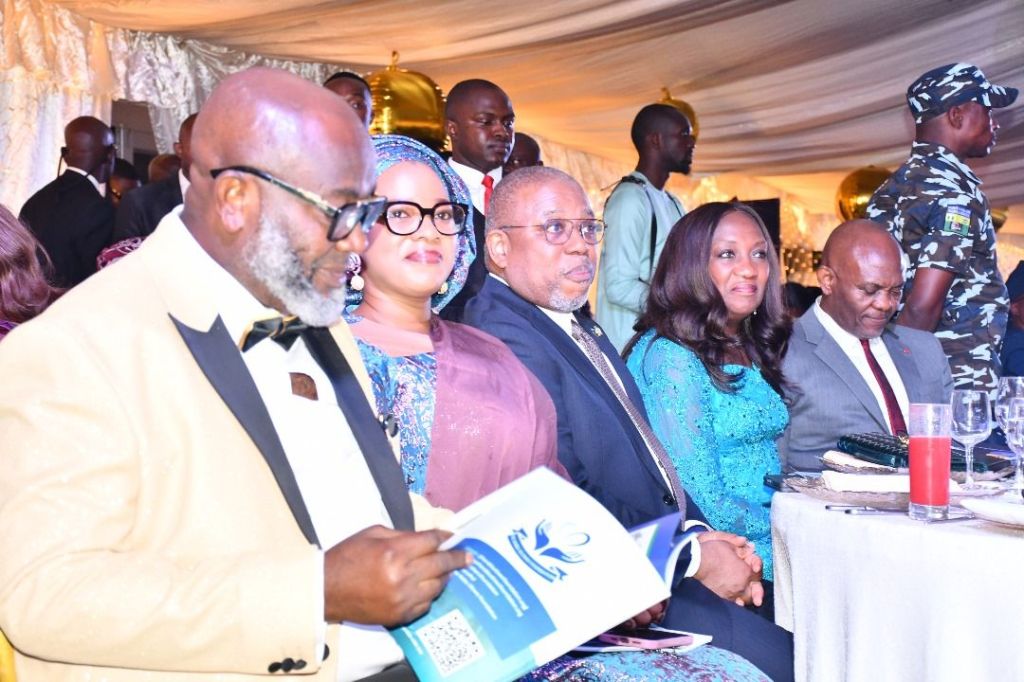
Prominent personalities from across Nigeria’s public and private sectors gathered in Abuja to celebrate the launch of the Dr. Rabiu Onaolapo Olowo Foundation, an event held in commemoration of the 40th birthday of Dr. Rabiu Olowo, Executive Chairman of the Financial Reporting Council of Nigeria.
Bede Ogueri Anyanwu, Deputy Director and Head of the Strategic Communications Directorate at the Fiscal Responsibility Commission, in a statement he signed and made available to journalists noted that the event attracted key figures including Victor Muruako Esq, Executive Chairman of the Fiscal Responsibility Commission; Mr. Tony Elumelu, Chairman of the United Bank for Africa (UBA); and Professor Taiwo Oyedele, Special Adviser to the President on Tax Reform. They were joined by several other distinguished Nigerians who came together to support the Foundation’s mission.
A highlight of the evening was a touching performance by children living with sickle cell anemia beneficiaries of the Olowo Foundation whose presentations underscored the Foundation’s commitment to creating lives of purpose and lasting impact.
In his keynote address, Mr. Tony Elumelu praised the Foundation’s vision and reaffirmed the need for sustainable interventions in empowering vulnerable communities. He was followed by Professor Muhammad M.O. Kah, a respected academic and champion of African excellence, who emphasized the role of transformational leadership in advancing social equity.
The ceremony concluded with a toast by Victor Muruako Esq, who lauded Dr. Olowo’s legacy of service, philanthropy, and unwavering commitment to national development.
The Dr. Rabiu Olowo Foundation is focused on improving the lives of underserved communities through initiatives in health, education, and youth empowerment, with special attention to individuals affected by sickle cell anemia.
The Economic Community of West African States (ECOWAS), in collaboration with the European Union (EU), Germany, and Spain, has launched four major initiatives worth €110 million to strengthen peace, security, economic integration, and institutional development across the West African region.
The high-level launch event, held yesterday at the ECOWAS Headquarters in Abuja, brought together over 80 senior officials, ambassadors, and development partners from West Africa and Europe. The initiatives are being jointly implemented by international development agencies, including GIZ, UNIDO, ITC, AECID, Expertise France, and Fundación FIAP.
Speaking at the event, President of the ECOWAS Commission, Dr. Omar Alieu Touray, said the projects are aimed at driving not just peace and security, but also boosting trade, governance, institutional frameworks, and cooperation with partner countries.
He reaffirmed ECOWAS’ commitment to ensuring the initiatives deliver tangible impact across the region.
“These projects are expected to contribute significantly to the region’s development by supporting trade within the community and strengthening ECOWAS’ strategic orientations,” Touray said.
“The budget of these projects is €110 million, coming from the EU, Germany and Spain. We are grateful for the continued and multifaceted support towards these four projects, because the objectives pursued are vital to ECOWAS and its Member States.”
EU Ambassador to Nigeria and ECOWAS, Mr. Gautier Mignot, underscored the EU’s unwavering commitment to a peaceful, prosperous, and integrated West Africa.
According to him, the initiatives reflect a deepened partnership with ECOWAS, focused on governance, institutional capacity, regional trade, and people-centered development.
Speaking also, the German Ambassador to Nigeria and ECOWAS, H.E. Annett Günther, emphasized that the launch marked more than the start of new projects.
“It reflects our shared commitment to trade, peace and security, and good governance in West Africa,” she said, highlighting that the projects support ECOWAS’ Vision 2050, which aims to build a citizen-centered community for peace and prosperity.
Günther noted the strategic importance of the programmes, adding “Trade and services are a key driver of employment and innovation and a powerful lever for economic transformation. In addition, countries that trade with each other are less likely to experience war or internal conflicts.”
Speaking further, the Deputy Head of Mission at the Spanish Embassy in Nigeria, Mrs. María Higón Velasco, praised ECOWAS for its leadership in regional cooperation and reiterated Spain’s support through AECID’s ongoing partnership with the Commission.
She stated that the initiatives would help deepen coordination with member states and development partners, in line with the ECOWAS-AECID Work Programme 2025–2028.
Top representatives from implementing agencies also reiterated their commitment to delivering sustainable outcomes for West Africa.
UNIDO Director General, Gerd Müller, described the projects as vital to building fair supply chains and green economies.
ITC Executive Director, Pamela Coke-Hamilton, said the programmes would unlock market access and enhance small business competitiveness, while GIZ Nigeria Country Director, Dr. Markus Wagner, affirmed that supporting ECOWAS means unlocking the region’s potential through inclusive and lasting progress.
Held alongside ECOWAS’ 50th anniversary celebrations, the launch drew wide participation from African Union officials, EU member states, ambassadors, UN leaders, and civil society stakeholders, reflecting strong regional ownership and global cooperation.














 Africa Security Investigation News