FG Launches Youth-Led Circular Economy Drive to Create Jobs, Tackle Climate Change

Maryam Aminu

The Federal Government has unveiled a bold new programme to put young Nigerians at the centre of climate action and job creation through the Circular Economy Youth Empowerment Initiative (CEYEI).

Launched in Abuja by the Minister of Youth Development, Comrade Ayodele Olawande, the initiative developed in partnership with SAMU Technology and the Recyclers Association of Nigeria (RAN) aims to turn waste into wealth while building a greener, more inclusive economy.

“This goes beyond job creation. We are raising a new generation of Nigerian innovators, entrepreneurs, and nation-builders,” Olawande said, describing CEYEI as a landmark achievement under President Bola Tinubu’s Renewed Hope Agenda.

At the heart of the programme is the Waste to Wealth Project, which will provide young people with skills training, mentorship, and access to green technologies to transform discarded materials into eco-friendly products. A dedicated online platform has also been launched to connect youth with markets, investors, and innovation opportunities at home and abroad.

The Ministry also highlighted other youth-focused reforms, including:

Nigerian Youth Academy (NIYA): a hub for youth protection and capacity-building.

Digital literacy training in partnership with NITDA.

YO! Health: a new mental health and wellness hub.

Youth Cred Scheme: a loan access programme with Credit Core, paving the way for a Youth Bank, MSME Incubator, and National Innovation Hub.

Ongoing NYSC reforms tailored to Gen Z and Millennials.

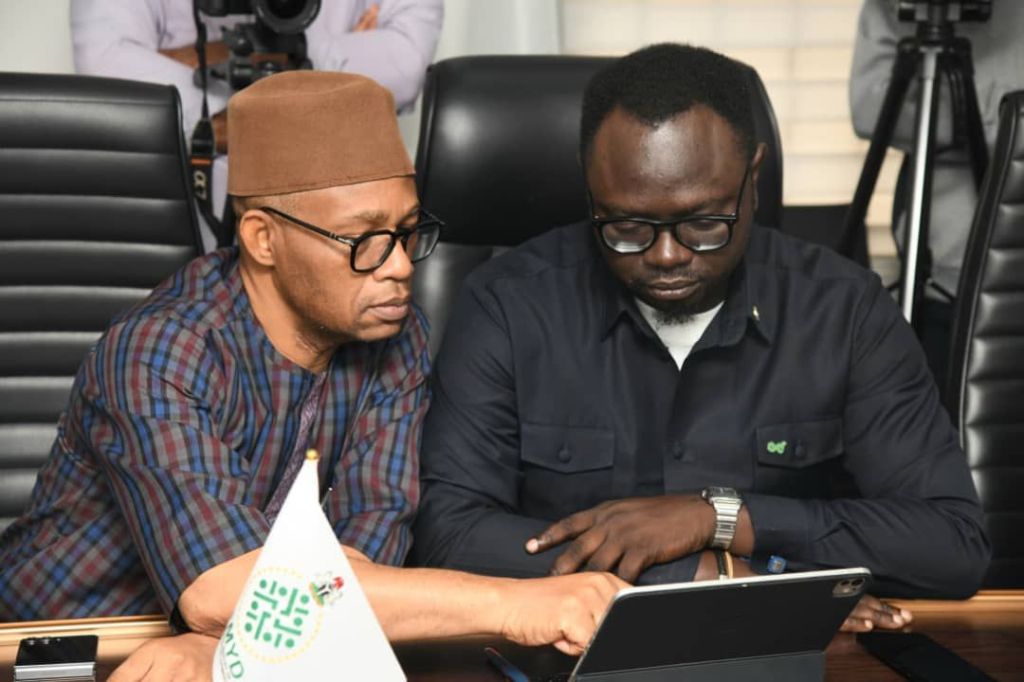
The Permanent Secretary, Federal Ministry of Youth Development, Olubunmi Olusanya, delivering his Welcome address at the launch of the Circular Economy Youth Empowerment Initiative (CEYEI).

In his remarks, Hon. Yusuf Sununu, Minister of State for Humanitarian Affairs and Poverty Reduction, stressed that with over 3 million Nigerians affected by humanitarian crises and a $36 billion global funding gap, CEYEI is a lifeline for youth-led innovations that can cut poverty and build resilience.

Permanent Secretary Olubunmi Olusanya said the initiative is about harnessing “the creativity and entrepreneurial spirit of Nigerian youth,” while Blessing Ekwere, speaking for RAN, hailed it as proof that young people are not just beneficiaries of development but drivers of real change.

With nationwide coverage across all 36 states and 774 LGAs, CEYEI is set to place Nigeria’s youth at the heart of the circular economy recycling, reusing, and reimagining waste into opportunity.

The Honourable Minister of Youth Development, Comrade Ayodele Olawande, alongside the Honourable Minister of State for Humanitarian Affairs and Poverty Reduction, Hon. Yusuf Sununu, management staff, and partners, in a group photograph at the unveiling of the Circular Economy Youth Empowerment Initiative (CEYEI).

RMAFC Flags Off Review of Nigeria’s Revenue Allocation Formula

Maryam Aminu

For the first time in more than three decades, Nigeria has begun the journey toward a new revenue allocation formula, as the Revenue Mobilisation Allocation and Fiscal Commission (RMAFC) on Monday officially set in motion a comprehensive review of how the nation’s wealth is shared among the federal, state, and local governments.

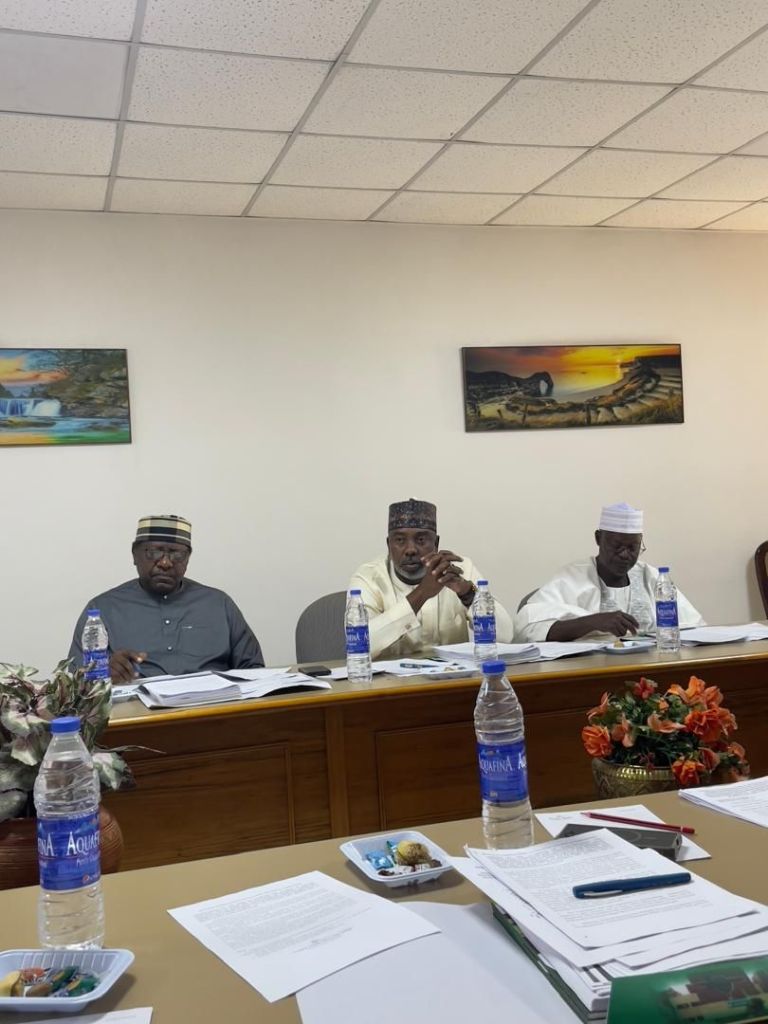
Declaring the process open at a press conference held at the Shehu Musa Yar’Adua Centre, Abuja, RMAFC Chairman, Dr. Mohammed Bello Shehu,
described the exercise as “a constitutional duty and a national imperative,” stressing that the formula must reflect today’s socio-economic realities, rather than the outdated structures of the 1990s.

“The last review was in 1992, and since then, Nigeria has changed significantly demographically, economically, and constitutionally,” Shehu said.

“Recent amendments devolving key responsibilities like electricity, railways, and correctional services to states have placed additional financial and administrative burdens on subnational governments. This makes a fresh review of the revenue allocation formula inevitable.”

He explained that the goal of the review is to develop “a fair, just, and equitable formula” that empowers all three tiers of government to deliver effectively on their constitutional roles while promoting equity and sustainability.

The Commission pledged that the review process would be inclusive, evidence-based, and transparent, involving inputs from the Presidency, National Assembly, governors, ALGON, the judiciary, ministries, civil society, private sector players, traditional rulers, and development partners.

Federal Commissioner and Chairman of the Revenue Formula Committee, Kabir Muhammad Mashi, also reaffirmed the Commission’s readiness to deliver an impactful outcome.

He disclosed that although RMAFC had earlier produced a report in 2022, it was overtaken by constitutional amendments in 2023 that shifted responsibilities among the tiers of government.

“Hence, the need for a fresh review of the revenue allocation formula in its entirety to reflect the current socio-economic challenges in the country, as well as the new economic policies of the present administration,” Mashi explained.

He described the initiative as a defining moment in Nigeria’s fiscal federalism and intergovernmental relations, adding that the committee is expected to submit its final report by December 2025.

FRC Chairman Calls for Urgent Validation of Fiscal Responsibility Code of Conduct

Maryam Aminu

The Executive Chairman of the Fiscal Responsibility Commission (FRC), Victor Muruako, Esq., has urged stakeholders to fast-track the validation of the newly developed Fiscal Responsibility Code of Conduct, describing it as a crucial enforcement tool for the Fiscal Responsibility Act (FRA) 2007.

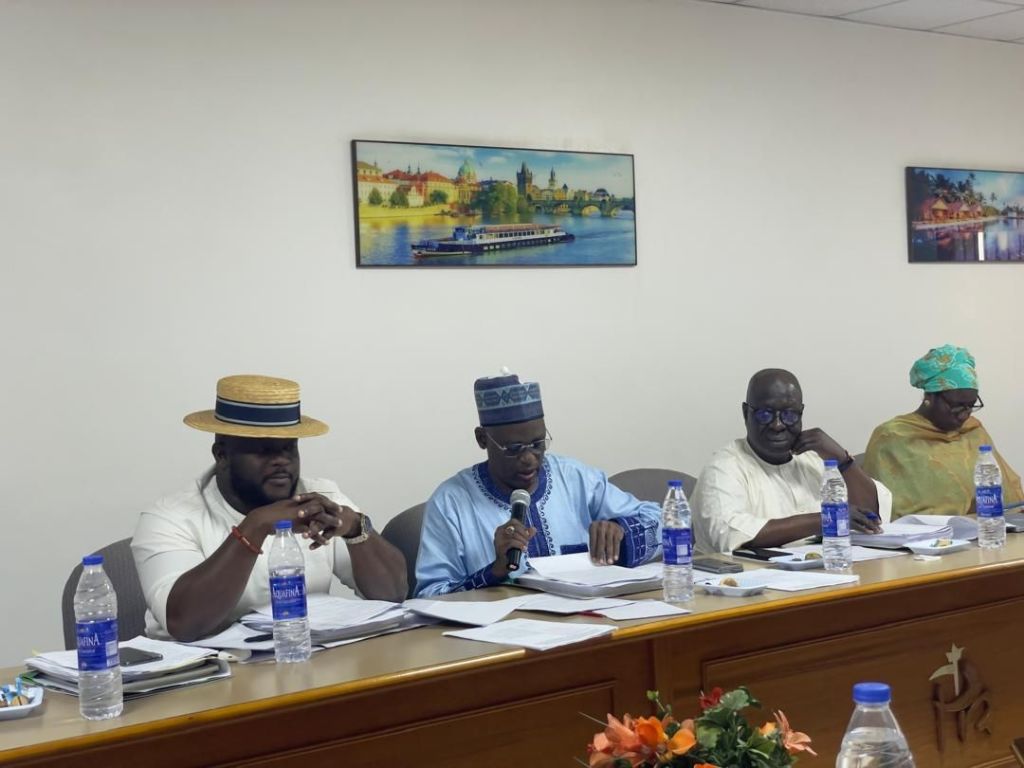
Speaking at a high-level stakeholders’ meeting in Abuja, Muruako welcomed participants from Ministries, Departments, and Agencies (MDAs), development partners, civil society organisations, and virtual attendees. He explained that the Code would help bridge existing enforcement gaps in fiscal governance, particularly in areas where the FRA lacks specific punitive provisions.

“We regard this document as a very vital and indispensable toolkit for the effective enforcement of the spirit and letters of the Fiscal Responsibility Act,” Muruako stated.

He commended the European Union, the Rule of Law and Anti-Corruption (RoLAC) Programme, International IDEA, and the Centre for Social Justice (CSJ) for their contributions, praising CSJ Lead Director, Eze Onyekpere, Esq., for his “zealous commitment” to entrenching fiscal discipline nationwide.

Muruako reiterated the Commission’s four core mandates: prudent resource management, macroeconomic stability, accountability, and transparency.

He noted that the FRC serves as Nigeria’s fiscal council in line with international best practices recognised by the World Bank, OECD, and IMF.

The proposed Fiscal Responsibility Code of Conduct seeks to:

Reduce risks in public financial management, including budget fraud and corruption.

Enhance accountability and transparency in fiscal decision-making.

Provide ethical guidelines that balance efficiency with social responsibility.

Foster fiscal discipline to ensure borrowing is strictly for capital projects and human development.

He lamented the absence of sanctions in certain sections of the FRA, warning that this has prolonged a “regime of impunity,” and pledged the Commission’s readiness to work with partners for effective implementation.

In his presentation, CSJ’s Eze Onyekpere argued that implementing even half of the Code’s provisions could transform Nigeria’s fiscal landscape, while criticising banks and state governments for violating FRA borrowing provisions.

Delivering the keynote address, Director-General of the Bureau for Public Service Reform, Dr. Dasuki Arabi, commended the FRC’s drive to promote transparency and fiscal prudence.

Representatives from the Economic and Financial Crimes Commission (EFCC), the Federal Ministry of Justice, and the Federal Ministry of Finance also pledged their commitment to collaborating with the FRC to enforce fiscal responsibility across all government institutions.

Nigeria Marks International Youth Day with Bold Call for Local Action

Maryam Aminu

Nigeria’s future is in the hands of its youth and they are already shaping it with bold ideas, grassroots innovation, and relentless energy.

That was the resounding message yesterday in Abuja as the Federal Government joined the world to mark the 2025 International Youth Day, themed “Local Youth Actions for the SDGs and Beyond.”

The Minister of Youth Development, Comrade Ayoade Olawande, described Nigerian youth as the nation’s “greatest strength,” urging them to channel local skills and creativity into driving economic growth, fostering national unity, and accelerating the achievement of the Sustainable Development Goals (SDGs).

“We cannot reach these goals without the energy, creativity, and leadership of young people. In Nigeria, more than 60 per cent of our population is under the age of 25. That is not just a statistic it is our greatest strength,” he declared.

Olawande said young Nigerians are already making transformative contributions in sectors such as agriculture, renewable energy, health, education, and digital technology, proving their capacity to tackle pressing social and economic challenges. He, however, noted that despite their talent and drive, many face persistent challenges, particularly in securing funding, accessing markets, and obtaining mentorship.

To bridge these gaps, the minister unveiled new measures by the ministry, including the Innovation Funfair a platform designed to connect young innovators with investors, mentors, and development partners.

He explained that the initiative goes beyond celebrating ideas by helping to turn them into sustainable businesses and community solutions.

“Today’s activities from innovation booths to pitch sessions, networking events, masterclasses, and cultural showcases are more than fun. They prove that Nigerian youth are ready to turn ideas into impact,” Olawande said.

The minister also stressed that “going beyond the SDGs” means preparing for the challenges of the future, not just meeting the 2030 deadline.

According to him, this requires continuous investment in youth skills, creativity, resilience, and visionary thinking.

He called on the private sector, donor agencies, and civil society to take an active role in supporting youth-led innovation through funding, mentorship, and policy advocacy.

“Support the ideas you see today with real investment. Fund them, mentor them, and open doors for them to access markets. That is how we will unlock the full potential of our youth,” he urged.

He also commended the resilience and ingenuity of the Nigerian youth, describing them as “workaholic visionaries” whose determination often outpaces the opportunities available to them.

“What we are asking for is not special treatment just an enabling environment for our youth to thrive, innovate, and lead,” Comrade Olawande stressed.

In his remarks, the Permanent Secretary of the Ministry of Youth Development, Olubunmi Olusanya, pledged that the ministry would strengthen partnerships to create enabling environments where youth-led initiatives can thrive.

Olusanya underscored the critical link between youth engagement and sustainable development, noting that over 65 per cent of SDG targets are tied to local governance, where young people’s contributions are most visible and impactful.

“Sustainable development doesn’t begin in boardrooms or government chambers; it begins with bold ideas, local innovation, and everyday actions by young people who dare to make a difference,” he said.

The Permanent Secretary highlighted examples of young Nigerians improving their communities through grassroots entrepreneurship, social impact projects, and climate action initiatives, affirming that these efforts must be nurtured with both policy support and practical resources.

The United Nations Development Programme (UNDP) Resident Representative in Nigeria, Ms. Elsie Attafuah, praised Nigerian youth for pioneering solutions in aggrotech, peacebuilding through art, digital innovation, and climate action.

“Our youth are not just a future workforce they are problem-solvers, innovators, and nation-builders today,” she affirmed, pledging UNDP’s continued investment in youth empowerment.

The celebration featured innovation booths, pitch sessions, networking forums, masterclasses, and cultural showcases, all underscoring one truth Nigerian youth are not just dreaming about the future; they are building it, one idea at a time.

Nigerian Supreme Council For Ecclessiatical Affairs Commends Concerned Christian Youth Forum

The Nigerian Supreme Council for Ecclesiastical Affairs (NSCEA) has commended and formally recognised the Concerned Christian Youth Forum (CCYF) as a legitimate and vital force in the defence of the Christian faith.

The recognition was confirmed in an attestation letter signed by NSCEA Secretary, Bishop Professor Funmilayo Adesanya-Davies, dated 25 July 2025.

“It is with great pride that we stand in solidarity with you as you embark on this noble mission to protect our Faith, our Denominations and the future generations of our Christian youths,” the bishop stated.

According to the NSCEA, the decision followed extensive consultations with senior Christian leaders and the Christian Association of Nigeria (CAN).

The Council noted that the CCYF has demonstrated unwavering commitment to preserving Christian values and fostering unity among the nation’s denominations.

“Let this day mark the dawn of a new era, where the indomitable spirit of our youths is unleashed in service of our common purpose in Christendom,” the statement added.

Speaking about the recognition and attestation, Paul James Adama, Convener of the CCYF, described the recognition as a “momentous milestone” and a testament to the strength and courage of Christian youths across the country.

“This monumental achievement is a reflection of our dedication to defending the Christian faith and protecting our spiritual leaders,” Adama said in a statement of appreciation.

He emphasised that while the recognition was a significant honour, the real victory lies in the Forum’s continued efforts to uphold Christian values in an ever-changing world.

“A thunderous congratulations to the Concerned Christian Youth Forum,” he said.

WORLDSDGsO Lagos Conference: Aliyu Abubakar Urges Africans on Connectivity in Solving Common Problems

In a powerful convergence of purpose and possibility, health leaders, innovators, and grassroots changemakers gathered in Lagos from July 25 to 31, 2025, for the World Sustainable Development Goals Organization (WorldSDGsO) Conference a week-long event that reimagined how African communities can tackle maternal and child health challenges with homegrown solutions.

The conference opened with a symbolic WorldSDGsO Walk and closed with renewed commitment toward Africa’s health equity and sustainable development agenda.

In his keynote address, Aliyu Garba Abubakar, Director of the Climate Action Agency West Africa for WorldSDGsO, outlined a bold, community-led blueprint to tackle Nigeria’s maternal and child health crises. His address, titled “Connecting Every Community to Life-Saving Solutions,” laid the groundwork for what could become a continental movement rooted in connectivity, local innovation, and peer-based learning.

Speaking passionately, Abubakar urged African nations to stop overlooking local heroes who are already saving lives in their communities.

He emphasized that the starting point should be recognizing and learning from grassroots actors people like traditional birth attendants who have delivered hundreds of babies without maternal deaths, grandmothers with indigenous treatments for malnourished children, or women’s groups that ensure pregnant women give birth in health facilities.

Abubakar said that instead of seeking complex external solutions, the continent must take a deliberate approach to identify these individuals and understand their methods not just to reward them, but to replicate their success.

He stressed that effective community practices should form the foundation of any health strategy, with those on the ground serving as the teachers.

The keynote speaker proposed that successful local problem-solvers should be systematically connected with others across Nigeria who face similar health challenges.

He explained that if a community in Kano has reduced malaria among pregnant women, then that knowledge must reach communities in Ogun or Benue still battling similar issues. Likewise, if a village in Cross River has achieved full immunization coverage, their methods should be shared across every geopolitical zone.

Abubakar pointed out that this kind of exchange doesn’t require large infrastructure only intentionality and the use of accessible technology. Mobile phones and messaging platforms, he argued, should serve as bridges between life-saving ideas and the people who desperately need them. “Information that can save lives should reach people in days, not years,” he said.

Rejecting the outdated model of “experts” teaching communities, Abubakar advocated for a more effective and respectful approach: communities learning from one another. He shared stories of villages that had solved emergency transport challenges, women’s groups that had successfully stopped mother-to-child transmission of HIV, and traditional rulers who had convinced entire populations to accept vaccination. These stories, he said, should be passed from one community to another, creating a ripple effect of solutions across the country.

He stressed that although local solutions are powerful, they need broader support to thrive and scale. In his words, global and institutional partners must not dominate these efforts but rather serve as enablers offering resources, technical backing, and funding to help expand effective local approaches. Abubakar noted that when a traditional practice proves successful, experts should help explain why it works and how it can be adapted elsewhere.

He proposed launching a national network beginning with 100 communities, where each would contribute two key elements: a proven innovation that is already saving lives, and a pressing challenge that still needs a solution. He envisioned a model where communities become both teachers and learners, connected by a national commitment to save lives.

Abubakar also called for a shift in how success is measured. Instead of focusing on targets or paperwork, he said outcomes must be judged by real-world impact like whether a mother in Sokoto survives childbirth, whether a child in Enugu gets vaccinated on time, or whether a pregnant woman in Osun receives the nutrition she needs. These, he insisted, should be the metrics that matter most.

The climax of his address was the unveiling of the ‘10,000 Lives Mission’, a bold initiative aimed at saving 10,000 Nigerian mothers and children by December 2026.

He encouraged every delegate in the room to leave not just informed but transformed and ready to act.

To jumpstart the mission, he challenged participants to take immediate action within 30 days. He urged them to document one local solution from their communities, identify the most pressing maternal or child health challenge they face, and connect with at least three other communities to exchange knowledge and offer support.

He stressed that these actions could be as simple as recording a short voice note or video in a local language and sending it to COPESA’s WhatsApp platform, which would translate and disseminate the messages across the country.

Abubakar envisioned that by January 2026, each participating community should be able to show clear evidence of impact whether it’s a practice they’ve adopted from another community or one they’ve shared that’s saving lives elsewhere. More importantly, he emphasized that the network’s credibility would lie in its transparency. Quarterly progress reports would be published, and both successes and shortcomings would be shared openly.

He made it personal, stating that by the end of 2026, he wanted to know the names and see the faces of mothers and children whose lives were saved because of the connections made through this network. He declared that this was not a call for bureaucratic, donor-heavy projects, but a real-time, people-powered movement.

In closing, Abubakar invited all stakeholders to commit not just organizationally, but personally. He asked each participant to write down a specific name or identify someone whose life they intended to impact within the year a pregnant woman, a vulnerable child, or a struggling family. This, he said, would be the true legacy of the conference.

He concluded with a powerful call to action: “The Nigeria we are building together proves that local solutions, powered by local networks, can do what even the best-funded global programs cannot. We’re not waiting for help. We are the help. The 10,000 lives we save in Nigeria are just the beginning. This starts with us. This starts now.”

EFCC, Police in Tug-of-War over Same Suspects

Maryam Aminu

A legal tussle appears to be brewing between the Economic and Financial Crimes Commission (EFCC) and the Nigeria Police Force over the custody and investigation of two suspects, as a lawyer accuses the EFCC of subjecting her clients to “double jeopardy.”

Khadijah Bayern, an Abuja-based legal practitioner, has petitioned the Attorney General of the Federation (AGF) over what she described as harassment and duplication of investigations by the EFCC, following the re-arrest and continued detention of her clients, Illesanmi Olaniyi and Ishola Maruf.

According to the petition titled “Double Jeopardy and Intimidation”, Bayern said her clients were initially arrested by the Nigeria Police Force on March 17, 2024, in connection with a reported glitch involving Moniepoint Bank. She explained that the men were invited by the Force Intelligence Department (FID), detained, and later granted administrative bail with sureties a bail she said remains valid.

During the police investigation, Bayern noted that two vehicles, a Toyota Hilux van and a Toyota RAV4, alongside several goods, equipment, documents, and other items, were seized from the suspects’ residences. The seized items are still in police custody, and a forfeiture case is currently before the court.

The lawyer expressed concern that despite the ongoing police investigation and court proceedings, the EFCC’s Special Duty Section 2 (SDC2) went ahead to re-arrest the same individuals on what she claimed were identical allegations. She alleged that the suspects have been held for 12 days by the EFCC without being granted bail.

While acknowledging that the EFCC has the right to investigate any criminal matter, Bayern faulted the Commission’s refusal to grant bail in a case that is clearly bailable under the law, especially when her clients were already on administrative bail by the police, who are actively investigating the same issue.

“This amounts to double jeopardy,” she stated. “The EFCC is aware the matter is before the Nigerian Police Force at FID, with several seizures already made. Detaining them again on the same subject matter undermines and frustrates both investigation and prosecution.”

She also raised alarm over the health conditions of her clients, stating that both men are medically unfit and have been frequent visitors to the EFCC clinic.

Bayern urged the AGF, as the chief law officer of the country, to intervene and put an end to what she described as intimidation and conflicting actions by federal agencies.

In a separate letter dated July 29, 2025, addressed to the Director of SDC2 at the EFCC, another counsel representing the suspects echoed Bayern’s claims. The letter acknowledged the ongoing police investigation and appealed for leniency in EFCC’s bail conditions.

The counsel requested that the EFCC allow civil servants on Grade Levels 14 and 15 to stand as sureties instead of the higher grades initially demanded, citing the medical vulnerabilities of the suspects.

“We assure you that this request is made in good faith and will in no way interfere with the Commission’s investigation,” the letter read. “We trust that the commission will consider this request favorably, in the interest of justice, fairness and our clients’ health.”

The matter underscores the often overlapping mandates of Nigeria’s security and anti-graft agencies, and raises fresh questions about the coordination of law enforcement processes in high-profile cases.

INNOVATE AFRICA CONFERENCE 2025: BRINGING TOGETHER AFRICAN LEADERS, INVESTORS, INNOVATORS, AND DEVELOPMENT AGENCIES IN ABUJA

Innovate Africa Corporation, in collaboration with the Office of the Deputy Speaker of the House of Representatives, Federal Republic of Nigeria, and ECOWAS, is excited to announce the Innovate Africa Conference 2025. Scheduled for October 23–24, 2025, this prominent event will take place at the renowned ECOWAS Conference Hall in Abuja. Under the theme “Re-Imagining Africa’s Leadership & Investment,”

According to a press release signed by the Founder & CEO, Innovate Africa Corp, Uloma Onyebuchi, this second edition of the conference will unite influential figures who are shaping governance, innovation, investment, and economic development across the continent.
“The conference will gather African heads of state, global leaders, policymakers, business executives, investors, technological innovators, entrepreneurs, academics, and development partners to explore actionable solutions and strategic investments for Africa’s advancement.

“For too long, the narrative surrounding Africa has focused on potential rather than progress. Innovate Africa is here to transform this narrative into one of resilience, opportunity, and evolution,” stated Uloma

While stressing further, “Over the course of two days, attendees can expect a dynamic agenda featuring keynote speeches, fireside chats, investment forums, sector-specific panels, diaspora engagement discussions, startup pitch competitions, and exhibitions—creating exceptional opportunities for high-level networking and deal-making.

“The Innovate Africa Conference 2025 is designed to foster policy reforms, encourage cross-border investments, and enhance Africa’s global standing through collaborative innovation.

“Exhibition space, partnership opportunities, and sponsorship options are currently available. Join us in shaping the future of Africa, led by Africans, for the global community. For inquiries regarding Exhibition, Partnership, and Sponsorship, please reach out to info@innovateafricacorps.com.

“About Innovate Africa Corporation:
Innovate Africa is a pan-African platform dedicated to promoting economic growth, sustainability, and social impact across the continent and its diaspora. We empower African entrepreneurs and institutions through innovation, investment, and inclusive development” Uloma added.

Education Ministry Denounces Smear Campaign Against UBEC Executive Secretary

The Federal Ministry of Education has strongly condemned what it described as a “sponsored smear campaign” targeting the Executive Secretary of the Universal Basic Education Commission (UBEC), Aisha Garba.

In an official statement released on Tuesday, the Minister of Education, Dr Maruf Tunji Alausa, said the Ministry’s attention had been drawn to “libellous” media reports circulated by an unknown group operating under the name Education Rights Activists Coalition (ERAC).

The group had accused Garba of administrative misconduct and disregard for the rule of law claims the Ministry has dismissed as “baseless, misleading, and malicious.”

Dr Alausa described the attacks as a deliberate attempt by “disgruntled individuals” to derail the ongoing reform agenda in basic education under Garba’s leadership.

“Aisha Garba is an internationally recognised education expert with over 24 years of experience, including 15 years at the World Bank. She has brought integrity, competence, and global best practices to UBEC,” he said.

According to the Ministry, Garba’s tenure has seen major strides in access, equity, and quality of basic education. UBEC has constructed nearly 5,000 classrooms, renovated over 3,000, and established nationwide Early Childhood Care and Development centres.

More than five million textbooks and over 350,000 units of school furniture have also been distributed.

In the area of teacher training, over 147,000 educators have been trained in modern teaching methods, and nearly 978,800 have benefitted from Nigeria’s largest-ever Teacher Professional Development initiative.

A major curriculum overhaul to embed digital literacy and entrepreneurship is also underway in partnership with the Nigerian Educational Research and Development Council (NERDC).

The Ministry also noted that reforms introduced under Garba’s leadership have improved the utilisation of the Basic Education Action Plan (BEAP) and the Matching Grant Formula, with ₦78.6 billion accessed by 28 states and the FCT in 2024 alone.

Institutional partnerships have also been strengthened with major development partners, including the World Bank, UNICEF, KOICA, the Islamic Development Bank (IsDB), and the UK’s Foreign, Commonwealth and Development Office (FCDO).

Over 15,000 community projects have been implemented through the School-Based Management Committee–School Improvement Programme.

The Education Ministry reaffirmed that no financial infractions or breaches have been recorded under Garba’s leadership, and urged the public to disregard what it called “orchestrated falsehoods.”

“We stand firmly with Aisha Garba as she continues her transformational work to deliver quality, safe, and inclusive basic education to Nigerian children,” Dr Alausa said.

NBA Gwagwalada Honours FRC Chairman, Victor Muruako, with Award of Excellence

Maryam Aminu

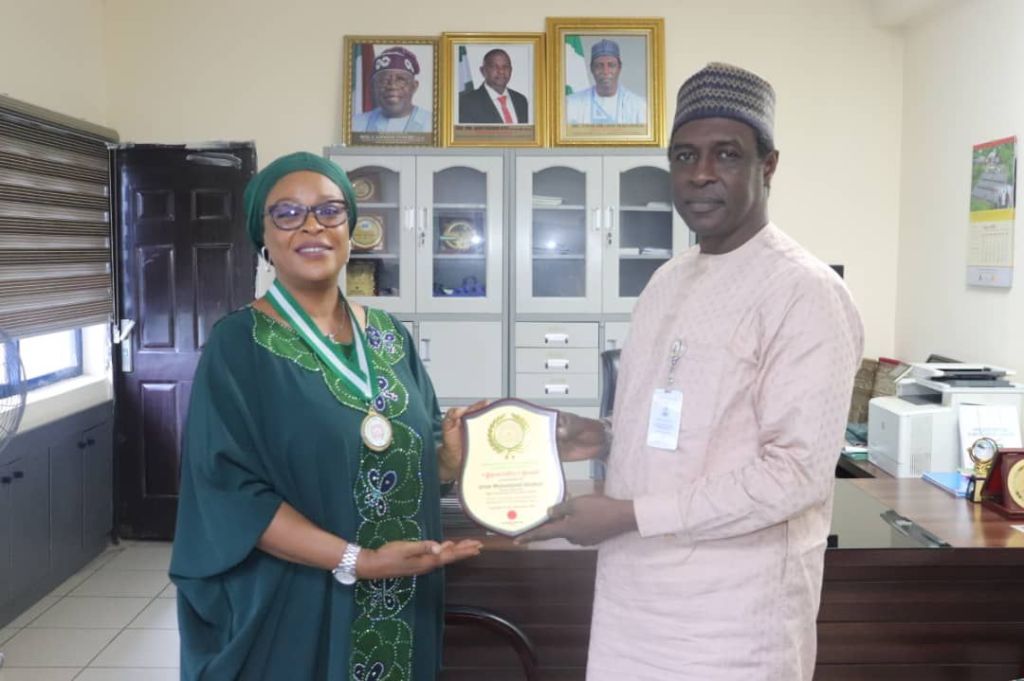
The Nigerian Bar Association (NBA), Gwagwalada Branch popularly known as the Eagle Bar has honoured the Executive Chairman of the Fiscal Responsibility Commission (FRC), Victor Muruako, Esq., with an Award of Excellence for his outstanding contributions to the legal profession and his steadfast leadership in promoting fiscal discipline and transparency in Nigeria.

The award presentation took place at the FRC headquarters in Asokoro, Abuja, in a ceremony attended by senior officials of the Commission and a nine-member delegation from the NBA Gwagwalada Branch, led by its Chairman, Barr. Owhor Clever.

Presenting the award, Barr. Clever commended Muruako for his professional excellence, integrity, and transformative leadership at the FRC.

He hailed the Chairman’s efforts in institutionalizing fiscal best practices, describing him as a visionary leader committed to public accountability and national development.

“We are here to celebrate an exemplary public servant whose extraordinary professionalism and achievements in law and governance are legendary,” Barr. Clever said. “We are proud to be associated with such a visionary leader.”

The NBA delegation also used the opportunity to inform the Chairman about key events planned for January 2026, including the annual Law Week, which will focus on mentoring young lawyers in legal professionalism, and a Chief Judge Forum aimed at fostering dialogue among key stakeholders in the legal and judicial space.

Barr. John Adawakum Clement, Secretary of the NBA Gwagwalada Branch, praised the FRC for its recent NYSC Sensitization Programme which he said is playing a crucial role in educating young graduates on fiscal responsibility and economic governance.

He also expressed interest in future collaborations with the Commission to secure expert facilitators for upcoming NBA programmes.

FRC Chairman Victor Muruako, Esq.

In his remarks, FRC Chairman Victor Muruako, Esq., expressed gratitude for the recognition and congratulated the newly elected NBA Gwagwalada leadership.

He described the legal profession as noble and charged lawyers to uphold high ethical standards in both advocacy and governance.

Reaffirming the Commission’s commitment to transparency and fiscal prudence as enshrined in the Fiscal Responsibility Act (FRA) 2007, Muruako emphasized the public’s right to demand accountability.

“Section 51 of the FRA makes it clear that every Nigerian has the right to ask questions and demand transparency in governance without needing to show personal interest,” Muruako said.
“As lawyers, you are uniquely positioned to promote good governance. Whether through litigation, advocacy, or civil society engagement, you hold the tools to ensure public funds are managed responsibly.”

The event concluded with a shared commitment to deepen collaboration between the Fiscal Responsibility Commission and the NBA Gwagwalada Branch in the areas of legal education, governance advocacy, and nation-building.