Youth Minister Mourns Elder Kisira

Maryam Aminu

The Honourable Minister of Youth Development Dr. Jamila Bio-Ibrahim has expressed sadness over the death of Peter Kisira, a former deputy governor of Kwara State.

This was contained in a statement personally signed by the Minister and made available to journalists on Sunday 31/03/24 in Abuja.

According to the statement Elder Peter Kisira’s contributions to the development and progress of Kwara State are indelible.

“His exemplary leadership and commitment to service have left an enduring legacy that will continue to inspire future generations.”

Bio-Ibrahim added that during his tenure as Deputy Governor, Elder Kisira demonstrated a profound understanding of the challenges facing young people and worked to create opportunities for their growth and development.

“His passion for youth empowerment and advocacy for their inclusion in decision-making will be remembered with gratitude.”

“In this time of grief, let it be acknowledged that Elder Peter Kisira lived a remarkable life and profoundly impacted society.

She prayed that his soul rest in eternal peace and God strengthen the family that he left behind.

“As the nation mourns his passing, let us also honour his memory by continuing the work he started, striving for a society where every young person can thrive and contribute meaningfully to the development of our” she urged

CSOs crys out over Collapse of National Grid and Misappropriation of Public Funds in TCN

By Emmanuel Daudu

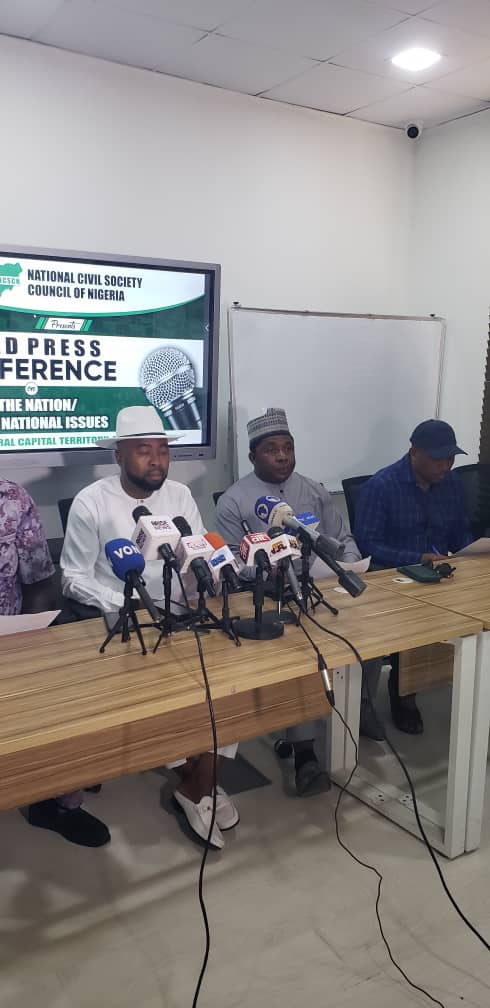
The National Civil Society Council of Nigeria (NCSCN), has called on President Bola Ahmed Tinubu, GCFR, Minister of Power and other Relevant Authorities for immediate probing and suspension of TCN Boss Engr. Sule Ahmed Abdulaziz over corruption allegations and epileptic supply in the Country

In a Press briefing held in Abuja today 30th March, 2024 the Executive Director of NCSCN Comr. Blessing Akinlosotu while addressing the Press, described the TCN  boss’ actions as insensitive towards what Nigerians were facing in the Country’s Power Sector.

In the words of the ED
“The state of Electricity across the Country has become a matter of national emergency with repeated collapse of the National Grid and inability to even fully transmit and distribute the very minimal capacity being generated. Yet in the mist of these frustrating and devastating situations, we hear of a very unbelievable scandal against the Managing Director / CEO of the Transmission Company of Nigeria (TCN), Engr. Sule Ahmed Abdulaziz.


Over 20 petitions have been brought before the Civil Society Council against the MD/CEO of TCN and a few other directed at the Leadership of the Distribution Companies (DISCOs). However, the most alarming is the recent reports across media outlets concerning bribery allegations against the Managing Director of TCN, Engr. Sule A. Abdulaziz, that he purchased an SUV Car to induce the Honourable Minister of Power to influence his retention.


The MD has reportedly bought a 2023 Lexus SUV LX 600 model procured at the cost of N298, 444,187.50k for the Minister of Power, Mr Adebayo Adelabu. Reliable Sources has it that the MD of TCN bought the vehicle from the internally generated revenue of the company to bribe the Minister to ensure that President Bola Ahmed Tinubu, GCFR does not remove him from office.


Available documents on the transaction show that the vehicle with Chassis No. JTJPBACX6P4026917 was procured from Kaura Motors Nigeria Limited through a contract agreement dated January 17, 2024, under the heading “Procurement Of Vehicles For Management Staff (Lot 1 & 2)”. A payment document with the heading “Payment Advice” shows that the money was paid to Kaura Motors Nigeria Limited account domicile with Fidelity Bank from TCN account through the Central Bank of Nigeria on February 20, 2024, at exactly 09:05 am and with Ref No: 997617729. The Batch Number is 15161, and the detailed description reads, “Payment for the supply and delivery of 1No Lexus LX 600 2023 Model for management staff lot 1 and 2.”
The most painful aspect of this ugly development to the Civil Society Community is that while the nation is languishing in darkness and epileptic power supply, about 226 containers of power equipment and transformers owned by the TCN are at the various ports in Nigeria.


Aside the corruption component in this offensive action, the gross insensitivity and irresponsibility therein is clearly showcased in the fact that this same MD of TCN has been unable to raise and pay up a paltry sum of One Billion Naira to take delivery of about 226 longstanding  containers of power equipment and transformers that are trapped in various ports as a result of inability of the MD/CEO of TCN to raise paltry sum of money required to clear and take final deliveries.


The Civil Society Council is in custody of a letter dated November 7, 2023 with reference TCN/MD/CEO/01/E,001/VOL 7/227/2023 signed by the MD/CEO of TCN himself to the Comptroller General of Nigeria Customs Service appealing for Intervention to cancel the huge demurrage and duties that had accumulated up to about N5b (five billion naira), of which the Comptroller General graciously oblige, cutting down to only 20% about N1b (One Billion only) in order to help improve electricity supply in Nigeria, yet, despite the goodwill and kind gesture of the Comptroller General of Customs, the MD of TCN is still unable to pay and take deliveries till date. We can all imagine the positive impact of 226 container load of power equipment and transformers to the national grid and electricity supply across the country, instead the MD of TCN can raise over one quarter of the same amount to buy car for a Minister.


NCSCN considers this failure to clear and take delivery of the containers of power equipment, purchase of car for the Minister of Power, and other violation of Procurement Act, as the height of irresponsibility and insensitivity to the plight of the masses, that calls for stiff punitive measures against the MD/CEO of TCN.


It is in the light of the foregoing that the National Civil Society Council of Nigeria (NCSCN) strongly demands the immediate suspension of Engr. Sule A. Abdulaziz by President Bola Ahmed Tinubu, GCFR, and investigation into these allegations by the EFCC, also that the Honourable Minister Power urgently addresses the Nigerian public on these very important matters.


The Council hereby issues a 7-day ultimatum starting from today of this Press Conference to relevant authorities [President Bola Ahmed Tinubu, GCFR, Minister of Power, Inspector General of Police, and General Public] to take actions on the above demands, failure to which we shall be left with no other option than to mobilize a mass protests nationwide to drive home our demands. Nigerians can no longer tolerate the excesses of the MD of TCN, and we demand remedies now or never.

Easter Celebration: Nigerian Car Maker, Prince Mustapha Audu Felicitates with Christians, preaches renew hope, love for others

Chief Executive Officer · Electric Motor Vehicle Company (EMVC) of Nigeria Prince Mustapha Audu has sent his greetings to Christians on this year’s Easter celebrations and called for renewed hope, unity, tolerance, and peaceful co-existence among Nigerians.

In his message, he wishes Christians all over the world, and Nigeria in particular a joyous Easter celebration, adding that love should be allowed to lead during and after this celebration.

He urged Christians to embrace love and spread joy amongst one another noting that the source of the Easter celebration was triggered by divine love

The Chief Executive Officer encouraged the public and youths in particular to shun acts that would abuse the motive of the festivity during the celebration and beyond

Prince Mustapha advised Nigerians not to get weary in the face of the unprecedented economic situation and other challenges confronting the nation, stressing that the Government of President Ahmed Bola Tinubu would shortly fix the economy and the crises would be addressed.

The Kogi-born entrepreneur and Politician finally appealed to Nigerians to be religiously tolerant to encourage the growth and development of our country.

Troops denied oil theft estimated at 1.5 billion Naira in 2 weeks-DHQ

By Emmanuel Daudu

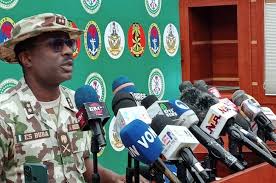
The Director Defence Media Operations, Major General
Edward Buba has disclosed that troops during the week under review neutralised 212 and arrested 252 persons stating further that Troops also arrested 29 perpetrators of oil theft and rescued 244 kidnapped hostages.
“In the SS, troops denied the oil theft of the estimated sum of One Billion Fifty Million Seven and Fifteen Thousand Two Hundred and Sixty Naira (N1,050,715,260.00) only.

“Furthermore, troops recovered 223 assorted weapons and 2,756 assorted ammunition. The breakdown as follows: 3 M56 rifles, 115 AK47 rifles, 3 PKT gun, 24 locally fabricated gun, 36 dane guns, 7 locally fabricated pistols, one fabricated revolver pistol, 3 locally made single barrel guns, 2 hand grenades and one locally made explosive.

“Others are: 1,716 rounds of 7.62mm special ammo, 494 rounds of 7.62mm NATO, 60 rounds of 7.62 x 25mm ammo, 290 rounds of 7.62 x 54mm ammo, 81 rounds of 9mm ammo, 2 live cartridges, 16 magazines, 3 M56 rifles magazines, one HH radio, 5 vehicles, 14 motorcycles, 15 mobile phones and the sum of N857,960.00 amongst other items.”

Major General Edward Buba made this known during a press conference on the ongoing military operations by the Armed Forces of Nigeria across the federation as at 28 March, 2024, held at the Defence Headquarters in Abuja.

While speaking further, “Troops in the Niger Delta area discovered and destroyed 102 dugout pits, 41 boats, 36 storage tanks and 8 vehicles. Other items recovered incl 39 cooking ovens, 6 pumping machines and 61 illegal refining sites. Troops recovered 944,700 litres of stolen crude oil, 171,060 litres of illegally refined AGO and 1,500 litres of DPK.

“The foregoing indicates that troops are weathering the storm through offensive posture and improved understanding of modus operandi of the adversary. Accordingly, we are doing our best to rescue other hostages in terrorist captivity.

“Troops would also continue to elimination threats posed by these terrorist and their cohorts. However, citizens should remember that they are our first line of intelligence. Therefore, as citizens, we have a collective responsibility of doing right.

“The armed force is bent on sustaining the winning ways of our operational engagements as demonstrated with the recent rescue of 16 and 137 hostages in Sokoto and Kaduna States, respectively. The rescue of these hostages is indicative of a better understanding of the dynamics of what we are dealing with ,and to address the issue in a much safer manner.

“The rescue operations was based on collaboration between the military working with local authorities and government agencies across the country, in a coordinated approach. The success demonstrates the unwavering commitment of the armed forces to secure and protect the citizens against harm and acts of terror.

“The pressure of military operations created a significant level of distress both for the terrorist and the children. Given the situation, troops line of interest was the children. The level of distressed created by the children was sufficient enough for troops to exploit in their rescue. Additionally, cursory operations in the general areas by troops culminated in the neutralization of several terrorist leaders and commanders in OP HADARIN DAJI theatre of operation.

“On the flip side, we must never allow the incident that occurred in Delta State that led to the killing of 17 soldiers that were buried on 27 March 2024 to ever happen again. The armed forces is a force for stability that employs both kinetic and non knowledge netic measures to achieve the desired end state.

“Prior to the ugly incident, the military had constructed several civic projects in Delta State as a sign of good will. For instance, the construction of Multipurpose Hall and Borehole Projects in Patani LGA and Medical Outreach at Aladja Community in Udu LGA all in Delta State, among several others. Needless to mention, the elders and community leaders have an obligation to expose these wanted persons.

“Nevertheless, troops would continue with their efforts until the culprits are found ,arrested, tried, and brought to justice by Nigerian law. The banner of eight wanted persons involved with the killing including a woman is hereby released. Accordingly, it is necessary to state that citizens are our first line of intelligence and must rise to the occasion in honour of their nation.”

Discourage Deforestation today

Emmanuel Daudu

Deforestation refers to the large-scale removal or clearing of forests or trees from an area. This process is often driven by human activities such as logging, agriculture, and urban expansion.

The consequences of deforestation are numerous and severe. The most immediate impact is the loss of habitat for countless plant and animal species, leading to a decline in biodiversity. Forests are home to approximately 80% of terrestrial biodiversity, so their destruction can result in the extinction of species.

Deforestation also contributes to climate change. Trees absorb carbon dioxide, a greenhouse gas responsible for global warming, and release oxygen. When trees are cut down or burned, this process is disrupted, leading to an increase in greenhouse gas emissions and the exacerbation of climate change.

Furthermore, deforestation leads to soil erosion, as the trees and their roots help to anchor the soil in place. Without tree cover, soil is more susceptible to erosion from wind and water, resulting in the loss of fertile soil and the degradation of land.

Deforestation also has social and economic impacts. Many indigenous communities and rural populations depend on forests for their livelihoods, including for food, shelter, and income from sustainable activities like logging or non-timber forest products. The destruction of forests can therefore lead to the displacement and impoverishment of these communities.

Efforts to address deforestation include establishing protected areas, implementing sustainable land-use practices, and promoting reforestation and afforestation programs. International agreements such as the United Nations’ Reducing Emissions from Deforestation and Forest Degradation (REDD+) initiative aim to provide financial incentives for forest conservation and sustainable management.

Overall, deforestation is a critical environmental issue that requires concerted global efforts to mitigate its impacts and protect the world’s forests for future generations.

END

Project sponsored by Zenith Global Media Services & Consultancy

Stop Environmental degradation, it is harmful to our environment

By Emmanuel Daudu

The world is blessed with natural and mineral resources, but exploitation of these resources has led to extreme pollution of the environment. Population growth and urbanization due to developments have also contributed immensely to the current pollution globally. Traffic emissions, transported dust and open burning are all significant contributors to air pollution around the world. The Sahara desert is a major source of transported dust, especially during the harmattan season in West Africa. Mercury emissions are very high in South Africa due to coal combustion and gold mining. Air pollutants may contaminate water and soil through atmospheric deposition. However, the major pollution sources for surface waters are the urban and industrial discharges of untreated effluents into the water. A few African countries have standards for effluent discharge into surface waters, but it is unknown whether these standards are being enforced. Though groundwater sources in wells and boreholes are the major sources of drinking water for the African populace, the biological water quality of these groundwater sources is mostly low in the region due to close proximity to sanitary facilities. Identified sources of soil pollution in Africa include agricultural activities, mining, roadside emissions, auto-mechanic workshops, refuse dumps and e-waste.

Oil spills are a major problem in oil-rich African countries such as Nigeria and Angola. Agricultural activities are the lowest impacting the soil in Africa

The role of citizens on environmental degradation can vary greatly depending on their actions and choices. Here are some ways in which citizens can contribute to environmental degradation:

Over consumption: Citizens play a significant role in environmental degradation through overconsumption of natural resources. The demand for products and services can lead to excessive extraction of resources, deforestation, and habitat destruction.

Waste generation: Citizens contribute to environmental degradation by generating large amounts of waste. Improper disposal of waste, such as littering or illegal dumping, can pollute land, waterways, and air.

Energy consumption: Citizens are responsible for energy consumption in households, transportation, and industrial activities. Overreliance on fossil fuels and inefficient energy use contribute to greenhouse gas emissions and climate change.

Pollution: Individual actions, such as using harmful chemicals, pesticides, or fertilizers, can contaminate water bodies and soil, leading to pollution. Additionally, personal choices related to transportation, such as using private vehicles instead of public transportation, can increase air pollution.

Lack of awareness and education: Citizens who are uninformed or unaware of the environmental consequences of their actions may inadvertently contribute to environmental degradation. Lack of knowledge about sustainable practices and alternatives can hinder positive environmental behavior.

However, citizens also have the power to mitigate environmental degradation:

Sustainable practices: Citizens can adopt sustainable practices, such as reducing energy and water consumption, recycling and reducing waste, and choosing environmentally-friendly products. These actions help reduce the pressure on natural resources, conserve energy, and minimize pollution.

Advocacy and activism: Citizens can play a crucial role in raising awareness and advocating for environmentally-friendly policies and practices. This can involve engaging in protests, petitions, or lobbying efforts to promote sustainability and hold governments and corporations accountable.

Community involvement: Citizens can actively participate in community-based initiatives, such as tree planting, clean-up drives, or conservation projects. Collaborating with local organizations and engaging in environmental volunteering activities helps protect ecosystems and enhance local sustainability.

Education and awareness: Citizens can educate themselves and others about environmental issues, encouraging sustainable behavior. By staying informed about climate change, pollution, and conservation, citizens can make informed decisions that contribute to environmental protection.

Responsible consumer choices: Citizens can vote with their wallets by supporting companies that prioritize sustainability and environmentally-friendly practices. This can influence businesses to adopt more sustainable practices and reduce their environmental impact.

Overall, citizens have the ability to either contribute to environmental degradation or play an active role in its mitigation and prevention. With the right choices and actions, individuals can contribute to a more sustainable and environmentally-friendly future.

How to curb the menace

Increase awareness and education: Educate individuals and communities about the importance of the environment and the consequences of environmental degradation. This can be done through schools, media campaigns, and community events.

Promote sustainable practices: Encourage individuals, businesses, and governments to adopt sustainable practices. This includes reducing waste, conserving water and energy, and promoting renewable energy sources.

Regulate and enforce environmental laws: Implement and enforce strict regulations to prevent pollution and promote the sustainable use of resources. This includes enforcing laws against illegal logging, pollution, and wildlife trafficking.

Support reforestation and habitat restoration: Invest in programs that restore damaged ecosystems and protect biodiversity. This includes planting trees, restoring wetlands and coral reefs, and protecting endangered species.

Encourage responsible consumption and production: Promote responsible consumption by reducing waste and promoting recycling and reuse. Encourage sustainable production practices that minimize the use of resources and reduce pollution.

Support renewable energy: Invest in renewable energy sources such as solar, wind, and hydroelectric power to reduce reliance on fossil fuels and decrease greenhouse gas emissions.

Encourage international cooperation: Collaborate with other countries and international organizations to address global environmental challenges. This includes sharing best practices, promoting sustainable development, and supporting international agreements such as the Paris Agreement.

Foster community involvement: Engage local communities in environmental conservation efforts. This can be done through volunteer programs, community gardens, and local environmental projects.

Support sustainable agriculture: Promote sustainable agricultural practices that minimize the use of chemicals, conserve water, and protect soil health. This includes promoting organic farming, agroforestry, and regenerative agriculture.

Invest in research and innovation: Support research and development of new technologies and practices that promote environmental sustainability. This includes investing in green technologies, sustainable materials, and eco-friendly infrastructure.

Overall, ending environmental degradation requires a multi-faceted approach involving education, regulation, community involvement, and international cooperation. It requires a shift towards sustainable practices and a collective effort to protect and restore the environment for future generations.

END

Project sponsored by Zenith Global Media Services & Consultancy
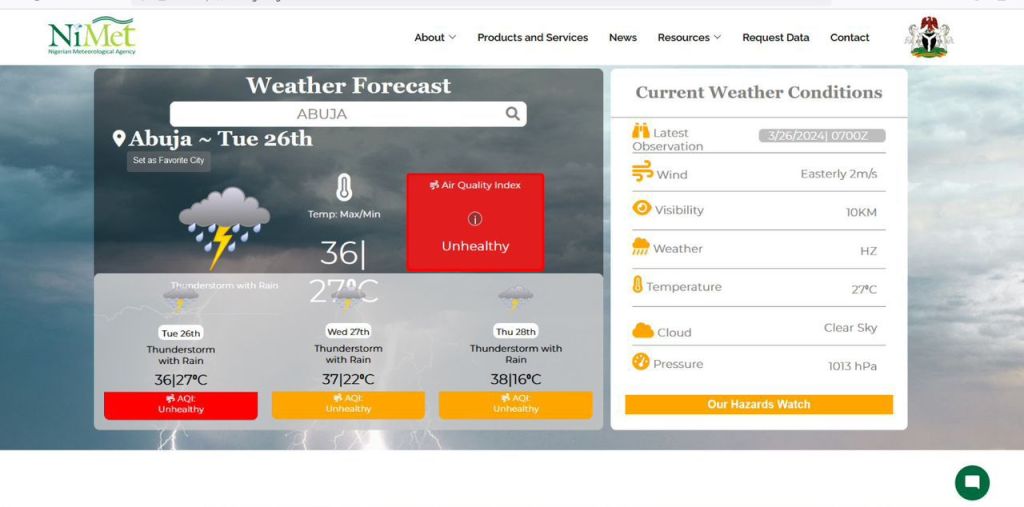
NiMet Unveils New  Website

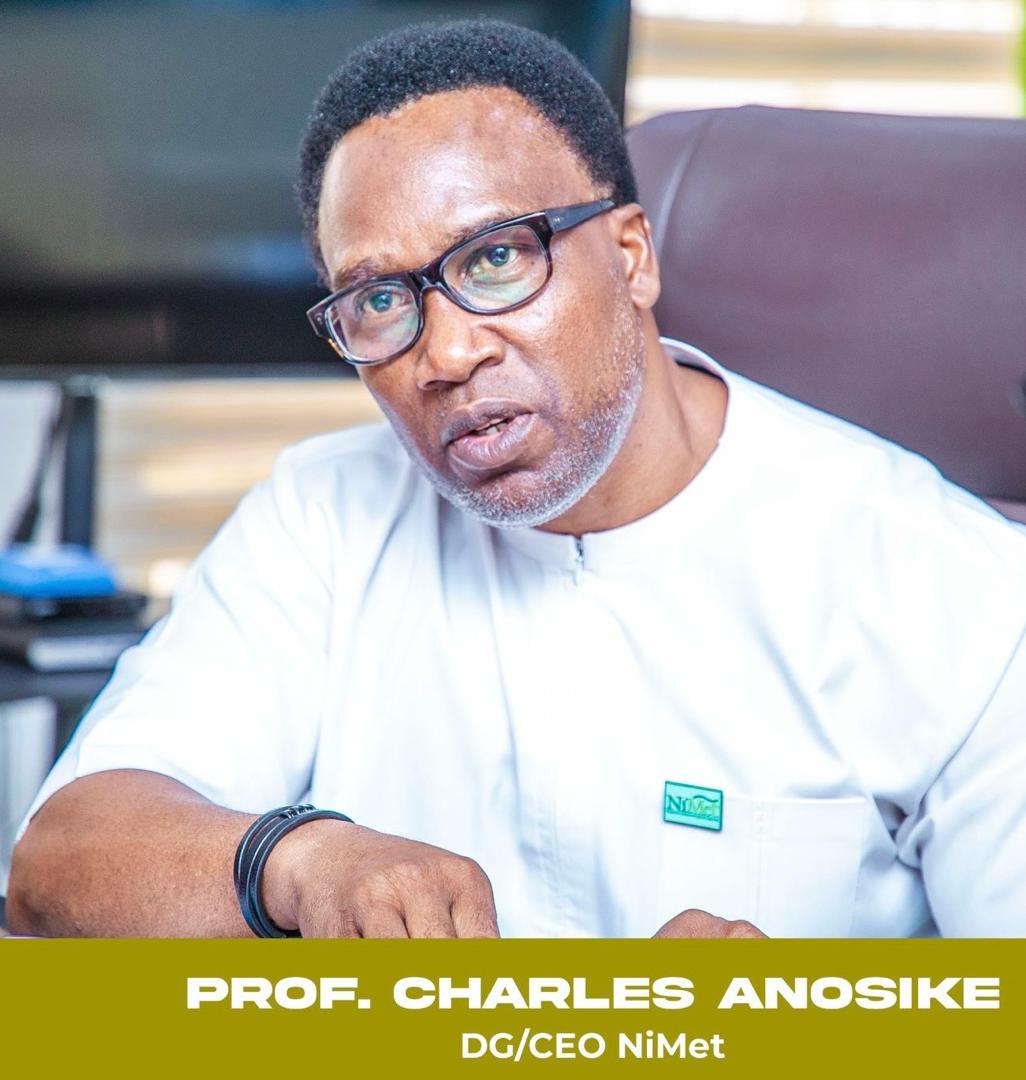
The Nigerian Meteorological Agency (NiMet), has unveiled its new website which the agency’s Director General, Chief Executive Officer, and the permanent representative of Nigeria with the World Meteorological Organization (WMO), Professor Charles Anosike says is; “More functional, interactive, dynamic and compares with websites of Met Offices in other parts of the world. The new website which can be accessed through our nimet.gov.ng domain has been meticulously designed by our internal ICT staff from the ground up, with a primary focus of establishing a sustainable and scalable portal for the agency”.

Continuing, Prof Anosike said that the unveiling of the new NiMet website, “is part of ongoing efforts by the new management of the agency to reposition the agency for improved and effective service delivery. This is in addition to other initiatives which are in line with the Aviation sector roadmap of the Federal Ministry of Aviation and Aerospace Development “.

Cyprian Okpalaku, Special Adviser on Information Communication Technology (ICT) to DG/CEO of NiMet, said that with the new website; “members of the public can effortlessly request data and monitor the progress of their requests directly through the portal. Also, the weather forecast widget has been revamped to enable partner agencies or organizations to easily integrate it into their own websites”.

Okpalaku listed other features of the website to include; per section view homepage design making it easy for visitors to concentrate on one content section at a time thus enhancing user experience, improved responsiveness ensuring optimal viewing and functionality across all devices,
secured back-office security matrix, highlighted enhanced features such as former Directors General sections, Sustainable Development Goals (SDGs) display, archive and documents section, NiMet Chat Box – an intelligent chat box which acts as a NiMet agent, responding to client inquiries with precision, weather alert section, activity sub-domains for agency departments, and an integrated news section.

Concluding, Okpalaku said that the new NiMet website; “serves as a cornerstone for the modern portal structure, contributing to NiMet SmartNet, a system facilitating back-office and smart office operations management across the agency and its branches nationwide”.

Nigeria Seeks Joint West Africa Regional Protection of Undersea Cables

Maryam Aminu

Following recent undersea cable cuts that challenged connectivity in many countries in the West African region, Nigeria has called for a coordinated and multilateral approach by the region to protect shared telecommunications infrastructure, and diversify connectivity to ensure uninterruptible connections.

The Executive Vice Chairman, Nigerian Communications Commission (NCC), Aminu Maida, made the submission at the 21st West Africa Telecommunications Regulatory Assembly (WATRA) Annual General Meeting (AGM) held in Freetown, Sierra Leone, between March 19th and 22nd 2024.

Dr. Maida, whose message was represented at the forum by the Deputy Director, Public Affairs of the Commission, Nnenna Ukoha, stated that the recent submarine cable cuts that resulted in nationwide outages on multiple networks in 12 African countries has raised the urgent need for the sub-region to establish a mechanism to protect itself from damage to submarine infrastructure and its attendant impact on the sub-region.

Maida in a statement by the Director, Public Affairs, Reuben Muoka on Sunday, disclosed that the recent submarine cable cuts that resulted in nationwide outages on multiple networks in 12 African countries raised the urgent need for the subregion to establish a mechanism to protect itself from damage to submarine infrastructure and its attendant impact on the subregion

The Executive Vice Chairman referred to a report by Cloudflare, an IT service management firm, which indicates that about six countries, including four West African countries, still suffers outages caused by the submarine cable cuts.

“Securing telecom infrastructure is paramount for fostering Foreign Direct Investment (FDI) and enhancing investor confidence in the West African sub-region.The reliability and resilience of telecommunications networks are crucial factors that investors consider when evaluating regional opportunities.” He added

“By ensuring the security of these vital assets, we can attract more investment, spur economic growth, and enhance our competitiveness on the global stage

He noted that a secured telecom infrastructure not only facilitates efficient communication and connectivity but also signals a commitment to safeguarding critical assets essential for business operations

The EVC recommended that the WATRA Working Group on infrastructure should expand it’s mandate to superhead the development of a comprehensive strategy to safeguard the subregion’s telecommunications networks and associated infrastructure thereby proactively bolstering resilience through improved disaster response protocols to better insulate ourselves from future disruptions

FG Calls For Collaboration With UNDP On Youth Empowerment

Maryam Aminu

In a significant stride towards youth empowerment, the Federal Government has called for the support of the United Nations Development Programme (UNDP) to implement the strategic plans of the Ministry of youth development.

The strategic plans are aimed at providing young Nigerians with the necessary skills, mentorship, conducive environment and access to resources that will empower them to become active contributors to the country’s economy.

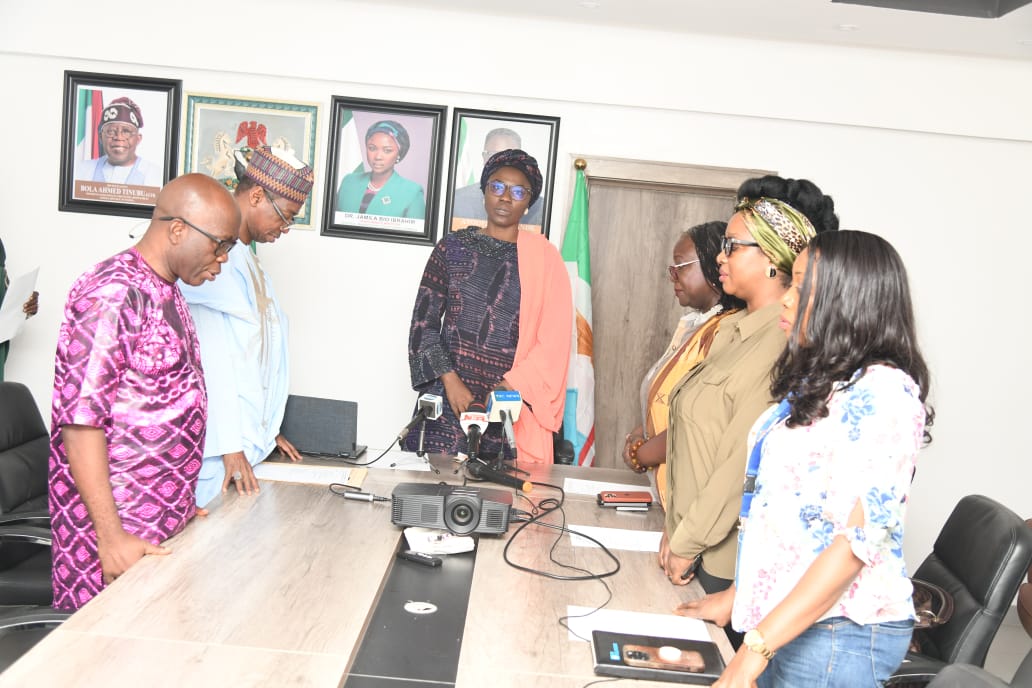
Dr. Jamila Bio Ibrahim, the Minister of Youth Development, made this call during a pivotal meeting with the Resident Representative of the UNDP, Ms. Elsie Attafuah, which took place at the Honourable Minister’s conference room in Abuja.

While shedding light on the strategic areas of the ministry’s agenda. Dr. Bio-Ibrahim said, “Our strategic ambition is to transform and reposition the Nigerian youth as catalysts for economic development. Young people must be an integral part of this process. We have other sub-ambitions, the first being a reduction in the youth unemployment rate, followed by an increase in youth possessing skills that are in line with global demand, and an increase in youth participation in social and economic development”

Dr Bio- Ibrahim expressed that the core tactical initiatives are focused on four pillars: Governance, Jobs and Skills Innovation, Culture and Behavioral Change, and Human Capital Development.

“These pillars aim to guide policy advocacy and development, improve coordination across stakeholders, and provide multi-agency youth programs and resources” she added

The Minister emphasized the determination of her ministry to establish communication governance frameworks, implement youth-embedded public and private sector mentorship programs, create multi-sector job off-taker platforms for youth employment, enhance NYSC reforms and establish youth villages and innovation centers.

She also disclosed plans to revitalize the national youth investment fund, launch the Young Leaders Institute, implement social, behavioral, and cultural change programs aimed at tackling youth-related issues such as climate change, gender, mental health, drug, and substance abuse.

The Minister further explained that the initiative includes provision of access to business literacy, financial management, and entrepreneurship training to meet the global market demand.

As part of efforts to actualise these initiatives, she disclosed plans to create more professional departments in the ministry

“We are currently seeking approval to create additional professional departments. However, the one that is particularly important to us is the Youth Well-being Department. It is crucial to create such a department because when young people have good mental health, they are more likely to be productive. Therefore, our goal is to prioritize the well-being of our youth”, she said.

She further said, “We are seeking approval to restart the Nigeria Investment Fund. If approved, it will enable us to employ the cluster approach with a view to enhancing youth development and empowerment. This, in turn, will lead to tangible sustainable impact on a great scale, and benefit our economy”.

Dr. Bio-Ibrahim maintained that one of the Ministry’s main goals is to increase the representation of young people in politics and governance at all levels by seeking the Council’s approval for 30 percent youth quota.

In his welcome remark, Dr. Donuma Umar Ahmed, Permanent Secretary of the Ministry, expressed his sincere appreciation for the meeting with UNDP Resident Representative.

He posited that the meeting was aimed to bring about positive change in the lives of young people in Nigeria.

He urged the participants to be proactive in their contribution.

Speaking also, Ms. Elsie Attafuah, the Resident Representative of UNDP, gave the assurance that her organisation would provide support for the initiatives.

Attafuah lamented that the African continent is facing a daunting challenge as young people continue to struggle to find jobs, leading to frustration and the growing trend of going abroad to seek jobs.

She pointed out that it was high time to delve deeper into the root causes of the problem and take a more realistic approach towards youth empowerment and job creation.

“We must create more opportunities and find jobs for our people, as merely providing them with starter packs or training won’t solve it. We need to identify the obstacles that hold us back and tackle them head-on. Let’s work together to eradicate this problem and create a brighter future for our youth and our continent.” She said.

“In the four pillars, we will encourage everyone to think outside the box and explore innovative practices that align with the ever-changing world,” she added.

Ms. Attafuah expressed her eagerness to collaborate with the Ministry in the priority areas outlined by the Minister.

She stressed the importance of ensuring that the design, implementation, and operationalization are done properly

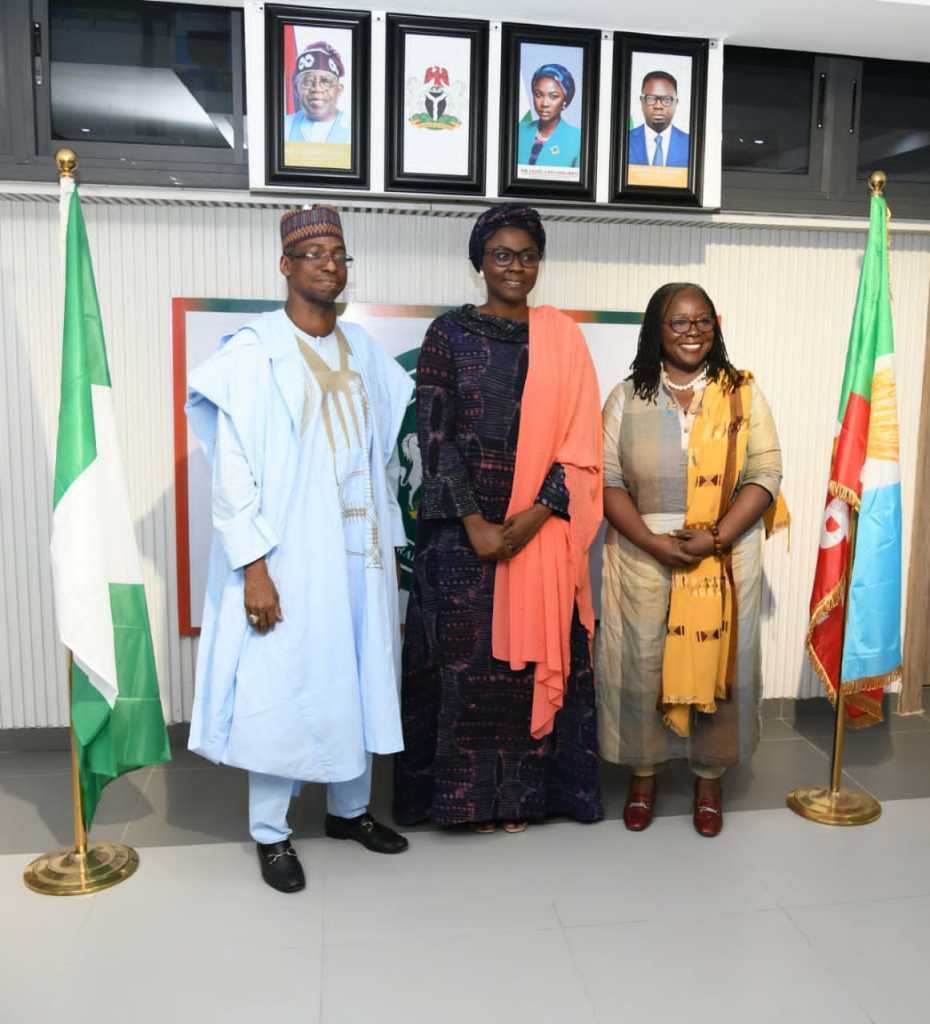
L-R, Dr. Dunoma Umar Ahmed, Permanent Secretary, Federal Ministry of Youth Development, Dr. Jamila Bio Ibrahim, Hon. Minister of Youth Development and Ms. Elsie Attafuah, Resident Representative, UNDP, during the courtesy call on the Minister in her office.

NCSCN COMMENDS FG, CUSTOMS ON CANCELLATION OF 25% PENALTY ON IMPORTED VEHICLES, SAYS MEASURE WILL CUSHION HARDSHIP

The National Civil Society Council of Nigeria (NCSCN) has commended the Federal Government and the Nigeria Customs Service (NCS) on the initiation of a 90-day window for the regularisation of import duties on specific categories of vehicles, effective from 4th March 2024 to 5th July 2024.

The commendation was made on behalf of the Civil Society Council by the Executive Director, Blessing Akinlosotu, in the wake of a Press Release issued by the Nigeria Customs Service signed by Abdullahi Maiwada, a Chief Superintendent of Customs and National Public Relations Officer for Comptroller General of Customs, dated 22 March 2024.

NCS under the directives of the Honourable Minister of Finance and Coordinating Minister of the Economy, took this step to ease economic hardship and encourage compliance, by approving the suspension of the 25% penalty previously imposed in addition to import duty on improperly imported vehicles.

Stakeholders, including vehicle owners, importers, and agents, are encouraged to seize this opportunity to regularise import duty payments within the designated 90-day timeframe.

“This is another highly commendable gesture by the Government of President Bola Ahmed Tinubu GCFR, through the Federal Ministry of Finance, and the Nigeria Customs Service to cushion the hardship on Nigerians as a result of the global economic down-turn.

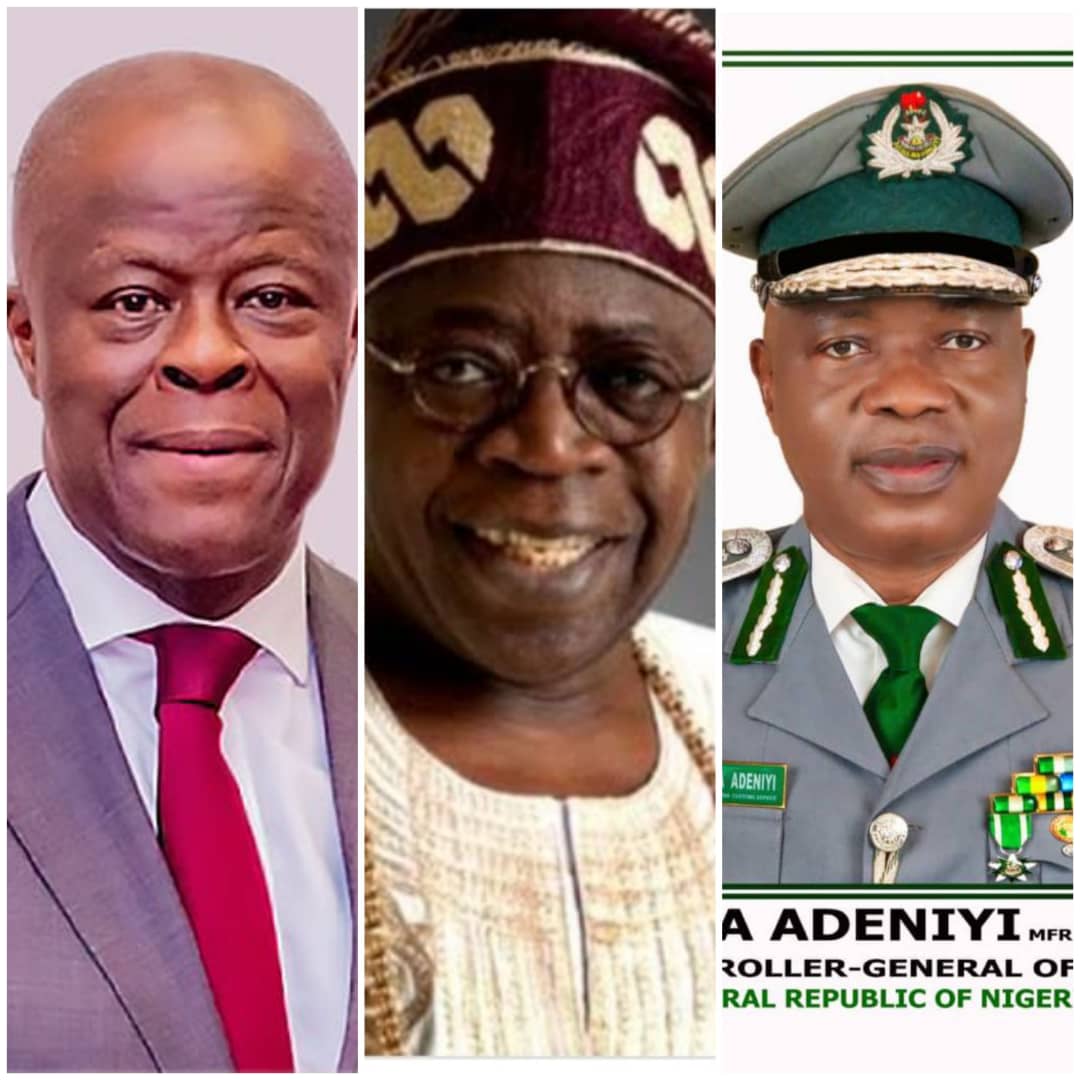
The Nigeria Customs Service under the new Comptroller General, Mr. Bashir Adewale Adeniyi has given unprecedented human face to the Service, of which the Civil Society Council deeply appreciates as the conscience of the citizenry and voice of the masses”. Akinlosotu posited.

“This waiver and removal of penalty charges will go a very long way in boosting individual and organisational business economies, while having a positive ripple out effect on families. With more of such strategic interventions coming from the Minister of Finance and the NCS, our Council believes the present nationwide hardship would be remarkably ameliorated in no distant time”. The Executive Director continued.

“The Civil Society Council hereby specially thank President Bola Ahmed Tinubu GCFR, appreciate the Honourable Minister of Finance, Wale Edun and commend the Comptroller General of Customs, Bashir Adewale Adeniyi for this development, while we call on the citizenry to exercise more patience, being rest assured that the current economic hardship shall drastically reduce, considering the numerous interventions being roled out by the Federal Government, especially by the Federal Ministry of Finance and the Nigeria Custom Service”. Akinlosotu concluded.