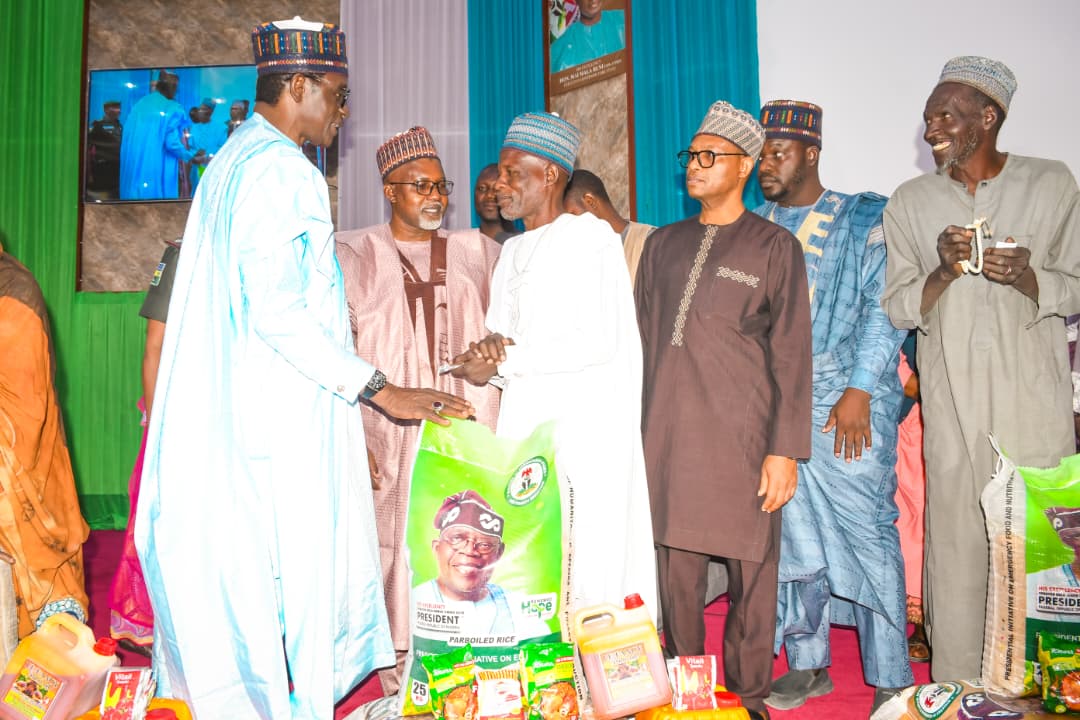
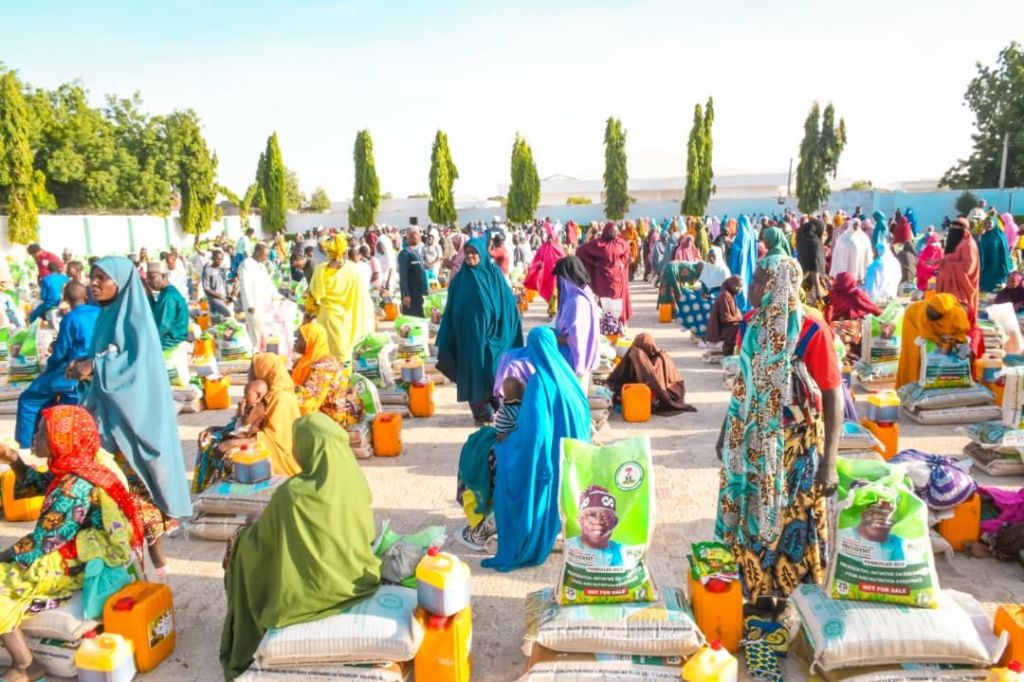
In a renewed push to tackle hunger and humanitarian distress in Nigeria’s conflict-ravaged North-East, the Federal Government has launched a fresh emergency food and nutrition support programme in Yobe State, targeting thousands of vulnerable households struggling with the lingering effects of insurgency and climate shocks.
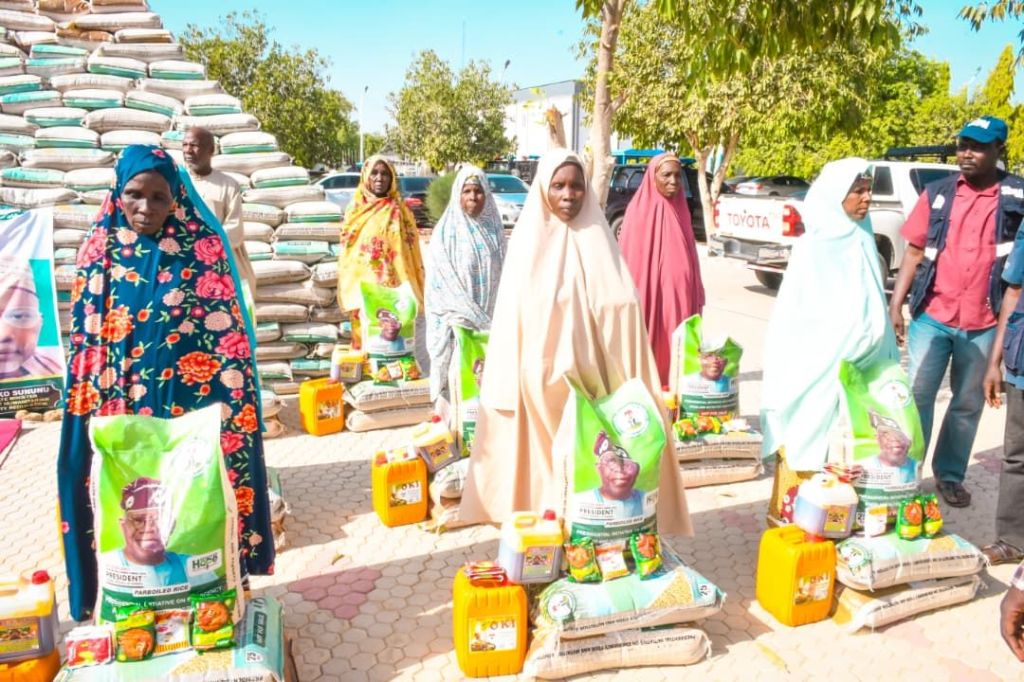
The intervention, flagged off on Wednesday in Damaturu, forms part of the Presidential Emergency Food and Nutrition Support initiative designed to cushion the impact of food insecurity and strengthen the resilience of communities affected by years of conflict and economic hardship.
Speaking at the ceremony, the Minister of State for Humanitarian Affairs and Poverty Reduction, Yusuf Tanko Sununu, described the programme as a deliberate and strategic response to the protracted humanitarian crisis in Yobe and the wider North-East region.
Sununu explained that years of insurgency and violent extremism have displaced thousands of families, disrupted livelihoods and weakened household resilience across the region.
He added that climate-related challenges, including desertification, erratic rainfall and periodic flooding, have further reduced agricultural productivity in the largely agrarian state, deepening food insecurity and poverty.
The minister stressed that despite reduced support from some international development partners, the Federal Government remains determined to protect vulnerable Nigerians from the effects of funding shortfalls.
He expressed appreciation to President Bola Ahmed Tinubu for prioritising social protection and humanitarian interventions under the administration’s Renewed Hope Agenda, noting that the programme reflects a strong commitment to safeguarding the welfare and dignity of poor and vulnerable citizens.
Sununu also commended the Governor of Yobe State, Mai Mala Buni, for strengthening collaboration with the Federal Government to ensure effective implementation of humanitarian programmes.
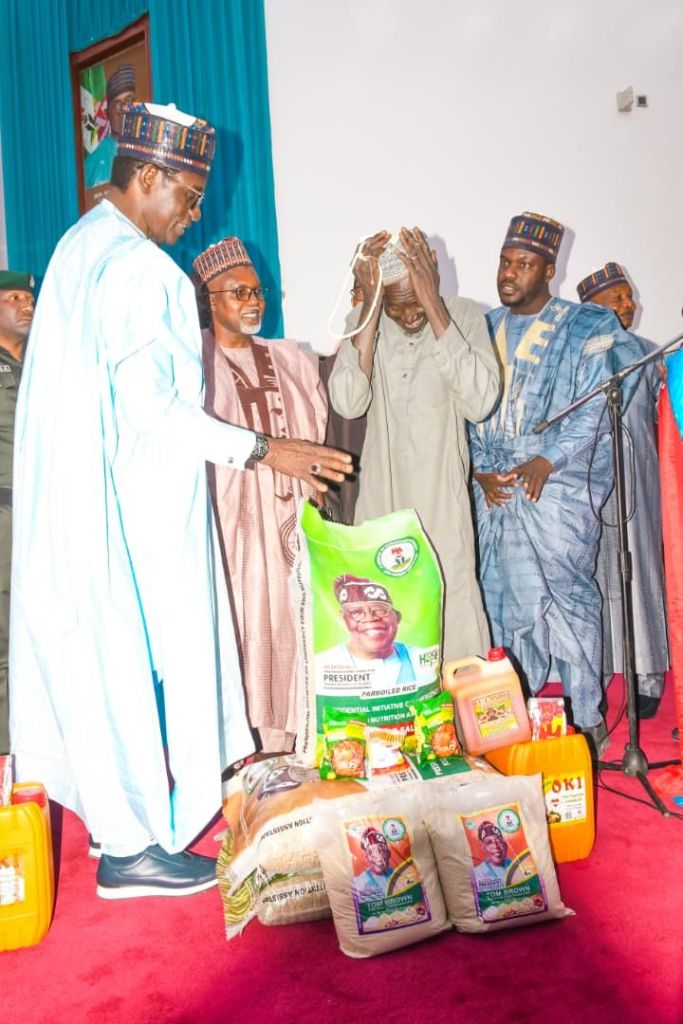
He further acknowledged the role of the Emir of Damaturu, Shehu Hashimi II Ibn Umar El-Kanemi, in promoting peace, transparency and community mobilisation.
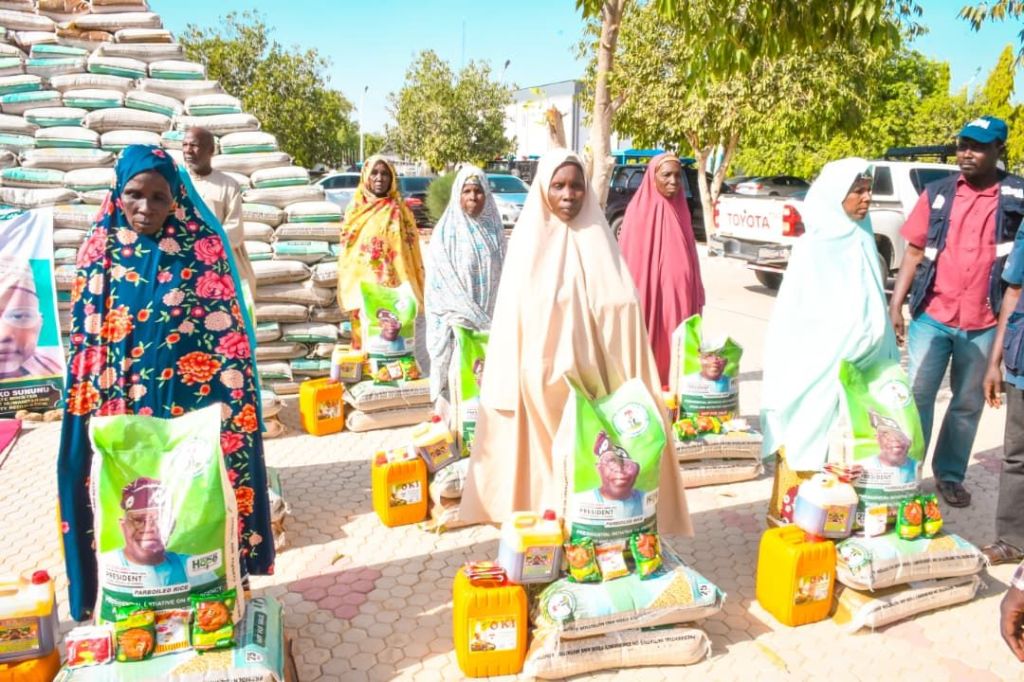
In his welcome address, the Permanent Secretary of the ministry, Olubunmi Olusanya, explained that the intervention includes the distribution of food items, nutrition commodities and essential medical supplies.
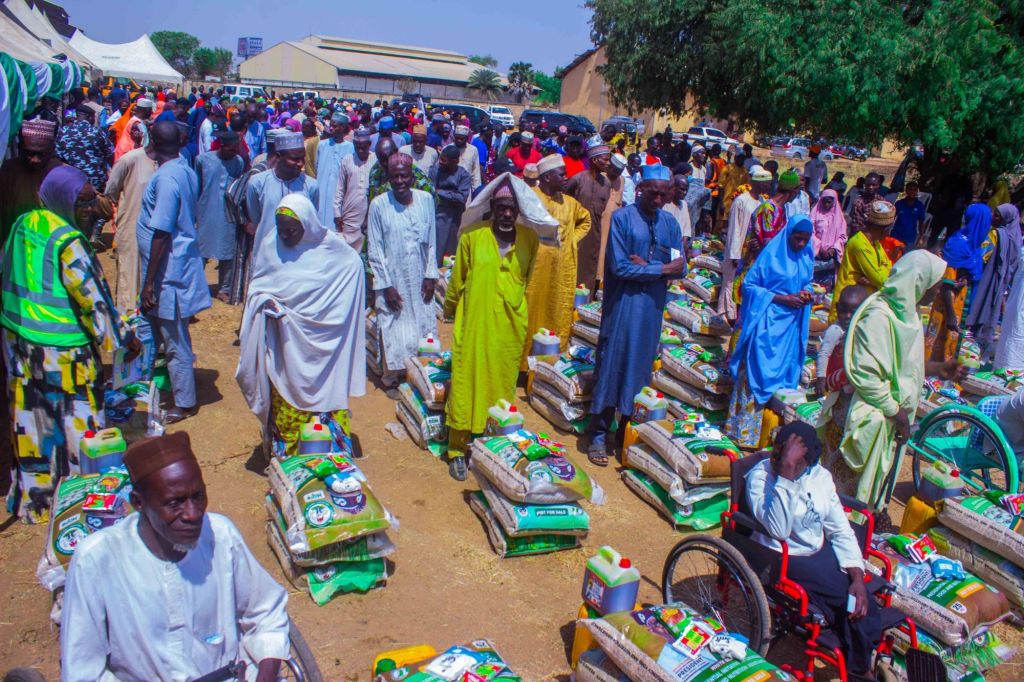
According to him, the programme is specifically targeted at internally displaced persons, vulnerable returnees, women-headed households, malnourished children, the elderly and persons with disabilities.
Olusanya assured that the ministry has put in place transparent systems in collaboration with the Yobe State Government to ensure proper targeting of beneficiaries and effective feedback mechanisms.
He noted that beyond providing immediate relief, the broader goal of the intervention is to stabilise affected households, promote early recovery and build long-term resilience in conflict-affected communities.
In his remarks, Governor Buni expressed gratitude to the Federal Government for its continued support toward Yobe’s recovery and development.
He disclosed that the state had taken significant steps to address displacement and humanitarian challenges, including launching Nigeria’s first State Policy on Internally Displaced Persons, which is backed by budgetary commitments and integrated into the state’s 25-year development plan.
Buni further revealed that the National Commission for Refugees, Migrants and Internally Displaced Persons, in partnership with the United Nations High Commissioner for Refugees and the Yobe State Emergency Management Agency, recently conducted a registration exercise for asylum seekers in Geidam Local Government Area.
The exercise, he said, documented 488 households comprising 1,699 individuals.
The governor reaffirmed his administration’s commitment to data-driven humanitarian coordination and continuous registration of vulnerable persons to ensure that no one is left undocumented or unsupported.
He also urged beneficiaries to use the distributed items responsibly and called on stakeholders to uphold integrity, compassion and unity throughout the implementation of the programme.
The ceremony ended with the official declaration of the distribution exercise, signalling renewed collaboration between the Federal Government and Yobe State in advancing food security, resilience and sustainable poverty reduction.

 Africa Security Investigation News