Maryam Aminu
In a bold move to reposition youth development at the heart of national transformation, the Federal Government has sealed a strategic partnership with Stratcomm Consulting to strengthen youth empowerment initiatives across Nigeria.
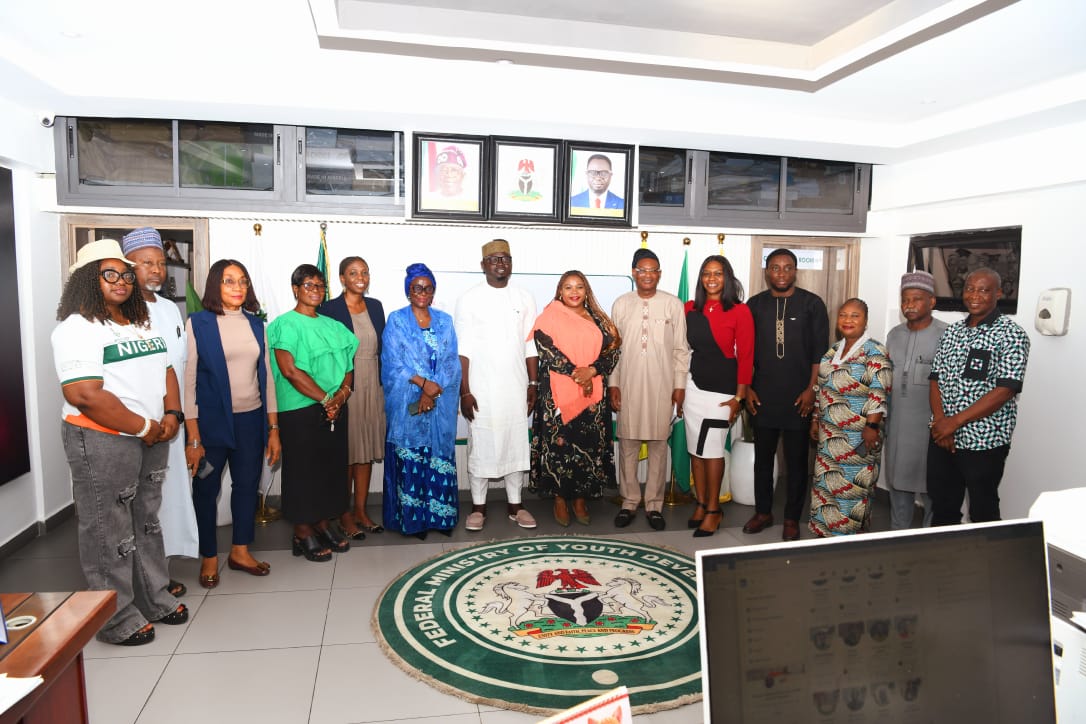
The partnership, formalised through the signing of a Memorandum of Understanding (MoU) between the Federal Ministry of Youth Development and Stratcomm Consulting in Abuja, signals a renewed push toward research-driven policy formulation, strategic communication, and sustainable youth-focused interventions.
Speaking at the signing ceremony, the Honourable Minister of Youth Development, Comrade Ayodele Olawande, described the collaboration as a forward-looking initiative designed to harness innovation, build institutional capacity, and deliver measurable outcomes for young Nigerians.
He stressed that the partnership goes beyond climate-related interventions and will focus on broader development priorities, particularly strengthening evidence-based policymaking and communication strategies.

The Minister, who was represented by the Permanent Secretary, Dr. Maryam Keshinro, emphasized that effective communication remains critical to ensuring government programmes achieve visibility, impact, and long-term sustainability.
He noted that data-driven decision-making would play a central role in shaping responsive youth migration and development strategies.
According to him, the agreement aligns with the Renewed Hope Agenda of President Bola Ahmed Tinubu, which prioritises public-private partnerships and inter-ministerial collaboration as key drivers of national development.
He reaffirmed the Ministry’s commitment to promoting youth-led initiatives, advancing strategic communication, and deepening evidence-based engagement in youth development programmes.
Also speaking, the Director of the Youth Migration and Climate Action Resilience Department, Oyekan Adeoloyin, explained that the department was established in response to growing national and global challenges related to youth mobility, economic migration, and environmental sustainability.
He noted that Nigerian youths are among those most affected by climate change and migration pressures but remain critical drivers of innovative and sustainable solutions.
Adeoloyin described the collaboration with private-sector partners as timely and strategic, stressing the need for coordinated action across ministries, sectors, and development partners to strengthen migration governance and climate resilience.
In his remarks, the Managing Director of Stratcomm Consulting, Dr. Kayode Olanorin, commended the Ministry’s innovative communication approach, noting that traditional and repetitive engagement methods are no longer sufficient to capture youth interest.
He described the partnership as essential in addressing emerging youth development challenges through collaborative and creative strategies.

 Africa Security Investigation News