Maryam Aminu
After years of neglect that left many youth development centres idle across the country, the Federal Government has taken a decisive step to breathe new life into the facilities, signing a strategic Memorandum of Understanding (MoU) with the Africa Projects Development Centre (APDC) to transform them into engines of skills acquisition, innovation and job creation.
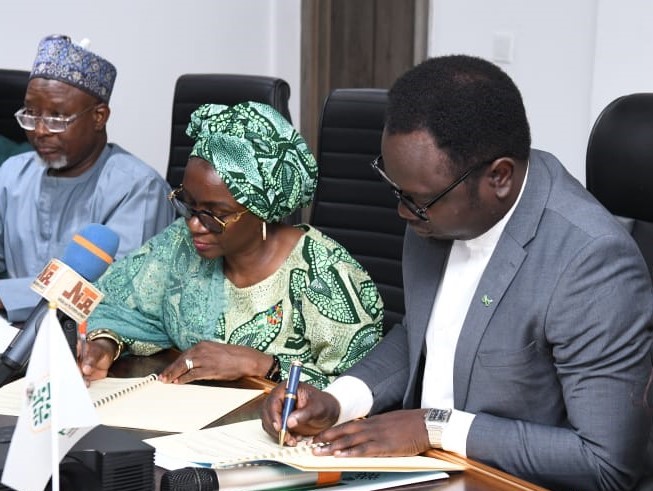
The MoU, signed on Monday in Abuja, signals a renewed national push to reposition Youth Development Centres as modern, fit-for-purpose hubs for vocational, digital and entrepreneurial training, aligned with the evolving demands of the labour market and Nigeria’s broader development agenda.
Speaking at the signing ceremony, the Minister of Youth Development, Comrade Ayodele Olawande, said the partnership reflects the Federal Government’s commitment to empowering young Nigerians and tackling unemployment through practical, results-driven interventions.
He acknowledged that many youth centres nationwide have suffered prolonged neglect, stressing that the collaboration with APDC will inject technical expertise, private-sector efficiency and innovative funding models to restore them to full functionality.
According to the Minister, the partnership represents a shared commitment to building a sustainable and inclusive youth development framework. He explained that the scope of the collaboration covers project design, training and capacity building, implementation, monitoring and evaluation, as well as resource mobilization, with the revitalization of Youth Development Centres as its core focus.
Comrade Olawande noted that the initiative aims to convert existing centres into vibrant training and incubation hubs offering vocational, technical, digital and entrepreneurial skills in high-demand sectors.
He added that the centres will also serve as platforms for innovation, mentorship and market access, enabling young Nigerians to translate skills into sustainable livelihoods.
He further stated that the MoU will strengthen the Ministry’s institutional capacity in donor engagement, project execution and results-based monitoring and evaluation, ensuring measurable impact and value for money. The agreement, he said, provides a practical pathway for translating youth development policies into implementable programmes that directly address skills gaps, unemployment and limited access to finance.

In her welcome address, the Permanent Secretary of the Ministry, Dr. Maryam Ismaila Kenshiro, described the partnership as a strategic milestone in strengthening youth development structures nationwide.
She said the collaboration would focus on transforming existing youth centres into functional training and incubation facilities delivering market-relevant vocational, technical, digital and entrepreneurial programmes.
Dr. Kenshiro noted that APDC’s proven experience in project design, capacity building and youth incubation will complement the Ministry’s mandate, enhance programme delivery, and improve monitoring and evaluation outcomes.
She added that the MoU also establishes a framework for joint resource mobilization, including engagement with development banks and strategic partners, to guarantee sustainability and measurable results.
Earlier, the Managing Director of APDC, Dr. Chiji Ojukwu, said the agreement was the product of sustained engagement and a shared vision to scale youth empowerment initiatives across the country.
He disclosed that APDC has empowered over 9,000 youths and women through interventions in agriculture, Technical and Vocational Education and Training (TVET), environmental sustainability and the creative industry.
Dr. Ojukwu explained that the partnership will support nationwide expansion of youth programmes, strengthen resource mobilization and promote evidence-based youth policy development, with a focus on long-term, sustainable impact.
With the MoU now in place, stakeholders say expectations are high that Nigeria’s youth centres will shift from dormant public assets to dynamic platforms driving skills, innovation and economic opportunity for millions of young Nigerians.

 Africa Security Investigation News