Maryam Aminu
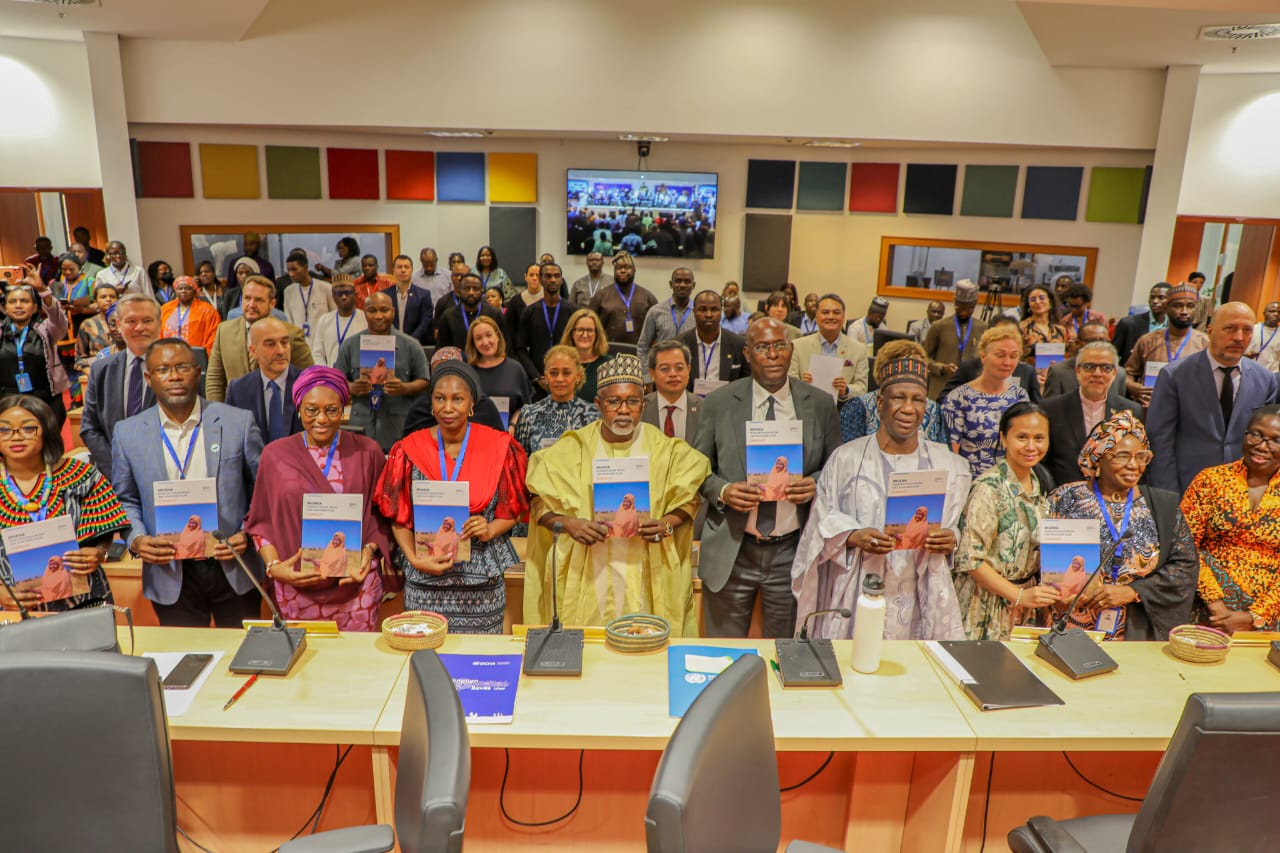
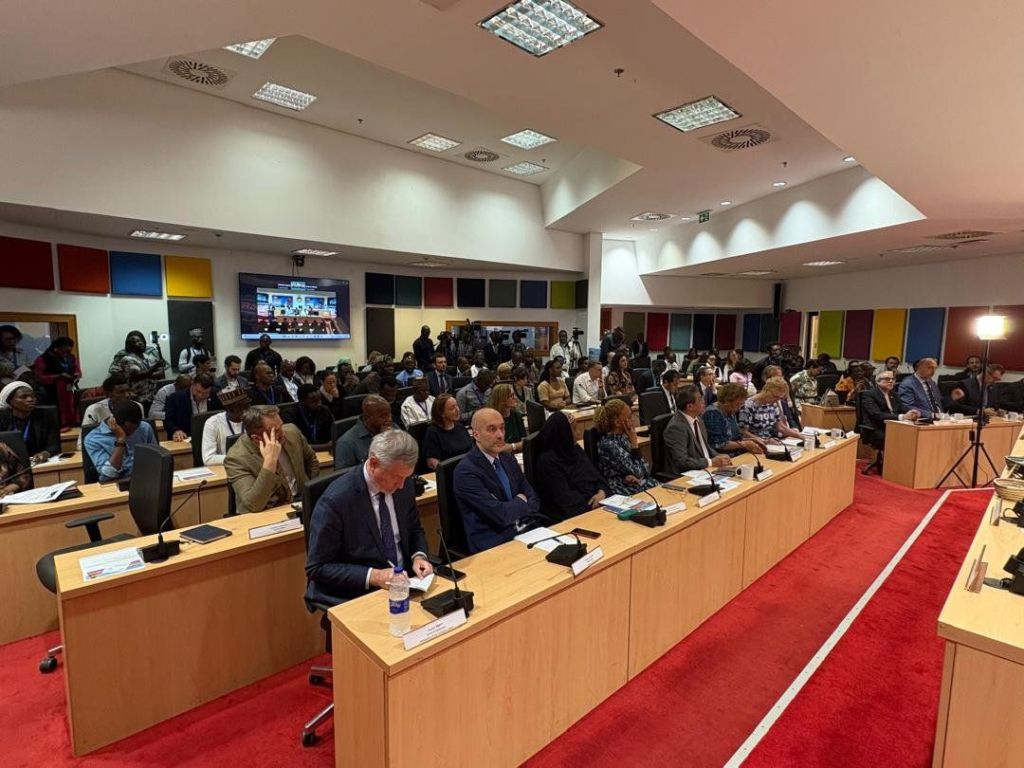
The Federal Government has declared a decisive shift in Nigeria’s humanitarian strategy, moving away from recurring emergency relief toward prevention, resilience, and sustainable human development, as it officially launched the 2026 Nigeria Humanitarian Needs and Response Plan (HNRP) in Abuja.
Speaking at the launch held at the UN House Auditorium, the Minister of Humanitarian Affairs and Poverty Reduction, Dr. Bernard M. Doro represented by Minister of State for Humanitarian Affairs and Poverty Reduction, Dr. Yusuf Tanko Sununu,, said the new plan reflects the government’s resolve to assume full leadership and ownership of humanitarian coordination while reducing long-term dependency on external aid.
According to the Minister, humanitarian action under the Renewed Hope Agenda of President Bola Ahmed Tinubu must serve as a bridge that supports stabilisation, restores dignity, and enables vulnerable Nigerians to permanently exit cycles of poverty and vulnerability.
“Humanitarian response must no longer be an end in itself. It must connect to recovery, strengthen resilience, and support communities to rebuild their lives sustainably,” Dr. Doro said.
He noted that while humanitarian interventions have played a critical role in mitigating the effects of conflict, climate shocks, displacement, and food insecurity particularly in Borno, Adamawa, and Yobe States Nigeria is now at a defining moment that demands a transition from repeated emergency responses to prevention and preparedness.
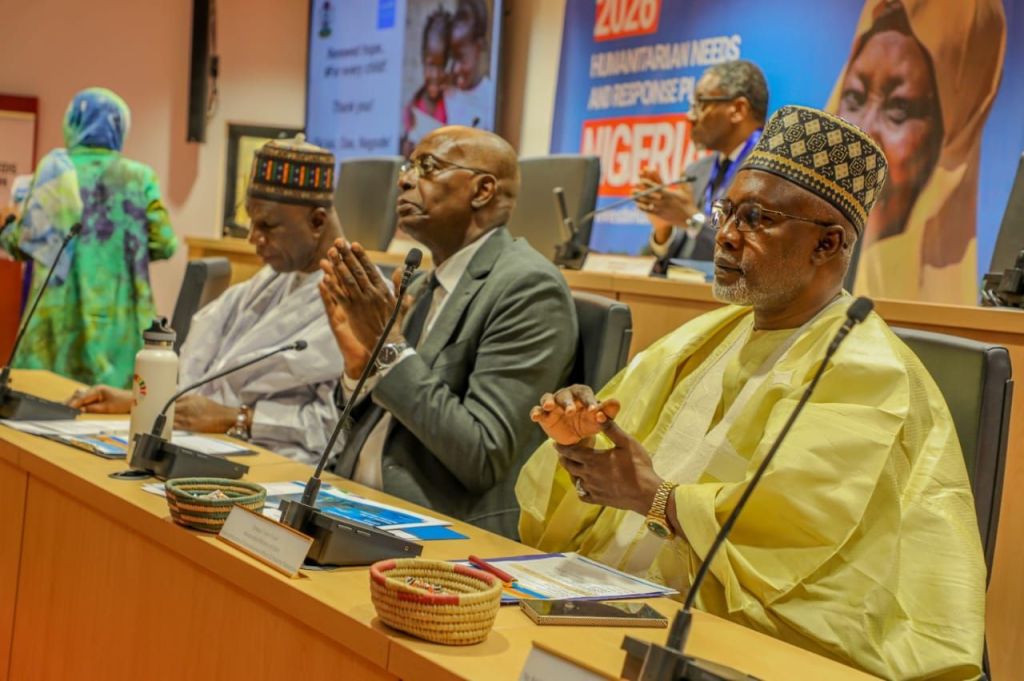
The Minister explained that the 2026 HNRP marks a strategic policy shift toward anticipatory action, early warning systems, risk-informed planning, and durable solutions, stressing that preventing crises is more humane, cost-effective, and sustainable than responding after devastation occurs.
Reaffirming government leadership, Dr. Doro stated that all humanitarian interventions must align with national policies and strengthen systems at the federal, state, and local levels, while contributing directly to poverty reduction, social protection, and inclusive growth.
He also emphasised localisation as a core priority, noting that Nigerian institutions, civil society organisations, women-led and youth-led groups, and community structures are central to effective response and lasting recovery.
“Displacement must not become permanent, and humanitarian aid must not replace governance or development. Our focus must remain on restoring livelihoods, expanding access to basic services, and addressing the root causes of vulnerability,” the Minister added.
Dr. Doro further highlighted the government’s commitment to advancing a Humanitarian–Development–Peace Nexus, describing it as essential for delivering lasting impact and ensuring humanitarian investments translate into improved quality of life for Nigerians.
The Minister’s remarks came against the backdrop of warnings by the United Nations that nearly 35 million Nigerians may face food insecurity during the upcoming lean season, with about three million children at risk of severe acute malnutrition. The UN also disclosed that the 2026 HNRP seeks $516 million to provide lifesaving assistance to 2.5 million people, amid declining global humanitarian funding.
Dr. Doro welcomed continued partnership with the international community but stressed that Nigeria’s humanitarian transition must be anchored on national ownership, accountability, and people-centred solutions.
“The success of the 2026 HNRP will depend not only on resources, but on how effectively we work together to deliver coordinated, accountable, and dignified outcomes for Nigerians,” he said.
He concluded by assuring that the Federal Government remains committed to leading Nigeria’s humanitarian and poverty reduction agenda in a manner that restores dignity, strengthens resilience, and ensures that no Nigerian is left behind.
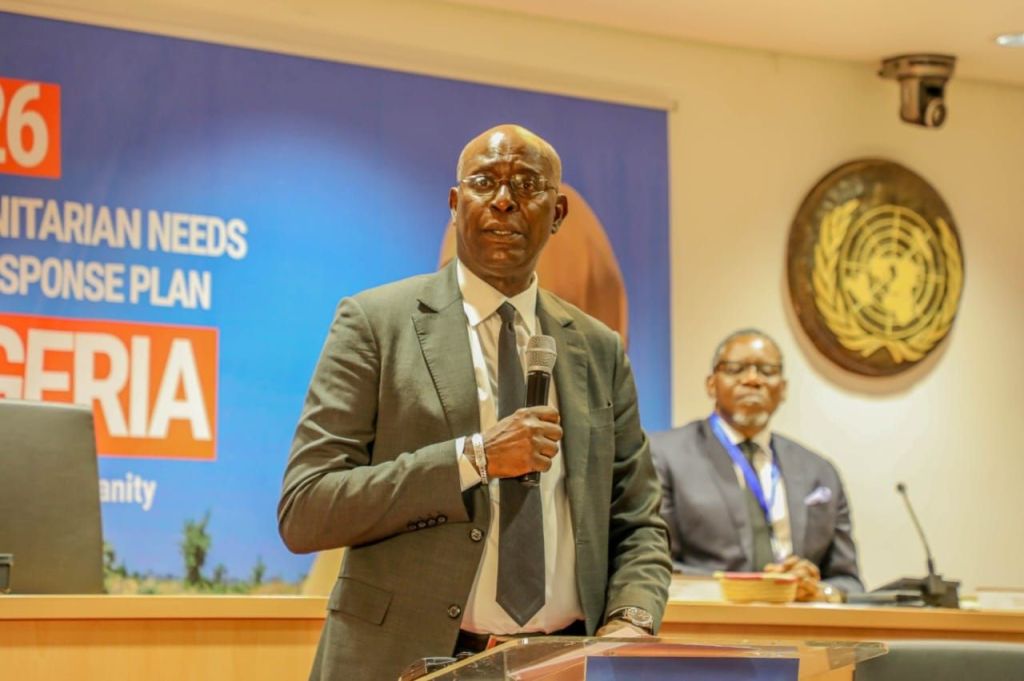
UN Resident and Humanitarian Coordinator in Nigeria, Mohamed Malick Fall
UN Resident and Humanitarian Coordinator in Nigeria, Mohamed Malick Fall, acknowledged the government’s increasing leadership and domestic resource mobilisation, noting that the era of internationally financed and delivered humanitarian action in Nigeria is gradually giving way to a nationally led and coordinated system.
Speaking in support of the government’s position, the United Nations Resident and Humanitarian Coordinator in Nigeria, Mohamed Malick Fall, warned that humanitarian needs in the country are rising at a time when global funding is sharply declining.
He disclosed that nearly 35 million Nigerians could face food insecurity during the upcoming lean season, while about three million children are at risk of life-threatening severe acute malnutrition, describing the figures as “lives and futures, not just statistics.”
Fall noted that civilians in Borno, Adamawa and Yobe States continue to face heightened protection risks due to renewed violent attacks, revealing that over 4,000 civilians were killed in the first eight months of 2025, the same number recorded in all of 2023.
He said the 2026 Humanitarian Needs and Response Plan, which targets 2.5 million people at a cost of $516 million, reflects a necessary focus on the most lifesaving interventions, while underscoring a broader transition toward a nationally led humanitarian system, with greater domestic financing, strengthened coordination, and increased reliance on Nigerian institutions and community-based organisations.

 Africa Security Investigation News