
Emmanuel Daudu
The Minister of Humanitarian Affairs and Poverty Reduction, Dr. Bernard M. Doro, has called for the establishment of a unified national framework to coordinate humanitarian response and poverty reduction efforts across Nigeria, stressing the need for stronger sub-national ownership and results-based financing.
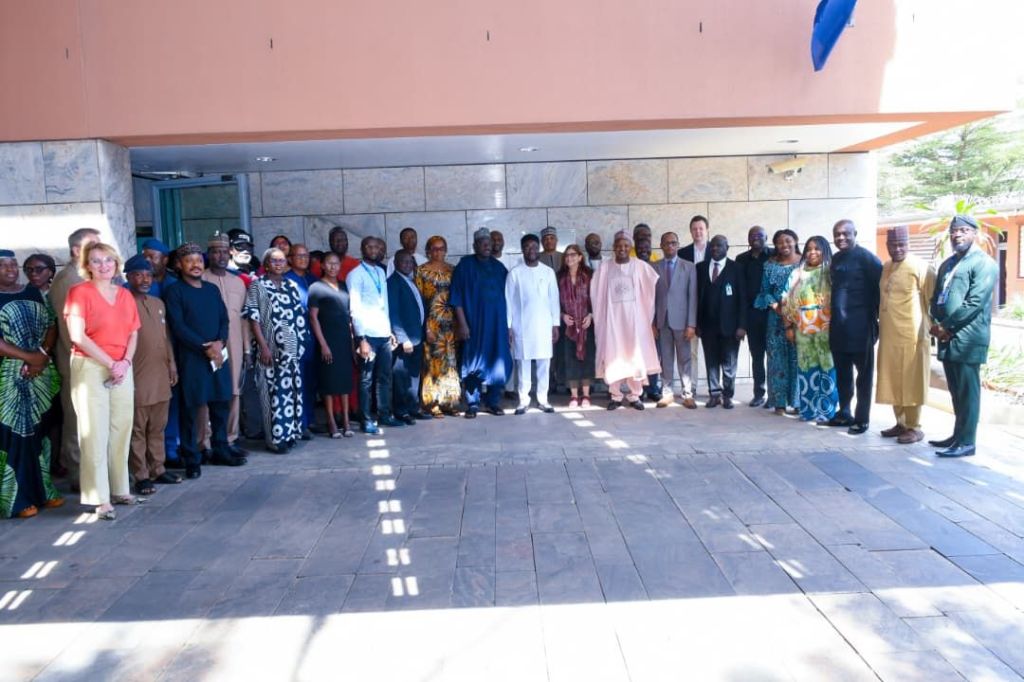
Dr. Doro made the call on Monday during a one-day High-Level Multi-Stakeholder Dialogue on Strengthening Sub-National Ownership and Results-Based Financing (RBF) for Humanitarian and Development Interventions, held at the European Union Conference Hall in Abuja.
He emphasised that state governments should assume primary operational responsibility for first-line humanitarian responses, particularly in addressing recurring challenges such as flooding, insecurity, population displacement and growing socio-economic vulnerabilities. According to him, states and local governments possess the proximity and contextual understanding required for timely, effective and sustainable interventions.
“Sub-national ownership is no longer optional but imperative,” the minister said, noting that humanitarian planning must be fully integrated into state development frameworks to deliver lasting impact.
Dr. Doro outlined key objectives of the dialogue, including reinforcing the operational mandates of State Ministries of Humanitarian Affairs and Poverty Reduction through improved budgeting, enhanced preparedness systems and stronger emergency response coordination. He also called for consensus on state-led response mechanisms such as early warning systems, motivation protocols for local governments and structured coordination among State Emergency Management Agencies and community-based responders.
A major highlight of the dialogue was the unveiling of the proposed “One Humanitarian, One Poverty Reduction System”, a national platform designed to harmonise and track all humanitarian and poverty reduction interventions across government institutions, development partners, civil society organisations and the private sector. Dr. Doro said the platform would enhance transparency, provide real-time data, support evidence-based decision-making and eliminate duplication of efforts, while anchoring financing on verifiable outcomes.
He further noted that progress in humanitarian response, social protection and poverty reduction would be gradual but achievable through sustained commitment and collaboration. While acknowledging ongoing debates around the boundaries between humanitarian intervention and social protection, he stressed that the ultimate focus must remain on measurable improvements in the lives of Nigerians.
The minister added that the dialogue, alongside upcoming engagements such as a follow-up meeting in February and the National Council on Humanitarian Affairs and Poverty Reduction, was aimed at ensuring effective implementation of national policies at state and local government levels. He called for stronger collaboration on livelihood creation and productive interventions with clearly defined exit outcomes that move beneficiaries out of poverty.
In his remarks, the Minister of Budget and National Planning, Alhaji Atiku Bagudu, underscored the constitutional and developmental necessity for cooperation across all tiers of government.
He noted that humanitarian action, social protection and poverty reduction are embedded in Nigeria’s Fundamental Objectives and Directive Principles of State Policy.
He also highlighted that ongoing macroeconomic reforms and increased fiscal inflows to states and local governments present new opportunities for investment in humanitarian and social sectors, in line with the National Development Plan and the Renewed Hope Development Agenda.
The Permanent Secretary of the Ministry, Mr. Olubunmi Olusanya, thanked participants for their engagement and urged states to utilise forthcoming platforms, including the National Council on Humanitarian Affairs and Poverty Reduction scheduled for January 2026, to deepen collaboration, share best practices and mobilise additional resources.
Also speaking, the EU Head of State, Human Development, Ms. Leila Ben Amor Mathieu, reaffirmed the European Union’s commitment to supporting Nigeria’s humanitarian and development priorities, particularly initiatives that strengthen local ownership, accountability and sustainable financing.
Panel sessions at the dialogue featured presentations on state-led poverty reduction initiatives under the Durable Solutions Framework, cascading the National Social Protection Framework to state levels, and results-based approaches to poverty reduction.
The dialogue concluded with a shared commitment among stakeholders to strengthen sub-national leadership, improve preparedness and emergency response systems, and advance results-based financing frameworks to ensure sustainable and measurable impact.
The event attracted participants from federal and state governments, local government authorities, civil society organisations, donor agencies, technical experts and the humanitarian community, with representatives from ECHO and the United Nations Office for the Coordination of Humanitarian Affairs also in attendance.

 Africa Security Investigation News