
Maryam Aminu
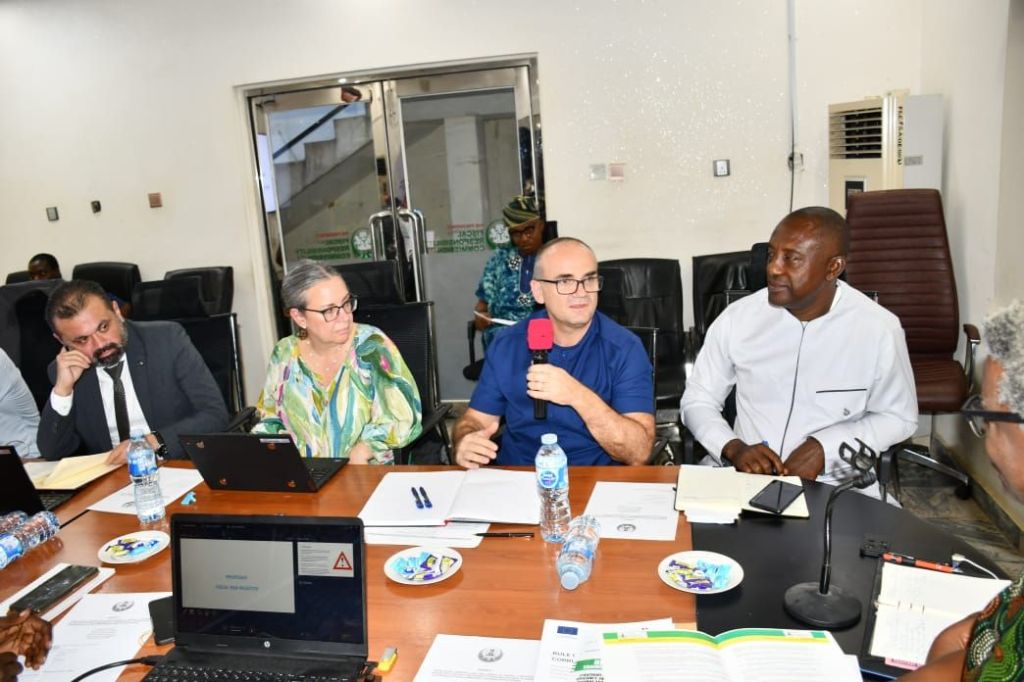
The International Monetary Fund (IMF) has urged the Fiscal Responsibility Commission (FRC) and the Debt Management Office (DMO) to deepen their collaboration as part of efforts to strengthen Nigeria’s fiscal-risk management framework and promote greater transparency in public finance. This was the central focus of a high-level bilateral meeting hosted by the FRC in Abuja, which brought together senior officials from both agencies and an IMF delegation led by Sybi Hida, Senior Economist in the IMF Fiscal Affairs Department.
Hida explained that the Fund’s mission was to review the country’s progress in identifying and managing fiscal risks, assess existing institutional structures, and encourage more openness in reporting vulnerabilities. He commended the FRC for its efforts so far but stressed that effective fiscal-risk management remained essential for safeguarding public resources and improving overall governance.
During the technical session, Mrs. Rachael Angbazo gave a detailed briefing on Nigeria’s fiscal-risk environment. She noted that the country continued to face significant macroeconomic risks, which she said were linked to oil-market instability, rising inflation, exchange-rate volatility, and increasing interest rates. She added that institutional and governance-related risks persisted, particularly due to weak compliance with the Fiscal Responsibility Act (FRA) 2007.
Angbazo further explained that contingent liabilities posed another challenge, drawing attention to government loan guarantees, obligations arising from public-private partnerships, and judgement debts. She stated that environmental and security-related risks such as recurrent flooding, the activities of Boko Haram and other criminal groups, as well as public-health threats like Lassa Fever continued to put additional pressure on the country’s fiscal stability.
She emphasized the FRC’s legal mandate to promote transparency, enforce fiscal rules, and improve the quality of fiscal information available to policymakers. According to her, several provisions of the FRA 2007, including the guidelines for the Medium-Term Expenditure Framework, deficit limits, and fiscal-risk reporting requirements, were central to strengthening Nigeria’s fiscal-risk oversight system.

The FRC also highlighted its ongoing initiatives to strengthen fiscal governance. These included the monitoring of the implementation of the Medium-Term Expenditure Framework and the annual budget, supporting states in drafting fiscal-responsibility laws, collaborating with the National Assembly on revenue hearings and oversight of remittances, supervising government borrowing to ensure compliance with the FRA, verifying capital projects across the country, enforcing the disclosure of audited accounts by government entities, and conducting sensitization programmes to improve nationwide compliance.
Despite these efforts, officials pointed out that limited funding, inadequate technical capacity, inconsistent reporting by ministries and agencies, and restricted institutional autonomy continued to hinder the Commission’s ability to conduct advanced fiscal-risk modelling and sustained oversight.
To address these gaps, the meeting recommended a series of reforms. Stakeholders called for amendments to the Fiscal Responsibility Act that would introduce enforceable sanctions and grant prosecutorial powers to the FRC. They also stressed the need to clarify certain legal provisions particularly the application of Section 12(2) to prevent misuse under emergency claims.
The participants emphasized the importance of building internal capacity for fiscal-risk analysis and scenario testing, while also urging stronger inter-agency cooperation and the institutionalization of comprehensive fiscal-risk reporting.
In his closing remarks, Sybi Hida advised the FRC to pay closer attention to legal and capacity-related risks. He reaffirmed the IMF’s willingness to support Nigeria in strengthening its fiscal-governance systems and emphasised the importance of frank, transparent disclosure of fiscal vulnerabilities.
The DMO, represented by Deputy Director Bartholomew Aja and Salisu Ahmed, also underscored its commitment to working more closely with the FRC. The officials noted the need to integrate the Commission more effectively into future debt-sustainability analysis processes and affirmed the DMO’s readiness to deepen inter-institutional cooperation.
The meeting ended with a shared understanding that stronger collaboration, improved transparency, and reliable data are essential pillars for protecting Nigeria’s long-term fiscal stability.

 Africa Security Investigation News