Emmanuel Daudu
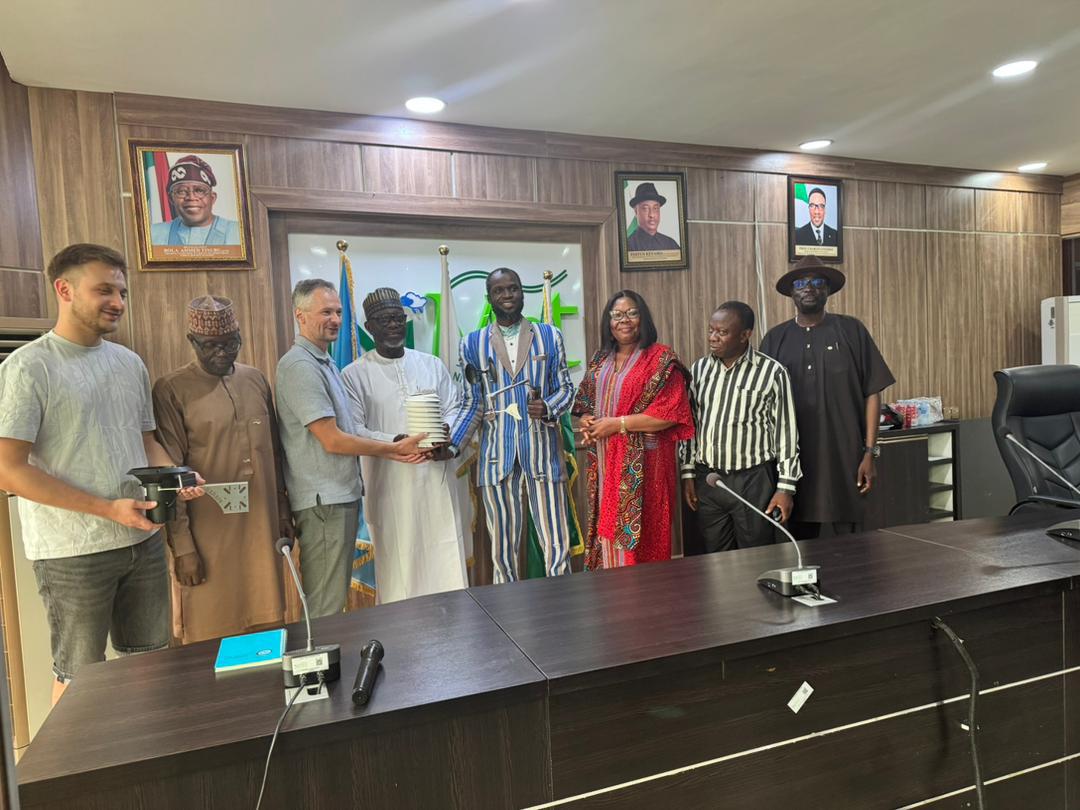
The Nigerian Meteorological Agency (NiMet) has announced a major technological leap in urban climate monitoring with the introduction of innovative Internet of Things (IoT)-powered, LoRaWAN-enabled weather stations.
The development follows a collaborative effort between Barani Design Technologies and the West African Science Service Center on Climate Change and Adapted Land Use (WASCAL). The project is expected to significantly enhance the accuracy and efficiency of weather data collection and transmission across Nigerian cities.
Speaking during the presentation ceremony, the Director-General/CEO of NiMet, represented by Engr. Hamid Abdulkareem, Director of Engineering and Technical Services, described the collaboration as “a strategic and innovative milestone in the weather forecasting value chain.”
“This initiative marks a significant step forward in our commitment to providing accurate and timely weather information. These advanced weather stations will be instrumental in helping us achieve our targets,” he said.
He noted that the new systems will complement the existing 25 Barani Automatic Weather Stations (AWS) currently operational within NiMet’s network, bringing the total number of reactivated compact automatic weather stations to 59. The move, he added, will boost the agency’s observation density and improve forecasting capability nationwide.
The NiMet DG further emphasized the need for continuous capacity building, urging Barani Design Technologies and WASCAL to keep NiMet’s technical team informed of training opportunities to ensure the long-term sustainability and seamless data transmission of the automated weather stations.
In his remarks, Mr. Jan Barani, CEO of Barani Design Technologies, commended NiMet for its forward-thinking approach, noting that the new generation of smart, energy-efficient weather stations was specifically developed to enhance data accuracy and reliability in urban environments.
“This breakthrough aims to make weather monitoring systems more compatible with smart city infrastructure. Traditional weather stations often face challenges with inconsistent measurements and relocation, which this design effectively addresses,” Barani explained.
Also speaking, Mr. Diallo Abdulaziz, Coordinator of the Data Management Department at WASCAL, said the partnership will strengthen Nigeria’s meteorological network by enhancing power and connectivity solutions for weather stations across the country.
The new IoT-enabled stations are designed to meet World Meteorological Organization (WMO) standards, ensuring the reliability, comparability, and global compatibility of the data collected a critical component for improved weather forecasting and climate analysis.

 Africa Security Investigation News