Maryam Aminu
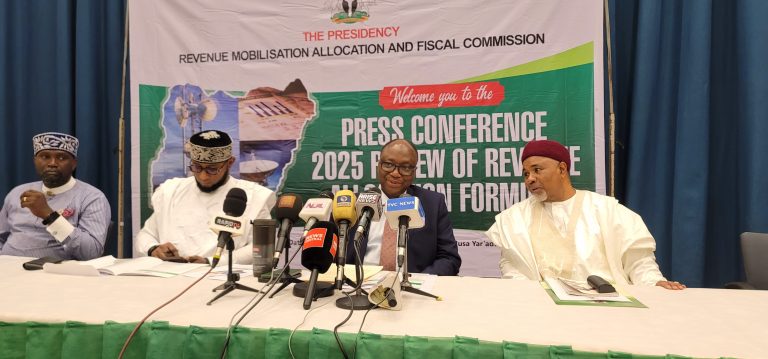
For the first time in more than three decades, Nigeria has begun the journey toward a new revenue allocation formula, as the Revenue Mobilisation Allocation and Fiscal Commission (RMAFC) on Monday officially set in motion a comprehensive review of how the nation’s wealth is shared among the federal, state, and local governments.
Declaring the process open at a press conference held at the Shehu Musa Yar’Adua Centre, Abuja, RMAFC Chairman, Dr. Mohammed Bello Shehu,
described the exercise as “a constitutional duty and a national imperative,” stressing that the formula must reflect today’s socio-economic realities, rather than the outdated structures of the 1990s.
“The last review was in 1992, and since then, Nigeria has changed significantly demographically, economically, and constitutionally,” Shehu said.
“Recent amendments devolving key responsibilities like electricity, railways, and correctional services to states have placed additional financial and administrative burdens on subnational governments. This makes a fresh review of the revenue allocation formula inevitable.”
He explained that the goal of the review is to develop “a fair, just, and equitable formula” that empowers all three tiers of government to deliver effectively on their constitutional roles while promoting equity and sustainability.
The Commission pledged that the review process would be inclusive, evidence-based, and transparent, involving inputs from the Presidency, National Assembly, governors, ALGON, the judiciary, ministries, civil society, private sector players, traditional rulers, and development partners.
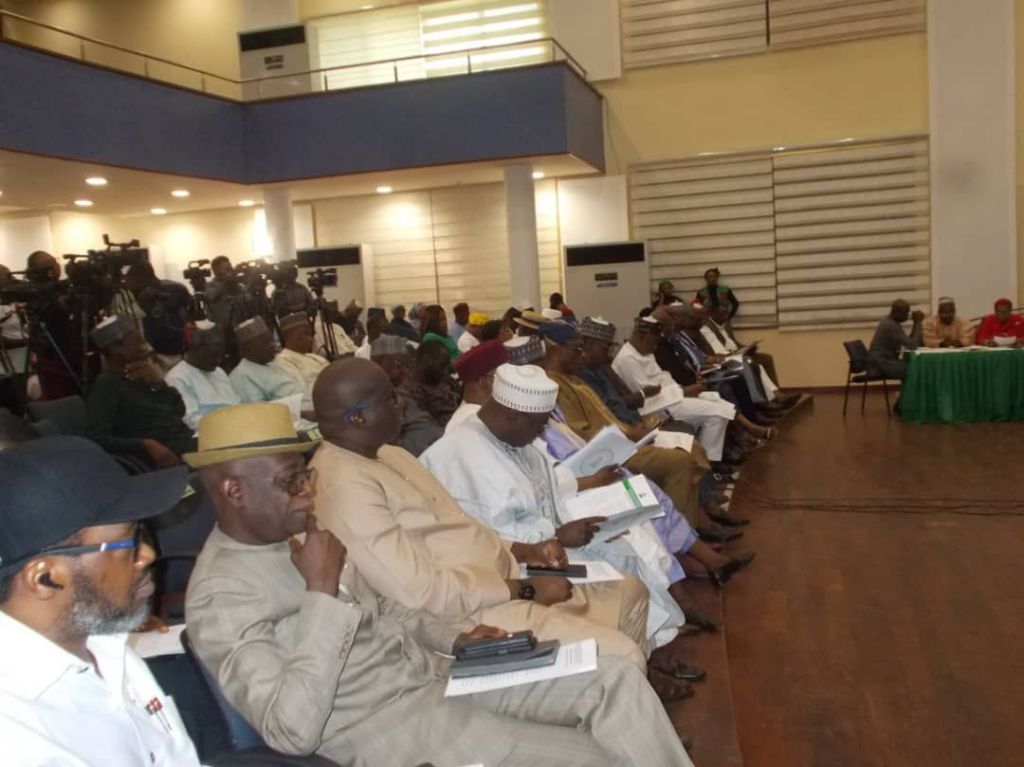
Federal Commissioner and Chairman of the Revenue Formula Committee, Kabir Muhammad Mashi, also reaffirmed the Commission’s readiness to deliver an impactful outcome.
He disclosed that although RMAFC had earlier produced a report in 2022, it was overtaken by constitutional amendments in 2023 that shifted responsibilities among the tiers of government.
“Hence, the need for a fresh review of the revenue allocation formula in its entirety to reflect the current socio-economic challenges in the country, as well as the new economic policies of the present administration,” Mashi explained.
He described the initiative as a defining moment in Nigeria’s fiscal federalism and intergovernmental relations, adding that the committee is expected to submit its final report by December 2025.

 Africa Security Investigation News