
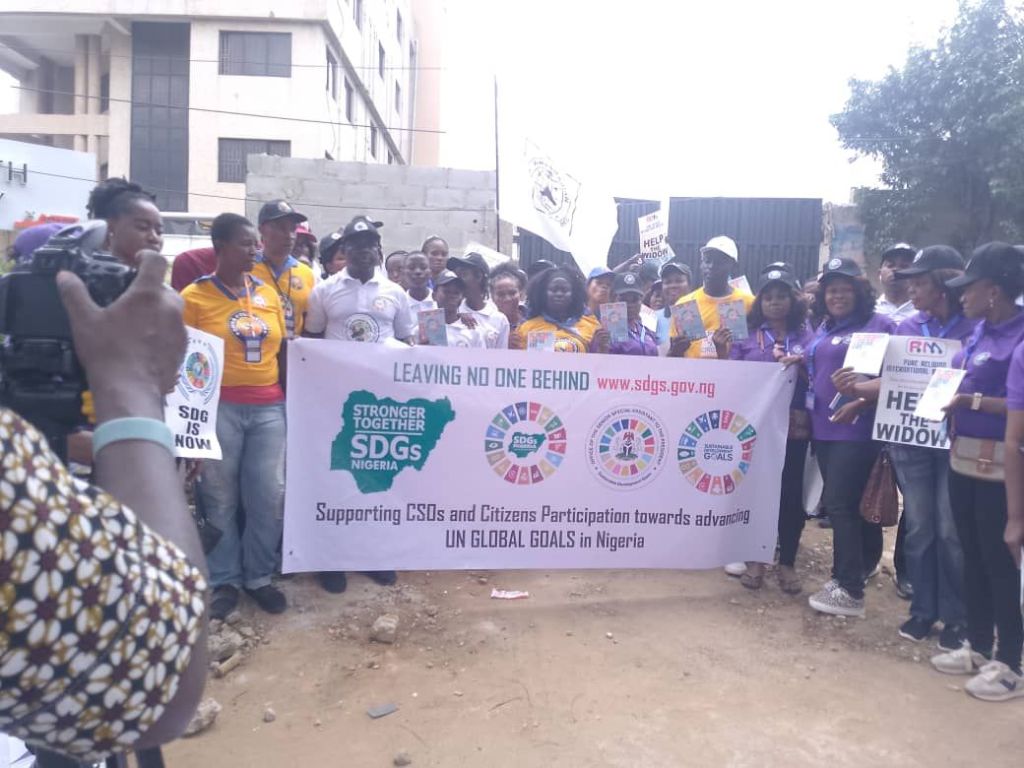
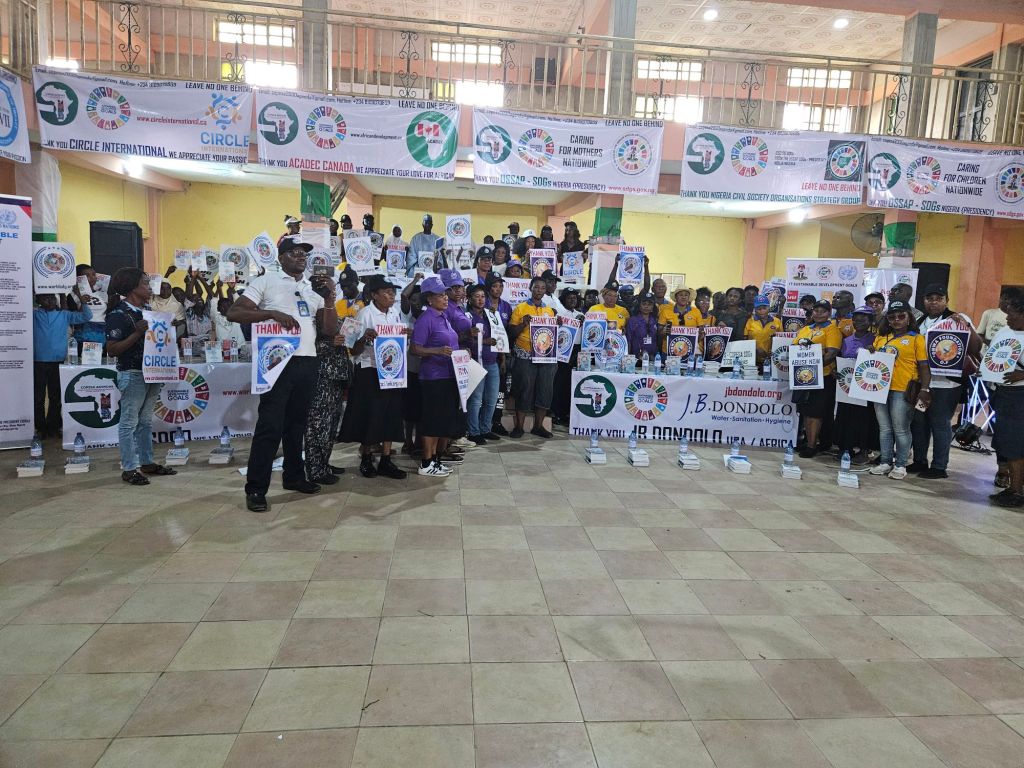
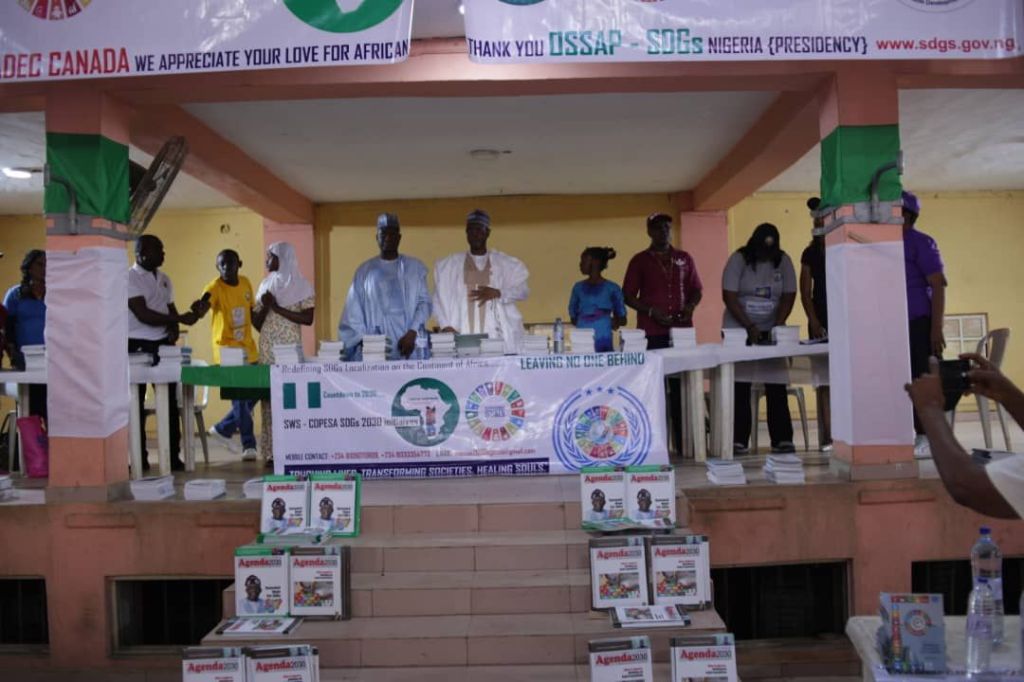
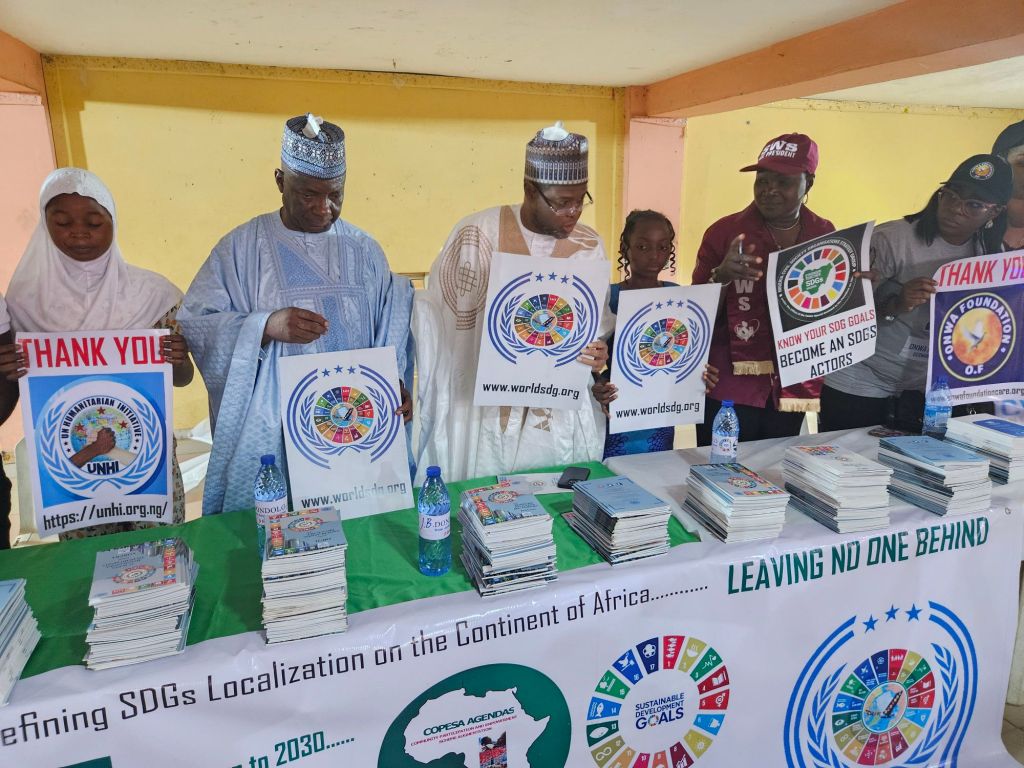
In a powerful convergence of purpose and possibility, health leaders, innovators, and grassroots changemakers gathered in Lagos from July 25 to 31, 2025, for the World Sustainable Development Goals Organization (WorldSDGsO) Conference a week-long event that reimagined how African communities can tackle maternal and child health challenges with homegrown solutions.
The conference opened with a symbolic WorldSDGsO Walk and closed with renewed commitment toward Africa’s health equity and sustainable development agenda.
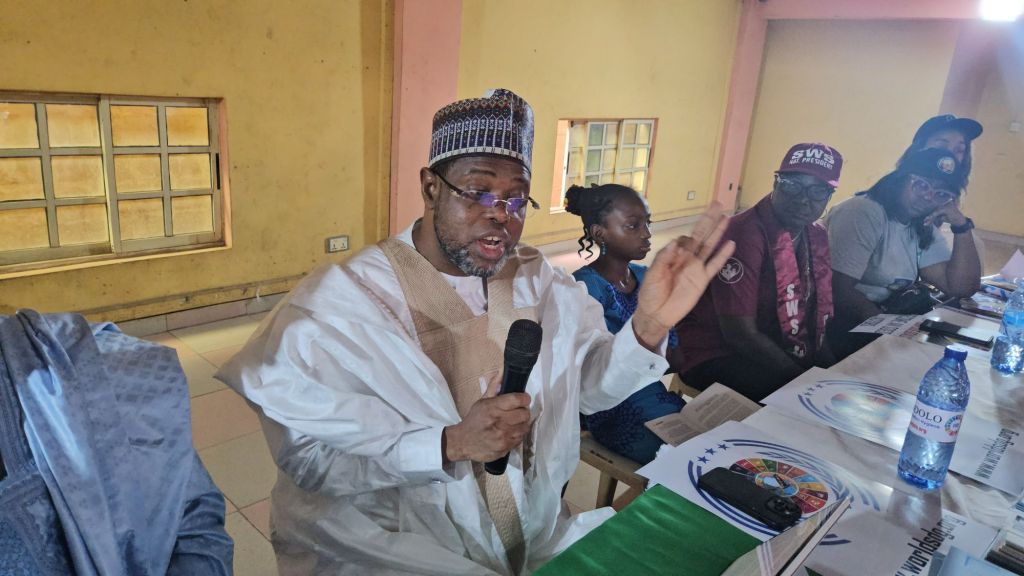
In his keynote address, Aliyu Garba Abubakar, Director of the Climate Action Agency West Africa for WorldSDGsO, outlined a bold, community-led blueprint to tackle Nigeria’s maternal and child health crises. His address, titled “Connecting Every Community to Life-Saving Solutions,” laid the groundwork for what could become a continental movement rooted in connectivity, local innovation, and peer-based learning.
Speaking passionately, Abubakar urged African nations to stop overlooking local heroes who are already saving lives in their communities.
He emphasized that the starting point should be recognizing and learning from grassroots actors people like traditional birth attendants who have delivered hundreds of babies without maternal deaths, grandmothers with indigenous treatments for malnourished children, or women’s groups that ensure pregnant women give birth in health facilities.
Abubakar said that instead of seeking complex external solutions, the continent must take a deliberate approach to identify these individuals and understand their methods not just to reward them, but to replicate their success.


He stressed that effective community practices should form the foundation of any health strategy, with those on the ground serving as the teachers.
The keynote speaker proposed that successful local problem-solvers should be systematically connected with others across Nigeria who face similar health challenges.
He explained that if a community in Kano has reduced malaria among pregnant women, then that knowledge must reach communities in Ogun or Benue still battling similar issues. Likewise, if a village in Cross River has achieved full immunization coverage, their methods should be shared across every geopolitical zone.


Abubakar pointed out that this kind of exchange doesn’t require large infrastructure only intentionality and the use of accessible technology. Mobile phones and messaging platforms, he argued, should serve as bridges between life-saving ideas and the people who desperately need them. “Information that can save lives should reach people in days, not years,” he said.
Rejecting the outdated model of “experts” teaching communities, Abubakar advocated for a more effective and respectful approach: communities learning from one another. He shared stories of villages that had solved emergency transport challenges, women’s groups that had successfully stopped mother-to-child transmission of HIV, and traditional rulers who had convinced entire populations to accept vaccination. These stories, he said, should be passed from one community to another, creating a ripple effect of solutions across the country.
He stressed that although local solutions are powerful, they need broader support to thrive and scale. In his words, global and institutional partners must not dominate these efforts but rather serve as enablers offering resources, technical backing, and funding to help expand effective local approaches. Abubakar noted that when a traditional practice proves successful, experts should help explain why it works and how it can be adapted elsewhere.
He proposed launching a national network beginning with 100 communities, where each would contribute two key elements: a proven innovation that is already saving lives, and a pressing challenge that still needs a solution. He envisioned a model where communities become both teachers and learners, connected by a national commitment to save lives.
Abubakar also called for a shift in how success is measured. Instead of focusing on targets or paperwork, he said outcomes must be judged by real-world impact like whether a mother in Sokoto survives childbirth, whether a child in Enugu gets vaccinated on time, or whether a pregnant woman in Osun receives the nutrition she needs. These, he insisted, should be the metrics that matter most.
The climax of his address was the unveiling of the ‘10,000 Lives Mission’, a bold initiative aimed at saving 10,000 Nigerian mothers and children by December 2026.
He encouraged every delegate in the room to leave not just informed but transformed and ready to act.
To jumpstart the mission, he challenged participants to take immediate action within 30 days. He urged them to document one local solution from their communities, identify the most pressing maternal or child health challenge they face, and connect with at least three other communities to exchange knowledge and offer support.
He stressed that these actions could be as simple as recording a short voice note or video in a local language and sending it to COPESA’s WhatsApp platform, which would translate and disseminate the messages across the country.
Abubakar envisioned that by January 2026, each participating community should be able to show clear evidence of impact whether it’s a practice they’ve adopted from another community or one they’ve shared that’s saving lives elsewhere. More importantly, he emphasized that the network’s credibility would lie in its transparency. Quarterly progress reports would be published, and both successes and shortcomings would be shared openly.
He made it personal, stating that by the end of 2026, he wanted to know the names and see the faces of mothers and children whose lives were saved because of the connections made through this network. He declared that this was not a call for bureaucratic, donor-heavy projects, but a real-time, people-powered movement.
In closing, Abubakar invited all stakeholders to commit not just organizationally, but personally. He asked each participant to write down a specific name or identify someone whose life they intended to impact within the year a pregnant woman, a vulnerable child, or a struggling family. This, he said, would be the true legacy of the conference.
He concluded with a powerful call to action: “The Nigeria we are building together proves that local solutions, powered by local networks, can do what even the best-funded global programs cannot. We’re not waiting for help. We are the help. The 10,000 lives we save in Nigeria are just the beginning. This starts with us. This starts now.”

 Africa Security Investigation News