
Maryam Aminu
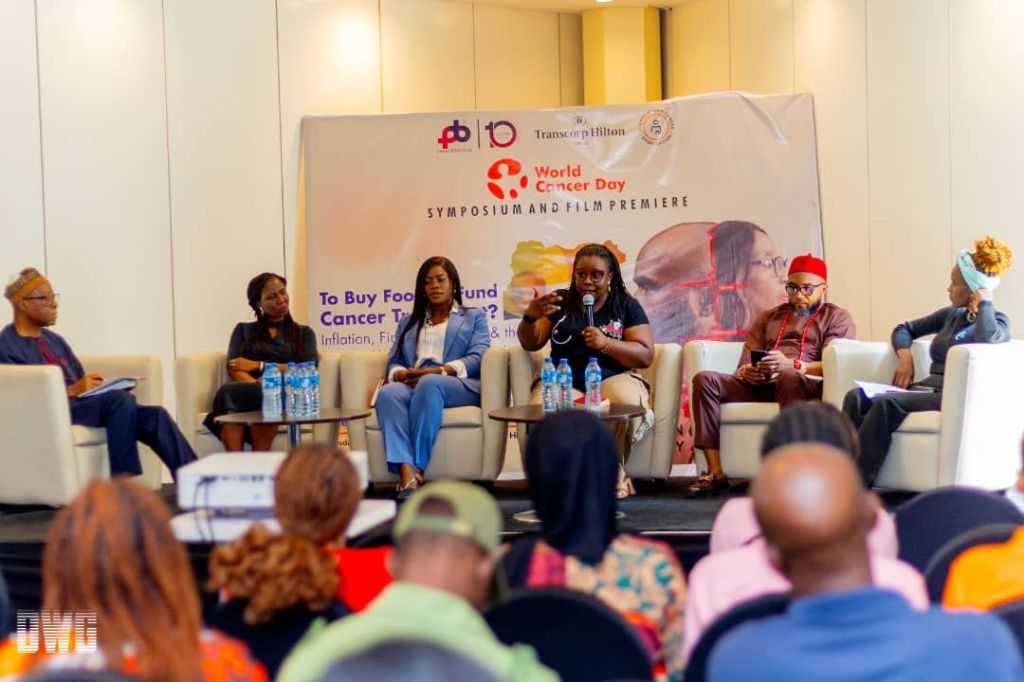
In a bid to raise awareness about colorectal cancer, Project PINK BLUE – Health & Psychological Trust Centre, in collaboration with the Global Colorectal Cancer Association, premiered the documentary Blood in My Stool at Transcorp Hilton Abuja on World Cancer Day 2025.
Nigerians have been urged to pay closer attention to symptoms of colorectal cancer, particularly the presence of blood in their stool, as the disease continues to claim thousands of lives annually.

The documentary, which highlights the devastating impact of colorectal cancer in Nigeria, features survivor stories and expert insights, emphasizing the importance of early detection and equitable access to cancer care.
The Minister of Youth Development, Comrade Ayodele Olawande, officially opened the film premiere and used the occasion to urge young Nigerians to become health champions in their communities.
“Do not ignore any blood in your stool rectal bleeding is a symptom of colorectal cancer,” he warned. “Avoid smoking, eat organic foods, limit alcohol, and maintain a healthy lifestyle.”
He emphasized that the renewed hope administration of President Bola Ahmed Tinubu is committed to improving youth health, citing initiatives such as the National Youth Investment Fund (NYIF), Nigerian Youth Academy (NIYA), and the Youth Confab.
“Health is wealth. If we want young Nigerians to succeed in business, governance, and leadership, we must first invest in their well-being,” he added.
Speaking also, Runcie C.W. Chidebe, Executive Director of Project PINK BLUE, revealed that colorectal cancer is the fourth leading cause of cancer-related deaths in Nigeria, with 5,912 out of 8,114 diagnosed patients succumbing to the disease in 2022.
“These deaths are not just statistics; they are people parents, brothers, sisters, and breadwinners. They are preventable if detected and treated early,” Chidebe stated.
He lamented that while cancers such as breast, cervical, and prostate receive significant attention, colorectal cancer remains largely neglected, leaving many patients unseen and unheard.
Candace Henley, Director of Equity and Partnerships at the Global Colon Cancer Association, stated that the film serves as a call to action, ensuring that patients’ voices are heard and that the disease receives the attention it deserves.

Mr. Ejike Ugwu, a Clinical Psychologist with Project PINK BLUE,
Mr. Ejike Ugwu, a Clinical Psychologist with Project PINK BLUE, emphasized the organization’s commitment to driving action for improved cancer care in Nigeria and across Africa.
He highlighted the harsh realities faced by many cancer patients in Nigeria, who often struggle with the difficult choice of using their limited funds to buy food or pay for treatment. “Many cancer patients, upon diagnosis, are more concerned about how to raise money for their medications rather than focusing on recovery,” he noted.
Ugwu called for the establishment of an accessible Cancer Health Fund to ease the financial burden on patients. “If we had the power, we would make cancer treatment free. But until then, we will continue to push for initiatives that improve the well-being of cancer patients,” he added.
A colorectal cancer survivor, Mrs. Yemisi Daodu, shared her journey, recalling how noticing blood in her stool prompted her to seek medical attention.
“My diagnosis was early, and I started treatment immediately. Today, I am doing well. But I was privileged to get treatment abroad how many Nigerians can afford that?” she asked, stressing the urgent need for equitable access to cancer care.
Another survivor, Elizabeth Awoejeh, urged the government to drastically reduce the cost of cancer medications, which she described as “too expensive and unaffordable.”
She reassured attendees that cancer is not a death sentence and encouraged early screening.
The documentary Blood in My Stool serves as a wake-up call for policymakers, healthcare professionals, and the general public to prioritize colorectal cancer awareness and prevention.
As Project PINK BLUE and the Global Colon Cancer Association continue their advocacy, they call on the government, donors, and civil society to invest in early detection, affordable treatment, and patient-centered care.

 Africa Security Investigation News