Adejoh Bilkisu
In celebration of the International Day of the Girl Child, the Benue State Peace and Reconciliation Commission welcomed a courtesy visit from the UN Women delegation and the CLEEN Foundation.
This strategic engagement aimed to amplify the role of women in peacebuilding and foster collaboration between key stakeholders to address ongoing security challenges within the state.
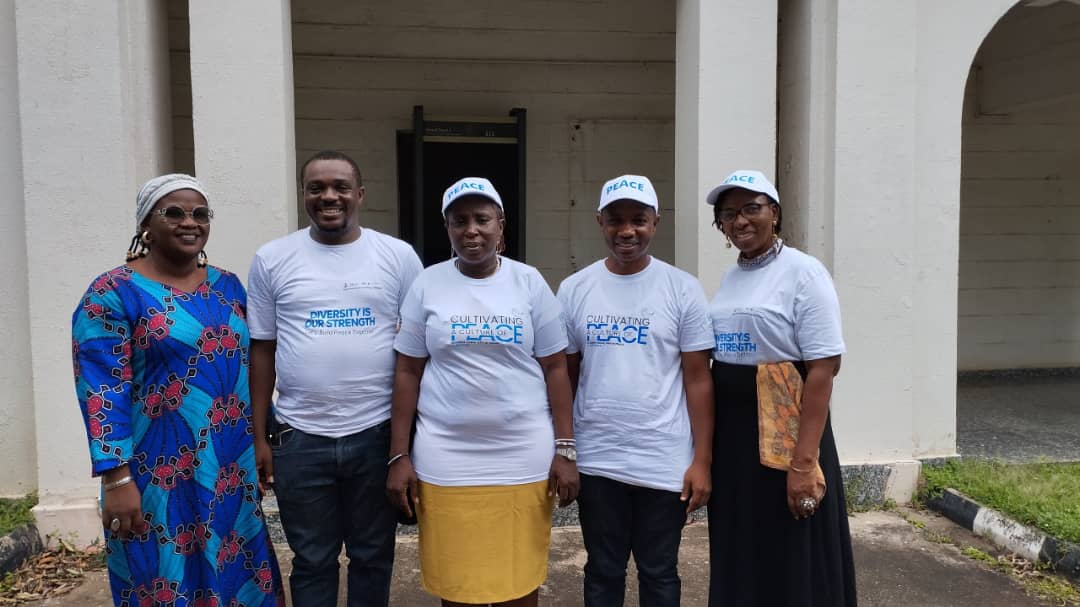
The courtesy visit, held in Makurdi, featured participants, including representatives from the Ministry of Women Affairs, the Women Mediators Network, and the HeForShe Network.
Notable among the seven participants were Dr. Gabriel Akinremi of CLEEN Foundation and Mrs. Magdalene Awuapila, a representative of the National Women Mediators Network.
The event, which underscored the critical role of women in conflict mediation and reconciliation efforts, drew significant attention as stakeholders explored potential avenues for collaboration in promoting peace in Benue State.
Addressing the attendees, Dr. Gabriel Akinremi emphasized the transformative role of women in peacebuilding, particularly in Benue’s rural communities.
He lauded the efforts of the Peace Commission, under the leadership of Mrs. Josephine Habba, for its continued dedication to fostering peace across the state’s local government areas (LGAs).
Akinremi noted that empowering women through education, economic opportunities, and political representation equips them to become active agents of sustainable peace.
Mrs. Magdalene U.I. Igbazua reinforced this sentiment, advocating for a more inclusive approach to peace and security that addresses the root causes of violence and inequality.
“Empowering women means addressing issues like gender-based violence, human trafficking, and exploitation,” Igbazua said.
“Only then can they truly contribute to and benefit from peace. This is not just women issue it’s a global issue that affects us all.”
Representing the Ministry of Women Affairs, Mrs. Magdalene Andor applauded the Peace Commission for its role in leading peace initiatives across the state.
She affirmed the ministry’s commitment to working closely with the Commission to ensure women are not just participants but leaders in peace processes.
“Women in Benue must be allowed to participate in state processes. We are ready to collaborate with you at any time,” Andor said, pledging the ministry’s ongoing support for the Commission’s activities.
Mrs. Josephine Habba, the Director-General of the Peace Commission, expressed her gratitude for the visit and reiterated her commitment to building women’s capacity to contribute to peacebuilding efforts.
“Women are the bedrock of our communities, and their voices must be at the table for any sustainable peace to be achieved,” Habba said.
She also underscored the importance of continuous learning and collaboration among stakeholders, emphasizing that peace can only be sustained through collective effort.
The participants collectively acknowledged the strides made by the Peace Commission in addressing conflict in Benue.
They also emphasized the need for continued efforts to address violence against women and girls, which remains a significant barrier to peace in many parts of the state.
The visit not only strengthened relationships between the Peace Commission and its partners but also set the stage for future collaboration in addressing peace-related challenges.
Stakeholders from the Ministry of Women Affairs and other organizations pledged their support to ensure the voices of women mediators are amplified in future peace processes.
The Peace Commission, in collaboration with UN Women and CLEEN Foundation, has pledged to continue its efforts to empower women as peacebuilders across Benue State.
Plans are underway to implement training sessions for women mediators, equipping them with the necessary tools and resources to contribute effectively to conflict resolution processes.
This courtesy visit marks a significant milestone in the ongoing efforts to promote peace and security in Benue State, particularly as the world continues to recognize the crucial role of women in shaping more peaceful and inclusive societies.
Despite the success of the visit, logistical challenges, such as the need for improved transportation access to remote communities and schools, were highlighted.
Participants recommended that future projects prioritize these areas to ensure broader outreach and engagement with grassroots communities.
As Benue State continues to navigate its security challenges, the involvement of women in mediation and reconciliation processes remains key to achieving lasting peace.
Through the collective efforts of stakeholders and the ongoing support of UN Women, the future of peace and gender equality in the state looks promising.


 Africa Security Investigation News