By Maryam Aminu
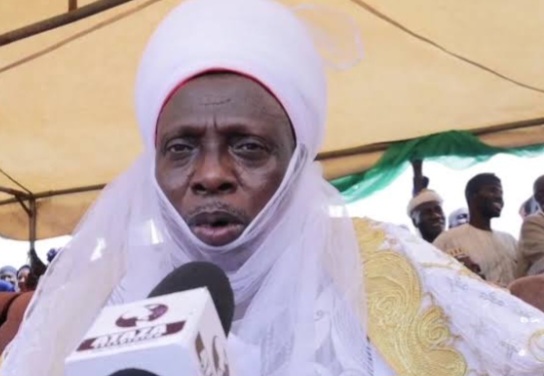
The World Sustainable Development Goals Organization-Nigeria has appointed the Garki Chief of the Municipal Area Council, FCT, Abuja, HRH (Dr) Usman Nga Kupi, the Sapeyi of Garki as member National Traditional/Mayor Council of the World Sustainable Development Goals Organization-Nigeria.
The appointment letter which was presented to him on Thursday, 15th of August, 2024 at his Palace in Garki by the Country Representative, H.E. Engr. Kolawole Rasheed Adenekan, alongside his delegation, brought hope to the rural dwellers as the tendencies of domesticating projects are high.
While speaking, the country representative, disclosed that there would be a flag off of a national environmental project aimed at goal 11 of the SDGs and there by metamorphosing into goal 3 of the SDGs on Saturday the 17th of August, 2024 in Abuja.
However, in the sphere of sustainable development, the involvement of various stakeholders is both transformative and indispensable. Among these stakeholders, traditional rulers hold a particularly pivotal role, anchored firmly in their communities and often revered as custodians of culture and social norms. The inclusion of such figures in initiatives aimed at global betterment should not only be encouraged but duly recognized. The significance of traditional leaders in accomplishing the United Nations Sustainable Development Goals (SDGs), with a particular focus on the esteemed appointment of HRH. (Dr) Usman Nga Kupi, the Sapeyi of Garki, as a Member of the National Traditional/Mayor Council of the World Sustainable Development Goals Organization-Nigeria is a welcome development.
The country representative, H.E. Engr. Kolawole Rasheed Adenekan while speaking to the media on the appointed made, said, “traditional leaders, by virtue of their influence and respect within their communities, are uniquely positioned to catalyse progress towards the achievement of SDGs. In Nigeria, as in many parts of Africa and the world at large, such leaders are not just figureheads but play an active role in governance, especially at the local level. They often possess expansive knowledge about the social and economic networks within their communities, making them valuable assets in promoting grassroots development.
“The appointment of HRH. (Dr) Usman Nga Kupi echoes this sentiment and signifies a recognition of the symbiotic relationship between tradition and modernity in the pursuit of development. As a Member of the National Traditional/Mayor Council of the World Sustainable Development Goals Organization-Nigeria, His Royal Highness holds the responsibility of bridging the gap between high-level policy directives and on-the-ground realities.
“HRH. (Dr) Usman Nga Kupi’s appointment represents a sincere commitment to involving traditional rulers in the implementation of the SDGs. The World Sustainable Development Goals Organization-Nigeria has taken an admirable step in acknowledging that sustainable development requires adapting global initiatives to suit local contexts, a process in which traditional leaders are indispensable. HRH. (Dr) Usman Nga Kupi, instilled with both the knowledge of contemporary development challenges and the wisdom of traditional governance, embodies an innovative approach to achieving the SDGs at the community level.
“The Sapeyi of Garki, with his extensive experience and deep-rooted connections within the community, is tasked with not only endorsing the SDGs but actively engaging in strategic planning and execution of relevant programmes. His role is to ensure that the targets set by the SDGs seamlessly integrate into local development plans, respecting both the culture and the socioeconomic dynamics of the regions.
Community involvement is crucial to the successful implementation of development projects. Traditional rulers, such as HRH. (Dr) Usman Nga Kupi, can act as catalysts, invoking their influence to rally community support around the goals. They can also play a role in educating the populace about the importance of sustainable practices, thus fostering a supportive environment for the implementation of the SDGs.
“They do this not merely by virtue of their authority but through genuine engagement, understanding the needs of their people, and actively seeking solutions that align with sustainable development principles. As traditional and religious leaders are often the most respected figures in rural areas, their endorsement of projects and initiatives carries significant weight, paving the way for more effective policymaking and project execution
By promoting policies that reflect the ethos of the SDGs, traditional leaders can lead the charge in transforming resource management culture from one that is extractive to one that is conserving and regenerative. Furthermore, by advocating for fair and ethical practices, they can ensure that economic benefits derived from natural resources are equitably distributed among community member”, Adenekan added.

 Africa Security Investigation News