Oladigbo Olalekan Efficient, the Programmes Manager at Tungba Communications Ltd, was formally inducted into the Chartered Institute of Personnel Management (CIPM) of Nigeria on Thursday, September 5, 2024. The prestigious event took place at the Civic Center on Ozumba Mbadiwe Avenue, Victoria Island, Lagos, attracting a notable assembly of industry professionals.
Oladigbo Olalekan, who oversees operations at Tungba100.9FM in Lagos and Tungba90.3FM in Osun State, joined a distinguished group of over six hundred new members at the induction ceremony. This milestone marks a significant advancement in his professional journey, reflecting his dedication to the field of human resources and personnel management.
The CIPM induction is a testament to Efficient’s commitment to enhancing his expertise and contributing to the standards of the personnel management profession in Nigeria. His successful completion of the institute’s demanding examinations is a clear indicator of his proficiency and readiness to embrace the responsibilities that come with the credential.
Olalekan Efficient is an active and influential figure in the media sector. He currently serves as the 2024 National Chairman of the Nigeria Guilds of Investigative Journalists Electoral Council. His leadership in this capacity further highlights his commitment to integrity and excellence within the journalism profession.
Olalekan Efficient’s induction into CIPM is expected to enhance his capabilities in managing and developing human resources, aligning with his ongoing efforts to foster professional growth and operational excellence within Tungba Communications Ltd. The integration of advanced personnel management practices will likely contribute to the company’s continued success and innovation in the broadcasting industry.
The CIPM induction ceremony not only celebrated the accomplishments of the new members but also reinforced the institute’s role in advancing professional standards and practices in personnel management across Nigeria. As he embarks on this new chapter in his career, his contributions to both the media and HR fields are anticipated to make a substantial impact.
UNESCO Laureate Prof. Bashiru Aremu has appointed endorsed Anloui Said Mohamed as Chairman for Board of Trustees and Patron for Comoros of Unity of Nations Action for Climate Change Council, UNACCC. This is contained in a statement on Saturday by Aremu, made available to newsmen by his Executive Assistant on Media, Publicity, and Communication Matters, Bieni Emenike. UNACCC is an official partner of the United Nations and a global CEO-led organisation of more than 200 leading businesses and partners working together to accelerate the transition to a sustainable world. We commend endorsed Anloui Said Mohamed for a well-deserved appointment, while also applauding his role in ensuring the establishment of UNACCC in Comoros and work to support Headquarters for the African continent with 57 Nations. “This is a remarkable achievement and a testament to your dedication to education, awareness, and sustainable development. “As you embark on this new journey, we wish you immense success in revolutionising education and the promotion of the sustainable development goals across Comoros and the African continent. “Your expertise will undoubtedly inspire positive change and foster a brighter future for Comoros and Africa at large.” endorsed Anloui Said Mohamed ,’s appointment letter also indicated that the organisation plans to composed the country Board of Trustees and national council members who will work assiduously to support UNACCC’s mission in Comoros . Together, we can make a meaningful difference and create a lasting impact. “Please accept our congratulations on this new beginning as we look forward to witnessing the transformation and welcoming the collaborations that will follow,” he added.
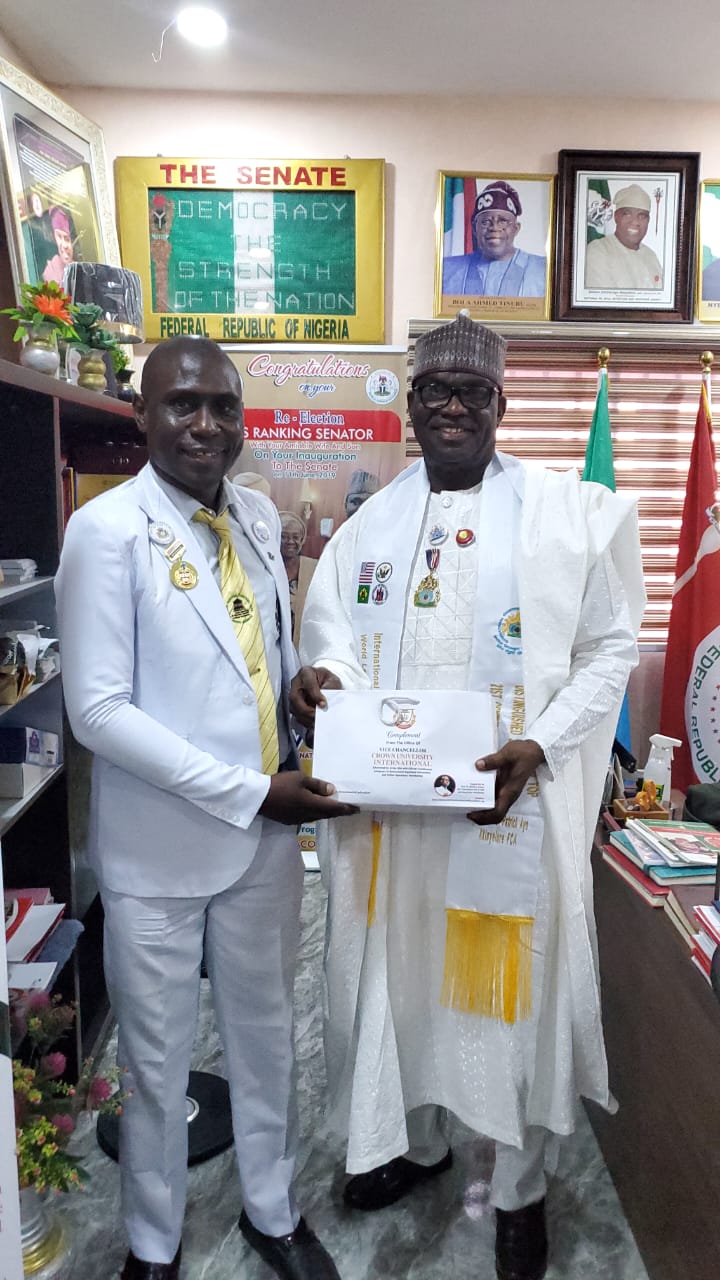
Senator Patrick Ayo Akinyelure Commends ICWLS On Global Awards, Expresses Happiness On Recognition As “Salute Most Notable & Top Distinguished Senator of Rare Fame of The 21st Century”.
UNESCO Laureate Congratulates Nigerian Senator, Patrick Ayo Akinyelure On Global Contributions To Political, Legislative & Public Administration Sectors Development.
International Chartered World Learned Society (ICWLS), World society with chartered file number: 5705811, Reg no:/ ICWLS/ 019, Decree No: Americas/IN/019/2023 with its Certificate issued under the laws of the United States of America as legal tender document both for public and private, an official partner of United Nations Global Compact, has honored a former Nigerian Senator, Patrick Ayo Akinyelure with Global Golden Five Stars & Life Fellow Member Awards In Political, Public Administration & Legislative Sectors as “Salute Most Notable & Top Distinguished Senator of Rare Fame of The 21st Century”.
The media learnt this today being Saturday, September 7, 2024 in a press statement personally signed by Prof Sir Bashiru Aremu, the World Grand President, International Chartered World Learned Society, ICWLS, which was made available to some group of Journalists in Asaba, Delta State capital by UNESCO Laureate’s Executive Assistance On Media, Publicity & Communication Matters, Comrade Sir Bieni Victor Emenike as UNESCO Laureate Commends former Most Dstinguished Senator of the Federal Republic of Nigeria on contributions to society; Political, Legislative & Public Administration excellence nationally and Internationally.
UNESCO laureate pen-ultimate weekend decorated Sen. Patrick Ayo Akinyelure in his office at Abuja as former Nigerian Senator bagged global honor as Life Fellow Member of this great internationally chartered body, ICWLS.
ICWLS-nternational Chartered World Learned Society is a worldwide independent organization, self- governing, pan- discipline educational charity group that provides expert scholarly advice on research, professional, public issues related to economic, cultural, sciences, engineering, health sciences, arts humanities and social sciences which is made up highly distinguished scholars and seasoned Professionals.
Sen. Patrick Ayo Akinyelure has commended the leadership of ICWLS for the global honor by “International Chartered World Learned Society-We do confirm and acknowledge him with noble rank to enjoy all the rights, honors and privileges, thereunto appertaining, thereof for his outstanding contributions in Political, Public Administration & Legislative Sectors”.
The press statement by Aremu reads in part: “On behalf of the International Chartered World Learned Society (ICWLS), I, VC CUICI, USA, UNESCO Laureate & HRH Duke of Kingdom of Atlantis in Singapore, Prof Sir Bashiru Aremu uses this medium to felicitate with the former Most Dstinguished Senator of the Federal Republic of Nigeria as “Salute Most Notable and Top Distinguished Senator of Rare Fame of the 21st Century”.
“The VC, CUICI, USA is a Fellow of Royal Society For Arts, Manufacturers and Commerce (RSA), United Kingdom (UK). He is a Life Fellow & World Grand President, International Chartered World Learned Society (ICWLS), USA. He is the World Acclaimed Distinguished Universities Research Professor and Editorial Board Member, Cambridge Publishing, United Kingdom. He is known as World Acclaimed Distinguished Universities Research Professor of Computer Science, Information Communication Technology in different global and Nigerian Universities such as Novena University, Ogume, Delta State, Ambrose Ali University, Ekpoma, Edo State, Imo State University, Imo State, Kaduna State University, Gregory University, Uturu, Abia State”.
“UNESCO Laureate is the Pioneer Member Board of Trustees of Minaret International University, Ikurun, Osun State, Nigeria to mention but a few. And other Global Universities such as West Coast University of Science, Technology & Arts, Bharat University, India. CUICI VC, is also a World Acclaimed Distinguished Universities Research Professor at Pradesh, Mandsaur, Mother Theresa Women University, India, World Congress of Arts, Sciences & Communication, as had served as Deputy Director-General for Africa And Research Professor at International Biographical Centre. Prof Aremu is cited in the World recognized publications by Famous Marquis Who’s is Who in the World”.
*ABOUT SEN. PATRICK AYO AKINYELURE. Patrick Ayo Akinyelure is a Nigerian banker who was elected to the Nigerian Senate for the Ondo Central district in Ondo State in April 9, 2011 elections running on the Labour Party ticket. He was subsequently re-elected to the same position)”.
“Ayo is an approved tax practitioner of the Chartered Institute of Taxation of Nigeria. He was Group Executive Chairman of the Allover Group, a microfinance lender, from 1994 to 2010. He defeated heavy weight Politicians in Ondo State as he emerged two-time Nigerian Senator Representing Ondo Central Senatorial District, Ondo State”.
“Patrick Ayo Akinyelure was Labour party candidate for the Ondo South Senatorial seat in April 2007. In July 2008 an Election Petition Tribunal in Akure nullified the election of Senator Gbenga Ogunniya of the People’s Democratic Party (PDP) based on Akinyelure’s petition. Ogunniya succeeded in appealing this decision”.
“In April 9, 2011 elections, Akinyelure ran again and this time was elected with 113,292 votes, ahead of Gbenga Ogunniya of the PDP with 41,783 votes”.
The Defence Headquarters (DHQ) of Nigeria has provided clarifications on two recent incidents involving the military’s operations in Zamfara State and a misleading terrorist video circulating on social media.
On August 29, 2024, around 5:00 pm, troops of Operation Hadarin Daji, deployed at Forward Operating Base (FOB) Zurmi in Zurmi Local Government Area of Zamfara State, conducted a fighting patrol to disrupt terrorist activities in Kwashabawa Village.
While en route to the village, troops engaged with the terrorists.
During the engagement, two of the troops’ Mine Resistant Ambush Protected (MRAP) vehicles became immobilized due to the swampy terrain caused by heavy rainfall. Despite attempts to recover the MRAPs, the troops were forced to dismount and demobilize the vehicles to prevent them from being captured and utilized by the terrorists.
This action highlights the challenges posed by weather conditions on ground operations.
The DHQ addressed a viral video released by a terrorist group, which falsely claims to show the mass killing of civilians in a mass grave. The DHQ clarified that the incident depicted in the video did not occur in Nigeria, but in a neighboring African country that is also battling terrorism. The military emphasized that the video is part of a propaganda effort by the terrorists to mislead the public and distract from their setbacks.
The DHQ also refuted rumors of the abduction of 150 people in Gobir, Sokoto State, categorically stating that the supposed abduction is a fabricated story aimed at undermining the successes of the Nigerian military and masking the terrorists’ weaknesses.
Major General Edward Buba, Director of Defence Media Operations, urged the public to remain vigilant against misinformation, disinformation, and fake news propagated by terrorists as part of their psychological warfare tactics.
He emphasized that while the dynamic nature of war presents unpredictable challenges, Nigerian troops maintain the flexibility to adapt and remain committed to achieving the strategic objective of winning the war.
The Nigerian Armed Forces have continued their relentless assault against terrorists and criminal elements across the country, achieving significant victories over the past week in multiple operations across the North East, North Central, and North West regions.
Troops under Operation HADIN KAI made substantial progress in the fight against Boko Haram (BH), Islamic State West Africa Province (ISWAP), and Jama’atu Ahlis Sunna Lidda’awati wal-Jihad (JAS) terrorists.
In a statement by the Director Defence Media Operations, Major General Edward Buba, he disclosed that between August 26 and September 4, a total of 233 terrorists, including 26 adult males, 82 adult females, and 129 children, surrendered in Borno State’s Gwoza, Damboa, and Bama LGAs, among other locations.
Major Buba exposed that Troops, alongside hybrid forces, launched multiple ambushes and offensive strikes across Borno, Yobe, and Katsina States, neutralizing 23 terrorists and recovering an arsenal of weapons, including 12 AK-47 rifles, four dane guns, and over 230 rounds of ammunition.
He added that the week saw the arrest of 38 suspects and the rescue of 35 hostages. “Anti-kidnapping operations in Mafa LGA of Borno State resulted in nine kidnappers neutralized, four arrested, and nine victims rescued.”
“The air component conducted a decisive airstrike on August 31, 2024, targeting a terrorist enclave in Southern Tumbus, resulting in the neutralization of ISWAP spiritual leader Goni Sanda and the destruction of key enemy assets.” He said
He further revealed that Troops under Operation SAFE HAVEN in the North Central zone focused on counter-kidnapping, arrest operations, and the dismantling of drug networks
Major Buba further expressed that in Plateau State, troops arrested 13 extremists and rescued six victims during operations in Bokkos, Barkin Ladi, Wase, Riyom, and Jos South LGAs.
“The operations led to the rescue of 14 hostages and the arrest of 18 suspects across multiple LGAs in Plateau and Kaduna States.”
“On August 30, troops raided a notorious drug peddler’s hideout in Jos South, Plateau State, apprehending a high-profile dealer and seizing weapons, including fabricated rifles and large quantities of ammunition.”
He stated that the troops of Operation WHIRL STROKE continued their offensive against violent extremists and kidnappers in the North Central region:
The troops neutralized three extremists, arrested 22 suspects, and rescued 14 kidnapped hostages in Benue, Taraba, and the Federal Capital Territory (FCT).
According to him, a joint operation with the Office of the National Security Adviser (ONSA) resulted in the capture of six extremists, including female collaborators involved in ransom negotiations.
Major Buba noted that Operation HADARIN DAJI focused on neutralizing terrorist networks across the North West:
“Troops engaged in ambushes and fighting patrols in Katsina, Kaduna, Sokoto, and Zamfara States, neutralizing 105 terrorists, arresting 21, and rescuing 36 hostages.”
“Troops captured six imposters and several terrorist collaborators, seizing military uniforms, vehicles, and a significant cache of weapons and ammunition.”
“On August 26, an air strike on a terrorist hideout in Safana LGA, Katsina State, resulted in the destruction of enemy structures and the death of several terrorists. Troops under Operation WHIRL PUNCH intensified their counter-terrorism efforts in Kaduna State:
“Multiple operations resulted in the neutralization of 16 terrorists and the arrest of nine suspects. Troops also recovered various weapons, including a PKT gun, AK-47 rifles, and fabricated firearms.” He said
An airstrike on August 29 targeted a terrorist enclave in Giwa LGA, Kaduna State, leading to the destruction of the enemy’s hideout.
Major Buba expressed that the Nigerian Armed Forces remain resolute in their mission to dismantle terrorist networks and protect citizens. With over 200 suspects arrested, 104 hostages rescued, and numerous terrorists neutralized, the ongoing operations underscore the military’s commitment to restoring peace and stability across Nigeria.
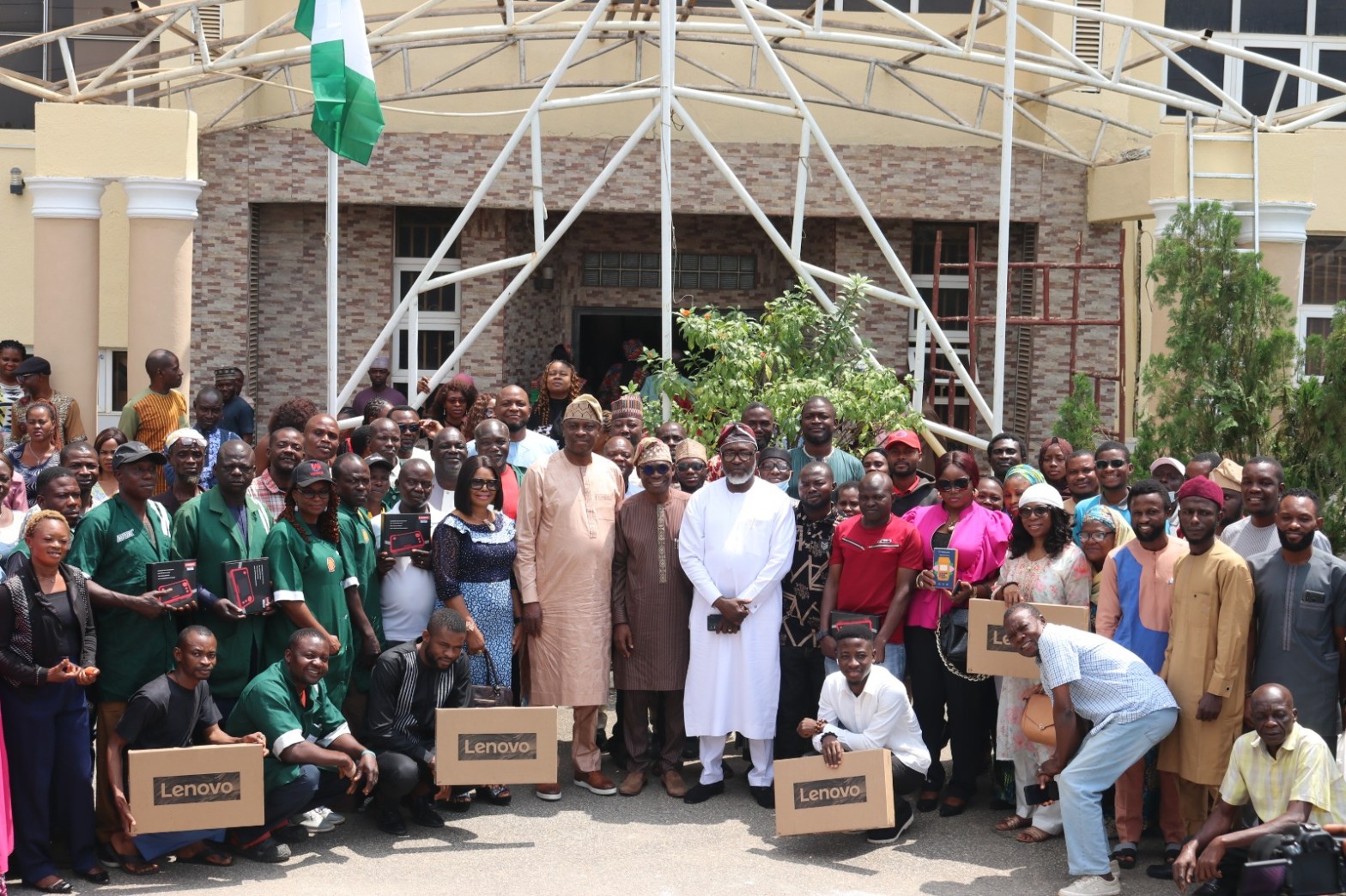
The Head of Service of the Federal Capital Territory Administration, Dr. Udo Samuel Atang has stated that the administration is actively implementing programs to enhance the capabilities of MSMEs through technological advancements, while empowering recipients to thrive in a competitive market.
The FCTA Head of service stated this during the disbursement and training for FCT CARE program at the Abuja Enterprise Agency, AEA on Thursday. He maintained that by doing this they will help in unlocking the full potential of MSMEs to create jobs, stimulate innovation, and accelerate economic growth.
Speaking further, he said “Through the Abuja Enterprise Agency (AEA), the delivery platform for Result Area 3, we provided targeted support to vulnerable MSMEs, including Credit Grants, Operational Grants, and Technological Enhancements. Our proactive approach ensures that MSMEs receives the necessary tools to succeed thus contributing to the overall economic development of the FCT and Nigeria.
“The World Bank FCT- CARES programme has been quite impactful on MSMES operating in the Federal Capital Territory as we have achieved notable impact such as ensuring that over 2500 businesses remain viable and sustainable thus preserving over 10,000 jobs, enhancing the technological capability of over 1500 MSMEs in addition to enhancing their business management skills.
“It will interest you to note that over 50, 000 MSMEs have been on-boarded on the World Bank FCT – CARES Portal. Thus, plans are underway to transit the programme by the World Bank and Federal Government to CARES 2.0, which will significantly expand firms accessing the support and further deepen the impact on the economic recovery of Nigeria. The FCT Administration will put in place necessary mechanisms to ensure MSMEs in the FCT reap much more benefits from the project,” he stated.
Also speaking at the event, the Acting Managing Director, Chief Executive Officer of Abuja Enterprise Agency (AEA), CHUDI UGWUADA-EZIRIGWE noted that the agency serves as the delivery platform for Result Area 3 of this crucial initiative on behalf of the FCT Administration, stressing that since the inception of the FCT CARES Programme, they have been committed to its success through a range of comprehensive and strategic efforts.
He noted that their efforts included: Engaging and raising awareness among over 2,000 key stakeholders in the entrepreneurial ecosystem, such as SME Associations, Cooperatives, Area Councils, Traditional Rulers, BDSPs, Banks, Media Organizations, and others.
Extending outreach across all 6 Area Councils of the FCT by conducting sensitization visits to Area Council Chairmen, Traditional Rulers, local market organizations, focal persons, and other significant community figures. Conducting media tours across television and radio platforms to further promote the programme.
Training enumerators on the use of applications and the objectives of the FCT CARES project across all 6 Area Councils.
Fully deploying the AEA MSME Enumeration platform to collect data on MSMEs in the FCT and assessing the data to identify eligible firms for the programme and Conducting verification visits to all identified participants.
CHUDI UGWUADA-EZIRIGWE expressed delight in sharing that their combined efforts have resulted in significant achievements such that over 50,000 SMEs in the FCT have been successfully enrolled.
He stated further that verification and monitoring visits have been conducted for over 9,000 businesses, while more than 2,500 eligible entrepreneurs have been trained and sensitized and also accessed funding for their businesses.
“There is no doubt that MSMEs are critical to economic growth worldwide. This programme represents a vital step in supporting their recovery and enhancing their capacities through technological advancement,” he concluded.
Thousands of beneficiaries were empowered on Thursday.
A coalition of 61 Civil Society Organizations (CSOs) in Nigeria has urged President Bola Ahmed Tinubu to clarify the ongoing controversy surrounding the planned extension of Inspector General of Police (IGP) Kayode Egbetokun’s tenure.
The CSOs argue that the debate over the IGP’s tenure extension reflects deeper concerns about governance, legality, and the urgent need for reforms within Nigeria’s law enforcement framework.
In a joint statement issued in Abuja on Friday, the groups emphasized that the government’s handling of this matter would significantly affect the stability of the Nigeria Police Force (NPF) and public confidence in the institution.
They cautioned that any misstep could result in discontent both within the police force and among the broader public.
The controversy was triggered by the emergence of a letter, allegedly signed by the Secretary to the Government of the Federation (SGF), purportedly extending the IGP’s tenure. The legitimacy of the letter, as well as the motives behind its issuance, have been questioned, with some suggesting it might be a strategy by the government to gauge public opinion before making a final decision.
Under Nigeria’s Constitution, the appointment of the IGP is the President’s prerogative, typically following consultations with the Police Council and subject to approval by the National Assembly. However, if President Tinubu has not endorsed a bill to extend the IGP’s tenure, the validity of any extension is debatable.
The CSOs further argued that extending IGP Egbetokun’s tenure, despite reaching the mandatory retirement age as outlined in the Public Service Rules and the Police Act of 2020, could undermine internal discipline, career progression, and morale within the NPF.
They insist that a new IGP should be appointed to maintain adherence to established regulations and promote capable leadership within the force.
The CSOs called on President Tinubu to promptly address the issue to prevent further uncertainty and to uphold the integrity of Nigeria’s law enforcement agencies.
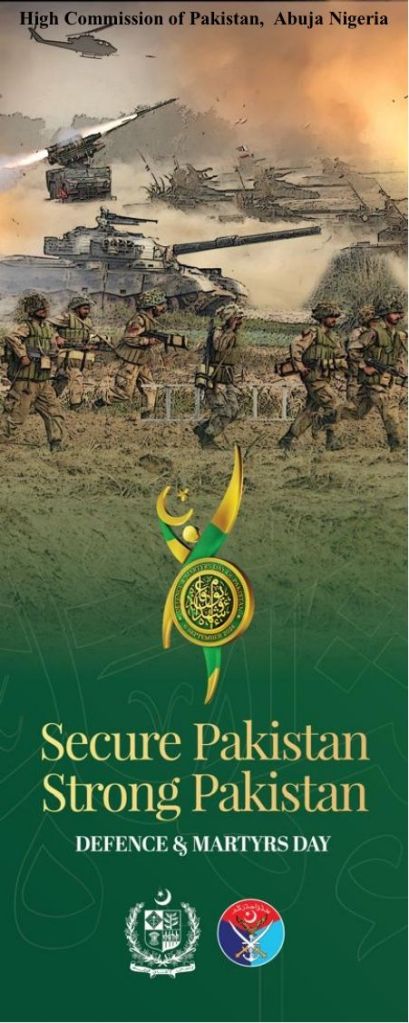
The Pakistani High Commission in Nigeria has celebrated Defence Day with a solemn and spirited ceremony that paid tribute to the valor and sacrifices of Pakistan’s Armed Forces while underscoring the nation’s dedication to safeguarding its sovereignty and promoting global peace.
In his opening address, High Commissioner Retired Major-General Sohail Khan welcomed the distinguished guests, including Nigerian dignitaries, diplomats, and members of the Pakistani community.
Major General Khan emphasized the significance of Defence Day.
He expressed that the day is observe to honor the courage and dedication of Pakistan’s military personnel.
“Today, we gather to recognize and remember the sacrifices of the Armed Forces of Pakistan,” High Commissioner Khan remarked.
He highlighted Pakistan’s pivotal role in international peacekeeping efforts, stating,
“Our Armed Forces rank as the fifth largest globally and have been at the forefront of United Nations peacekeeping missions since the 1960s, contributing to 46 missions across 29 different countries.”
The High Commissioner paid homage to the Pakistani soldiers who have laid down their lives in the fight against terrorism, asserting, “Our brave soldiers have embraced martyrdom while defending our homeland from internal and external threats.”
He further emphasized Pakistan’s position as a “responsible nuclear state” with robust command and control systems managed by the Armed Forces.
High Commissioner Khan dedicated the day to honoring the fallen heroes and the serving members of the Armed Forces for their unwavering commitment and selflessness.
Also, Colonel Kamran Mushtaq, Defence Advisor to the Pakistani High Commission, addressed the gathering, reflecting on the significance of September 6th as a symbol of national unity, courage, and resolve.
“This day reminds us of our nation’s unwavering readiness to defend our sovereignty at any cost,” Col. Mushtaq stated.
He reiterated Pakistan’s steadfastness in confronting any internal or external threats and urged all attendees to renew their commitment to the country’s defense.
The event concluded with a powerful message of solidarity and hope, as Col. Mushtaq invoked a prayer for guidance and protection: “May Allah Almighty guide and protect us all,” he declared.
The ceremony ended with resounding calls of “Long Live the Armed Forces of Pakistan. Long Live Pakistan. Long Live Nigeria.”
The observance of Defence Day reinforced the strong diplomatic and cultural ties between Pakistan and Nigeria, reaffirming Pakistan’s enduring commitment to regional stability and global peace.
Introducing OPPO Reno12 F 5G: Your First Choice AI Phone Packed with AI Portrait Capabilities, Stylish Design, Incredible Durability and Unrivaled Connectivity
OPPO today introduces Reno12 F 5G in Nigeria, adding to its popular Reno Series with a highly stylish and accessible AI phone. Featuring a brand-new Cosmos Ring Design, a dynamic Halo Light, and a 120Hz Smart Adaptive Screen, all protected by the robust All-Round Armour, Reno12 F 5G impresses with its stylish design and solid build.
As an AI Portrait Expert, OPPO Reno12 F 5G not only takes the lead in enhancing creativity in photography with advanced AI features like AI Eraser 2.0 and Smart Image Matting 2.0, but it also boosts productivity with AI tools including AI Recording Summary, AI Writer, and more. Powered for high performance by the MediaTek Dimensity 6300 Platform, and with AI LinkBoost for enhanced connectivity, OPPO Reno12 F 5G is the top choice for users’ entry into the world of AI Phones.
“We are thrilled to introduce the OPPO Reno12 F 5G to the Nigerian market. This phone is a true testament to our commitment to blending style, durability, and cutting-edge AI technology. Whether you’re a photography enthusiast or someone looking to boost productivity, the Reno12 F 5G is designed to meet all your needs with ease and elegance,” said Folasade Omonijo, Marketing Manager, OPPO Nigeria.
Premium Design and Unbreakable Build Style Meets Strength in All-New Design
OPPO Reno12 F 5G revolutionizes the design of the Reno Series with the introduction of the new Cosmos Ring Design. Drawing inspiration from classic wristwatches, the meticulously crafted circular camera module on the back cover exudes a sleek, elegant and luxurious feel, while a Halo Light encircles the camera to add a unique dynamic lighting effect that syncs up with music and adds an extra vibe to users’ listening experience. Not only does the Halo Light provide a variety of customizable lighting effects for different scenarios, but it also serves as a subtle notification system for charging, calls, and messages, alerting users with minimal interruption during situations like meetings and classes.
Complementing the stunning Cosmos Ring Design are three captivating color options fusing both contemporary and classic color schemes on OPPO Reno12 F 5G. Amber Orange, with a texture that dances like flickering flames; Olive Green, with a curved light column texture exuding dynamic fluidity. Measuring just 7.69mm in Olive Green and 7.76mm in Amber Orange, the phone weighs a mere 187g, combining stylish design with comfort for all occasions.
OPPO Reno12 F 5G boasts a 120Hz Smart Adaptive Screen with a remarkable local peak brightness of up to 2,100 nits for visual experiences that are both vivid and comfortable, while ensuring responsiveness in every interaction. The screen’s Splash Touch feature eliminates difficulties caused by wet screens or hands by improving the accuracy of taps and swipes even in rainy or other wet conditions. Additionally, the phone offers top level smart eye protection, leveraging both hardware and software solutions to minimize blue light emissions and display the optimal screen temperature throughout the day.
Despite its elegant and stylish looks, OPPO Reno12 F 5G boasts incredible durability fortified with All-Round Armour to defend against everyday drops, scratches, pressure, and water splashes. The robust armour includes an advanced glass screen and OPPO’s in-house developed High-strength Alloy Framework, while internal components are safeguarded by a Sponge Bionic Cushioning structure. Thanks to this inside-out protection, OPPO Reno12 F 5G is rated for IP64 Water and Dust Resistance and certified for 5 Stars in SGS Performance Multi-Scene Protection Testing.
A World of Rich AI Features at Your Fingertips Boosting Creativity and Productivity through Accessible GenAI
At the heart of Reno12 F 5G is OPPO’s commitment to making AI technology accessible by providing more users with advanced GenAI features that ignite creativity in photography and enhance productivity. When it comes to AI photography, AI Eraser 2.0 offers a smooth way to remove unwanted passers-by from photos with just a tap, supporting removal of a wide range of objects and natural filling in generated backgrounds at a faster speed. AI Smart Image Matting 2.0 meanwhile has been updated with enhanced accuracy, allowing for multi-subject cutouts that can be saved as standalone stickers for future use. Also included on the phone is AI Studio, which provides a personalized AI-powered photography experience that can transform regular portraits into unique digital avatars.
Alongside the AI imaging features, OPPO Reno12 F 5G adds a range of useful AI productivity tools like AI Recording Summary, which can process voice recordings and extract key information into easy-to-read summaries. More features are wrapped in the AI Toolbox, including AI Writer for crafting quick emails, social media posts and comments, AI Summary for extracting essential details from long passages of text, and AI Speak for reading articles aloud. Thanks to the easy-to-use AI Toolbox, users can conveniently call on these features from the sidebar to boost their productivity across a range of scenarios.
The Brand-New AI Portrait Expert Natural and Clear Images with the AI Portrait Expert
Beyond its suite of GenAI Features, OPPO Reno12 F 5G elevates the photography experience with an Ultra-Clear Camera System designed to capture sharp and natural portraits. The system includes a top-grade 50MP Main Camera, a 2MP Macro Camera for perfect close-up portraits, and a 112-degree 8MP Ultra-Wide-Angle camera, complemented by a 32MP selfie camera with multiple focal lengths.
On top of this powerful camera combo, Pro Portrait Mode leverages both the main and macro cameras to deliver professional-grade bokeh effects for stunning portraits, while AI Portrait Retouching provides more vivid and natural retouching effects. Together, the hardware-software combinations ensure every portrait on Reno12 F 5G captures full natural beauty with exceptional details.
Always Connected, Always On The Fastest Network, Anywhere
Ensuring a significant uplift to the fundamental experience on Reno12 F 5G is the best-ever network performance in the history of the Reno Series. This includes OPPO’s AI LinkBoost technology coupled with a 360° Surround Antenna solution that leverages a system-level AI model to boost signal reception and optimize network selection.
By intelligently adapting to challenging network conditions, AI LinkBoost ensures users enjoy the best connection possible. For example, it accelerates video sharing speeds and reducing video call buffering on congested networks or those with weak signals. When exiting an elevator, AI LinkBoost helps Reno12 F 5G swiftly reconnect to a network 36% faster than the previous generation, and enhance location accuracy when navigating with Google Maps, For extreme cases with no network coverage at all, OPPO’s BeaconLink supports device-to-device voice calls over Bluetooth based on a self-developed protocol, making ad-hoc network communication possible even in a completely disconnected environment.
Powerful Performance and Lasting Smoothness
OPPO Reno12 F 5G is powered by a MediaTek Dimensity 6300 Platform boasting a 10% overall improvement in energy efficiency compared to the previous generation. It is available in large memory configurations of 8/12GB of RAM and 256/512GB ROM, with up to 12GB of additional virtual RAM available through OPPO’s RAM Expansion technology to guarantee seamless multitasking. The addition of OPPO’s exclusive Trinity Engine also ensures long-term system smoothness through the precise allocation of computational resources. This includes ROM-Vita, which can smartly compress and clean storage to create more space for user files. Thanks to these enhancements, Reno12 F 5G has passed OPPO’s 50-Month Fluency Protection test, guaranteeing system smoothness for more than four years of use.
With its 5,000mAh Large Battery, OPPO Reno12 F 5G can provide up to 1.94 days of regular use, or an impressive 13.95 hours of non-stop TikTok streaming. Thanks to OPPO’s advanced technology, the battery is also able to maintain optimal performance for over four years of normal use. This long-lasting battery is supplemented by 45W SUPERVOOCTM Flash Charge, which enables a full 100% charge in 71 minutes. Even a quick 10-minute charge from 1% can deliver over 7 hours of music playback or more than 6 hours of call time, ensuring users are never more than a few minutes away from staying connected and entertained.
Pricing and Availability
OPPO Reno12 F 5G will be available in nationwide in Amber Orange, Olive Green from 13 August 2024. The 8/12GB RAM + 256/512GB ROM model will be available in both colors.
About OPPO
OPPO is a leading global smart device brand. Since the launch of its first mobile phone – “Smiley Face” – in 2008, OPPO has been in relentless pursuit of the perfect synergy of aesthetic satisfaction and innovative technology. Today, OPPO provides a wide range of smart devices spearheaded by the Find and Reno series. Beyond devices, OPPO also provides its users with ColorOS operating system and internet services such as OPPO Cloud and OPPO+. OPPO has footprints in more than 60 countries and regions, with more than 40,000 employees dedicated to creating a better life for customers around the world.
In a determined push to quell insecurity in the Northwest, the Honourable Minister of State for Defence, Dr. Bello Muhammed Matawalle, paid a high-profile visit to Sokoto State on Monday, September 4, 2024.
His visit, part of an ongoing operation to combat banditry and terrorism in the region, underscored the Federal Government’s renewed commitment to restoring peace and stability in the crisis-ridden state.
During a meeting at the Sokoto State Government House, Dr. Matawalle engaged in strategic discussions with the Executive Governor of Sokoto State, His Excellency, Ahmad Aliyu Sokoto, PhD.
The visit reinforced President Bola Ahmed Tinubu’s directive to prioritize security in the Northwest, particularly in areas hardest hit by violent groups.
“The safety of the people of Sokoto, and indeed the entire Northwest, is a top priority for President Bola Ahmed Tinubu GCFR,” Dr. Matawalle declared.
“The President has made it clear that we must leave no stone unturned in our efforts to restore peace to this region. I am here today to reaffirm the Federal Government’s commitment to this cause and to assure you that our troops are receiving the full backing of the Chief of Defence Staff and the Service Chiefs.”
The Minister of State for Defence’s visit also included a morale-boosting engagement with the troops at the 8 Division Headquarters of the Nigerian Army, where he commended the soldiers for their bravery and resilience in the face of mounting security challenges.
Dr. Matawalle, echoing President Tinubu’s firm stance, called for intensified efforts to eliminate the threats posed by bandits and terrorists.
Governor Ahmad Aliyu Sokoto expressed deep appreciation for the Federal Government’s support and commended Dr. Matawalle’s leadership and dedication to ensuring the safety of Sokoto State and the Northwest.
He described the Minister as “tested, trusted, and reliable,” and highlighted his confidence in the Federal Government’s capacity to eradicate the menace of insecurity in the region.
“Let me thank Mr. President for ordering you and other Security Chiefs to relocate to Sokoto State until we flush out these criminals,” Governor Aliyu stated.
“Honourable Minister, you are tested, trusted, and reliable, and your visit today shows that insecurity will soon be a thing of the past in Sokoto State and the entire Northwest zone.”
The Governor called on the people of Sokoto State to unite and collaborate with the security forces, urging them to avoid spreading fake news and misinformation, which could undermine the efforts to restore peace.
“Security cannot be achieved without the active cooperation and relevant information from our citizens. Together, we can overcome this challenge,” Governor Aliyu added, reassuring the people of Sokoto that their safety and security remain at the forefront of the government’s agenda.
The visit comes at a critical juncture for Sokoto State, which has endured relentless attacks from armed groups over the past months.
The Federal Government’s intensified focus on security operations in the region signals a renewed commitment to ending the violence and fostering lasting peace.
As the Minister of State for Defence concluded his visit, he reaffirmed the Federal Government’s pledge to provide all necessary resources and strategic support to ensure the success of the ongoing military operations.
“We recognize the critical importance of security in ensuring the well-being and prosperity of our citizens,” Dr. Matawalle reiterated.
“The troops are doing a credible job under challenging conditions, and I want to assure them and the people of Sokoto State that the Federal Government will continue to provide all necessary resources and strategic guidance to ensure the success of their mission.”
The unwavering stance of both the Federal and State Governments highlights a unified approach to tackling the security issues plaguing the Northwest. With Dr. Matawalle’s assurances and the proactive steps being taken, there is renewed hope among the people of Sokoto State that peace and stability will soon be restored.