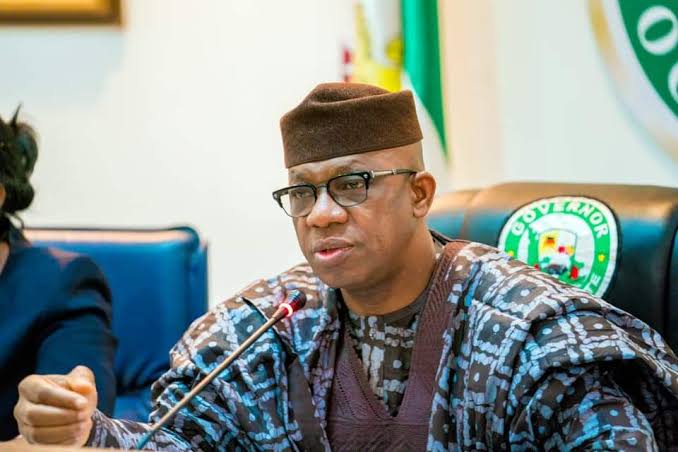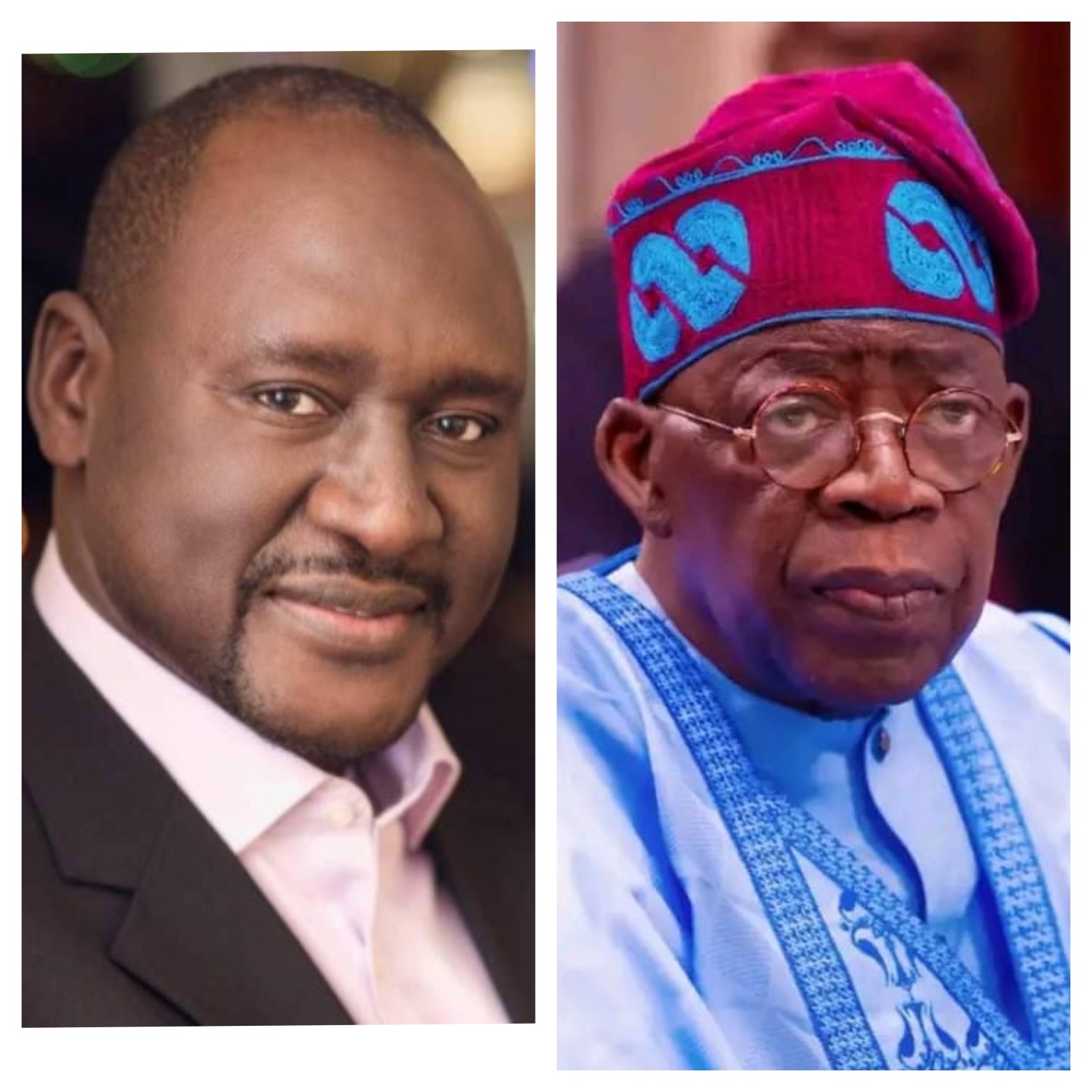
PDP governors in no position to advise Tinubu on governance or rate his performance -TMSG

The Tinubu Media Group (TMSG) has revealed the hypocrisy of the PDP governors describing them as chichidodos, a mythical bird that hates excreta but feed on worms that live in faeces.

The group made the remarks on Sunday in Abuja following the governors’ comments on the Tinubu administration.

In a twist of irony, the PDP governors who had feasted on the enormous allocations being generated by the Tinubu administration have turned to accuse the same government of non – performance.

The TMSG, in a statement signed by its Chairman Emeka Nwankpa and Secretary Dapo Okubanjo, noted that the PDP governors statement was down to insincerity and smirks of being arrogantly sanctimonious. Non-performing governors like those of the PDP are a burden on the country, the group emphasised.

“The governors elected on the platform of the PDP are in no position to advice President Bola Tinubu on governance or rate his performance in office because none of them has done anything worthwhile with the improved revenue they had been getting since Tinubu assumed office in the last one year.

The group said: “Going through the communique issued by PDP governors on sundry national issues at the end of their meeting in Enugu, we were not surprised that they took pot shots at President Bola Tinubu who has over the years been the nemesis of their party even before his assumption of office.

“But we find it shameful that state governors, with little or no real performance to their names in spite of a quantum leap in public funds allocated to them in over one year, are pointing fingers of blame at the President.

“We consider this as an act of hypocrisy, but we also recognize that they have to play the politics of opposition, which in Nigeria denotes abuse or canvassing false narratives.

“Just like President Tinubu, we acknowledge that the twin policies of fuel subsidy removal and unification of multiple exchange rates as well as high cost of living globally have exacerbated the high cost of living in the country but, it has also led to improved allocations from the federation account to all tiers of government which these governors enjoy.

“Our question for this group of governors is,what have they been doing with the public funds at their disposal to the extent that they themselves have had to raise posers on the ability of subnationals to pay the new minimum wage?

” The Federal government has also been extending support to state governments, regardless of party affiliation, but there are no signs of massive infrastructure projects in many of the states that are commensurate with the funds the governors have been receiving.

“And lest we forget, some of these governors are presiding over oil-producing states which incidentally have the highest number of people living in multidimensional poverty even after years of receiving enormous allocations tied to resources.

“Yet these are governors who chose to “express dismay at the management of the economy” rather than sit down and engage in a sincere peer review mechanism that will enhance performance in their respective States.

TMSG also wondered what the PDP governors meant by the good old days of the former ruling party.

“We found it laughable that members of a party that presided over multiple oil boom eras with little to show for it could engage in a revisionist ploy to hoodwink gullible Nigerians.

“This is a political party which plundered Nigeria’s hard-earned resources and squandered its national patrimony for a period of 16 years and ring-fenced hundreds of state-owned companies and investments through an opaque privatization process.

“It is easy for PDP governors to play the populist card by bringing up price of food items and the pump price of fuel but Nigerians have not forgotten the massive diversion of oil revenue into private foreign bank accounts as well as

the deliberate neglect of public infrastructure in the face of huge revenue earnings.

Recalling what Information minister Mohammed Idris told PDP governors sometime in February this year,TMSG said listed the many achievements of President Bola Tinubu.

‘The President and his administration recognise the unfinished business of revamping our national economy kickstarted by the administration of President Muhammadu Buhari,’’ the group referred to the minister as saying.

The minister said the government has achieved breakthrough in such programmes that focused on large-scale infrastructure, social welfare, prioritizing the equipping of, and welfare of the military and security agencies. So also is the reclaiming of Nigeria’s strategic place in the comity of nations.’’

He added that Boko Haram and its affiliates, which were on the ascendancy in 2014/2015, have since been decimated, and similar bold gains are now being made with bandits and other criminals.’

“If a 16-year period marked by those harsh realities were the good old days the PDP governors were referencing, then our message to them is, Never again,” the pro-Tinubu group added.

end

TSF Commends Federal Government’s Initiative to Address Food Shortage Across Nigeria

The Tinubu Stakeholders Forum (TSF) has commended the Federal Government for its proactive measures in addressing the critical issue of food shortage across Nigeria.

In a statement signed by its Chairman Ahmad Sajoh and Secretary Afolabi Josiah on Sunday in Abuja, the group said the measures including the dispatch of trailer loads of food supplies to states are a reflection of the administration commitment to the welfare of Nigerians.

“This initiative of dispatching 20 trailer loads of 25kg bags of rice to each of the 36 states and the Federal Capital Territory (FCT) through state governments underscores the Tinubu administration’s commitment to alleviating hardship among the most vulnerable members of society.

“We see the distribution of these rice supplies to the states as a laudable effort to ensure equitable access and support for those in need.

“We at TSF recognise, acknowledge, and support this additional step taken by the government to bolster food security measures and express hope that the subnational governments will ensure that the supplies get to those they are meant for.

“We are encouraged by the knowledge that this effort by the Tinubu administration is not a standalone one as it supplements existing government strategies aimed at enhancing food security nationwide

“So for us, President Bola Tinubu, has demonstrated an unwavering dedication to safeguarding the welfare of all Nigerians, particularly during challenging times, the TSF affirmed.

end

Tinubu’s intervention in national minimum wage crisis, great relief for Nigerians- Group

The Democratic Front (TDF) has described the successful intervention of President Bola Tinubu in the long standing crisis over a new national minimum wage as a great relief for Nigerians.

It said in a statement signed by its Chairman Danjuma Muhammad and Secretary Wale Adedayo that it was a reflection of the President’s solid,time-tested negotiation skills.

“We welcome the cheery news of the resolution of the lingering minimum wage crisis and the role played by President Tinubu in breaking the deadlock.

“As many Nigerians may have realized now, it took the intervention of the President to break the impasse between Federal Government officials and that of Organized Labour after the tripartite committee had completed its 6-month assignment without all parties reaching an agreement.

“What better way could anyone describe a situation where the leadership of the Nigeria Labour Congress NLC and that of the Trade Union Congress TUC gave the President a standing ovation as soon as the deal was sealed.

“This for us is a reflection of the political will to get things done even when confronted with a dead end so President Tinubu deserves credit for staving off a potential Labour crisis which could have impacted negatively on the economy.

“As we all know, the history of faceoffs between Labour and Government is rooted in a series of multi-dimensional trajectory that have impacted negatively on national productivity.

“Whenever we remember in retrospect, the exemplary role President Bola Tinubu played in 2016, as a non state actor, to prevail on the then Ayuba Wabba led NLC to call off an active nation-wide strike over the national minimum wage, our confidence in his ability to successfully break the impasse was never in doubt. And we were indeed proved right.

“So we believe the President deserves to be appreciated for the manner he got the two Labour centres to shift ground from their earlier wage demand to accept the new offer of N70,000, despite its consequences on the recurrent expenditure.

“We also laud the President for his unwavering determination to cushion the effects of subsidy removal by going beyond wage increase to allocating N100 bn for the purchase of CNG buses and CNG conversion kits across Nigeria, as well as also providing N125bn to energise MSMEs.

“The President’s intervention measure of N185 bn palliative loans to all state of the federation should equally be appreciated within the same context.

“We however know that some people have been calculating the new minimum wage in dollar terms without considering Purchasing Power Parity (PPP) but we make bold to say, for instance that the naira equivalent of $100 could buy a lot more in Nigeria than what same amount could get in any American city.

“So for us, a new minimum wage which is more than twice the previous one should be viewed from local perspective which obviously Labour acceded to by accepting the President’s offer,” it added.

The group also urged Organized labour to continue to cooperate with government in order to make ongoing reforms a success.

end

Features: Jeremiah Koung’s Cerebral Cortex for Good leadership

By Emmanuel Daudu (Nigeria Journalist)

The political landscape of Liberia, a nation with a rich history and a complex fabric of socio-political dynamics, has been shaped by the contributions of numerous individuals whose aspirations and actions have influenced the course of its governance. One such individual, who has recently risen to prominence, is the Honourable Jeremiah Koung – a figure that encapsulates the quintessence of contemporary Liberian politics.

Jeremiah Koung’s ascent within Liberia’s political sphere has been marked by a striking trajectory, symbolising simultaneously the trials and triumphs that characterise the nation’s politics. Born and nurtured in a country marred by civil conflict and economic trials, Koung’s narrative is ostensibly that of a steadfast pursuit of political influence, underscored by an adherence to the principles of dedication and service to his compatriots.

First and foremost, the impact of Koung’s political strategy, underscored by his advocacy for health and social welfare, is not to be underestimated. Prior to assuming his current role, he was instrumental in the establishment of a notable hospital in Nimba County, which is considered a bastion of his influence. This palpable commitment to health care lends credence to the assertion that Koung is not merely a political figurehead, but a servant of the public interest, championing initiatives that matter deeply to the citizenry.

However, the purely idealistic depiction of any political figure is often tempered by the realities of the political machinations they must navigate.

Moreover, Koung’s tenure as Vice President is laden with expectations. With a focus on economic rejuvenation and national unity, his office has been tasked with the formidable challenge of navigating Liberia through the quagmires of post-conflict rebuilding and socio-economic enhancement. The global context within which Koung operates is challenging, a point underscored by The Liberian Observer, which emphasises the difficulty of enacting substantive policy changes in an era of global economic uncertainty.

The foresight and adaptability required in such a role are monumental, but they offer a canvas upon which Koung’s capacity and potential can be projected. Should he succeed in actualising the economic aspirations and fostering unity he espouses, his tenure would be etched into the annals of Liberian political history as an exemplar.

It is here that one must consider the essence of political acumen – not solely in translating aspiration into action but in marshalling the unity of diverse interests towards a common good.

The Liberian Vice President’s international undertakings reflect another dimension of his influence. As head of the Liberian delegation to international forums, Koung’s role in articulating and advancing Liberia’s interests in the global arena is pivotal. The prestige and gravitas he brings to international negotiations have a direct bearing on how Liberia is perceived and treated on the world stage. It is in these arenas that the diplomatic finesse of a country’s leadership is put to the test, and by many accounts, Koung has acquitted himself with a level of competency that deserves acknowledgment

Critically, a nuanced study of Koung’s influence must also engage with the discourse on governance and the investment in Liberia’s youth. The demographic reality of Liberia is that it is a nation with a sizable youth population, many of whom look to leaders like Koung for direction and inspiration. His approach to tackling issues such as education, employment, and entrepreneurship will indelibly shape the future of countless young Liberians and, by the same token, the country’s prospects for sustained progress and stability.

It is impossible to foretell the ultimate impact of Jeremiah Koung’s vice-presidency with certitude; political landscapes are, by nature, shifting sands shaped by many hands.

However, the potency of Koung’s position lies as much in the present as in any future legacy. It is how he manoeuvres through the labyrinth of current socio-political pressures, how he addresses the immediate concerns of his fellow Liberians, and how he reconciles divergent expectations into a coherent vision for Liberia that will define his tenure.

Jeremiah Kough’s ascendancy to the vice-presidency of Liberia is a subject ripe for argumentative discourse. His political prowess is underscored by his dedication to public welfare, his involvement in contentious political skirmishes, and his navigation of the complex interplays of governance. Moreover, his impact on international relations and investment in the future generation compounds the intricacies of his influence. While one may contend with various aspects of his political journey, it is beyond dispute that Koung’s role is a microcosm of the broader dynamics that shape Liberia’s ongoing narrative. As with all political figures, the true measure of his legacy will be determined by the outcomes of his decisions and the perceptions of those he serves. Time, as ever, will be the ultimate arbiter of Jeremiah Koung’s mark on Liberian political history.

In the last few years, the West African nation of Liberia has navigated through a labyrinth of political and socioeconomic challenges to gradually cement its democratic credentials. Part of this ongoing transformation involves the individuals at the helm of governance, notably the Vice President, Jeremiah Koung.

The Vice Presidency is pivotal to the function of the Liberian Government. It acts as the second highest political office and is integral in ensuring that the wheels of democracy keep turning. Vice President Koung, since assuming his role, has been overwhelmingly engaged both nationally and internationally to influencing peace, projects, programs across board to better the economy of the nation and the lives of its citizens.

Before Koung’s ascendancy to vice presidency, his tenure as a legislator had been marked by various contributions to the country’s political and legislative landscape. Democracy thrives on political stability, which is fostered by the implementation of policies that emanate from a legislative framework. Koung’s legislative career, which involves the sponsoring of bills and the active participation in the legislative processes, provided a bedrock for his current role as the Vice president of Liberia.

One of the hallmarks of a thriving democracy is the accountability of its leaders to its citizenry. In this administration, efforts to increase transparency, chiefly initiated by Koung, have been commended by various watchdogs and international agencies. His push to open up government dealings to public scrutiny demonstrates a commitment to a democratic dividend that not only strengthens governance but also empowers citizens.

Vice President Koung has been a champion for enhancing civic engagement, thereby promoting one of the key tenets of democracy – the involvement of citizens in the decision-making processes. His support for initiatives that encourage community involvement in governance matters has been a testament to his belief in a government ‘of the people, by the people, for the people’.

Democracy is not just about the political system; it also encompasses the socio-economic development of a nation. Vice President Koung has often highlighted the importance of education as a fundamental democratic right that enables individuals to participate fully in society. By backing educational reforms and advocating for social programs that aim to lift individuals out of poverty, Koung is contributing to the creation of an informed and empowered populace that is essential for the health of any democracy.

Another dimension where Vice President Koung’s influence has been palpable is in the sphere of human rights and gender equality. Access to rights and equal treatment under the law are critical components of a democracy, and strides in these areas reflect the health of a nation’s political system. Koung has publicly expressed support for policies that fight discrimination and promote the rights of all Liberians, regardless of gender, ethnicity, or religion.

This commitment could potentially see an increase in respect for human rights and more opportunities for women, thus enriching Liberia’s democratic fabric, which is goal 5 of the Sustainable Development Goals, SDGs. This makes him automatically a He for She Ambassador.

Democracy is an ongoing journey, and Liberia’s road is no exception. Vice President Jeremiah Koung’s tenure has undeniably coincided with a period of burgeoning democratic change. His promotion of accountability, civic engagement, educational investment, and a focus on human rights and gender equality are initiatives that seem to drive the democratic dividends that Liberians are beginning to reap. While it is true that much work remains to be done, and criticism must be acknowledged, it is also fair to recognize the potential positives stemming from the Vice President’s actions and policies.

As Liberia continues to navigate its democratic path, the office of the Vice President, occupied by Jeremiah Koung, will remain instrumental in shaping the direction of the country. With continued emphasis on these democratic principles and the engagement of its citizens, Liberia is poised to enjoy the fruits of a robust and mature democracy, ultimately benefiting all Liberians.

In the realm of Liberian politics, the figure of Jeremiah Koung, as he ascends to the role of Vice President, carries with it a plethora of expectations and apprehensions concerning the nurturing and enhancement of democratic principles in Liberia. Acclaimed for his leadership and revered by his adherents, Koung now faces the pivotal challenge of aligning his perceived leadership style with the broader democratic mission necessary for progression in Liberia’s sociopolitical context.

Jeremiah Koung, a former member of the Liberian House of Representatives and now the incumbent Vice President, is perceived by many as an individual with a strong mandate to lead. His ascendancy in Liberian politics is marked by his prior commitment to addressing the issues faced by his constituents in District 1 of Nimba County.

Koung’s efforts have often been praised for being community-centric, focusing on tangible developments such as health care and education. However, it is imperative to explore how the personal leadership qualities of Koung translate into his capacity and willingness to propagate and uphold democratic principles in his role as Vice President.

A democratic mission in the Liberian context is not simply a political necessity but also a collective aspiration for a society that has been deeply scarred by civil strife and governance challenges. It revolves around the fortification of institutions, the safeguarding of human rights, and the establishment of an accountable governance model that resonates with Liberians’ democratic aspirations. As the Vice President, Koung’s role in this democratic mission is critical, as his authority and actions could potentially influence the direction of Liberian democracy.

Proponents of Jeremiah Koung argue that his leadership posterior is fundamentally aligned with democratic values. They highlight his community-based initiatives, grassroots connection, and responsiveness to constituents’ needs as indicators of his democratic commitment. Koung’s defenders also point out his advocacy for transparency in government dealings, as evidenced by his push for accountability measures in public projects and his own alleged lifestyle of relatively modest means compared to other politicians.

Moreover, Koung’s leadership style—often described as consultative and inclusive—mirrors the participatory governance model central to democracy. Through engaging community voices in the decision-making process and fostering a culture of participation, Koung demonstrates a commitment to involving the citizenry in governance, a cornerstone of democratic systems.

To evaluate Koung’s potential to further Liberia’s democratic mission, one must cautiously balance the arguments for and against his democratic alignment. On one hand, there seems to be a genuine connection between Koung’s community focus and the nurturing of a participatory democracy. Since democracy thrives on active citizen engagement, his style of leadership could stimulate broader civic participation and public debate, providing a fertile ground for democratic ethos to flourish.

Conversely, the true measure of a democracy goes beyond community engagement—it necessitates adherence to the rule of law, protection of minority rights, and a steadfast commitment to political pluralism.

As an influential and ascendant figure in Liberian politics, Jeremiah Koung is poised at a crossroads that will either consolidate or undermine Liberia’s democratic mission. While his leadership style has elements that suggest a democratic disposition, it is imperative that he espouses consistent democratic values through transparent and accountable governance. In doing so, Koung has the potential not only to enhance his leadership perception but to solidify his vice presidency as a critical juncture in Liberia’s democratic journey.

END

By Emmanuel Huleji Daudu
Editor-In-Chief, Africa Security Investigation News,
Global Founder,
World Sustainable Development Goals Organization
+234 9036683775
daudupress@gmail.com
info@worldsdgs.org

Amb. Johanness Makouvia to represent Togo at the 12th Int’l Youth Fellowship in Seoul-South Korea

A young Togolese, with great leadership influence within the youth sphere, has been invited by the International Youth Fellowship as its Special Guest at the 12th International Youth Fellowship conference to be hosted in Seoul-South Korea from 20th to 29th July 2024.

Making the disclosure on Thursday in Togo, he stated that one of the things that would be resolved is the best approaches young people would adopt while engaging with their leaders so that what happened in Kenya doesn’t repeat itself in any part of the world again.

While speaking on the potential benefits of the global Youth conference, he has this to say, “1. Networking opportunities: The conference brings together young people from different countries, cultures, and backgrounds. This provides a unique opportunity to network and build relationships with fellow delegates. These connections can potentially lead to future collaborations, friendships, and partnerships.

“Cross-cultural understanding: The conference encourages dialogue and interaction among participants, fostering a deeper understanding and appreciation of different cultures, traditions, and perspectives. This helps to break down stereotypes and promotes tolerance and global unity.

“Personal development: Attending the conference allows young people to learn new skills, gain confidence, and develop leadership qualities. Through workshops, seminars, and group activities, participants can enhance their communication, teamwork, and problem-solving abilities.

“Global perspectives: The conference provides a platform to discuss and address global issues such as climate change, poverty, human rights, and social justice. By attending the conference, young people can broaden their knowledge, broaden their outlook, and gain a better understanding of their role in creating positive change in the world.

“Inspiration and motivation: The conference features keynote speakers, inspiring stories, and success stories from young leaders and experts in various fields. These motivational sessions can ignite passion, inspire action, and encourage participants to aim higher and pursue their dreams.

“Cultural exchange: In addition to the conference sessions, cultural exchange programs, performances, and exhibitions are often organized as part of the event. This allows participants to showcase their cultural heritage, learn about other cultures, and celebrate diversity.

“Access to resources: The conference often provides access to useful resources, including educational materials, research findings, and practical tools. Participants can benefit from these resources for personal growth, academic purposes, or to implement their own projects and initiatives.

“Recognition and exposure: The conference provides a platform for young people to showcase their talents, ideas, and projects. This can lead to recognition, exposure, and opportunities for further development. It also allows participants to gain visibility and credibility among their peers and potential future employers.

“Bridging the generation gap: The conference helps to bridge the gap between different generations by facilitating intergenerational dialogue and understanding. This can lead to the exchange of knowledge and experiences, mentorship opportunities, and the transfer of wisdom from older generations to younger ones.

“Lifelong friendships: The conference offers a unique environment for participants to form lasting friendships with like-minded individuals who share similar aspirations, values, and interests. These friendships can provide a support network and source of inspiration long after the conference has ended”, he added.

About Johaness Makouvia and his NGO, Mouvement des Jeunes Promoteurs de la Paix (MJPP). He have been active for many years in the search for and promotion of peace in the world, and their actions and commitment are echoed internationally. On several occasions, he has been asked to share his experience at a world meeting on youth from July 19 to 30 …

Over the past few weeks, South Korea has been hosting a number of high-profile events world events. Next week, the country will host the 12th edition of the
World Ministerial Forum (WMF). An event attended by official delegations from
several countries.
Among the guests at this event is Ambassador Johaness Makouvia, President of the international NGO
international MJPP (Mouvement des jeunes promoteurs de la paix). During the meeting, which aims, among other things, to “establish a common understanding of youth issues in international society”, Mr. Makouvia, well known for his mediation work on behalf of youth and peace
for youth and peace, will address a message to the audience.

Other Togolese officials will be taking part in this meeting of exchange and sharing. be punctuated by intense activities. Each evening, the participating ministers meet to discuss in depth
youth issues, with a view to finding solutions to their problems.
According to the timetable for this global event, in addition to presentations by
Ambassador Makouvia, delegates will visit leading Korean industrial companies and their and their production plants to gain first-hand experience of cutting-edge technologies. Through these visits, the context and driving force behind South Korea’s unprecedented
Korea’s unprecedented economic development. This development has enabled this country, one of the world’s poorest in the 1950s, to become the world’s 10th largest economy.
Ambassador Johaness Makouvia will also take part in a tour of Korea’s famous attractions.Korea; a visit designed to enable participants to appreciate the excellence and beauty of traditional
Korean culture.

“It’s an honor for us to be invited to this event, which remains a major opportunity to defend the cause of youth and seek solutions to the problems of this important of our societies. It’s also the umpteenth recognition of our actions in our country Togo, in Africa and throughout the world”, declared Mr. Makouvia. The World Ministers Forum (WMF) is organized by the NGO International Youth
Fellowhip (IYF) founded by the Korean Ock Soo Park. The event highlights the role of international cooperation in solving the world’s youth problems; and to serve as a platform or platform or arena for an ongoing global conversation on youth development.
Highly anticipated at this forum, Mr. Makouvia has several honors to his credit. He was voted:
Best African manager in the field of peace promotion and social cohesion
(RWANDA 2023), Best promoter of peace and non-violence in Africa (MOROCCO 2023),
Great Builder for Safeguarding Peace in Africa (Côte d’Ivoire 2022), Best African Promoter
peace and social cohesion (PADEV RWANDA2022).

Tinubu’s Administration Prioritizes Youth Skill Development for Employment

By Maryam Aminu

The Federal Ministry of Youth Development has reaffirmed the administration of President Bola Ahmed Tinubu’s dedication to equipping Nigerian youth with essential skills to boost employment and employability.

The Minister of State for Youth Development, Engr. Ayodele Olawande made this known during the World Youth Skills Day Celebration held at the Dangote Ultra Modern Skills Acquisition Centre (DUMSAC) today in Kano.

Engr. Olawande, emphasized the administration’s commitment to youth skill acquisition.

L-R: Ayodele Olawande at WYSD in Kano

“Education is good but only skills will develop our nation and improve the living condition of the youth,” Olawande stated.

The minister also co-launched the Better Education For Africa’s Rise (BEAR) III project, a collaboration between the Ministry of Education of the People’s Republic of Korea and the United Nations Educational, Scientific and Cultural Organisation (UNESCO).

Olawande highlighted the necessity of aligning Nigeria’s education system with the demands of the 21st-century job market.

“It is very imperative that we tie the kind of education we give the youth to the dictate of the job market. A graduate must not only be able to read, write and speak good English, he must possess at least two skills that he can immediately deploy after leaving school to earn a productive living,” he asserted.

World Youth Skills Day (WYSD) is celebrated annually on July 15, following the United Nations General Assembly (UNGA) declaration. The event aims to raise awareness about the importance of equipping young people with skills for employability, entrepreneurship, and self-employment.

Olawande with dignitaries at skills exhibition stand in Kano

Global Alliance for Peace and Unity Condemns Planned Protest by Nigerians in August

By Maryam Aminu

The Global Alliance for Peace and Unity (GAPU), an organization dedicated to fostering peace and unity, has voiced strong opposition to the planned protest by Nigerian citizens set to take place in August 2024.

The protest, organized by various civil society groups and activists, aims to address a range of pressing issues including government accountability, economic hardship, and social injustice.

In an official statement signed by the President, Global Alliance for Peace and Unity, Hon. Solomon Pevkyaa yesterday in Abuja expressed deep concerns over the potential for violence and social unrest that could arise from the protest.

Hon. Pevkyaa highlighted the importance of maintaining peace and stability in the country, especially during a time of economic challenges and political tensions.

“While we recognize the right of individuals to express their grievances and demand accountability, we urge all parties involved to prioritize peaceful dialogue and constructive engagement over public demonstrations that could escalate into violence,” said Hon.Pevkyaa

“Our mission is to promote harmony and prevent conflict, and we believe that solutions can be achieved through collaborative efforts rather than confrontational tactics.”

The planned protest has garnered significant attention and support from various sectors of Nigerian society, including youth organizations, human rights groups, and opposition political parties. Organizers argue that the protest is a necessary step to draw attention to widespread issues such as corruption, unemployment, and the rising cost of living.

As the date of the protest approaches, GAPU has called on both the government and protestors to engage in meaningful dialogue and work towards a peaceful resolution.

GAPU President commended the efforts of it Global Patron, Secretary to the Federation, George Akume in stabilizing the administration of President Bola Ahmed Tinubu.

Global Patron of GAPU, Secretary to the Government of the Federation, Sen. George Akume

“This acknowledgment underscores Akume’s pivotal role in fostering stability and ensuring the effective functioning of Tinubu’s government. As a prominent figure within the administration, Akume’s contributions have been instrumental in navigating the complexities of governance and maintaining a cohesive political environment.”

“We commend Akume for his dedication to public service and his strategic initiatives that have strengthened the administration’s foundation. His leadership and commitment to national unity have been crucial in addressing various challenges and promoting a stable political climate.”

Hon. Pevkyaa disclosed GAPU’s plan to organize a sensitization workshop that will raise awareness and educate citizens about the impactful initiatives and achievements of President Bola Ahmed Tinubu’s administration.

He expressed that the workshop aims to spotlight the government’s efforts in various sectors, fostering a deeper understanding and appreciation among the populace.

Defence Minister calls for collaboration with F.U.D on conflict resolution and research on military equipment production

By Emmanuel Daudu

…Our doors are open for possible collaboration- Badaru.

The Honourable Minister of Defence, Mohammed Badaru Abubakar, CON, mni, has urged the Federal University Dutse, Jigawa State (FUD) to partner with the Ministry Defence on Conflict resolution and
research on Military equipment production and repair through Defence Industries Corporation of Nigeria.

According to a press release signed on the 18th of July, 2024 by Henshaw Ogubike Mnipr FCAi Fsca Fcpe, Director ( Information and Public Relations), receiving the Vice Chancellor of FUD, Professor Abdulkarim Sabo Mohammed and Management Staff of the University in Ship House, Abuja, the Minister said the Ministry is open for possible collaboration with the Federal University Dutse and other indigenous companies in areas of conflict resolution and production of defence equipment.He emphasized the importance of collaboration in conflict resolution studies and research for defence hardware production.

“With our DICON Bill, we are encouraging our indigenous companies to be involved in the production of weapons, ammunition and spare parts for our military hardware,” he said.

The Defence Industries Corporation of Nigeria (DICON) is a Nigerian company responsible for the production of military equipment and hardware for the Nigerian Armed Forces.
Its main objective is to achieve self-sufficiency in military equipment production, reduce reliance on foreign suppliers, and enhance Nigeria’s defence capabilities.

The Minister commended the Vice Chancellor for his leadership and innovations, urging for sustained collaboration for national benefit.

On his part, the Vice Chancellor of Federal University Dutse, Professor Abdulkarim Sabo Mohammed congratulated the Minister on his achievements, acknowledging his contributions to the University’s development during and after his tenure as Jigawa State Governor, including the establishment of the University’s Teaching Hospital and flagship structures. “Your contributions to the development of our University as the Executive Governor
of Jigawa state is enormous and unprecedented and also your continued contributions to date” he said.

Defence Minister urges women to be agents of change

By Emmanuel Daudu

The Minister of Defence, Mohammed Badaru Abubakar, CON, mni, has called on women to become agents of change in their communities and society at large.

According to a press release signed on the 18th of July, 2024 by Henshaw Ogubike Mnipr FCAi Fsca Fcpe, Director ( Information and Public Relations), the Minister made the call when he received delegation of National Female Students Association led by
Comrade Choice Uchenna Enebeli at Ship House, Abuja.

“Women has always been the backbone of the society adding that it is time for them to harness the incredible power and potential that lies within each and every one of them,” he said.

While commending the Association efforts, he encouraged them to harness their power and potential to drive positive change.

The Minister praised the Association’s upcoming programs aimed at empowering female students with knowledge and skills for academic and career excellence. He urged them to make the program all-encompassing, with a national scope.

Earlier, the leader of the delegation,
Comrade Choice Uchenna Enebeli said that, the purpose of their visit is to create awareness on their upcoming programs designed to equip female students with the knowledge and skills necessary to excel in their academic pursuits and career development.

Comrade Choice said that the goal of National Female Students Association of Nigeria is to harness the power of young women to build a better Nigeria that is prosperous and peaceful inorder to achieve the vision and create a lasting legacy for generations to come.

Defence Minister Lauds Humanitarian effort as critical to National Security

By Emmanuel Daudu

The Honourable Minister of Defence, Mohammed Badaru Abubakar, CON, mni, has commended the efforts of the Senior Special Adviser ( SSA) to the President on Humanitarian Affairs and Poverty Alleviation, Hon. Delu Bulus Yakubu, saying that her efforts are crucial in addressing national security.

According to a press release signed on 18th of July, 2024 by Henshaw Ogubike Mnipr FCAi Fsca Fcpe, director ( Information and Public Relations), the Minister said this when he received the SSA at Ship House, Abuja.

The Minister emphasized the importance of collaboration between the Ministry of Defence and the Office of the SSA on Humanitarian Affairs to address national security and poverty alleviation. He acknowledged that national security encompasses not only military strength but also addressing poverty and lack of opportunities.

The visit underscored the importance of collaboration between the Ministry of Defence and the Office of the SSA on Humanitarian Affairs in addressing national security and poverty alleviation.

The Minister praised the SSA’s dedication to humanitarian affairs and poverty alleviation, assuring her of the Ministry’s willingness to collaborate on joint initiatives. “Your commitment to humanitarian affairs is admirable, and we are eager to work together to implement comprehensive strategies that will benefit our nation,” he said.

On her part, the Senior Special Adviser congratulated the Minister on his achievements, commending his leadership in enhancing the nation’s security architecture. She reiterated the need for continued collaboration, saying g that national security requires collective efforts. “National security is a social service that requires collective efforts for it to succeed,” she said.

She further said that her Office is working on a joint interactive National Seminar aimed at bringing together relevant authorities, non-governmental organizations, and security experts to share ideas on improving national security through humanitarian services.