Minister of Youth Development Raises Concern Over Rising Irregular Migration Among Young People

Maryam Aminu

The Honourable Minister of Youth Development, Dr. Jamila Bio Ibrahim, has voiced her concern over the increasing trend of irregular migration among young people in Nigeria.

This concern was expressed during a two-day awareness programme on the effects of irregular migration, organized by the Ministry in Benin, Edo State, Southern Zone.

Represented by Mr. Kabiru Mohammed, Director of Education and Youth Development of the Ministry, Dr. Ibrahim highlighted the alarming rate at which irregular migration is impacting the stability and functionality of societies.

She stressed the social, economic, and cultural challenges posed by this issue and called for urgent, collaborative efforts to address and mitigate these challenges.

Dr. Ibrahim emphasized that the administration of President Bola Tinubu, through the Ministry of Youth Development, is working diligently with relevant ministries, departments, and agencies to curb this growing concern.

“The Ministry has developed various empowerment programmes such as the restructured National Youth Investment Fund (NYIF), the Presidential Initiative on Youth Cluster, the National Youth Skills Programme, the proposed construction of Youth Villages, the development of Youth Development Centres nationwide, and a 30% affirmative action for youth participation in government, among other initiatives,” she stated.

The Honourable Minister also reflected on the needless and avoidable deaths of young Nigerians attempting to cross the Mediterranean Sea to Europe, and the numerous cases of organ harvesting, rape, child labor, kidnapping, and prostitution faced by illegal desert migrants.

Dr. Ibrahim educated participants on the concept of migration, emphasizing that youth development is a cross-cutting national agenda and that all stakeholders have a role to play in combating the menace of irregular migration.

She noted that young people are the legacies of any nation and play a crucial role in national development.

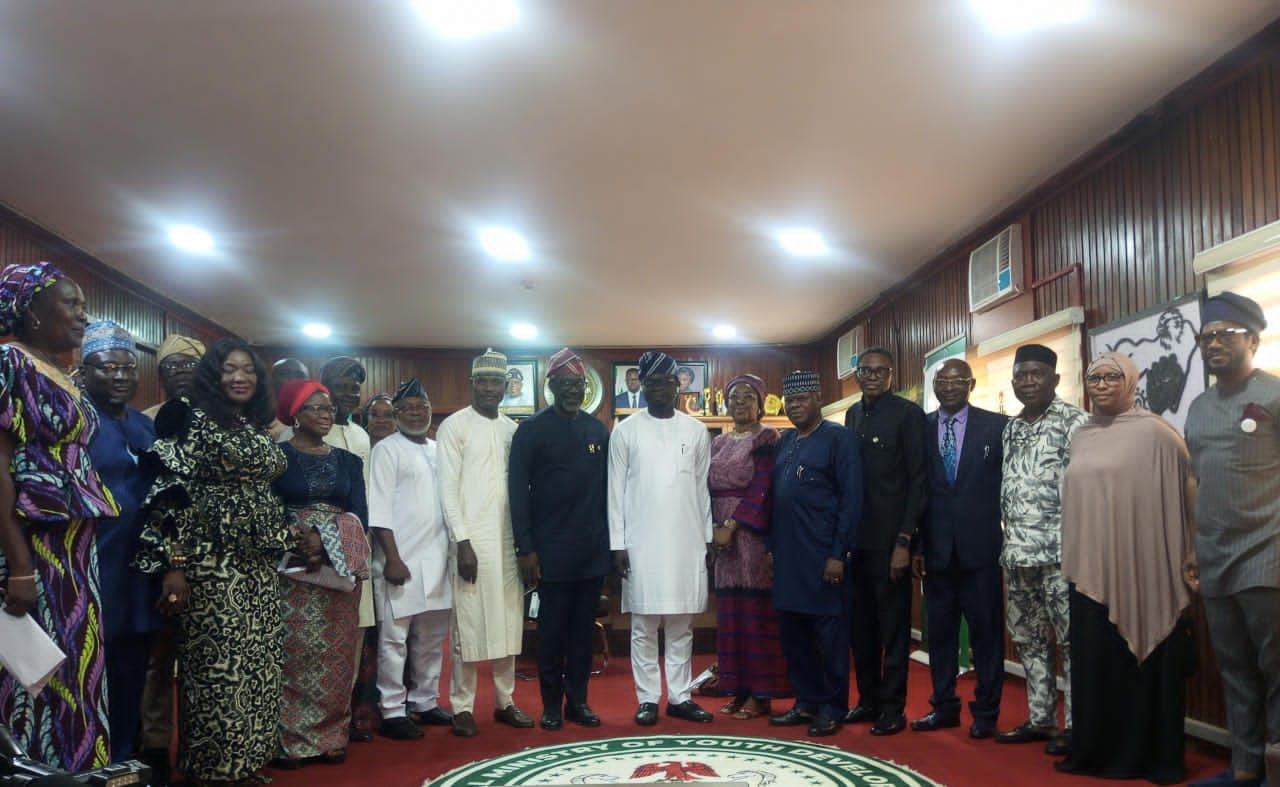
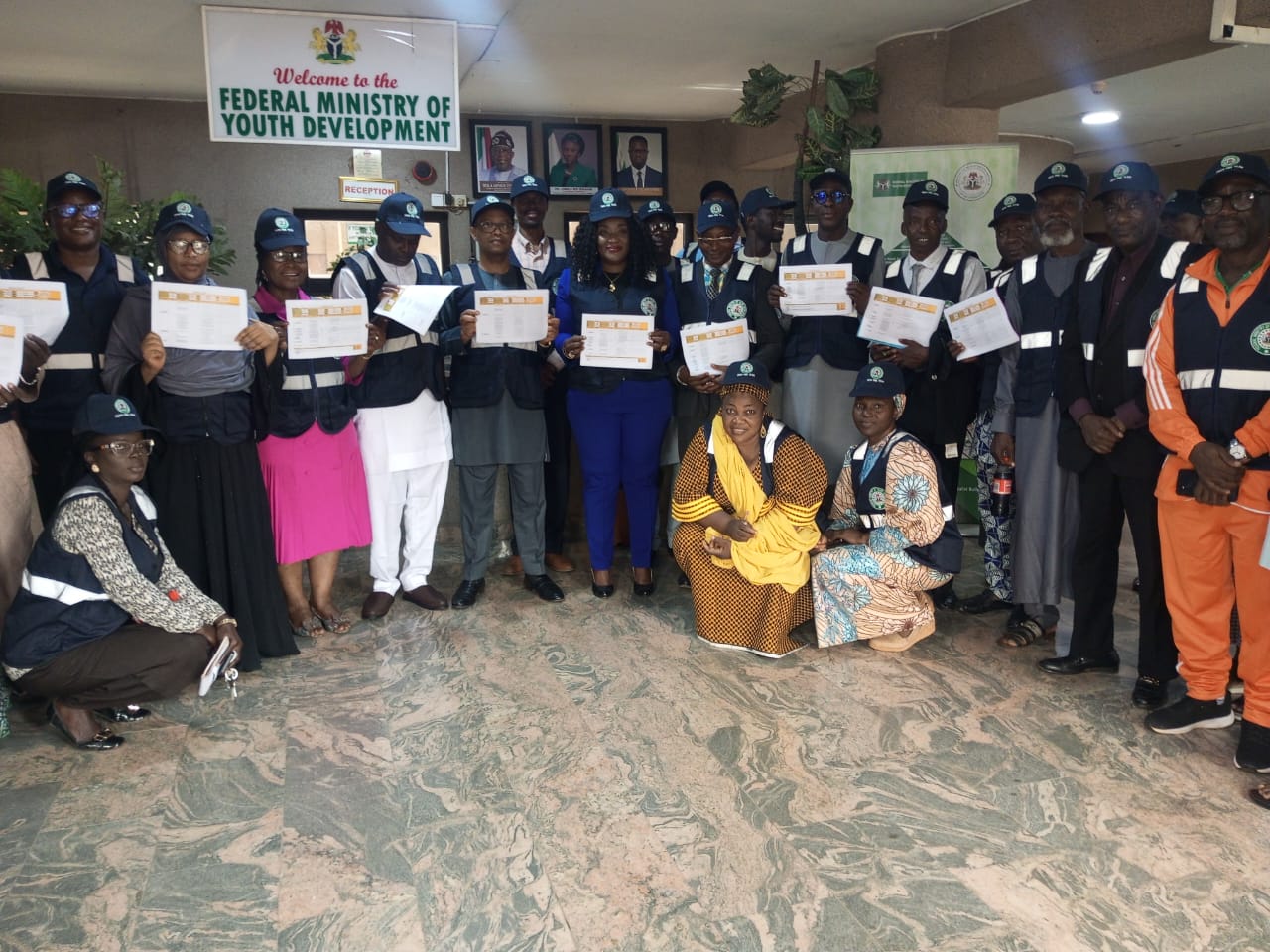
Group photograph of dignitaries with participants.

In his goodwill message, the Comptroller General of the Immigration Service, Edo State Command, MC Monyei, represented by Assistant Comptroller Chris Dodoh, described irregular migration as a perilous journey for many young people, often driven by dreams of a better life but frequently ending in tragedy.

He emphasized that the sensitization and awareness campaign is a critical step in the collective efforts to educate and inform young people about the harsh and uncertain realities of irregular migration.

He called on all stakeholders to empower the youth with knowledge about legal and safer ways to achieve their aspirations without risking their lives or dignity.

One of the participants, Igbon Osedebamen, noted that the programme helped her understand the distinction between regular and irregular migration.

“I now realize that regular migration can be measured, while irregular migration cannot. As young people, it is time for us to reject this problem in our society that exposes us to danger and choose the correct way to migrate,” she stated.

Minister of Youth Launches National Youth Skills Program to Combat Unemployment

Maryam Aminu

The Honorable Minister of Youth has launched the National Youth Skills Program (NYSP), a transformative initiative aimed at tackling youth unemployment in Nigeria.

Addressing a distinguished gathering of stakeholders, the Minister underscored the program’s importance in equipping young Nigerians with the skills and tools necessary to pursue their dreams and contribute to national development.

“Our nation is at a pivotal moment. The future of our youth, the heart of our progress, hangs in the balance. This program is not just a new initiative but a bold and transformative strategy to tackle one of our nation’s most pressing issues youth unemployment.” She added

The Minister disclosed that currently, over 42.5% of Nigeria’s young population remains unemployed, with 33 million young Nigerians lacking a clear path forward.

The Minister highlighted this alarming statistic as a call to action, emphasizing that the NYSP aims to change this narrative by focusing on 11 key sectors critical to Nigeria’s development, such as agriculture, renewable energy, and the digital economy.

“With the right skills and training, our youth can not only find employment but also become the driving force behind these sectors,” the Minister explained.

“Imagine a future where a young Nigerian trained through the NYSP becomes a job creator, establishing a business that powers homes and employs hundreds of others.”

The program also includes a robust financial empowerment component. Through the Nigerian Youth Investment Fund (NYIF), ₦110 billion has been allocated for the 2024 fiscal year to support youth-led businesses.

Dr. Bio expressed that the upcoming National Youth Development Bank will provide grants, loans, and mentorship to help young Nigerians turn their ideas into thriving enterprises.

The Minister highlighted the program’s commitment to inclusivity, ensuring that the NYSP reaches every corner of Nigeria, including remote villages.

“No young person should feel that opportunity is beyond their reach,” she said.

The NYSP aims to include 50% female participants and provide specific pathways for young women to thrive in various sectors. She noted that special provisions have also been made to ensure accessibility for persons with disabilities.

Collaboration is at the core of the NYSP’s success, with contributions from government agencies, private sector leaders, civil society, and international partners.

The Minister called on the private sector to join the effort, not just as employers but as partners in training, apprenticeships, and mentorship.

To ensure the program’s effectiveness, a robust Monitoring and Evaluation (M&E) Framework has been implemented to track key performance indicators, such as job creation, the success rate of youth-led businesses, and contributions to national economic growth.

“We aim to reduce youth unemployment by as much as 20% over the next five years and achieve a 50% increase in youth-led enterprises,” the Minister declared.

“We are not just offering skills training; we are providing a holistic solution, bridging gaps, and aligning with global best practices.”

The Minister called on the youth of Nigeria to seize the opportunities presented by the NYSP.

“We believe in you. We are investing in you because you are the key to Nigeria’s future. Let’s build that future together.”

3rd from the right: Minister of Youth Development, Dr. Jamila Bio-Ibrahim. 3rd from left: The Permanent Secretary . Sec. Mr. Olubunmi Olusanya with Prince Olugbenga Momoh, Director EDP and first from the right, Director information & PR of the Ministry, Mrs Omolara Esan, during the launch of NYSP in Abuja.

Nigerian Communications Commission Deploys Device Management System to Regulate Mobile Devices

Maryam Aminu

The Nigerian Communications Commission (NCC) has launched the Device Management System (NCC-DMS) to register and regulate all mobile phones accessing communication networks across the country, Nairametrics reports.

This deployment is part of the NCC’s new “Type Approval Business Rule 2024,” which mandates all Mobile Network Operators (MNOs) in Nigeria, including GLO, MTN, and Airtel, to connect their equipment to the DMS platform.

According to the NCC, the initiative aims to enhance control over mobile devices, improve security, and ensure compliance with regulatory standards.

The DMS will function as a Central Equipment Identity Register (CEIR), tracking all mobile devices by collecting their International Mobile Equipment Identity (IMEI) numbers and synchronizing them with international IMEI databases.

This centralized system will allow the NCC to monitor devices across all network operators, ensuring that only approved and compliant devices are permitted on Nigeria’s communication networks. Devices not registered through the system will be blacklisted, rendering them unusable within the country.

The NCC-DMS is designed to combat the use of unapproved devices, prevent mobile phone theft, and reduce fraud. By tracking and blacklisting the IMEIs of stolen devices, the system is expected to significantly curb phone-related crimes.

The Commission emphasized that blacklisting stolen or illegal phones will render them useless, reducing the incidence of phone theft and snatching by stripping such devices of their value.

Beyond tracking devices, the NCC-DMS will act as a regulatory tool by requiring all MNOs to synchronize their Equipment Identity Registers (EIRs) with the system.

This synchronization will enable the regulator to enforce uniform standards for device registration and regulation across the country.

The NCC has also stipulated that device suppliers will be responsible for registering type-approved devices on the NCC-DMS.

Additionally, individuals will be required to register their devices through the DMS, though the number of devices allowed per registration will be limited, as determined by the Commission.

The Commission disclosed that a registration fee will apply to each device registered on the system, affecting both consumers and suppliers, who must ensure that all devices sold or used within Nigeria comply with NCC regulations.

This fee is separate from the existing type-approval fees.

The NCC initially proposed the NCC-DMS in 2021 to enhance national security and improve transparency in Nigeria’s telecommunications sector.

This move is expected to reduce mobile-related crimes, protect consumers, and boost government revenue through device registration.

NCC Sets Final Deadline for NIN-SIM Linkage Compliance to September 14, 2024

Maryam Aminu

The Nigerian Communications Commission (NCC) has announced that the final deadline for the linkage of Subscriber Identification Modules (SIMs) to National Identity Numbers (NINs) is set for September 14, 2024.

This follows significant progress in the Federal Government’s 2020 policy to link all SIMs to NINs, with over 153 million SIMs already successfully linked, achieving a compliance rate of 96%, up from 69.7% in January 2024.

The NCC has called for the continued cooperation of all Nigerians to reach 100% compliance in the final phase of this critical process.

The Commission emphasized that the full linkage of all SIM cards to NINs is vital for enhancing the security and trust of Nigeria’s digital economy.

“By ensuring all mobile users are verified, this policy is expected to strengthen confidence in digital transactions, reduce fraud and cybercrime, and encourage broader participation in e-commerce, digital banking, and mobile money services. This will, in turn, promote financial inclusion and contribute to economic growth.”

In collaboration with the Office of the National Security Adviser (ONSA) and the National Identity Management Commission (NIMC), the NCC has uncovered cases where individuals have possessed an unusually high number of SIM cards—some exceeding 100,000.

The Commission reiterated its commitment to working with security agencies and other stakeholders to combat the sale of pre-registered SIMs, safeguarding national security and ensuring the integrity of mobile numbers in Nigeria.

The NCC has directed all Mobile Network Operators (MNOs) to complete the mandatory verification and linkage of SIMs to NINs by September 14, 2024.

Starting from September 15, 2024, the Commission expects that no SIM operating in Nigeria will be without a valid NIN.

The Commission urges all members of the public who have not yet completed their NIN-SIM linkage, or those experiencing issues due to verification mismatches, to visit their service providers promptly to update their details before the deadline.

Approved self-service portals are also available for this purpose.

The NCC also reminds the public that the sale and purchase of pre-registered SIMs are criminal offences punishable by imprisonment and fines.

Citizens are encouraged to report any such activities to the Commission via its toll-free line (622) or through its social media platforms.

The NCC expressed gratitude to the public for its continued cooperation in strengthening Nigeria’s digital ecosystem.

Malala Fund and Partners Urge Nigerian Government to Protect the VAPP Act

Maryam Aminu

The Malala Fund along with its partners, has called on the Nigerian government to reject the proposed repeal of the Violence Against Persons Prohibition (VAPP) Act.

Enacted in 2015, this landmark legislation provides critical protections against gender-based violence (GBV) and ensures the safety, empowerment, and education of girls across Nigeria.

The VAPP Act is a significant achievement in Nigeria’s fight against GBV, criminalizing various forms of abuse, including domestic violence, rape, female genital mutilation, and child marriage.

The Advocacy groups warn that repealing the Act could have severe consequences for girls’ education, potentially increasing dropout rates and creating more hostile learning environments.

“Repealing the VAPP Act would not only undermine efforts to protect Nigerian women and girls from violence but also threaten their right to education,” said Nabila Aguele, Chief Executive of Malala Fund Nigeria.

“When girls feel safe, they are more likely to attend school and reach their full potential. We cannot afford to take a step back in the fight for gender equality. We urge the Senate to amend and strengthen the Act, rather than repeal it.” She added

While recognizing that the VAPP Act may require revisions to ensure clarity and inclusivity, Malala Fund and its partners advocate for amendments rather than a complete repeal.

“Introducing new provisions, such as attempted rape and defilement, is commendable. However, repealing the entire Act could have far-reaching repercussions,” said Bukky Shonibare, Executive Director of Invictus Africa.

“The VAPP Act, passed after years of effort, has now been adopted by 35 of the 36 states in Nigeria. Let us build on this progress by amending and properly implementing the Act rather than repealing it.” said Shonibare

Advocates also call for better implementation of the VAPP Act to support GBV survivors effectively.

“Enacting and implementing legal protections against gender-based violence is critical for ensuring girls have access to education, stay in school, and complete their education,” said Toyin Chukwudozie, Executive Director of Education as a Vaccine.

“Repealing the VAPP Act will jeopardize this fundamental right for all girls nationwide, particularly in states where the Act has already been adopted. It is unnecessary and undermines the efforts of everyone who fought for its passage.”

Malala Fund and its partners reiterated their commitment to ensuring 12 years of free education for all Nigerian children.

The VAPP Act is a crucial component of this effort, and the coalition will continue advocating for its preservation and effective implementation.

The coalition called on the Senate to reject the repeal of the VAPP Act.

They further urged the Senate to amend the VAPP Act to ensure clear, inclusive language that protects all individuals, particularly women and girls.

The statement was signed by Hamzat Lawal of Connected Development (CODE), Rotimi Olawale of YouthhubAfrica, Frances Okeke of Sustainable Collective Advocacy for Africa Development Initiative, Benjamin John of Unique Care and Support Foundation (CASFOD)

Others include Hassana Shuaibu of ACE Charity, Sani Muhammad of Bridge Connect Africa Initiative, Pamela Okoroigwe of The Inclusion Project (TIP),  Abubakar Muazu of Center For Advocacy, Transparency and Accountability Initiative (CATAI), Gideon Olanrewaju of AREAi, Toyin Chukwudozie of Education as a Vaccine, Sola Fagorusi of Onelife Initiative and Bukky Shonibare of Invictus Africa

FG to Equip Youth with Skills for National Development -Youth Minister

Maryam Aminu

The Federal Government has taken decisive steps to equip Nigerian youth with essential skills for success and meaningful contributions to national development.

The Minister of Youth Development, Dr. Jamila Bio Ibrahim announced this during a youth skills stakeholder consultative dialogue at her office in Abuja.

Dr. Ibrahim reaffirmed the government’s commitment to empowering young Nigerians.

“Nigeria’s youth make up over 60 percent of our population. This demographic is not just a statistic but a powerful force that, if properly harnessed, can transform our economy and elevate our global standing,” she said.

The Minister addressed the pressing issue of youth unemployment, highlighting the urgency of skills development and employment initiatives.

“With youth unemployment currently at approximately 42.5 percent, this is not a challenge we can afford to overlook. It requires immediate and comprehensive action,” she asserted.

Dr. Ibrahim detailed the Ministry’s strategies to tackle youth unemployment through groundbreaking initiatives, such as the restructured Nigerian Youth Investment Fund (NYIF), the Presidential Initiative on Youth Engagement and Cluster (PIYEC), and the National Youth Skills Program. These initiatives aim to equip young Nigerians with the skills, resources, and opportunities necessary to thrive in an evolving global economy and drive sustainable national progress.

“These programs provide accessible financing, training, mentorship, and enterprise development opportunities across critical economic sectors, paving the way for financial empowerment,” Dr. Ibrahim explained.

“The National Youth Skills Program, in particular, equips Nigerian youth with cutting-edge, globally competitive skills to ensure they are prepared for today’s interconnected marketplace.”

She also emphasized the importance of collaboration in achieving these goals.

“We aim to foster stronger interagency cooperation and enhance partnerships among government bodies, donors, and the private sector. By aligning our roles, leveraging our strengths, and pooling resources, we can create a unified and impactful approach to youth skills development,” the Minister added.

In his opening remarks, the Permanent Secretary of the Ministry, Mr. Olubunmi Olusanya, welcomed the stakeholders and underscored the significance of the National Youth Skills Program (NYSP).

Olusanya explained that the program is designed to bridge the critical skills gap among Nigerian youth, aligning with Nigeria’s broader development objectives, particularly President Bola Tinubu’s eight-point agenda to reduce unemployment and foster economic growth through entrepreneurship.

Prince Olugbenga Momoh, the Director of Enterprise Development and Promotion at the Ministry, thanked the stakeholders for their participation despite the short notice, describing their commitment as a positive sign for the future of Nigerian youth.

He outlined the Ministry’s efforts in building capacity in various areas, including vocational skills, business development training, and sectors such as borehole drilling, plumbing, electrical work, carpentry, interior decoration, tiling, vulcanizing, mechanics, and the creative industry.

From the right is the Perm. Sec. Federal Ministry of Youth development, Mr. Olubunmi Olusanya, flanked by the director of Enterprise Development and Promotion of the Ministry, Prince Olugbenga Momoh during the youth skills stakeholder consultative dialogue meeting in Abuja.

4th from the right is Dr. Jamila Ibrahim, 5th from the right is the Perm. Sec.with some directors of the Ministry and stakeholders during the meeting

World Sustainable Development Goals Organization’s Secretary-General lauds Nigeria’s UN  Resident  & Humanitarian Coordinator

By Maryam Aminu

World Sustainable Development Goals Organization,  which operates within the entire UN member nations, absorbing  the entire 17 SDGs as agencies, each  headed by Directors and Deputy Directors respectively  within the organization has lauded the Nigeria UN  Resident  &  Humanitarian Coordinator,
Mr. Mohamed Malick Fall for making time to tour around Nigeria for a sightseeing of the SDGs achievements across the federation.

The Secretary-General,  His Excellency Emmanuel Huleji Daudu who made this commendation recently expressed delight in the passion of the just posted to Nigeria  UN  Resident  &  Humanitarian Coordinator, Mr. Mohamed Malick Fall.

Secretary-General, World Sustainable Development Goals Organization, Mr. Emmanuel Huleji Daudu

Emmanuel stated that touring across the Nigerian states is a significant indicator that betokens passion for humanity, love for the Nigerian people, and desperation to better the 17 SDGs implementation in the country.

While speaking further, Emmanuel disclosed that the tour of the UN  Resident  &  Humanitarian Coordinator,
Mr Mohamed Malick Fall would, in no distance time, yield positive results as engagement with stakeholders across the federation has informed him on what to do and how to go about his job.
“Throughout his week-long tour, Fall engaged with various stakeholders, including state governors, commissioners, private sector leaders, civil society organizations, traditional rulers, and representatives from women and youth groups. Without doubt, this will increase the developmental strides across the federation through the instrumentality of the 17 SDGs”.

While congratulating him on his transfer to Nigeria, he assured him of the maximum support of the World Sustainable Development Goals Organization-Nigeria and the Global Body.

Famous Investigative Journalist, Wale Abideen Appointed TPI Spokesman

The Progressive Institute, TPI, Abuja has appointed Olawale Abdulfatai Abideen as the head of Media and Strategic Communications Department.

The institute which is a newly established Policy Think Tank of the ruling All Progressives Congress, APC was launched in Abuja last Friday.

A well known investigative journalist and Publisher of Security Monitor, Abideen bagged B. A (Homs) degree in Linguistics from the University of Ilorin and a post graduate diploma degree, PGD in Journalism from the prestigious Nigerian Institute of Journalism, NIJ, Lagos. He also acquired numerous trainings and certificates in investigative reporting, tracking of illicit activities as well as strategic communications both within and outside Nigeria. He is currently undergoing a Master Degree in Mass Communications.

Former Political Correspondent and Head of Investigative Desk in The Week Magazine and former Lagos Specialist and Political Correspondent in The Source magazine, Abideen began his journalism career at the Herald Newspapers, a publication of Kwara State Government and he has worked in various local and international media outlets.

A member of Nigeria Union of Journalists, NUJ and International Consortium of Investigative Journalism, ICIJ, Abideen is the founder of African Center for Investigative Journalism, ACIJ and founding President of the Nigerian Association of Online Journalists, NAOJ.

He was the media strategist at the Institute for Governance and Leadership Studies in Africa, IGLSA, Abuja.

A ‘fire-brand’ researcher, brilliant investigator, strategic communicator and an online specialist, Abideen is also a media proprietor. He is happily married and blessed with children

HEDA and 175 Organizations Urge Nigerian Government to Resist Shell’s Pressure on Divestment Decision

The Human & Environmental Development Agenda (HEDA Resource Centre), in coalition with other 175 international and local organizations, is urging the Nigerian Government to stand on President Bola Ahmed Tinubu’s decision to block Shell’s proposed divestment of its onshore oil fields under SPDC to Renaissance African Energy. Renaissance, a Special Purpose Vehicle registered in the British Virgin Islands, is reportedly controlled by unknown individuals, raising concerns about transparency and accountability, decommissioning and abandonment, host community development funds, technical and financial capacity, and security for the country.

The President’s decision follows an in-depth assessment conducted by S&P Global, an international consultancy firm engaged by the Nigerian Government through the Nigerian Upstream Petroleum Regulatory Commission (NUPRC). S&P Global’s report flagged multiple issues in Shell’s divestment plan, including concerns over Renaissance’s financial credibility, as Shell is providing 70% financing for the acquisition of the assets, responsible for production of 30% of Nigeria’s oil output.

Additionally, the report challenged Shell’s low estimates of environmental damage caused by its operations in Nigeria, especially given the recent findings by the Bayelsa State Oil and Environment Commission, which put the cleanup costs for pollution in Bayelsa at $12 billion, with Shell being responsible for a reasonable share of the pollutions.

In a letter signed by HEDA Chairman, Olanrewaju Suraju, addressed to NUPRC’s Commission Chief Executive, Engr. Gbenga Komolafe, and copied to President Tinubu, UK’s National Crimes Agency, and US Department of Justice on behalf of the coalition, expressed concerns over the NUPRC’s silence on the Shell-Renaissance deal, in contrast to its announcement of approval of other divestment proposals, such as Eni-Oando and Equinor-Project Odinmim. This silence suggests the NUPRC’s alignment with S&P Global’s recommendations to reject the Shell-Renaissance transaction.

According to HEDA, members of the coalition have been closely monitoring developments and alarmed by reports of alleged pressure from Shell on government officials to disregard S&P Global’s findings. While HEDA makes no direct accusations of inducement, the organization emphasizes that these claims warrant serious investigation. The coalition has already reported the matter to relevant regulatory and investigative authorities.

According to Suraju, “The coalition is calling for the immediate public release of the S&P Global report on proposed divestment of SPDC, which was commissioned using public funds. NUPRC has a responsibility to ensure transparency and accountability in this process. HEDA, alongside its coalition partners will continue to monitor this issue closely and pursue all necessary legal and prosecutorial actions to uphold justice and environmental protection in Nigeria.”

Some of the civil society coalition members includes the Civil Society Legislative Advocacy Centre (CISLAC), Youths and Environmental Advocacy Centre (YEAC-Nigeria), Ijaw Elders Forum Lagos, Policy Alert, Urhobo Oil-Producing Communities Forum, and Corner House.

They also include Friends of the Earth International, Polluters Pay, Centre for International Environmental Law, Indigenous Environmental Network, Hawkmoth, Global Justice Ecology Project, Oil Change International, Oil & Gas Action Network, Alliance for Climate Frontline Communities, Social Development Integrated Centre (Social Action), Re:common, Fridays for the Future, and Greenpeace Africa, Women from the Mountain, System Change not Climate Change etc.

Dr. Sani Ibrahim appointed Member National Board of Trustees World Sustainable Development Goals Organization-Nigeria

By lois Zhiya

World Sustainable Development Goals Organization-Nigeria has appointed Dr. Sani Ibrahim Yauri as member, National Board of Trustees.

The appointment letter which was signed on the 29th of August, 2024 by the Country representative, His Excellency Engr Kolawole Rasheed Adenekan charged the new member of the Board of Trustees to remain steadfast in his passion for humanity and be focused in guiding the national administrators of the organization to making sure that they don’t operate outside the outlined ethics of UN, Nigeria and the organization.

According to the letter, “As a member of the Board of Trustees, you will be entrusted with the responsibility to guide the national administrators of the organization in fulfilling our mission while upholding the highest ethical standards. We expect you to remain steadfast in your passion for humanity and maintain a focused approach in all your endeavors.

“The United Nations, Nigeria, and our organization have outlined a set of ethics that must be strictly adhered to by all members. It is imperative that you familiarize yourself with these guidelines and ensure that the administrators operate within their boundaries. Your role in advising and supervising the organization’s activities will play a crucial part in maintaining the integrity and effectiveness of our work.

“We believe that your experience, expertise, and commitment to our shared values will greatly contribute to the growth and success of our organization. Your dedication to humanitarian causes has been recognized, and we trust that you will continue to exemplify excellence in your service”.