The Federal Government has officially cleared the Honourable Minister of State for Defence, H.E. Dr. Bello Muhammed Matawalle, of all allegations linking him to banditry in Zamfara State, describing the accusations as baseless and politically motivated.
The Office of the National Security Adviser (NSA), after a thorough investigation, found no substantial evidence to support the allegations.
In a statement on national television, Special Adviser on Information and Strategy to President Bola Tinubu, Bayo Onanuga, disclosed that the accusations were fabricated to tarnish Matawalle’s reputation.
“As far as I know, most of those things are just mere allegations,” Onanuga stated, highlighting that the probe conducted by the NSA revealed the accusations to be without merit.
Political observers believe that the baseless accusations aimed to discredit Matawalle, seeking his removal from office.
However, following a recent cabinet reshuffle, President Tinubu’s confidence in Matawalle’s commitment to Nigeria’s security remains unshaken.
Since his appointment, Matawalle has played a pivotal role in enhancing security, especially in the North West region. His recent operational visit to Sokoto and the successful elimination of notorious bandit kingpin Halilu Sububu underscore his active efforts in the fight against insecurity.
Onanuga emphasized that the government remains committed to truth and transparency in public service, stressing that “people are just bringing out all kinds of fake things and allegations.”
His remarks resonate with the administration’s goal to address public concerns while safeguarding the integrity of its officials.
In light of the exoneration, there are growing calls for those who propagated these allegations to retract their statements and issue a formal apology.
Supporters argue that Matawalle’s dedication to national security should be recognized and that falsehoods only serve to hinder Nigeria’s progress.
FROM: Nigerian Supreme Council for Ecclesiastical Affairs (NSCEA)
DATE: 15th. October, 2024
SUBJECT: CAUTION AGAINST FALLACIOUS AND HERETIC TEACHINGS OF CHRISTIAN FAITH
Dear Dr. Abel Damina,
We, at the Nigerian Supreme Council for Ecclesiastical Affairs (NSCEA), have observed with dismay your current preachings and teachings of Biblical tenets and hereby write to express grave concern and caution regarding these your teachings, which have been brought to our attention. This letter also serves as a DISCLAIMER.
Heresy is, “a belief or opinion contrary to orthodox Christian doctrine and any belief, teaching or practice that explicitly undermines the gospel.” Heresies are “beliefs or teachings that deviate from established or orthodox doctrine, often considered contrary to the accepted teachings of a religion or faith.”
In Christianity, these include:
Arianism: Denies Jesus’ divinity.
Gnosticism: Emphasizes secret knowledge over faith.
Pelagianism: Rejects original sin and predestination.
Donatism: Questions validity of sacraments performed by unworthy clergy.
Monophysitism: Believes in single nature of Christ.
While we appreciate your passion for spreading the Gospel, we cannot ignore the alarming rate of theological errors and heresies in your messages, especially as it is now going viral on social media as hate speech and cyber crime against the Christian faith. Please note that, the Bible is not for philosophising, it’s the WORD OF GOD inspired of the Holy Ghost.
Specifically, we have issues with the following titles of your messages such as: “There is no heaven”, “You don’t need God to Succeed”, “Jesus is not coming back”, “Heaven is scam”, “God is not responsible”, “Jesus Christ is not a Christian”, “Jesus Christ is God the Father and there is no trinity”, “The Bible is not the Word of God”, “No to Holy communion” and “No to tithing”, etc.
We assert that, most of these your topics are mere fallacies and heretic, while the notions are mistaken beliefs, especially based on generalisations, self interpretation, personalised style, alarming sub-titles, and unsound arguments. For instance, in English, “the notion that the camera never lies is a fallacy.” You also know this, but your preaching style is focused on attracting your audience through content creating hype rather than being correct and spiritual.
These teachings deviate from the fundamental doctrines of Christianity, contradicting the Holy Scriptures and the historic confessions of the faith. Your interpretations in most cases are also subjective to undermine the authority of Scripture, compromise the deity of Christ, and confuse the nature of our great salvation.
The core tenets of Christian faith include: CORE DOCTRINES:
Trinity: One God in three persons – Father, Son (Jesus Christ), and Holy Spirit.
Incarnation: Jesus Christ, fully human and fully divine.
Salvation: Faith in Jesus Christ saves humanity from sin and its consequences.
Bible: Inspired, authoritative, and infallible scripture.
Creation: God created the universe and humanity.
ESSENTIAL BELIEFS:
Deity of Christ: Jesus is Lord and God with the Holy Spirit in Trinity.
Virgin Birth: Jesus born of Mary, conceived by Holy Spirit.
Atonement: Jesus’ death and resurrection redeem humanity.
Resurrection: Jesus rose bodily from the dead.
Second Coming: Jesus will return to judge and establish God’s kingdom.
CHRISTIAN WORLDVIEW:
Sin and Fallen Nature: Humanity’s rebellion against God.
Redemption: God’s plan to restore humanity through Jesus.
Faith and Works: Salvation by faith, demonstrated through works.
Here are some common errors in reasoning and argumentation that you have been involved in rather than humbly subjecting your interpretations to the help of the Holy Spirit.
FALLACIES:
Ad Hominem: Attacking the person, not the argument.
Strawman: Misrepresenting or exaggerating an opposing argument.
False Dilemma: Presenting only two options when there are more.
Slippery Slope: Assuming a chain of events without evidence.
Appeal to Authority: Using authority to support an unjustified claim.
Appeal to Emotion: Using emotions rather than logic.
Begging the Question: Assuming the truth of the conclusion.
Circular Reasoning: Using a conclusion as a premise.
Denying the Antecedent: Incorrectly concluding that a condition is false.
GENERALISATIONS:
Hasty Generalization: Drawing conclusions from insufficient evidence.
Sweeping Generalization: Making overly broad statements.
Stereotyping: Applying group characteristics to individuals.
OTHER ERRORS:
Ambiguity: Using unclear or vague language.
Equivocation: Using words with multiple meanings.
False Analogy: Comparing unlike things.
Faulty Causality: Assuming cause-and-effect without evidence.
Ignoring the Context: Omitting relevant information.
Misleading Vividness: Using vivid imagery to mislead.
Oversimplification: Simplifying complex issues.
Question-Begging Epithet: Using loaded language.
Red Herring: Introducing irrelevant information.
Unfounded Assumption: Assuming facts without evidence.
COGNITIVE BIASES:
Anchoring Bias: Relying too heavily on initial information.
Availability Heuristic: Overestimating the importance of vivid information.
Bandwagon Effect: Following popular opinion.
Confirmation Bias: Seeking supporting evidence.
Hindsight Bias: Believing events were predictable.
Illusion of Control: Overestimating control over events.
Priming: Influencing thoughts or behaviors.
Selective Perception: Filtering information.
Self-Serving Bias: Attributing success to internal factors.
Sunk Cost Fallacy: Continuing investment due to past commitment.
LOGICAL ERRORS:
Affirming the Consequent: Assuming a conclusion based on incomplete evidence.
Denying the Consequent: Incorrectly concluding that a condition is false.
Undistributed Middle: Assuming a conclusion based on incomplete evidence.
Illicit Major: Using an invalid premise.
Illicit Minor: Drawing an invalid conclusion.
RHETORICAL DEVICES (USED TO DECEIVE OR PERSUADE):
Allusion: Referencing famous people or events.
Hyperbole: Exaggerating for emphasis.
Metaphor: Comparing unlike things.
Personification: Attributing human qualities to non-human entities.
Rhetorical Questions: Asking questions for effect.
Recognizing these errors can help you critically evaluate arguments and make more informed decisions logically. Moreover, ‘Logic’ is the systematic study of reasoning and argumentation, focusing on the principles and methods for evaluating information, constructing arguments, and making informed decisions.
MAIN BRANCHES OF LOGIC ARE:
Deductive Logic: Concerned with certain and absolute conclusions.
Inductive Logic: Deals with probable conclusions based on evidence.
Abductive Logic: Involves making educated guesses or hypotheses.
Symbolic Logic: Uses symbols and formal languages to represent logical relationships.
Mathematical Logic: Applies logical principles to mathematical reasoning.
LOGICAL CONCEPTS:
Proposition: A statement that can be true or false.
Premise: A statement supporting a conclusion.
Conclusion: The inferred result of premises.
Inference: The process of drawing conclusions.
Argument: A set of premises and conclusions.
Validity: The property of an argument’s logical structure.
Soundness: The property of an argument’s truth and validity.
You also need to learn and know that universal characteristics of language include being representative, symbolic, conventional, arbitrary, creative, etc.
THE TOTAL PACKAGE OF SALVATION IN OUR LORD JESUS CHRIST
The total package of salvation in Jesus Christ include: SPIRITUAL BENEFITS:
Forgiveness of sins (Ephesians 1:7)
Righteousness (2 Corinthians 5:21)
Reconciliation with God (Romans 5:10)
Eternal life (John 3:16)
Adoption as God’s children (Ephesians 1:5)
Spiritual rebirth (John 3:3-7)
EMOTIONAL BENEFITS:
Peace (John 14:27)
Joy (John 15:11)
Hope (Romans 5:2-5)
Comfort (2 Corinthians 1:3-4)
Love (1 John 3:1)
PHYSICAL BENEFITS:
Healing (Isaiah 53:5, Matthew 8:17)
Protection (Psalm 91)
Provision (Matthew 6:33)
Strength (Philippians 4:13)
ETERNAL BENEFITS:
Heaven (John 14:2-3)
Eternal glory (2 Corinthians 4:17)
Resurrection (1 Corinthians 15:50-54)
New heaven and new earth (Revelation 21:1-4)
As leaders in the Nigerian Christian community at NSCEA, we cannot continue to tolerate and watch the body of Christ in this predicament of yours, we are compelled to address these errors and ensure the integrity of our shared faith. We urge you to:
Publicly retract and correct these false teachings.
Engage in theological dialogue with reputable scholars to clarify and deepen your understanding.
Align your ministry with the orthodox, evangelical and pentecostal teachings of Christianity or back out completely. It is always good to know enough to realise that you do not know enough.
Dr. Abel Damina, you have crossed the line, and you are therefore no more a representative of Christianity (The Body of Christ) in Nigeria.
We remain committed to upholding the truth and unity of the Body of Christ in Nigeria.
Sincerely yours,
Signed. Bishop Professor Funmilayo Adesanya-Davies Secretary, Elders’ Council, Nigerian Supreme Council for Ecclesiastical Affairs (NSCEA).
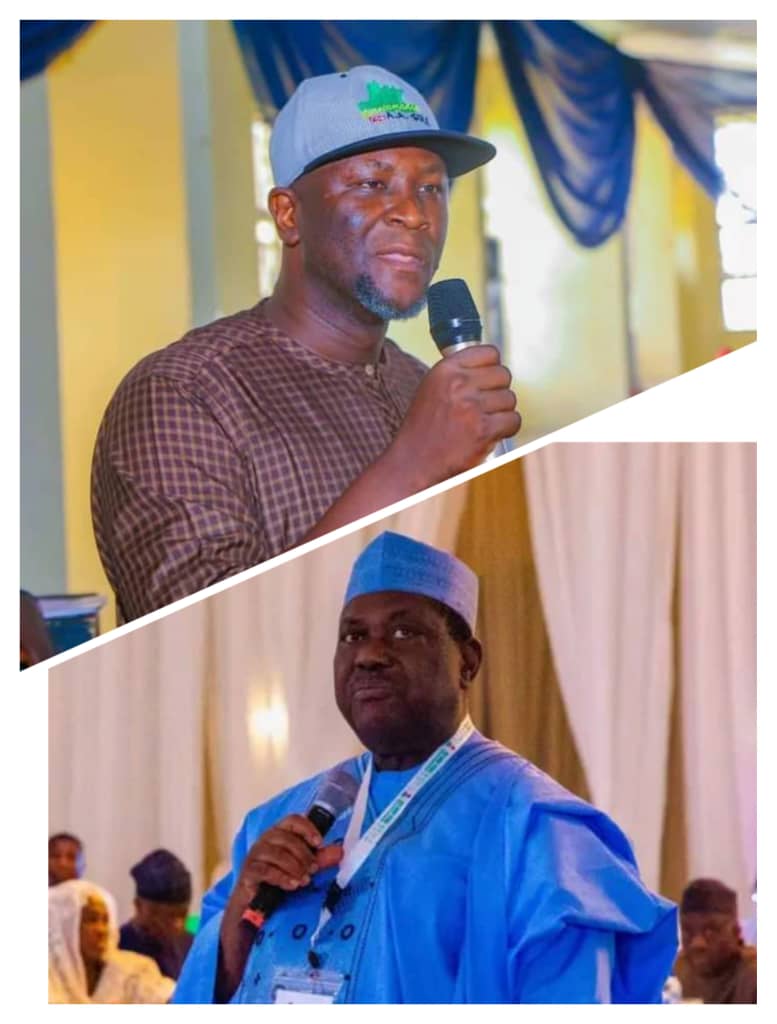
In a resounding tribute to exceptional leadership, newly elected National Speaker of the Youth Assembly of Nigeria (YAN), Comrade Famuyibo Oluwasegun, has commended Honourable Minister of State for Defence, Dr. Muhammed Bello Matawalle, for his steadfast loyalty to President Bola Ahmed Tinubu and his unwavering commitment to Nigeria’s security.
The accolade came during Oluwasegun’s acceptance speech at the YAN national election ceremony held at Agura Hotels, Abuja.
Reflecting on Matawalle’s profound influence on his own journey, Oluwasegun expressed heartfelt gratitude, stating that after divine guidance, it was Matawalle’s mentorship that helped him ascend to this pivotal role.
“Dr. Bello Matawalle’s support and belief in my potential were instrumental in my success,” he shared, underscoring Matawalle’s unwavering fight against terrorism and banditry as an inspiration for young Nigerians striving for change.
The statement, signed by Henshaw Ogubike, Director of Information and Public Relations of the Ministry of Defence also highlighted Oluwasegun’s appreciation for the YAN Board of Trustees, the Convention Planning Committee, and the assembly delegates for their trust.
The Speaker pledged to work tirelessly for the advancement of Nigerian youth and the broader national agenda.
Hon. G.T.C. Samuel, Acting Chairman of YAN’s Board of Trustees, encouraged the new leaders to serve as role models of integrity and unity.
The 4th Assembly, under Oluwasegun’s leadership, is set to usher in a wave of youth-driven initiatives.
Key national positions have been filled with a team dedicated to championing innovation, integrity, and progress for Nigeria’s young population. Joining Oluwasegun are Deputy National Speaker Umar Bala Babayaro from Kaduna State, Majority Leader Sadiq Abubakar of Borno State, and National Chief Whip Raymond Sylvanus from Cross River State, among others.
The Revenue Mobilisation Allocation and Fiscal Commission (RMAFC) has hailed President Bola Tinubu’s recent directive to trim the size of official convoys for ministers and top executives.
This measure, part of a wider strategy to tackle Nigeria’s escalating governance costs, signals a strong commitment to economic reform, according to RMAFC Chairman Dr. Muhammad Shehu Bello, OFR, who is urging state governments to mirror the President’s initiative.
Dr. Bello in a statement by Maryam Umar Yusuf, Head of Information and Public Relations at RMAFC, commended the President’s vision, noting that high governance costs are straining Nigeria’s ability to fund essential services, boost infrastructure, and combat unemployment.
“This directive could not be more timely. It offers a much-needed pathway to a leaner, more impactful government structure,” Dr. Bello emphasized.
Over the years, RMAFC has led the charge in advocating for prudent spending.
The Commission has repeatedly advised the federal and state governments to reduce redundant costs and focus on programs that directly benefit Nigerian citizens.
“We’ve called on government bodies to embrace a culture of fiscal responsibility that promotes sustainable development over lavish expenditures,” Dr. Bello said.
The RMAFC Chairman highlighted the urgent need to address Nigeria’s unique governance challenges, describing factors such as bloated bureaucracies, overlapping agencies, and endemic corruption as persistent barriers to progress.
He cited issues ranging from infrastructure decay to the rising costs of security due to insurgency and other crimes that continue to stretch national resources.
“This high cost of governance in Nigeria is beyond alarming; it’s unsustainable,” Dr. Bello remarked.
“The reality is that it’s a collective burden impacting all three arms of government, and it limits our capacity to achieve key developmental goals like healthcare, education, and economic growth.”
To curb these excesses, RMAFC has advocated for the immediate implementation of the Orosanye Report, which aims to streamline government structures, reduce political appointments, and ensure prudent fund allocation across all levels of governance.
Chairman Revenue Mobilisation Allocation and Fiscal Commission,Dr Muhammad Bello Shehu
Dr. Bello stressed that embracing these recommendations is crucial if Nigeria is to reduce its financial burdens and redirect resources to impactful development.
Maryam Umar Yusuf, Head of Information and Public Relations at RMAFC, reiterated the Commission’s stance, expressing hope that both federal and state officials will embrace the President’s directive and work towards creating a more cost-effective, citizen-focused government.
With its continued push for fiscal responsibility, RMAFC remains committed to supporting initiatives that enhance Nigeria’s growth prospects and deliver real value to its citizens.
The Revenue Mobilisation Allocation and Fiscal Commission (RMAFC) has hailed President Bola Tinubu’s recent directive to trim the size of official convoys for ministers and top executives.
This measure, part of a wider strategy to tackle Nigeria’s escalating governance costs, signals a strong commitment to economic reform, according to RMAFC Chairman Dr. Muhammad Shehu Bello, OFR, who is urging state governments to mirror the President’s initiative.
Dr. Bello in a statement by Maryam Umar Yusuf, Head of Information and Public Relations at RMAFC, commended the President’s vision, noting that high governance costs are straining Nigeria’s ability to fund essential services, boost infrastructure, and combat unemployment.
“This directive could not be more timely. It offers a much-needed pathway to a leaner, more impactful government structure,” Dr. Bello emphasized.
Over the years, RMAFC has led the charge in advocating for prudent spending.
The Commission has repeatedly advised the federal and state governments to reduce redundant costs and focus on programs that directly benefit Nigerian citizens.
“We’ve called on government bodies to embrace a culture of fiscal responsibility that promotes sustainable development over lavish expenditures,” Dr. Bello said.
The RMAFC Chairman highlighted the urgent need to address Nigeria’s unique governance challenges, describing factors such as bloated bureaucracies, overlapping agencies, and endemic corruption as persistent barriers to progress.
He cited issues ranging from infrastructure decay to the rising costs of security due to insurgency and other crimes that continue to stretch national resources.
“This high cost of governance in Nigeria is beyond alarming; it’s unsustainable,” Dr. Bello remarked.
“The reality is that it’s a collective burden impacting all three arms of government, and it limits our capacity to achieve key developmental goals like healthcare, education, and economic growth.”
To curb these excesses, RMAFC has advocated for the immediate implementation of the Orosanye Report, which aims to streamline government structures, reduce political appointments, and ensure prudent fund allocation across all levels of governance.
Chairman Revenue Mobilisation Allocation and Fiscal Commission,Dr Muhammad Bello Shehu
Dr. Bello stressed that embracing these recommendations is crucial if Nigeria is to reduce its financial burdens and redirect resources to impactful development.
Maryam Umar Yusuf, Head of Information and Public Relations at RMAFC, reiterated the Commission’s stance, expressing hope that both federal and state officials will embrace the President’s directive and work towards creating a more cost-effective, citizen-focused government.
With its continued push for fiscal responsibility, RMAFC remains committed to supporting initiatives that enhance Nigeria’s growth prospects and deliver real value to its citizens.
Article sponsored by World Sustainable Development Goals Organization, worldsdgs.org
In recent years, Nigeria has faced severe security challenges, particularly from insurgent groups like Boko Haram and other criminal elements. The Chief of Defence Staff, General Christopher Gwabin Musa, has played a pivotal role in the country’s military response to these threats. His strategies are not only focused on combating immediate threats but also on the broader objective of restoring peace and stability in Nigeria.
Since its inception, Boko Haram has wreaked havoc in the northeastern regions of Nigeria, leading to loss of lives and displacement of millions. The group’s insurgency has posed a formidable challenge not only to the Nigerian military but also to the civilian population. According to a report by the United Nations Development Programme, over 30,000 people have died, and millions have been displaced due to the conflict. Such dire circumstances necessitate a robust military strategy to effectively combat the insurgency and restore law and order.
General Christopher Gwabin Musa was appointed as the Chief of Defence Staff in 2023. He has an extensive military background, having served in various positions within the Nigerian Armed Forces. His experience includes operations in several conflict zones and leadership roles that have equipped him with the skillset necessary for addressing complex security challenges. Under his leadership, the military has aimed at not only defeating insurgent groups but also addressing the underlying issues contributing to insecurity.
One of the key strategies implemented by General Musa is the emphasis on improving intelligence gathering and distribution. Effective intelligence is crucial in pre-empting attacks and disrupting insurgent operations. In an article discussing the Nigerian military’s approach under General Musa, it was noted that a more integrated intelligence framework involving collaboration with local communities has been established. This strategy includes the use of technology to gather and analyse data, allowing for a more proactive military response.
Collaboration with local populations is vital, as communities often have the best understanding of the dynamics on the ground. By fostering trust between military operatives and local residents, the military has improved its human intelligence capabilities, leading to successful operations against Boko Haram and other groups. Improved communication channels have also allowed for quicker dissemination of important information to troops, thus enhancing operational effectiveness.
General Musa has advocated for joint operations between various branches of the military as well as collaborations with international partners. The synergy between the Army, Navy, and Air Force has proven effective in conducting comprehensive military operations. This approach can be seen in operations like ‘Operation Hadin Kai’, which focuses on a unified military response in the Northeast.
Additionally, partnerships with neighbouring countries have been strengthened. The Multinational Joint Task Force (MNJTF), which includes troops from Chad, Cameroon, and Niger, has become an essential component of Nigeria’s strategy against Boko Haram. This regional cooperation allows for coordinated efforts to dismantle insurgent networks that operate across borders, significantly enhancing security along Nigeria’s vast and sometimes porous borders.
Recognising that military operations alone cannot solely address the root causes of insurgency, General Musa has prioritised community engagement and civil-military relations. The military has initiated various outreach programmes aimed at rebuilding trust between the armed forces and civilian populations. These initiatives often involve humanitarian assistance, vocational training, and educational programmes aimed at reintegrating former combatants and providing alternative livelihoods for at-risk youth.
By addressing the socio-economic factors that contribute to the recruitment of youths into insurgent groups, the military aims to reduce the likelihood of future conflicts. Effective civil-military relations not only build trust but also encourage local communities to actively participate in efforts to maintain peace and security. Furthermore, reports from community leaders indicate that such initiatives have resulted in a noticeable decline in insurgent recruitment in previously hotbed areas.
Under General Musa’s leadership, there has been a strong focus on modernising Nigeria’s military capabilities. This includes the procurement of advanced technologies, equipment, and training for soldiers. The military has sought to enhance its airpower, which is critical in conducting surveillance, reconnaissance, and targeted strikes against insurgent positions.
Investment in military hardware is crucial not only for offensive operations but also for improving the overall readiness of Nigerian forces. Reports indicate a renewed focus on maintaining and upgrading existing equipment, ensuring that troops are well-equipped to defend against asymmetric warfare tactics employed by Boko Haram and other insurgent groups.
General Musa has also played an essential role in advocating for a coherent policy and regulatory framework that guides military operations. This involves compliance with international humanitarian laws, which is critical in ensuring that military actions do not exacerbate the humanitarian crisis in conflict-affected areas. The importance of adhering to these standards has been underscored in various military training sessions.
By fostering a culture of accountability and professionalism within the armed forces, General Musa aims to ensure that the military operates in a manner that respects human rights and maximises the chances of winning the hearts and minds of the civilian population.
General Christopher Gwabin Musa’s military strategies in curbing insecurity, particularly in the fight against Boko Haram, reflect a comprehensive approach that combines intelligence gathering, joint operations, community engagement, modernisation of equipment, and adherence to ethical standards. While challenges remain, the progress made under General Musa’s leadership offers a hopeful perspective on Nigeria’s security landscape.
In an era marked by complex security challenges, the role of military leadership has never been more critical. General Christopher Musa, the Chief of Defence Staff, has emerged as a figure of remarkable influence and effectiveness in navigating the intricate landscape of national security. His leadership style, marked by a results-oriented approach, strategic vision, and adept management of resources, has set a new standard for military leadership. This argues that General Musa’s leadership exemplifies how an effective Chief of Defence Staff can optimise military operations, enhance national security, and foster public trust in the armed forces.
General Musa’s tenure as Chief of Defence Staff has been characterised by a results-oriented mindset. This approach focuses on achieving tangible outcomes rather than merely following protocol or tradition. According to an article from the Nigerian Tribune, Musa has prioritised concrete action over bureaucracy, streamlining operations to ensure that objectives are met efficiently. His clear emphasis on results has not only boosted military effectiveness but has also instilled a sense of accountability within the ranks.
A results-oriented leader evaluates performance based on set metrics, which General Musa has adeptly employed. Under his guidance, the Nigerian Armed Forces have showcased significant improvements in counter-terrorism efforts, particularly against the backdrop of the ongoing insurgency in the northeastern parts of Nigeria. According to a report by the Africa Report, initiatives spearheaded by Musa have led to decreased incidents of violence and increased local community engagement with the military. This effectiveness in delivering results showcases the importance of focused leadership and the inherent capability of a Chief of Defence Staff to facilitate change.
Effective military leadership requires a strategic vision that aligns military operations with national interests. General Musa has demonstrated this through his articulate understanding of the broader geopolitical landscape and the implications of local conflicts. His strategic foresight has enabled the Nigerian military to proactively address security threats, rather than simply reacting to them.
For instance, under Musa’s leadership, the Nigerian Armed Forces have adopted a comprehensive approach to tackling insecurity, integrating intelligence sharing, community policing, and partnership with international allies. As detailed in a report by This Day Live, Musa has effectively coordinated joint military exercises with foreign militaries, fostering collaboration that amplifies operational effectiveness and enhances capability-sharing. This strategic alignment not only strengthens the Nigerian military’s combat readiness but also enhances its diplomatic leverage in international security cooperation.
The ability to articulate and implement a strategic vision is critical in military leadership. General Musa’s adept navigation of Nigeria’s security challenges demonstrates how a well-defined strategy can lead to substantive improvements in operational outcomes. Moreover, his leadership has cultivated an environment where flexibility and adaptability are valued, allowing military operations to respond swiftly to changing threats.
In the sphere of military leadership, effective resource management is crucial. General Musa has prioritised efficiency and optimisation of military resources, ensuring that personnel and equipment are utilised in the most effective manner possible. The military, often constrained by budgetary limitations and logistical challenges, benefits greatly from leadership that recognises the importance of sustainable resource management.
According to a report from Vanguard Nigeria, Musa has implemented reforms aimed at improving the logistical capabilities of the Nigerian military, pushing for better training programs and modernisation of equipment. These initiatives have resulted in a more agile and responsive military, capable of conducting operations with greater precision and effectiveness.
Furthermore, efficient resource management contributes to troop morale and operational readiness. General Musa has emphasized the importance of welfare and support for soldiers, recognising that well-cared-for personnel are more likely to perform effectively. This is echoed in the Nigerian Army’s recent initiatives to improve soldiers’ living conditions and by allocating resources judiciously, General Musa has fostered a culture of commitment and productivity within the ranks.
Military leadership extends beyond the confines of operational strategy and resource management; it encompasses the relationship between the armed forces and the civilian population. General Musa comprehends the importance of transparency and engagement in fostering public trust in the military. His outreach initiatives, focused on community interactions, have played a pivotal role in bridging the gap between civilians and the armed forces.
One notable example of Musa’s efforts is the establishment of community engagement programs, where military personnel participate in activities aimed at promoting peace and security. A report by the Nigerian News Agency highlights Musa’s outreach initiatives that have successfully improved communication between the military and local communities in conflict-affected areas. These efforts not only disseminate information about military operations but also allow local populations to express their concerns and aspirations.
Building public trust in the military is vital for operational success, especially in regions grappling with insurgency and armed conflict. General Musa’s proactive stance in community engagement illustrates how military leadership can become an ally for civilian interests. By proactively addressing the needs of the population and facilitating dialogue, Musa has garnered support for military operations, which is essential for achieving long-term stability and security.
General Christopher Musa’s leadership as Chief of Defence Staff exemplifies the effectiveness of a results-oriented approach to military leadership. His strategic vision, resource management skills, and efforts to build public trust have not only transformed the Nigerian Armed Forces but have also highlighted the essential components of effective defence management. In an age where security threats continue to evolve, General Musa’s leadership serves as a model for how military leaders can navigate these challenges successfully. By fostering an environment of accountability, collaboration, and community engagement, he has elevated the standards of military leadership, making a significant impact on national security and public perception of the armed forces. As countries around the world grapple with similar challenges, they would do well to draw lessons from General Musa’s proven approach to leadership.
General Christopher Gwabin Musa, as a key military leader, has conducted a series of result-filled operations aimed at addressing these challenges. His strategic initiatives have had profound implications for the safety and economic stability of the nation. This argues that General Musa’s operations have positively impacted both the Nigerian populace and the economy, fostering a sense of security, promoting investment, and enabling sustainable development.
One of the most significant impacts of General Musa’s operations is the enhancement of security across Nigeria. A secure environment is foundational for the economic well-being of any nation. With the incessant threats from insurgents and criminal gangs, civilians have often lived in a state of fear, hindering their daily activities and contributing to economic stagnation. General Musa’s approach, which prioritises intelligence gathering, community engagement, and swift action, has yielded positive results.
According to a report by the Nigerian Army, operations led by General Musa have successfully liberated many communities from the grip of insurgents and bandits, returning stability to previously affected areas. In regions where operations have been conducted, there has been a noticeable reduction in violence, leading to greater confidence among citizens. This newfound safety allows people to engage in agricultural activities, businesses, and schooling, which are crucial for economic development.
In the words of General Musa himself, “The commitment to restoring peace in our communities is unwavering. We will ensure the safety of every Nigerian“. This commitment reflects a proactive stance that prioritises the needs of civilians, thus fostering a greater sense of national unity and social responsibility.
The correlation between security and economic activities cannot be overstated. With a secure environment established through the result-oriented operations of General Musa, businesses have begun to thrive once again. Many entrepreneurs who had previously relocated due to insecurity are resettling in their communities, re-establishing their businesses and creating jobs.
A healthy economy requires the unwavering support of various sectors, especially small and medium-sized enterprises (SMEs), which are the backbone of the Nigerian economy. Research suggests that SMEs account for over 50% of employment in the country and significantly contribute to GDP (National Bureau of Statistics, 2022). As General Musa’s operations restore peace, SMEs are able to flourish, leading to a reduction in unemployment rates and increased local production.
Furthermore, a stable security environment attracts foreign investments. Potential investors often hesitate to put their money into a country riddled with insecurity. However, reports indicate that following the successful operations led by General Musa, there has been a renewed interest from both local and foreign investors in the Nigerian market. Areas such as agriculture, tourism, and technology are beginning to see investments that previously would have been deemed too risky.
The influx of investment not only benefits the businesses themselves but also contributes to the overall economic growth of the country. As companies expand and new businesses emerge, there are increased tax revenues for the government, which can then be reinvested in infrastructure and social services.
Community engagement is a vital aspect of General Musa’s operations. Recognising that security concerns often stem from internal grievances within communities, General Musa has prioritised outreach and collaboration with local leaders. This approach fosters trust between the military and civilians, which is essential for maintaining long-term peace.
Engaging with communities allows the military to gather intelligence more effectively and understand the unique challenges faced by various regions. By establishing trust, citizens are more likely to report suspicious activities and collaborate with military personnel to combat crime. This collaborative effort amplifies the impact of security operations.
For instance, in Borno State, numerous community-driven initiatives have seen civilians working alongside military forces to identify threats. Such cooperation not only marginalises the influence of insurgents but also promotes a sense of ownership among the people regarding their security. When communities feel a sense of duty in combating insecurity, they are less likely to resort to violence or to harbour ill feelings against the military.
Another critical area of impact from General Musa’s operations is the resilience built within communities against future threats. By prioritising education and vocational training as part of security operations, General Musa promotes a culture of learning and self-reliance. Knowledge and skills can prepare young people for successful careers, diverting them from the cycle of violence and criminality.
Moreover, through community policing initiatives, civilians are equipped with the skills to monitor and report potential threats. This collaborative security framework strengthens the resolve of communities to protect themselves against future insurgencies or criminal activities. Reports by the Institute for Peace and Conflict Resolution indicate that communities that engage in continuous dialogue with military forces exhibit lower rates of violence and conflict. This resilience is essential for Nigeria as it aims to recover from years of conflict and instability.
The success of these operations underscores the importance of effective leadership and strategy in maintaining peace and stability in Nigeria. As communities transform from fear to empowerment, and as businesses grow and thrive, it is clear that General Musa’s operations have positively shaped the future of Nigeria — both socially and economically. Sustaining these efforts is crucial, not just for immediate security, but for the long-term growth and prosperity of Nigeria.
As the world observes Kashmir Black Day, Pakistan’s High Commissioner to Nigeria, Mr. Sohail Ahmad Khan, has spoken out against the prolonged injustices faced by the people of Kashmir.
In a statement released on 27th October, 2024 in Abuja, Mr. Khan emphasized that Kashmiris around the globe mark October 27 as a day of solidarity, mourning, and defiance, as they continue their quest for self-determination and fundamental human rights.
“Kashmir Black Day is an annual commemoration observed globally by Kashmiris and their supporters to condemn the injustices in Jammu and Kashmir,” Mr. Khan stated.
“It is a day to reaffirm the world’s commitment to the right of Kashmiris to self-determination, as enshrined in multiple United Nations resolutions.”
No to the injustice faced by Kashmiris
The High Commissioner underscored that the UN has repeatedly called for a democratic resolution in Kashmir through a free and impartial plebiscite.
However, he highlighted that the people of Jammu and Kashmir continue to face systemic oppression, with the region transformed into the most heavily militarized zone in the world.
He likened the current state of the territory to “the largest prison on earth,” where the rights of its inhabitants are systematically curtailed.
Mr. Khan appealed to the international community including the United Nations, human rights organizations, civil society groups, media houses, and human rights advocates worldwide to stand by the Kashmiris in their struggle.
“It is imperative for global defenders of justice to fulfill their moral and legal obligations to the besieged people of Kashmir, working toward an end to tyranny and oppression in the region,” he urged.
This statement by Mr. Khan on Kashmir Black Day marks yet another call to action for a global response to the ongoing crisis in Kashmir, pressing for peace, justice, and the recognition of the Kashmiris’ right to self-determination.
In a powerful directive aimed at intensifying Nigeria’s anti-insurgency efforts, Defence Minister Mohammed Badaru Abubakar has urged the Nigerian Air Force (NAF) to take definitive control of the country’s airspace and contribute robustly to ending insecurity, particularly in the volatile North-West region.
This was contained in a statement signed by the Director, Information and Public Relations, Henshaw Ogubike on Friday in Abuja
Ogubike disclosed that during a strategic visit to the Headquarters of the 213 Forward Operating Base (FOB) in Katsina, the Defence Minister announced the deployment of additional resources, including attack helicopters and drones, to strengthen the Air Force’s operational capabilities.
“We are deploying additional platforms to enhance your capacity in eliminating bandits and terrorists,” Abubakar asserted, underscoring the government’s serious commitment to national security.
The Minister conveyed President Bola Ahmed Tinubu’s satisfaction with the Air Force’s recent achievements, pledging further support and resources to bolster their operations. “Mr. President is pleased with your progress and will provide the necessary equipment to support your welfare and effectiveness,” he affirmed.
With a sense of urgency, Abubakar directed the troops to expedite efforts in curbing insecurity. “End it now, please. End insecurity now,” he demanded, stressing the administration’s resolve to bring peace to affected regions swiftly.
The Minister also visited FOBs in Zurmi and Gurbi Baure, where he commended the soldiers’ renewed vigor in combating insecurity, recognizing their crucial role in recent successes.
“Your dedication and daily progress shows you have the will and capability to end this crisis. We are here to thank you for the strides made so far,” he remarked, projecting confidence in the armed forces’ capacity to bring the situation under control soon.
The Minister highlighted cooperation with Zamfara and Katsina States, applauding their active involvement in federal security initiatives.
Earlier this week, Abubakar held a high-level meeting with the governors of the two states, alongside the National Security Adviser, to strategize on reinforcing security frameworks across the Northwest.
“All states are cooperating, and with the new command and public support, insecurity will soon be a thing of the past,” he stated.
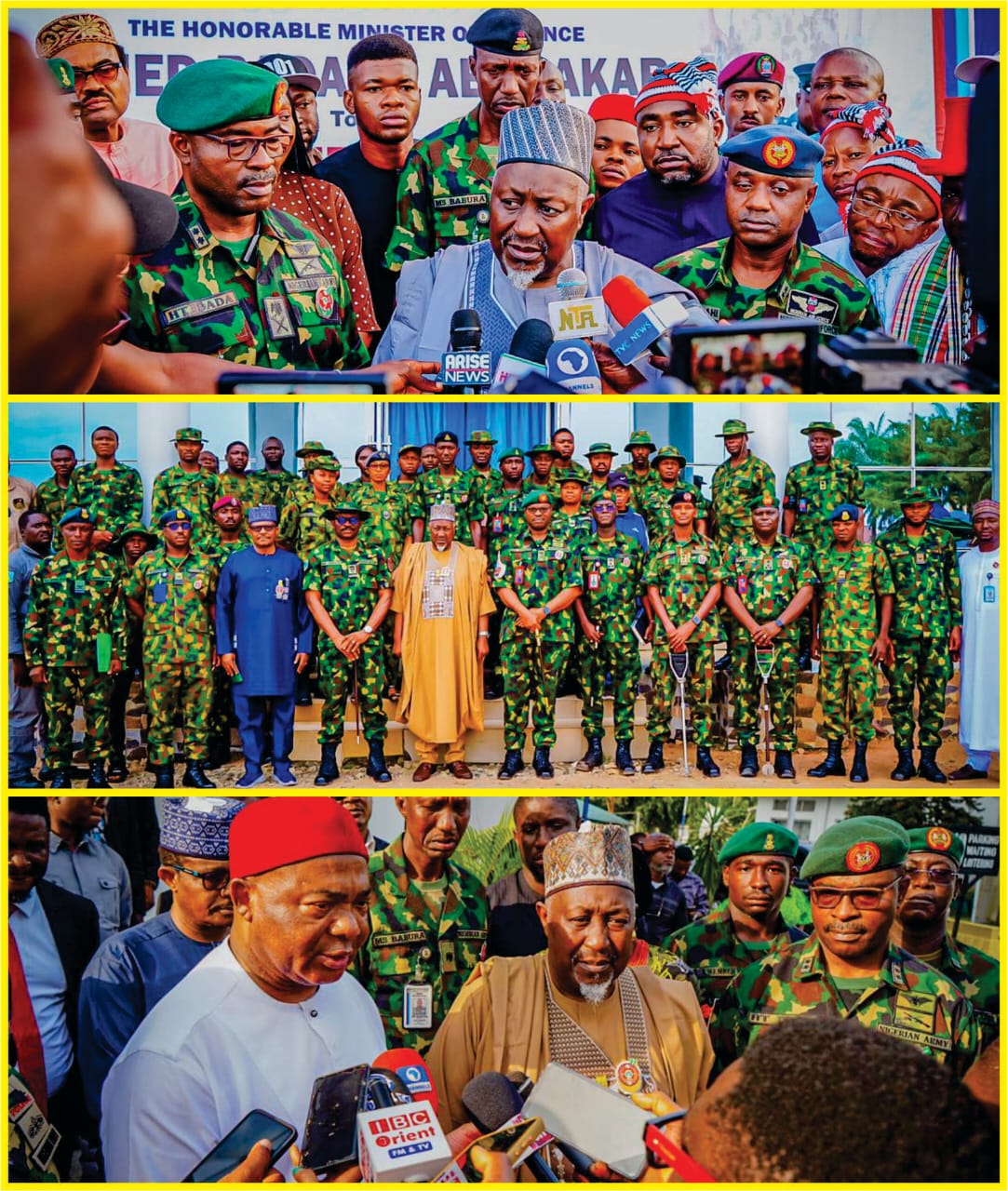
In a determined push to restore peace and security to Zamfara State and the entire North-West region, President Bola Ahmed Tinubu has instructed Nigerian troops to eliminate banditry and insecurity.
This directive was delivered by the Minister of Defence, H.E. Mohammed Badaru Abubakar, during a high-stakes visit to Zamfara, where he assessed the operational status of the Headquarters of Joint Task Force Operation Hadarin Daji, codenamed “Operation Fansan Yamma.”
Badaru in a statement signed by Henshaw Ogubike Director, Information and Public Relations and made available to journalists on Friday in Abuja conveyed the President’s grave concern over the ongoing security issues, reinforcing the Federal Government’s steadfast commitment to the success of the operation.
“President Tinubu is deeply committed to ending the violence in the North-West, particularly in Zamfara,” he stated, urging troops to intensify their fight against local bandit kingpins.
Addressing the troops directly, the Minister praised their dedication and stressed the importance of their mission.
“Your renewed vigor is essential in our fight. I am confident in your ability to bring an end to insecurity in Zamfara State. The nation is behind you, and I will report back to Mr. President on your progress,” he declared, rallying the soldiers to push forward in their efforts.
In a strategic show of support, the Defence Minister also visited key locations, including Combat 2, 17 Brigade along Tsafe-Shema-Gusua road, and the Forward Operation Base.
He lauded the troops for their unrelenting commitment to securing this notorious road, noting a marked improvement in safety over the past 48 hours with no reported incidents.
“Your commitment is yielding tangible results, and I encourage you to maintain this momentum to keep this vital route safe for all,” the Minister urged, emphasizing the Federal Government’s ongoing investment in troop welfare and operational support.
During his visit, the Minister met with Zamfara State Governor, H.E. Dauda Lawal, briefing him on the Federal Government’s enhanced approach to security in the region.
Lawal shared updates on the state’s collaborative efforts with the military, pledging unyielding support in the fight against banditry. “Zamfara State is committed to confronting these security challenges head-on. With the support of the military, we are determined to strike at the heart of bandit strongholds and bring lasting peace,” the Governor affirmed.
The Federal Government’s reinforced strategy marks a significant escalation in the fight against insecurity, aiming to ensure a fully coordinated security response across the North-West region.
In a resolute message to Nigerian youths, newly appointed Honourable Minister of Youth Development, Comrade Ayodele Olawande, has outlined his ambitious plans to expand youth-oriented services and initiatives.
This was contained in a statement signed and made available to journalists on Saturday in Abuja by the Director, Information and Public Relations,Omolara Esan.
Esan noted that during his first official address in office, Olawande emphasized his commitment to making a significant impact on the lives of Nigerian youths through improved policies and enhanced engagement.
Comrade Olawande, formerly Minister of State for Youth Development, was appointed as the substantive Minister by President Bola Ahmed Tinubu on October 23, 2024, following the Federal Executive Council meeting at the Presidential Villa in Abuja.
In his statement, Olawande called on Nigerian youths to uphold the law and avoid activities detrimental to societal progress, stressing the importance of their role in aligning with the government’s agenda to foster a prosperous and secure future.
“My primary goal is to diligently improve and expand services that will benefit the youths of this nation,” he said. “Our young people are key to building a resilient and thriving Nigeria, and it’s imperative we prioritize their needs and aspirations.”
The Minister further outlined his vision to address youth unemployment through new policy frameworks aimed at economic empowerment.
He announced plans for comprehensive reforms that would not only enhance current youth programs but also introduce targeted strategies to generate sustainable job opportunities.
By championing innovative solutions, he aims to foster a socio-economic environment where Nigerian youths can flourish.
With this strategic shift in leadership, Olawande’s tenure is expected to drive the Ministry’s focus on creating a supportive and inclusive landscape for Nigerian youths to thrive, contributing directly to the country’s long-term growth and development.