SEE TOP 5 AGENDA TINUBU’S NEW HEALTH MINISTER OF STATE DR. SALAKO ADEBOYE NEEDS TO URGENTLY ADDRESS TO REVAMP OUR HEALTH SECTOR

Few days ago, President Bola Tinubu submitted to the Senate for confirmation list of his new ministerial nominees including old ministers who were reassigned with new portfolio.

Special Adviser to the President on Information and Strategy, Bayo Onanuga, disclosed on his verified X handle on Sunday 3rd November that President is expected to swear in seven new Ministers on today Monday 4th November, marking a significant development in the Renewed Hope administration’s restructuring efforts.

The tasks ahead for both the old and new minsters in the Tinubu’s administration is crucial in giving or renewing daunting hope of Nigerians in the midst of several challenging issues ranging from the troubling economy to failing healthcare sector where we are losing our best Doctors and medical practitioners to the Western countries. THE JAPA PALAVER.

The new Ministers of State for Health, Dr. Salako Iziaq Adekunle Adeboye must come to the full realisation that for a sector that is faced with so many challenges, Nigerians expect so much from him as the incoming minister of state for Health.

In Nigeria public health sector investment is not among the best globally; maternal and infant mortality remain among the highest in the world while brain drain is surging due to ill-political interference in critical healthcare governance and management as witnessed recently in some health facilities in the country, including Federal NeuropsychiTric Hospital, Enugu.

Dr. Salako Adeboye, the new Minister of State for Health, has a daunting task ahead of him in revamping poor hospital management nationwide. Here are the top 5 agendas he needs to urgently address:

  1. Improving Healthcare Infrastructure with the right clinical governance oriented personel at the helm of affairs.
    Many hospitals in Nigeria lack basic infrastructure, making it difficult to provide quality healthcare. Dr. Adeboye needs to prioritize investments in hospital infrastructure, including building renovations and equipment upgrades.
  2. Enhancing Healthcare Workforce Capacity: Nigeria faces a significant shortage of healthcare professionals, particularly in rural areas. Dr. Adeboye should focus on training and recruiting more healthcare workers, improving staff welfare, and implementing retention strategies of these very best of the Country crying neglect, discriminations and political maladjustment.
  3. Addressing Brain Drain due to Malicious Healthcare Political Interference:
    Nigeria’s healthcare sector is experiencing a surge in brain drain, with many healthcare professionals leaving the country in search of better opportunities. Dr. Adeboye needs to address the root causes of brain drain, including poor working conditions, and lack of opportunities for career advancement for young Doctors and medical practitioners. A typical example under the last Minister of State for Health was the accusation of pushing for a female friend of his (Dr Unogu Ngozi) who failed her interview during the examination as Medical Director of the Federal Neuropsychiatric Hospital Enugu, as against one Dr. Andrew Orovwigbo, who we learnt emerged victorious in the interview and examination conducted, yet denied his right. The lady was given a substantive letter after failure because she bragged prior to this day that failure can triumph over merit. She actually got it. Nobody can tell how Dr Alausa did it. Is it any manipulation of the Kitchen Cabinet the former Minister bragged about? Did he forge the result already in the open and told Mr President a different thing as the basis of his recommendation. Many good doctors have left because of Mr Kitchen cabinet manner of settling official issue. He must reverse the appointment letter based on merit just to show his kind objectivity on issue.
  4. Universal Health Coverage:
    Nigeria’s Universal Health Coverage remains low, leaving many without access to essential healthcare services. Dr. Adeboye needs to work towards increasing coverage and ensuring that all Nigerians have access to quality healthcare. And need to strenghten the Nationsl health insurance authority with the provision of the best drugs given its pool of funds.
  5. Health Emergency Preparedness:
    Nigeria’s health emergency preparedness remains low, making it difficult to respond to outbreaks and emergencies. Dr. Adeboye should prioritize improving emergency preparedness, including investing in emergency response systems and training healthcare workers. Ambulance services and fire services must work in Synergy.

Analysis: Embracing a Collaborative Approach to Humanitarian Services in Nigeria


By Emmanuel Huleji Daudu


In recent years, the issue of poverty alleviation has gained significant attention globally, particularly in Nigeria, where the need for effective humanitarian services is increasingly pressing. The statement made by Dr. Yusuf Tanko Sununu, the Honorable Minister of State at the Federal Ministry of Humanitarian Affairs and Poverty Alleviation (FMHAPA), during the welcoming reception organized in his honour on Thursday 31st October, 2024 in Abuja at the ministry is a hope alive for Nigerians especially the downtrodden.


The statement encapsulates a new ethos of inclusivity and cooperation aimed at tackling the multifaceted challenges faced by the nation. Dr. Sununu’s assertion that “Mr. President must have reasons for posting two Ministers to the Ministry on which he believes reaching out to the poor people must be inclusive” is a clarion call for unity, shared responsibility and innovative solutions in addressing the needs of Nigeria’s most vulnerable. This states that by fostering a collaborative environment within the ministry, encouraging open dialogue, and facilitating partnerships with various stakeholders, Nigeria can effectively enhance its humanitarian efforts and make a lasting impact on poverty alleviation.


Dr. Sununu’s emphasis on the need for inclusivity in humanitarian initiatives cannot be overstated. Poverty is not a one-dimensional issue; it encompasses economic, social, and cultural dimensions that must be addressed comprehensively. The appointment of two ministers to oversee the ministry underscores a commitment to tackling the complexities of poverty from multiple angles. According to a report from the World Bank, Nigeria accounts for a significant percentage of the global extreme poor (World Bank, n.d.). The gravity of this situation necessitates a concerted effort not only from the government but also from civil society, non-governmental organisations (NGOs), and the private sector.


Inclusivity in humanitarian efforts promotes diverse perspectives and experiences, which can lead to more effective interventions. As stated by the United Nations Development Programme (UNDP), inclusive development ensures that marginalised groups are heard and their needs addressed. By fostering an environment where ministry staff feel valued and empowered to contribute through “advice, suggestions, and opinions,” as Dr. Sununu suggests, the FMHAPA can develop more targeted and effective poverty alleviation strategies.


This collaborative approach can ensure that the policies formulated are reflective of the realities on the ground, leading to better outcomes for those in need.


Dr. Sununu’s call for mutual cooperation among staff members resonates deeply with the principles of effective communication in achieving humanitarian goals. He states, “the door of my office is open to you all,” signalling his commitment to transparency and accessibility. Open communication within the ministry can help in breaking down silos that often hinder effective collaboration. Research conducted by the Harvard Business Review highlighted that organisations with strong communication practices are more productive and experience lower employee turnover (Harvard Business Review, 2017).


In the context of FMHAPA, fostering a culture of open dialogue means that staff can share insights gleaned from their interactions with vulnerable communities. This can lead to the identification of specific needs and barriers that traditional poverty alleviation programmes might overlook. For instance, engaging local community leaders can provide invaluable context on the cultural and societal factors influencing poverty in various regions. Thus, the minister’s invitation for ongoing dialogue can pave the way for more responsive and adaptable humanitarian strategies.


The urgency of the poverty crisis in Nigeria necessitates collaborative efforts beyond government agencies. Dr. Sununu’s call for collaboration is timely as it aligns with the need for partnerships with NGOs, community-based organisations, and private sector entities. Each of these actors brings unique resources and capabilities that can enhance the effectiveness of humanitarian initiatives.


According to a study by the Overseas Development Institute, partnerships between governments and NGOs have proven beneficial in reaching underserved populations and implementing sustainable solutions (Overseas Development Institute, 2018). NGOs often have a deeper understanding of local contexts and can mobilise resources more effectively, whilst the government provides the legal framework and funding necessary to scale initiatives. By working together, these stakeholders can create a more holistic approach to poverty alleviation that leverages the strengths of each entity.


Additionally, establishing partnerships with the private sector can drive innovation in service delivery. Businesses can contribute through Corporate Social Responsibility (CSR) initiatives that align with the ministry’s goals. For instance, partnerships in agricultural development can enhance food security for impoverished communities, while collaborations in education can improve access to quality schooling for children in need.


As Dr. Sununu rightly points out, accountability is crucial; all partners must measure their contributions to ensure that the humanitarian services rendered have a tangible impact on the lives of Nigerians.


Accountability is a significant theme in the humanitarian framework proposed by Dr. Sununu. His insistence on mutual cooperation and shared responsibility implies that all actors involved in the provision of humanitarian services must be held accountable for their actions and outcomes. A culture of accountability ensures that resources are utilised effectively and that beneficiaries are treated with dignity and respect.


Incorporating robust monitoring and evaluation mechanisms can enhance accountability in humanitarian efforts. The Global Humanitarian Response Plan emphasises the need for systematic assessments and feedback loops to understand the efficacy of interventions (Global Humanitarian Response Plan, 2020). By continuously evaluating the impact of their initiatives, the ministry can make informed decisions about resource allocation and identify areas for improvement. This commitment to accountability also builds trust with the communities served, fostering a sense of ownership and partnership between beneficiaries and service providers.


Dr. Sununu’s vision for the FMHAPA also includes an implicit acknowledgment of the importance of capacity building within the ministry and its partners. Empowering staff with the skills and knowledge necessary to implement effective programmes is critical for long-term success. The capacity to analyse data, engage communities, and manage projects effectively can greatly enhance the ministry’s ability to combat poverty.


Training programmes and workshops can be designed to equip staff with the tools required for effective service delivery. According to a report by the International Federation of Red Cross and Red Crescent Societies, investing in capacity building has proven essential in building resilient communities (IFRC, 2019). By ensuring that ministry staff are well-trained and informed, the FMHAPA can enhance its operational efficiency and responsiveness to emerging needs.


The statement made by Dr. Yusuf Tanko Sununu serves as a powerful reminder of the importance of inclusivity, communication, collaboration, accountability, and capacity building in humanitarian services. As Nigeria grapples with the challenge of poverty, the proactive stance taken by the Honorable Minister of State sets a transformative tone for the FMHAPA. By embracing a collaborative approach that brings together diverse voices and resources, the ministry can develop innovative solutions that effectively respond to the needs of the poor.


However, if Nigeria is to make significant strides in poverty alleviation, it must foster an environment where all stakeholders are encouraged to collaborate, share ideas, and work cohesively towards a common goal. As Dr. Sununu aptly emphasised, we can only achieve meaningful change if we work together as “brothers and partners.” By doing so, we can realise the vision of a more inclusive and equitable society for all Nigerians.

Nigerian Military Achieves Major Success in Ongoing Counterterrorism Operations

Maryam Aminu

In a significant escalation of Nigeria’s counter-insurgency and counterterrorism efforts, the Nigerian Armed Forces have reported a string of successful operations across the country.

Over the past week, troops have dismantled terrorist networks, seized critical assets, and apprehended high-profile suspects, strengthening the nation’s security and stability.

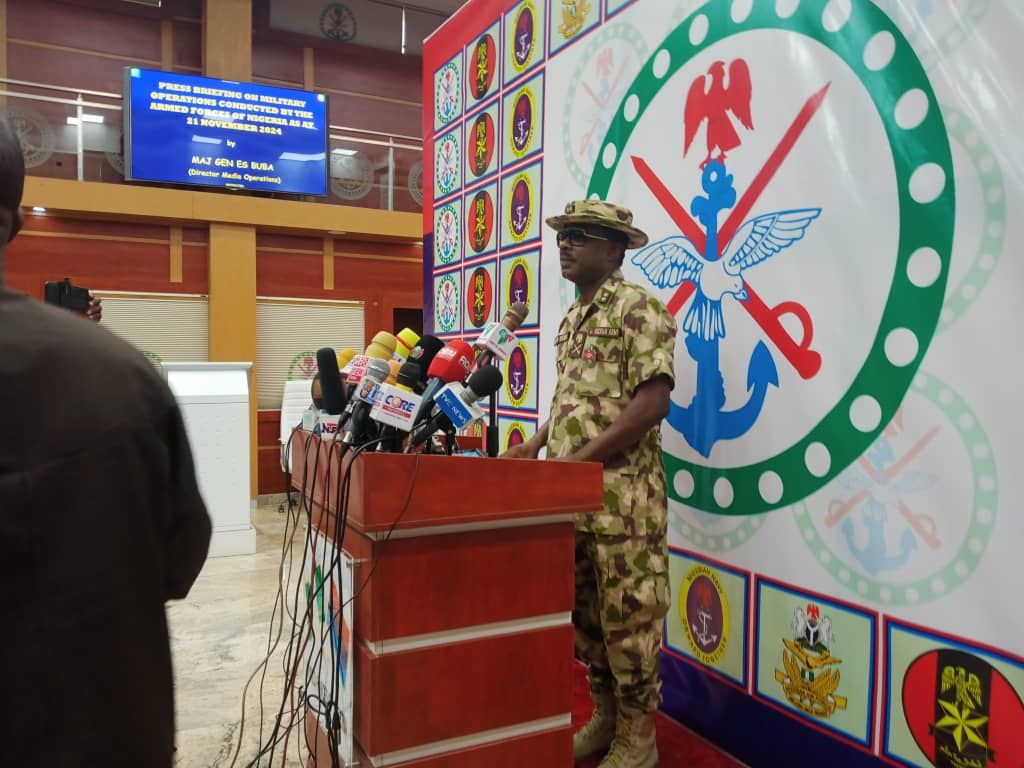
The information was disclosed by Major General Edward Buba, Director of Defence Media Operations, underscoring the army’s resolve to defeat insurgency.

Major General Buba expressed that in the North-West region, troops successfully apprehended a high-profile terrorist leader, Abubakar Bawa Ibrahim, widely known as “Habu Dogo,” in Rumji Village, Illela Local Government Area, Sokoto State.

Habu Dogo, a cross-border operative on the watchlist of Nigerian and Nigerien authorities, has long been linked to insurgency activities in the region.

The Director of Defence Media Operations explained that his capture marks a significant victory for Nigerian forces, disrupting a notorious network operating across borders.

The military’s campaign extended to the South-East, where seven leaders and operatives linked to the Indigenous People of Biafra (IPOB) and its Eastern Security Network (ESN) were detained.

Defence headquarters disclosed that among those apprehended were Dr. Nnamdi Chukwudoze and Chigozie Ezetoha, known as “Chapet,” who were arrested in Anambra State’s Ihiala Local Government Area. Additional arrests included prominent figures such as Mrs. Ngozi Chukwuka and Mr. Oyekachi Ohia in Umuahia South, Abia State, and Elijah Mmaduipeya Obumneke in Imo State’s Orsu Local Government Area.

Over the review period, Nigerian troops reported significant operational success: neutralizing 187 insurgents, arresting 262 suspects, and rescuing 147 kidnapped individuals. Additionally, 39 individuals involved in oil theft were detained, marking substantial headway in the ongoing crackdown on illegal activities in the Niger Delta. The estimated value of thwarted oil theft alone stands at N1.25 billion.

Major General Buba revealed further that the Nigerian Armed Forces seized 205 assorted weapons and a total of 5,241 rounds of ammunition.

Notable items recovered include 89 AK-47 rifles, multiple pistols, fabricated guns, and rounds of various calibers.

This cache is a testament to the military’s proactive approach to curbing arms proliferation across insurgent territories.

He stated that in the Niger Delta, a stronghold for illegal oil refining, troops dismantled 49 crude oil cooking ovens, 98 unauthorized refining sites, and confiscated 1,090,135 liters of stolen crude oil and 873,510 liters of illegally refined diesel.

These actions represent a crucial step in Nigeria’s effort to curtail the economic damage caused by oil theft.

According to Major General Buba, the armed forces are on a path to securing victory over terrorists, who are now left with a stark choice: surrender or face annihilation on the battlefield.

These recent operations underline the army’s unrelenting pursuit of peace and security, aiming to end insurgency and restore stability in affected areas.

FG Encourages Youth to Embrace 21st Century Skills for Employment Opportunities

Maryam Aminu

The Federal Government has called on Nigerian youth to equip themselves with essential 21st-century skills to address the rising unemployment crisis.

Speaking in Abuja during the celebration of Africa and National Youth Day, themed “Educate an African Fit for the 21st Century” with a sub-theme of “Building a Resilient Education System: A New Hope for Nigerian Youth,” Honourable Minister for Youth Development, Comrade Ayodele Olawande, emphasized the importance of skills like critical thinking, digital literacy, and effective communication.

Minister Olawande urged young Nigerians to actively develop a broad range of competencies that enhance employability, making them attractive to potential employers.

He highlighted that a proactive approach to skill development is essential for navigating today’s competitive job market, where adaptability and innovation play a critical role.

“Acquiring these skills will enable youth to confidently handle the demands of an evolving job market,” said the Minister.

“This proactive approach is crucial in tackling the unemployment challenges facing many young Nigerians. Through dedicated skill development, they can improve their job prospects and build a foundation for long-term career growth and success.”

A cross-section of the Nigeria Youth during the commemoration of the Africa and National Youth Day celebration organised by the Ministry in Abuja on Friday (1/11/24).

The Minister explained that the event’s theme, “Educate an African Fit for the 21st Century,” aligns with the One Youth, Two Skills initiative, which aims to complement formal education with practical skills.

He noted that the initiative is an integral part of the Renewed Hope Agenda, which seeks to eradicate unemployment and stimulate economic growth across Africa.

In a keynote presentation, Professor Ahmed Adamu of Nile University, Abuja, highlighted that technological advancements are expected to result in the loss of 85 million jobs globally by next year, while 97 million new jobs are anticipated to emerge.

Professor Adamu underscored that future job markets will favor individuals who actively seek to acquire new skills and adapt to technological trends.

“It’s crucial for young people to stay informed about emerging technologies and continuously engage in skill-building activities,” Professor Adamu emphasized.

“By preparing for new roles, they can leverage upcoming job opportunities rather than risk being left behind in an increasingly competitive landscape.”

Vice President Jeremiah Kpan Koung Launches Liberia’s National Civil Service Testing Center to Transform Public Recruitment

On October 31st, 2024, the Republic of Liberia through the Civil Service Agency, took a significant step forward with the official opening of the National Civil Service Testing Center. The initiative is meant to enhance the Liberian Government’s civil service.

The Country’s Vice President Jeremiah Kpan Koung led an array of government officials at the ceremony, underscoring the importance of this modern, computer-based facility in the recruitment of qualified public servants.

Vice President Koung emphasized the role of the civil service as the backbone of Liberia’s workforce. “It is necessary that we recruit our very best; a workforce of quality, competence, patriotism, and dedication.” He stated.

The Vice President’s remarks highlighted a steadfast commitment to elevating the standards and integrity of public service in Liberia.

The National Civil Service Testing Center marks a significant advancement from the previous paper-based testing system. Koung further pointed out that the old method often allowed individuals without the requisite skills to enter the civil service. “Today, we unveil a system that reflects our Nation’s values of integrity and efficiency,” he declared, stressing that the new facility would ensure that recruitment is based solely on merit and competence.

Equipped with state-of-the-art technology and specialized assessment tools, the Testing Center promises a more streamlined and secured evaluation process for prospective civil servants. “This means a faster, more efficient hiring process, which ultimately strengthens our civil service and improves service delivery for all Liberians,” Vice President Koung elaborated.

The National Civil Service Testing Center is equipped with advanced computers and specialized tools that streamline the testing process, enabling faster, more accurate assessments of prospective civil servants. The facility houses three testing rooms with a total of 27 cubicles, each providing candidates with ample space to ensure a comfortable testing experience. Each cubicle is outfitted with a bell notifier, wireless mouse, and pad to facilitate smooth interaction between candidates and the testing administrators.

The Liberian Vice President then called for a united effort in leveraging the new facility’s capabilities. He reaffirmed the government’s dedication to fairness, integrity, and the pursuit of excellence in public service.

He stressed, “Together, we are advancing toward a stronger, more effective, and more accountable government dedicated to serving Liberia.”

In his closing statement, Vice President Koung officially announced the National Civil Service Testing Center open, encouraging full utilization of the new facilities. This innovative step is expected to resonate throughout Liberia, fostering a more competent civil service that will contribute to the nation’s progress and development.

As Liberia embarks on this new chapter in civil service recruitment, the imminent changes are anticipated to create a wave of optimism towards governmental accountability and service excellence, promising a brighter future for all Liberians.

The opening ceremony was attended by government officials, representatives of the Liberian Civil Servants Association, Public Corporation & Autonomous Agencies, the Diplomatic Community and International Partners.

In his overview of the undertaking, the Director-General Josiah F. Joekai, Jr. described the unveiling of the National Civil Service Testing Center signifies as a historic milestone in Liberia’s civil service recruitment, ushering in a new era of merit-based, transparent, and efficient recruitment practices.

“This state-of-the-art, computer-based testing system replaces the outdated paper-based approach, addressing past concerns regarding fairness, integrity, and procedural inefficiencies. The establishment of this center highlights the government’s unwavering commitment to creating a civil service grounded in excellence, accountability, and responsiveness.” Mr.  Josiah F. Joekai, Jr pointed out.


Mwetana, a name originating from the Vai tribe, meaning “We are going forward”, is a Liberian Information Technology Company that developed the system and integrity consultants created the bank of wide-ranging questions covering the 85 testable positions.


NASENI and Imose Technologies Launch Made-in-Nigeria Laptops and Tablets to Drive Local Content and Job Creation

Maryam Aminu

In a groundbreaking initiative, the National Agency for Science and Engineering Infrastructure (NASENI) has partnered with Nigerian technology company Imose Technologies Ltd to roll out made-in-Nigeria laptops and tablets, marking a significant step toward local content development and economic self-reliance.

The new devices, a 14-inch NASENI Zedon X-Pro laptop and a 10.5-inch tablet, were unveiled as part of NASENI’s mission to advance indigenous industrialization and job creation, aligning with President Bola Ahmed Tinubu’s Renewed Hope Agenda.

This agenda emphasizes bolstering local content and economic partnerships as key drivers for revitalizing Nigeria’s economy.

Innovation of NASENI and Imose Technologies Ltd

The Zedon X-Pro laptop, featuring a Core i5 processor, combines power and portability, catering to diverse user needs from students and professionals to anyone seeking a reliable device on the go.

Meanwhile, the 10.5-inch tablet offers versatility for activities like document editing, creative tasks, video streaming, and gaming, highlighting NASENI’s commitment to designing practical devices for the Nigerian market.

According to NASENI’s Executive Vice Chairman/CEO, Khalil Suleiman Halilu, this collaboration is a strategic decision under the agency’s 3Cs principles of Collaboration, Creation, and Commercialization.

“We are transforming NASENI into a central player in Nigeria’s technology revolution, with a focus on adopting, adapting, and domesticating cutting-edge technologies. This partnership with Imose Technologies is aimed at reducing importation and establishing a national technology brand that every Nigerian household can access,” Halilu stated.

Imose Technologies Chairman, Osayi Izedonmwen, expressed pride in the partnership, highlighting the company’s decade-long dedication to addressing uniquely Nigerian challenges.

“We are honored to collaborate with NASENI to bridge the digital divide and make technology more accessible for education and work,” he said, underlining Imose’s focus on manufacturing locally-designed devices to transform institutions and improve lives.

The launch of these NASENI-branded devices embodies a shared vision of innovation and national pride between NASENI and Imose Technologies. It is anticipated that these devices will soon be available for purchase by government agencies, private organizations, and individuals across Nigeria. Prospective buyers can inquire further by contacting NASENI directly at sales@naseni.gov.ng.

Kaduna Hostages Freed in Strategic Military Operation

Maryam Aminu

In a pivotal moment for Nigeria’s ongoing against insurgency, two hostages abducted from the Doctors’ insurgents Quarters at the National Eye Centre in Kaduna over a year ago have finally regained their freedom.

Dr. Ganiya Nurudeen Popoola, a renowned medical expert, and a young boy, Master Folaranmi Abdul Mughiy, were safely released on October 30, 2024, following an intensified military operation.

Their abduction on September 27, 2023, along with Squadron Leader Nurudeen Abiodun Popoola, Dr. Popoola’s husband, shocked the nation. Squadron Leader Popoola was rescued by troops in March 2024.

This rescue is credited to innovative non-kinetic operations employed by Nigerian military forces, emphasizing negotiation and strategic intelligence over force. The high-stakes operation underscores the military’s evolving approach to combating terrorism, which has already yielded several successful hostage rescues across the North Central region.

Though details of the circumstances leading to their release remain under wraps due to ongoing security protocols, officials hinted that certain terrorist factions have expressed intentions to lay down arms. This surrender trend, mirroring developments in Nigeria’s North East, signals a possible breakthrough for peace.

Speaking on this milestone, Major General Edward Buba, Director of Defence Media Operations, commended the unwavering dedication of the armed forces and appealed for nationwide support in eradicating terrorism. “Our goal is to restore peace across all regions, and this mission requires the united effort of every Nigerian,” Buba stated. He further affirmed that while the military is open to peaceful surrender from militants, it remains prepared to meet resistance with decisive action.

The release of Dr. Popoola and Master Mughiy offers a moment of hope, reinforcing public confidence in the military’s capability to protect and preserve lives. As the nation celebrates their safe return, this operation marks another step toward the goal of a safer, more secure Nigeria.

FRIDAY PRAYER FROM His Excellency, UNESCO Laureate, Prof. Sir. Bashiru Aremu!بِسْــــــــــــــــــــــمِ اللّهِ الرَّحْمَنِ الرَّحِيْ


*DEAR:*
All the Muslim, Christian and Other religions, 👫“


O’ God, On This Blessed Day, O’ God, Guide our leaders to do the right things that will salvage our situation.
Jummat Mubarak to the entire Africa and best wishes to all!
Salihu Haruna, NCE, B. Sc, M.Sc, MICWLS,
Deputy Secretary General,
For UNESCO Laureate, Prof Sir Bashiru Aremu, The Africa Chairman/President and Chief Patron of Unity of Nations Actions for Climate Change Council of the Africa Region an official partner of United Nations and other organizations worldwide. *https://dailypost.ng/2024/08/10/unesco-laureate-aremu-heads-african-climate-change-council/
https://leadership.ng/-laureate-aremu-heads-african-climate-change-council/
https://quicknews-africa.net/unesco-laureate-aremu-head

Defence Headquarters Denies Alleged Takeover of Military Training Area in Niger State by Terrorists

Emmanuel Daudu

The Defence Headquarters has categorically refuted claims that terrorists have seized control of the Nigerian Army’s Military Training Area in Kotangora, Niger State, following recent reports that the Niger State House of Assembly raised such concerns.

This statement, released by Major General Edward Buba, Director of Defence Media Operations, aims to clarify the actual situation on the ground and assure citizens of the Armed Forces’ steadfast commitment to national security.

According to the Defence Headquarters, reports of bandits taking over the training area are inaccurate and do not align with the realities faced by military personnel in the field.

“This allegation is incorrect and does not reflect the on-ground situation,” said the statement.

While troops operating in the Kotangora region have encountered terrorists, Defence Headquarters confirmed that no part of the training area has been surrendered to hostile forces.

“Our clearance operations are in full swing, and we continue to neutralize threats from terrorists attempting to cross the vast area,” Major Buba emphasized.

The Defence Headquarters further clarified that ongoing military operations in Niger State are targeted exclusively at terrorist elements.

The Armed Forces’ statement underscores the need to accurately identify these threats, stressing that any other categorization misrepresents the nature of the security challenges being addressed.

The military is working closely with the Niger State Government to ensure enhanced security across the state.

Major General Buba reaffirmed that troops remain vigilant and committed to neutralizing terrorist threats and restoring peace.

“Our forces are relentless in pursuing these terrorists wherever they may be hiding,” he affirmed.

Defence Ministry Mobilizes Armed Forces to Safeguard Repairs on Damaged Power Infrastructure in Northern Nigeria

Emmanuel Daudu

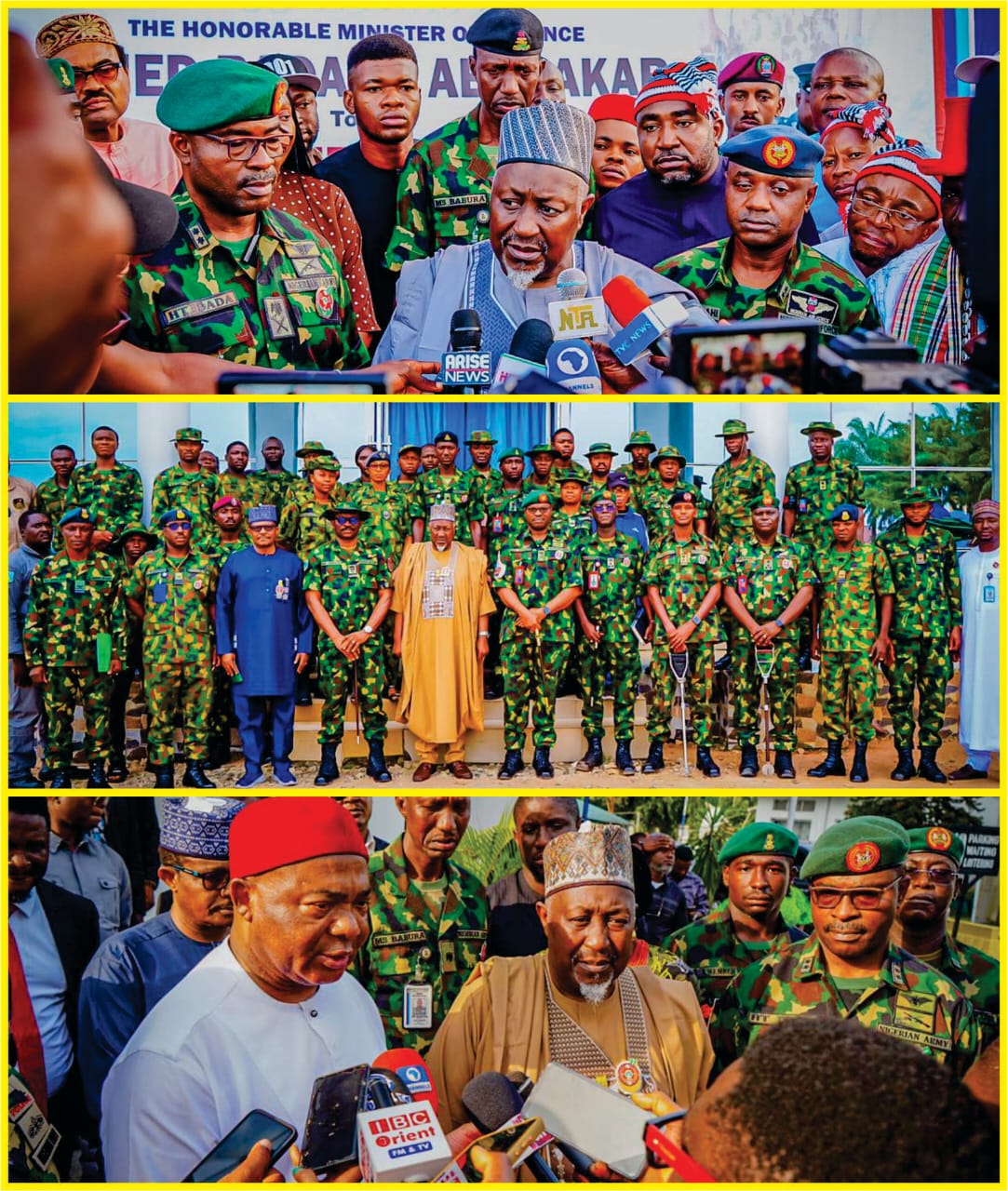
In an urgent response to the recent power grid collapse affecting Northern Nigeria, the Honourable Minister of Defence, H.E. Mohammed Badaru Abubakar,
has taken decisive action to secure national infrastructure against future interference.

Following a directive from President Bola Ahmed Tinubu, the Minister has ordered the Chief of Defence Staff (CDS) to deploy security forces to safeguard the restoration efforts on compromised electricity towers.

This swift intervention comes as Northern Nigeria grapples with widespread blackouts, a direct result of sabotage by third-party actors targeting critical power infrastructure. The outages have disrupted the daily lives of millions, impacting residential and industrial activities across several states.

The President, expressing grave concern over the situation, mandated robust security measures to protect and expedite the repair process of the national grid.

In a statement by the Director Defense Information and Public Relations, Henshaw Ogubike, the Minister directed the CDS to ensure that all repair teams working on these electricity towers receive full military protection. This strategic move aims not only to facilitate immediate repairs but to reinforce the security of essential infrastructure against non-state actors, thereby stabilizing the power grid for the well-being of Nigerians.

Badaru further appealed to affected citizens, urging them to remain patient and cooperative as the government mobilizes all necessary resources to resolve the crisis.

He assured the public that restoring the grid’s functionality is a top priority, promising updates as the repair operations progress.