The Honourable Minister of Youth Development, Comrade Ayodele Olawande, has praised the Executive Governor of Kaduna State, Senator (Dr.) Uba Sani, for creating a dedicated Ministry of Youth Development in the state a move he described as both visionary and timely.
In an official statement released by the Director Information and Public Relations, Omolara Esan, the Minister hailed the decision as a “significant milestone” that will enhance the coordination and execution of youth-centered policies and programmes across Kaduna.
He noted that the establishment of the ministry demonstrates the Governor’s commitment to youth empowerment and inclusive development.
Comrade Olawande had earlier paid a courtesy visit to Governor Sani, during which he proposed the formation of a youth affairs ministry.
He expressed appreciation for the Governor’s prompt and affirmative action, calling it a testament to “responsive and forward-thinking leadership.”
“The Governor’s decision is a clear demonstration of his dedication to unlocking the potential of young people in Kaduna State,” Olawande stated.
The Minister further commended Governor Sani’s leadership, adding that youth are pivotal to the state’s socio-economic progress.
He assured that the Federal Ministry of Youth Development will fully support the newly established ministry in delivering impactful programmes that benefit young people across Kaduna.
Nigeria’s rich tapestry of tastes and traditions took center stage on Wednesday as the Honourable Minister of Youth Development, Comrade Ayodele Olawande, graced the official launch of the Naija Food Festival, hosted by Hunter TV Africa in Lagos.
The vibrant festival drew a diverse crowd of culture enthusiasts, food lovers, and creatives eager to celebrate the country’s rich culinary legacy.
Olawande, visibly impressed by the colourful array of Nigerian cuisines, hailed the event as a dynamic showcase of the nation’s heritage and entrepreneurial spirit.
“The Naija Food Festival is more than a celebration of food, it’s a powerful reminder of our identity, resilience, and creativity,” Olawande said, highlighting the Ministry’s dedication to youth empowerment and cultural preservation.
In a spirited show of support, the Minister joined notable personalities including Hon. Ayo Adeagbo, Special Assistant to the President on Arts, Culture and the Creative Economy; Fuji music legend Wasiu Alabi Pasuma; and Hon. Idris Aregbe, Special Adviser to the Lagos State Governor on Arts, Culture and the Creative Economy, in a live cooking session that drew cheers from an excited audience.
Honourable Minister showing his cooking skills
Olawande praised the festival’s organizers for their innovative approach to cultural promotion and expressed confidence in forging future collaborations that spotlight Nigerian talent and traditions.
Calling on stakeholders in entertainment, arts, and culture to embrace President Bola Ahmed Tinubu’s vision for inclusive national development, he urged a renewed investment in preserving Nigeria’s culinary heritage as a tool for youth engagement and economic growth.
“The Federal Government remains firmly committed to supporting creative platforms that honour our heritage, spark innovation, and build sustainable livelihoods for young Nigerians,” he affirmed.
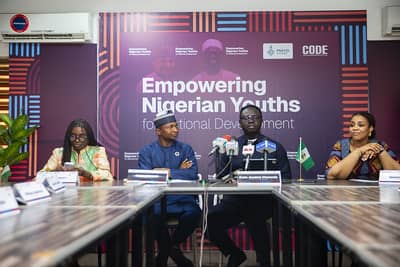
In a bid to advance national development through youth empowerment, Connected Development (CODE) hosted a high-level roundtable discussion yesterday in Abuja under the theme “Empowering Nigerian Youths for National Development: From Promises to Progress.”
The event brought together key stakeholders, including the Honorable Minister of Youth Development, Comrade Ayodele Olawande, civil society organizations, and media representatives, to forge a collaborative strategy that aligns with the federal government’s Renewed Hope Agenda.
Speaking at the event, Hamzat B. Lawal, Chief Executive of CODE, stressed the urgency of moving from rhetoric to results. “While our young people are breaking new ground in technology, the creative arts, and social entrepreneurship, they are also contending with systemic inequities that limit their potential,” he stated.
Lawal acknowledged ongoing government efforts, including the 2025 Youth Agenda, but emphasized the need for inclusive and practical implementation. “Any proposed National Youth CONFAB must ensure grassroots representation so policies reflect the diversity of Nigerian youth,” he added.
Connected Development further proposed strategic measures to unlock Nigeria’s demographic dividend:
A unified National Youth Policy Framework aligning state and federal efforts, especially in marginalized regions, Establishment of quarterly engagements between civil society and the Ministry. And Scaling the N10 billion FCT Youth Fund to a N200 billion National Youth Investment Fund, with 40% reserved for women-led ventures.
Through initiatives like Follow The Money and partnerships such as the Open Government Partnership (OGP), CODE has empowered communities and institutionalized youth participation in governance. These efforts, Lawal said, must be matched by greater collaboration across government, civil society, and the private sector.
“The Nigerian youth are not a problem to be solved they are the architects of our future,” Lawal concluded. “It is time to turn promises into progress.”
Lawal reaffirmed CODE’s readiness to work with stakeholders to ensure youth inclusion becomes a pillar of national development strategy.
Earlier, the Minister of Youth Development, Comrade Ayodele Olawande, outlined an ambitious vision for youth engagement, including the creation of a Youth Development Bank, reform of the National Youth Service Corps (NYSC), and the institutionalization of quarterly CSO-government dialogues.
“We must create sustainable structures that give our young people access to funding and entrepreneurial support. A Youth Development Bank will be a major catalyst,” Olawande stated.
The Minister praised Nigerian youth as global trailblazers across various sectors, including technology, education, medicine, agriculture, and the creative industries.
He emphasized that their innovation must be met with institutional backing and structured inclusion to drive national transformation.
“It’s time our young people start engaging the legislative, judiciary, and executive arms constructively. We must shape the laws and systems that shape us,” he added.
Olawande also announced plans for a 30-day National Youth Confab, an inclusive platform for policy dialogue, innovation, and grassroots participation, reaffirming the administration’s commitment to youth-led development
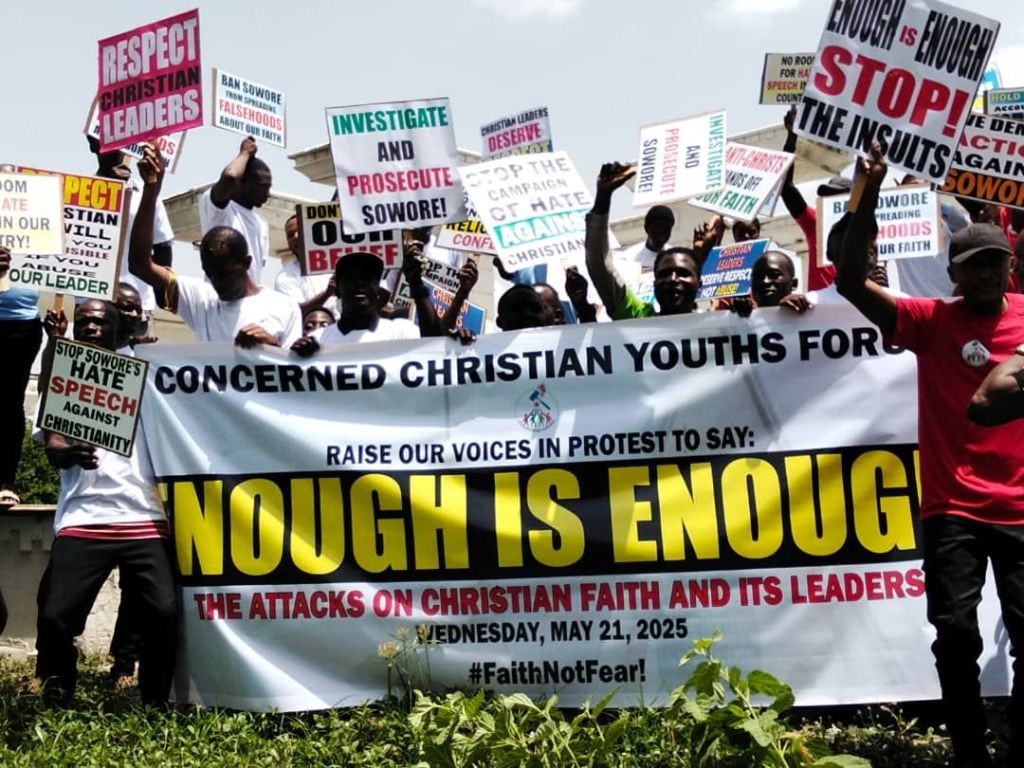
The Concerned Christian Youth Forum, under the leadership of its convener Adama Paul James, has raised serious concerns over what it describes as “unwarranted attacks on Christianity and its leaders” in Nigeria.
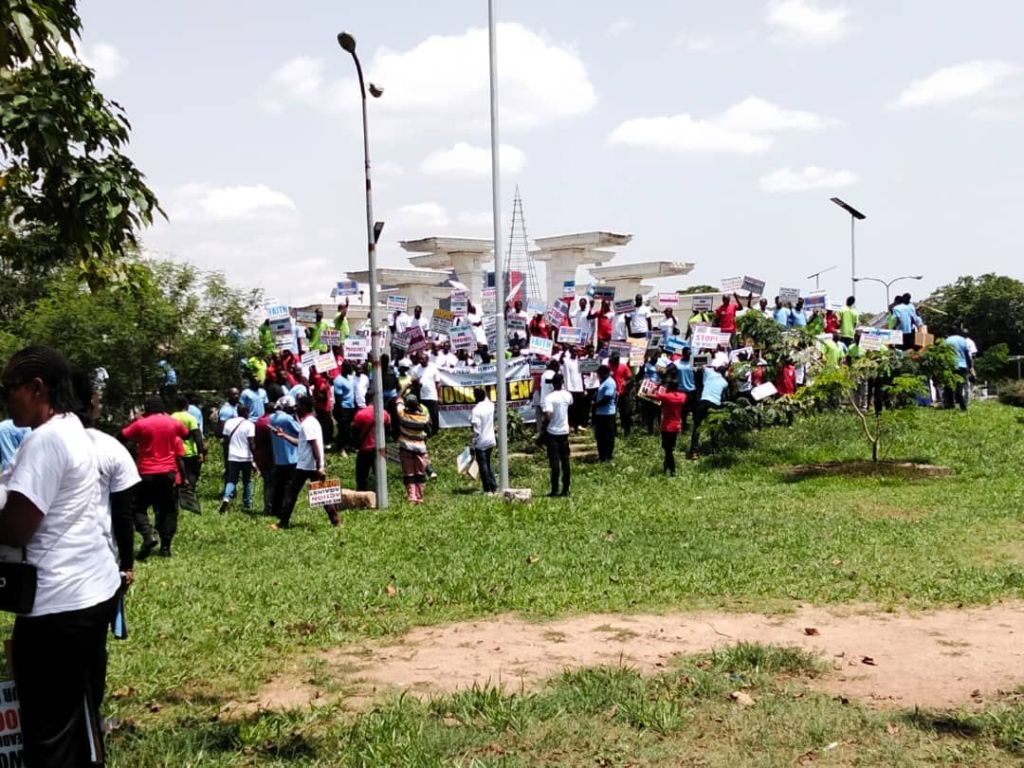
Speaking at a peaceful rally in Abuja, the Forum called on the government, media, and citizens to recognize and address the growing wave of defamation and hate speech targeted at the Christian faith.
Mr. James lamented what he referred to as “a persistent campaign of misinformation and slander” against Christian leaders, pointing to a worrying trend across both social and traditional media platforms.
“These are not isolated incidents,” he stated, “but a coordinated effort to marginalize our faith and destabilize national unity.”
The Forum alleged that the attacks are part of a larger, well-funded campaign aimed at inciting religious conflict, naming Omoyele Sowore and unnamed collaborators as central figures in this effort.
It called for urgent government action to protect religious freedom and uphold democratic values.
Despite the concerns raised, the Forum also took the opportunity to commend the Federal Government for the recent establishment of the Forest Guard initiative an effort aimed at combating growing insecurity, particularly in rural areas.
“The Forest Guard is a timely and welcome development,” James said.
“We believe it will enhance security and provide a buffer against those who terrorize our communities from hiding places in the forests.”
While praising the initiative, the Forum urged the government to ensure the guards are adequately trained, equipped, and supported to effectively carry out their duties.
It also acknowledged the dedication of Nigeria’s security agencies, encouraging them to intensify their efforts to end violence and restore peace across the nation.
The Concerned Christian Youth Forum reiterated its commitment to unity, peace, and collaboration, urging all Nigerians regardless of religious background to stand together against hatred and division.
“We will not stand idly by while our faith and leaders are under siege, but we will remain steadfast in our resolve to promote peace, tolerance, and national cohesion.” He concluded
A highly reputable national Civil Society group, National Civil Society forum of Professionals, NCSFP, has drown the attention of the federal government on the need to inculcate a worthy son of the president of the federal Republic of Nigeria, His Excellency Bola Ahmed Tinubu GCFR into any leadership position in this administration.
The call, which was made on Friday during a press conference held in Abuja, stressed on the personality of Dr. Raymond Edoh and his role in the 2023 presidential election.
According to the President of the organization, Alh. Danjuma Harouna, while addressing the press, described Dr. Raymond Edoh is a loyal and worthy political son of President Bola Tinubu, who contributed immensely to the victory of his father as the president of the federal Republic of Nigeria in 2023. “One of these days, during our visit to Dr. Raymond Edoh, while listening to him, I and the delegation of the organization that went for the courtesy visit realized that he is not different from president Bola Ahmed Tinubu, in his optimism about Nigeria, his leadership charisma, passion to lead, wealth of knowledge and experience, and the most of them are his tactical brilliance in ideas on how insecurity can be curbed, poverty can be inhibted, and development can be achieved stresslessly including the windows to the fundings of the projects and programs.
“We further noticed how highly coordinated and determined he is about this nation in line with this administration’s agenda and despite he hasn’t been considered with any appointment, he assured us of Tinubu’s return in 2027 as according to him, he will throw his full political weight behind his father. No doubt, he is an influential young leader who has served and still serves in several capacities across political forums, youth movements and organizations, and international organisations.
“Dr. Raymond Edoh has continued to be a crusader of hope for greater Nigeria and Africa at large. He believes in empowering people and encouraging the younger ones to grow and become useful to their sundry societies through capacity building programs, empowerment of all kinds, financial donations in millions of Naira, mental sensitization, lectures on basic moral orientation, national patrotism and security, to mention but a few.
“He also went further by telling us that he will continue to support his father, Bola Ahmed Tinubu come what may because he believes in him.
“However, he had earlier disclosed to us during his welcome address that he hopes to serve in this administration if given the opportunity, and what he plans to achieve for Nigerians is mind-blowing.”
Also speaking, the vice president, Hajia Juwairat Aliyu, also stressed that Dr. Raymond Edoh is a disciplined young Nigeria full of humility and popularly known for his diligence to duty and integrity. “One of the best things that this administration would do amongst many others is to give Dr. Raymond Edoh an appointment in this administration. His prowess and doggedness is amazing, and I think President Bola Ahmed Tinubu GCFR should see him worthy of an appointment to help in the achievement of New Hope Agenda, “she said
Speaking further, Aliyu lauded President Bola Ahmed Tinubu for his resolve in making Nigeria’s economy better through the complete payment of the Nigeria IMF loan that has lingered for years.
She, however, charged President Tinubu to focus on the development of youths and find ways to incorporate them into leadership positions
The Concerned Christian Youth Forum (CCYF) has announced plans for a peaceful protest in response to the rapidly escalating attacks against the Christian faith and Christian Leaders, which are being funded by Omoyele Sowore and his collaborators
This protest is being organized in response to the growing disregard shown to our religion and the unacceptable actions taken against our religious leaders by Sowore and his associates.
This distressing situation has been exacerbated by the fact that Christianity and Christian Leaders are being deliberately targeted, Our beliefs and traditions disrespected, and Our faith undermined by Omoyele Sowere and His collaborators that are receiving financial support for the sole purpose of sparking religious conflict.
We are also using this protest to call the attention of the Government to the alarming rise in killings and bloodshed across the country with a demand for the Government to do everything possible to end this senseless killings.
The Concerned Christian Youth Forum (CCYF) is calling on all Christian Youths within the FCT to join us in this peaceful protest on May 21st Wednesday 2025, at 10 AM and ending by 2pm, Venue is the Unity Fountain opposite Transcorp Hilton in Maitama.
The protest will be accessible to all Christian Youth, with free buses decorated with our banners providing transportation from various locations across the city and all the six area councils of the FCT.
James Paul Adama. Convener, Concerned Christian Youth Forum. Abuja Nigeria.
In a bold step to improve the health and well-being of young Nigerians, the Federal Government has unveiled YO! Health, a new national health awareness campaign targeting youth across the country.
The initiative was officially launched by the Honourable Minister of Youth Development, Comrade Ayodele Olawande, at a high-level event held at the Transcorp Hilton in Abuja. YO! Health seeks to promote healthy lifestyles and empower young people with the information and tools needed to take control of their physical, mental, and emotional well-being.
Speaking at the launch, Olawande said the campaign is rooted in the government’s commitment to youth development and health equity. “Good health is a prerequisite for young people to thrive and contribute meaningfully to society,” the Minister said. “YO! Health is designed to bridge the gap in access to essential health services while advancing awareness, education, and preventive care.”
The initiative focuses on six strategic pillars: Mental Health; Alcohol, Drug and Substance Abuse; Communicable Diseases; Health Insurance (especially for youth in the informal sector); Non-Communicable Diseases; and Sexual & Reproductive Health.
According to the Minister, these focus areas were selected based on data and insights from young Nigerians themselves, reflecting real challenges and lived experiences. The campaign also revolves around four key objectives: Raising Awareness, Empowering Youth, Advocacy and Policy Influence, and Co-Design and Implementation.
YO! Health is a collaborative effort led by the Ministry of Youth Development in partnership with the Federal Ministries of Health and Women Affairs, civil society organizations, international partners, and private sector stakeholders.
Permanent Secretary of the Ministry, Olubunmi Olusanya, lauded the initiative as a holistic approach to youth health. He described it as a “structured framework to address critical aspects of youth health and well-being,” adding that the program reflects the government’s dedication to building a healthier, more empowered generation.
The initiative has received strong backing from the Renewed Hope administration of President Bola Ahmed Tinubu, whose support was acknowledged by Olawande during the launch event.
YO! Health is expected to roll out nationwide in the coming months with community-based activations, health outreach programs, and digital engagement strategies tailored to young Nigerians.
Nigeria has restated its firm commitment to global peace and security during the 2025 United Nations Peacekeeping Ministerial Conference, currently underway at the UN Headquarters in New York.
Speaking on the second day of the High-Level Pledging Session, the Honourable Minister of Defence, H.E. Mohammed Badaru Abubakar, reaffirmed Nigeria’s dedication to supporting international peacekeeping operations and maintaining global stability.
In his remarks, Badaru highlighted Nigeria’s ongoing contributions to UN missions, including the rotation of the Base Protection Force with the United Nations Interim Security Force in Abyei (UNISFA) and the deployment of a Formed Police Unit to the United Nations Transition Mission in Somalia (ATMIS).
He further emphasized Nigeria’s leading role in sub-regional peace efforts through the Economic Community of West African States (ECOWAS) and the African Union (AU), referencing the country’s longstanding contributions to peacekeeping operations in Sierra Leone, Liberia, and more recently, The Gambia and Guinea Bissau.
Underscoring Nigeria’s enduring partnership with the UN, the Minister announced five new pledges under the Peacekeeping Capability Readiness System, signaling Nigeria’s increased readiness to support future peace operations.
The Minister reaffirmed Nigeria’s resolve to contribute meaningfully to global peace, stating that the country remains committed to fostering regional and international security through cooperation and collective action.
The House of Representatives has garnered significant commendation for passing the Chartered Institute of Purchasing and Supply Management (CIPSMN) Amendment Bill 2024, marking the first amendment to the CIPSMN Act since its inception in 2007.
The Bill was adopted on Thursday, May 8, during a plenary session chaired by Speaker Rt. Hon. Tajudeen Abbas, who underscored the rigorous legislative process it underwent. “The Bill has gone through a thorough legislative process, including a robust public hearing. The contributions from stakeholders were overwhelmingly positive, which has enabled the House to better understand the importance of these amendments,” Abbas stated.
Key among the amendments is the proposed change of the Institute’s name to the ‘Chartered Institute of Procurement and Supply Chain Management of Nigeria,’ aligning it with global best practices and broader professional mandates.
Presenting the Report of the House Committee on Public Procurement, Committee Chairman Rt. Hon. Uyime emphasized the economic significance of the amendments. “Effective supply and procurement are crucial to economic growth. This amendment underscores the necessity for structured procurement processes that align with international standards,” he noted.
A pivotal clause in the amendment mandates that all civil servants involved in procurement and supply chain functions must undergo professional training and certification provided by the Institute. This measure, according to the Committee’s recommendations, is aimed at fostering professionalism and accountability across public sector procurement.
“We are ensuring that procurement officers across all ministries, departments, and agencies are equipped with the necessary skills and professional certification to effectively manage procurement processes,” Hon. Uyime added.
The amendment further seeks to elevate the Institute’s status, placing it on par with other established professional bodies in Nigeria and granting it statutory recognition to regulate procurement and supply chain management nationwide.
The Bill now awaits concurrence by the Senate before being transmitted to the President for assent.
The National Identity Management Commission (NIMC) has announced a major milestone in its nationwide identity enrollment campaign, revealing that it has successfully captured over 120 million Nigerians into its national database.
Speaking during a press briefing in Abuja on Wednesday, the Director General/CEO of NIMC, Engr. Abisoye Coker-Odusote, reaffirmed the commission’s commitment to enrolling the entire Nigerian population by the end of the year.
“We have enrolled many Nigerians and still counting. We are definitely going to continue to ensure that we enroll more Nigerians before the end of this year,” Coker-Odusote stated.
Group photograph: DG NIMC with Journalists
As part of its ongoing reforms, the Commission disclosed a 40% reduction in extortion and corruption within the enrollment process. Coker-Odusote attributed this progress to improved oversight and the deployment of enhanced technology across enrollment centers.
To accelerate the process, state and local government offices have been equipped with upgraded tools and better-trained personnel.
In a move to make enrollment even more accessible, the NIMC has also launched a self-assist digital platform, enabling users to log in with biometrics, verify their identities, comply with cybersecurity and data protection protocols, and update their records online.
The NIMC boss further emphasized the role of the National Identification Number (NIN) in driving economic empowerment and access to government services.
She noted that access to the government-backed student loan program is now tied to NIN registration, a measure aimed at promoting financial inclusion and supporting higher education.
“The government has provided loan facilities for students or aspiring students who wish to pursue higher education. With NIN, they can now apply for these opportunities with ease,” she said.
DG NIMC also revealed that the Commission has engaged cybersecurity experts to strengthen its systems in line with international best practices, reinforcing its dedication to data protection and secure identity management.
She emphasized the importance of national identity as a foundation for development, inclusion, and access to essential services.















 Africa Security Investigation News