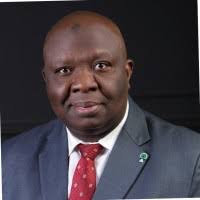
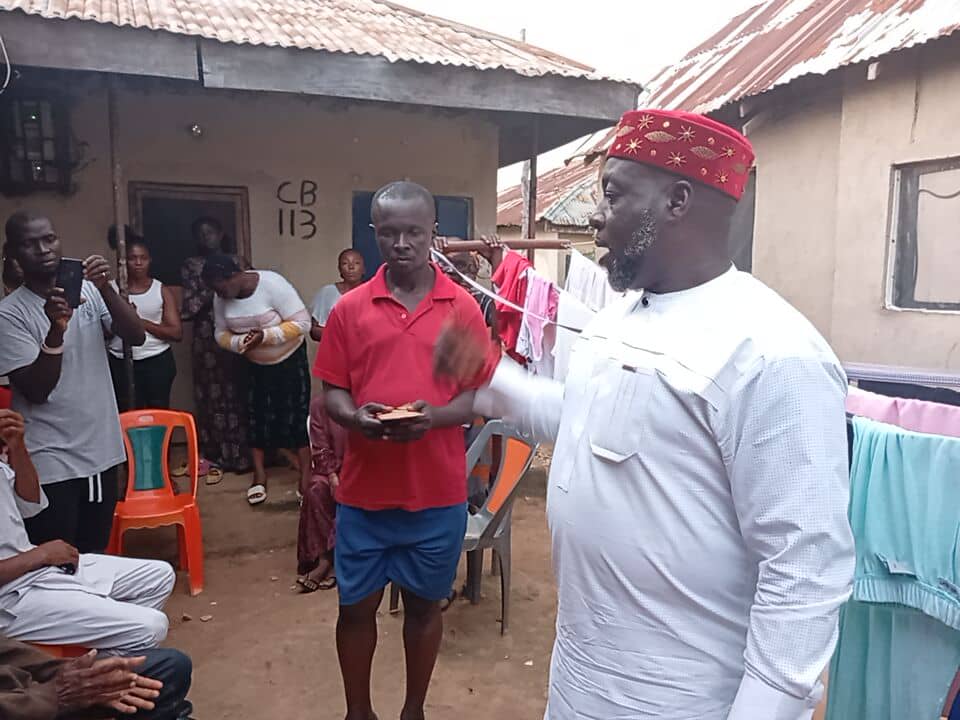
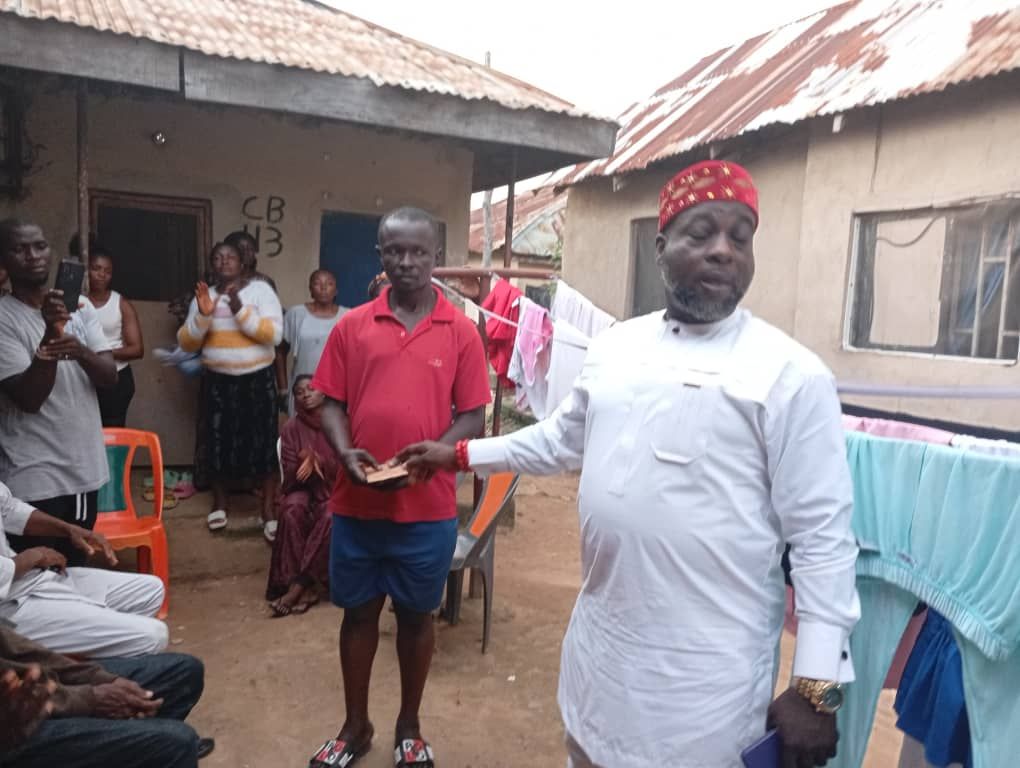
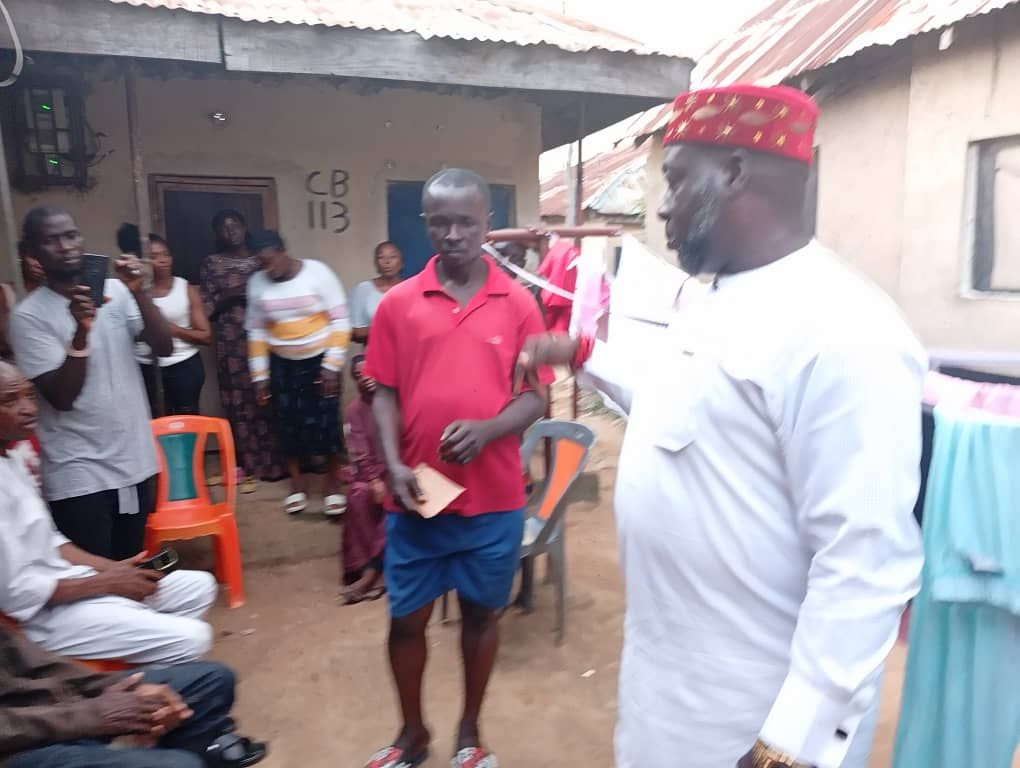
The First African UNESCO Laureate collaborated his foundation with GFA Foundation

During contesy visit at GFA Foundation at Osogbo Osun State Nigeria,The First African UNESCO Laureate Prof Sir Bashiru Aremu launched support for the GFA Foundation

The Founder of GFA Foundation in person of Alhaja Ganiyat Adebimpe was excited and said as stated below:

We were honored to receive The First African UNESCO Laureate, Prof. Sir Bashiru Aremu at the GFA Office today!

In which The First African UNESCO Laureate Prof Sir Bashiru Aremu reply as stated below
In his words, “Your mission is noble, and I’m committed to promoting the GFA Foundation beyond your expectations by collaborated with our Prof Sir Bashiru Aremu Intl Foundation Inc in USA and associates world wide.”

This visit marks a new dawn of impact, global recognition, and partnership for GFA Foundation

GFA FOUNDATION is an NGO that is willing to safeguard women against single mothers association, child abuse and others related issues, also caring for
empowerment for the widows,children and the needy.
They also work against abusive marriage and other related issues in our society
such as marriage counseling , for both single and married,
Therapy center for depression and others

About Prof Sir Bashiru Aremu Intl Foundation Inc in USA and associates world wide
Prof Sir Bashiru Aremu Intl Foundation Inc is a foundation established by The First African UNESCO Laureate Prof. Sir Bashiru Aremu, a renowned Nigerian academic and expert in Computer Science and Information Technology. The foundation is committed to empowering students, promoting education, and uplifting local communities.

Key Activities:

  • Educational Seminars: Organizes seminars that cover relevant topics, with engaging speakers and modern facilities.
  • Scholarship Programs: Offers scholarships to deserving students, providing them with opportunities for academic growth.
  • Community Development: Engages in outreach events, promoting community development and providing resources for small businesses.
  • Mentorship: Provides mentorship programs, guiding students and young professionals in their academic and professional pursuits.

Global Partnerships:
Crown University Int’l University Int’l Chartered Inc in USA which is teaching and research hospital campuses are located in Santa Cruz Province in Argentina, Spain, Brazil with official Partner Constituent campuses at government regulated Universities world wide and online operations

  • International Chartered World Learned Society: Prof. Sir Bashiru Aremu serves as the World Grand President, representing the society in the United Nations Global Compact.
  • West Coast Int’l University of Science Technology Management and Arts USA: Partnered with the foundation, promoting academic excellence and research.
  • Chartered Intl Da Vinci University USA and associates world wide and online operations
  • International Centre for Eye Research and Education Argentina: Prof. Sir Bashiru Aremu serves as Vice President of the Board, contributing to global health initiatives and other organizations world wide

ICAD 2025: African Leaders, Scholars Call for Rethinking Governance and Democracy on African Terms

Maryam Aminu

Africa’s democracy must be rebuilt from within, with young people at the centre, tribalism dismantled, and foreign models replaced by indigenous systems of governance. This was the resounding call as political leaders, scholars, and civil society actors gathered at the International Conference on Africa’s Democracy (ICAD 2025) in Abuja.

Speaker of Nigeria’s House of Representatives, Hon. Tajudeen Abbas, represented by Deputy Speaker Benjamin Kalu, stressed the urgent need to prioritise youth inclusion in governance. He said Africa’s parliaments must become proactive by adopting youth-centred legislative frameworks.

“With over 60% of our population under 35, our democracy must reflect their aspirations,” Abbas said. He cited Nigeria’s Not Too Young to Run Act and the Legislative Mentorship Initiative as progress points, while calling for open parliaments, digital civic tools, and regional collaboration.

He warned that without dismantling structural barriers to youth and women’s participation, inclusive development would remain a distant dream.

Renowned Kenyan scholar Prof. Patrick Otieno Lumumba in his Keynote address warned that Africa’s political future remains bleak if tribalism continues to drive electoral competition. “The tribe is innocent; it is the tribalists who are guilty,” he declared, noting that ethnicity is being weaponised by opportunistic leaders.

Lumumba urged Africans to reject colonial-era divisions and embrace inclusive systems inspired by traditional governance models such as Ethiopia’s Gadaa system.

He also decried the rise of kakistocracy governance by the least qualified and urged young people to rise, learn from history, and lead with wisdom.

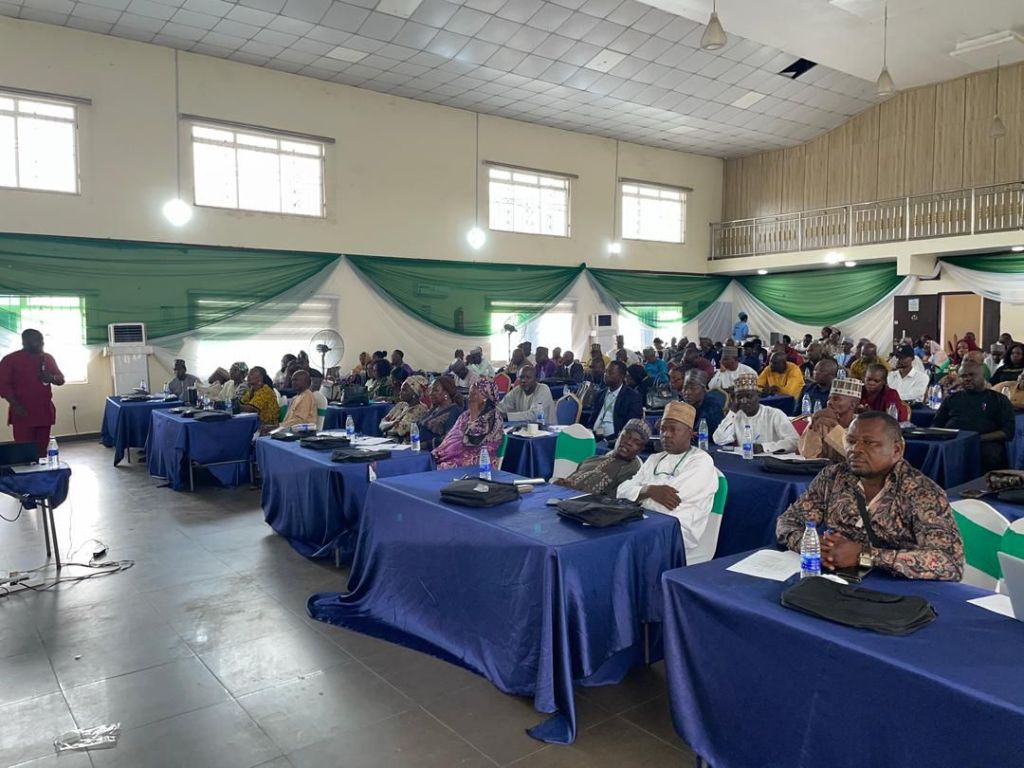
Cross session of participants

“If tribalism continues to shape our politics, Africa is done. But if we rethink governance and include every voice, Africa will rise,” he concluded.

Former Kenyan Prime Minister H.E. Raila Odinga echoed the call for homegrown solutions, urging African countries to discard imported Western governance models that fail to reflect the continent’s realities.

Former Kenyan Prime Minister H.E. Raila Odinga

“Democracy must be universal, yes but it must also be uniquely African,” Odinga said. He warned against authoritarian drift on the continent and challenged governments to anchor democracy in indigenous systems of consensus, culture, and history.

In his address, ICAD 2025 Team Leader Ambassador Chris Iyama said Africa must urgently stop outsourcing its development path. “We need to start talking to ourselves,” he said. “We need to redefine democracy on our own terms not those handed down by foreign powers.”

ICAD 2025 Team Leader Ambassador Chris Iyama

Iyama challenged the continent to move away from dependency on international aid, questioning why African nations remain underfunded despite vast natural wealth. “For how long will our budgets remain hostage to donor priorities while our people live amidst untapped billions in resources?”

He called for political will and regional collaboration to drive sustainable development and create governance systems that truly serve Africans not foreign interests. “We must unlock our own potential, fund our own progress, and lead our own democratic journey,” Iyama affirmed

ICAD 2025: African Leaders, Scholars Call for Rethinking Governance and Democracy on African Terms

Maryam Aminu

Africa’s democracy must be rebuilt from within, with young people at the centre, tribalism dismantled, and foreign models replaced by indigenous systems of governance. This was the resounding call as political leaders, scholars, and civil society actors gathered at the International Conference on Africa’s Democracy (ICAD 2025) in Abuja.

Speaker of Nigeria’s House of Representatives, Hon. Tajudeen Abbas, represented by Deputy Speaker Benjamin Kalu, stressed the urgent need to prioritise youth inclusion in governance. He said Africa’s parliaments must become proactive by adopting youth-centred legislative frameworks.

“With over 60% of our population under 35, our democracy must reflect their aspirations,” Abbas said. He cited Nigeria’s Not Too Young to Run Act and the Legislative Mentorship Initiative as progress points, while calling for open parliaments, digital civic tools, and regional collaboration.

He warned that without dismantling structural barriers to youth and women’s participation, inclusive development would remain a distant dream.

Renowned Kenyan scholar Prof. Patrick Otieno Lumumba in his Keynote address warned that Africa’s political future remains bleak if tribalism continues to drive electoral competition. “The tribe is innocent; it is the tribalists who are guilty,” he declared, noting that ethnicity is being weaponised by opportunistic leaders.

Lumumba urged Africans to reject colonial-era divisions and embrace inclusive systems inspired by traditional governance models such as Ethiopia’s Gadaa system.

He also decried the rise of kakistocracy governance by the least qualified and urged young people to rise, learn from history, and lead with wisdom.

Cross session of participants

“If tribalism continues to shape our politics, Africa is done. But if we rethink governance and include every voice, Africa will rise,” he concluded.

Former Kenyan Prime Minister H.E. Raila Odinga echoed the call for homegrown solutions, urging African countries to discard imported Western governance models that fail to reflect the continent’s realities.

Former Kenyan Prime Minister H.E. Raila Odinga

“Democracy must be universal, yes but it must also be uniquely African,” Odinga said. He warned against authoritarian drift on the continent and challenged governments to anchor democracy in indigenous systems of consensus, culture, and history.

In his address, ICAD 2025 Team Leader Ambassador Chris Iyama said Africa must urgently stop outsourcing its development path. “We need to start talking to ourselves,” he said. “We need to redefine democracy on our own terms not those handed down by foreign powers.”

ICAD 2025 Team Leader Ambassador Chris Iyama

Iyama challenged the continent to move away from dependency on international aid, questioning why African nations remain underfunded despite vast natural wealth. “For how long will our budgets remain hostage to donor priorities while our people live amidst untapped billions in resources?”

He called for political will and regional collaboration to drive sustainable development and create governance systems that truly serve Africans not foreign interests. “We must unlock our own potential, fund our own progress, and lead our own democratic journey,” Iyama affirmed

Amid Silence and Sorrow: Why We Must Never Forget the Humanity in Us

By Nankpak Cirfat

Following the passing of Nigeria’s former President Muhammadu Buhari, the nation has engaged in a public reckoning with his legacy. Tributes have poured in from political allies, foreign diplomats, and citizens. Flags flew at half-mast, and debates resurfaced on whether he deepened Nigeria’s democratic fabric or weakened it through prolonged silence and policies that many considered exclusionary.


While this national reflection is understandable, perhaps even necessary it is impossible to ignore a glaring inconsistency in how we distribute compassion in Nigeria. As we mourn one man’s death at the highest echelon of power, we continue to turn a collective blind eye to hundreds of lives lost in rural communities, particularly in Plateau State.
Since early 2023, coordinated attacks in Bokkos, Mangu, Riyom, and Barkin Ladi LGAs have led to the deaths of over 1,300 civilians, with tens of thousands displaced. In December 2023 alone, the Christmas Eve massacre in Bokkos saw at least 190 people killed across 23 villages, according to Human Rights Watch. Despite this, national outrage was largely muted, federal response tepid, and media coverage fleeting.
This disparity in response reveals a disturbing hierarchy of empathy in Nigeria’s public consciousness, where the lives of the elite are grieved with state-backed solemnity, but the poor are mourned only by their neighbors.
What is happening in Plateau State is not merely intercommunal conflict or isolated acts of violence; it is a slow-burning genocide. Villages are wiped out, cultural heritage erased, and survivors are abandoned to IDP camps with inadequate security or support. Yet, we continue to frame the issue in passive, euphemistic terms like “clashes” or “reprisals,” thus avoiding the moral clarity and urgency the crisis demands.
Why does this matter? It matters because the way a nation responds to suffering, particularly of its most vulnerable defines its moral standing. When state institutions and political elites demonstrate more concern for protocol than for protection, they erode public trust and feed the very instability they claim to combat.
Moreover, selective empathy undermines social cohesion. Nigeria is a multi-ethnic, multi-religious state that cannot afford to normalize systemic indifference to certain regions or groups. If justice and dignity are not evenly distributed, then peace will always be fragile and conditional.
The federal government’s silence and the sluggish pace of justice have emboldened impunity. Perpetrators continue to attack knowing there will be no meaningful investigation, prosecution, or international spotlight. Plateau is bleeding, and Nigeria is watching.
I believe this is not just a security issue, it is a governance crisis, a communication failure, and a moral emergency. We must demand accountability not just from armed actors, but from institutions tasked with preventing violence and protecting lives.


The death of former President Buhari should not overshadow the death of our national conscience. If anything, it should compel us to interrogate what kind of republic we are building, one where we remember the powerful but forget the powerless?
We need more than condolences. We need a shift in national priorities. That includes:
Immediate deployment of impartial investigations into the Plateau killings;

Transparent and equitable support for all internally displaced persons (IDPs);

Stronger early-warning systems and community-based conflict prevention strategies;

A responsible media that doesn’t allow crises to vanish from the headlines once political drama resumes.

Finally, we must recenter humanity in public discourse. Behind every number is a name, a family, a future extinguished. Whether in the corridors of Aso Rock or the ravaged hamlets of Daffo, every Nigerian deserves dignity in life and justice in death.
Buhari’s death is a moment not just of mourning, but of moral recalibration. If we can lower our flags for a former president, we can raise our voices for the voiceless.
The test of any nation is not how it remembers its leaders, but how it protects its people.

Nankpak  Cirfat

Nankpak Cirfat is a communications officer – media relations at Connected Development (CODE), a journalist, and a development advocate He works at the intersection of civic accountability, good governance, peacebuilding, and public storytelling.

Towards a New Nigeria: National Summit Demands People-Driven Constitution and True Federalism

Maryam Aminu

A strong call for a fresh constitutional order resonated from Abuja this week as the National Summit on the Future of Nigeria’s Constitutional Democracy concluded with far-reaching resolutions aimed at redefining Nigeria’s governance and future.

Convened by the Patriots, a group of eminent elder statesmen, in partnership with the Nigerian Political Summit Group (NPSG), the two-day summit held from July 16 to 17 brought together a broad coalition of stakeholders, including traditional leaders, youth and women organisations, civil society groups, academics, and professionals.

Addressing participants, the Convenor of the Summit and former Commonwealth Secretary-General, Chief Emeka Anyaoku, said the summit had critically assessed Nigeria’s current governance system under the 1999 Constitution.

He explained that the prevailing constitution was not a product of the people’s will and had failed to address the country’s longstanding governance challenges.

Anyaoku was quoted as saying that the existing constitution had weakened federalism, fostered ineffective governance, escalated insecurity, and deepened socio-economic disparities.

Participants at the summit reportedly agreed that a new Constitution was urgently needed. They recommended that it be drafted through a non-partisan National Constituent Assembly, to be elected and supervised by the Independent National Electoral Commission (INEC). They also resolved that such a Constitution should be subjected to a national referendum prior to being assented to by the President, in order to ensure popular legitimacy.

Stakeholders advocated for a return to true federalism, with a restructuring of the country into federating units aligned with the six geopolitical zones. They reportedly called for the devolution of powers from the central government to the sub-national levels to enhance efficiency and accountability.

The summit reportedly suggested a review of the presidential system of government, with a view to adopting a more cost-effective and sustainable governance model. Participants also proposed legislative and judicial reforms, which would include the establishment of special courts and the empowerment of federating units to create their own courts of appeal.

According to the communiqué, the summit further recommended the institutionalisation of independent candidacy, the introduction of strict anti-defection laws, and the full-scale implementation of electronic voting technologies to improve electoral transparency and credibility.

The summit emphasized the urgent need to drastically reduce the cost of governance, proposing a 75% cut in the number of government agencies and a limit on the size of ministerial and commissioner appointments.

Participants also called for robust anti-corruption reforms, including a thorough restructuring of the police and judiciary to ensure effectiveness and public trust.

On human development and inclusivity, the summit stressed the need to protect citizens’ rights, ensuring guaranteed access to education, security, and employment. Delegates also advocated for the inclusion of women, youth, and persons with disabilities in governance structures.

Additionally, the summit urged that Nigerians in the diaspora, estimated to be over 15 million, be granted voting rights in future elections.

On security matters, it was reported that the establishment of state police and the implementation of community-based policing were among the key recommendations aimed at tackling insecurity at the grassroots.

Participants backed the principle of fiscal federalism, urging that states be granted greater control over their natural and financial resources to foster local development and accountability.

Chief Emeka Anyaoku, in his closing remarks, expressed hope that the resolutions reached would serve as a blueprint for building a new Nigeria anchored on justice, equity, and shared prosperity.

He said that the summit aimed to ignite a national rebirth one in which no citizen is oppressed and every Nigerian child can dream and aspire to a better future.

The summit ended with a unified pledge from participants to continue advocating for the implementation of the resolutions as part of a broader effort to reform Nigeria’s constitutional democracy.

The Patriots Lead Call for New Democratic Constitution to Reflect Nigeria’s Plural Identity

Maryam Aminu

National leaders of thought under the banner of The Patriots, led by former Commonwealth Secretary-General Chief Emeka Anyaoku, have reignited calls for a new, inclusive and democratically-formulated constitution that reflects Nigeria’s diversity and addresses its developmental challenges.

Speaking at the opening of a National Constitutional Summit in Abuja, jointly organised by The Patriots and the Nigerian Political Summit Group, Chief Anyaoku declared that the 1999 Constitution (as amended) is no longer fit for purpose, describing it as a military-imposed framework that fails to recognise the country’s pluralism.

“Nigeria is a pluralistic country. Like all successful pluralistic nations, our constitution must be crafted by representatives elected specifically for that purpose,” Anyaoku asserted.
“The 1999 Constitution was not democratically formulated. Its governance structure is non-inclusive and encourages excessive administrative spending at the expense of capital development. Hence, the need for a truly people-driven constitution.”

Citing the nation’s persistent insecurity, poverty, infrastructure gaps, and the disillusionment of Nigerian youth, the elder statesman urged for the drafting of a new constitution that would be ratified through a national referendum to ensure legitimacy and ownership by the people.

Also weighing in on the matter, former President Olusegun Obasanjo represented at the summit by Secretary General of the Eminent Patriots, Mr. Olawale Okunniyi acknowledged flaws in the current constitution but stressed that even the best-drafted laws are vulnerable to abuse by selfish leadership.

“No constitution is perfect,” Obasanjo noted, “but bad leadership can subvert even the best constitutional provisions. Getting the right leaders is critical to building the Nigeria we all dream of.”

Senator Gbenga Daniel, Co-Chairman of the Organising Committee and former Governor of Ogun State, said the summit was a bold citizen-led constitutional intervention, built on years of advocacy and public dissatisfaction with the current governance framework.

“The 1999 Constitution has repeatedly shown its limitations in fostering equity, inclusion, national cohesion, and effective governance,” Daniel stated.
“This summit will critically examine fundamental themes including the structure of the federation, local government reform, resource control, fiscal federalism, judicial and electoral reform, and national security.”

According to Daniel, all resolutions from the summit will be meticulously compiled and submitted to the Presidency and the National Assembly for consideration.

“This is not an act of rebellion. It is an invitation to constructive collaboration and democratic renewal. No voice is too small, and no group should be left behind,” he added.

The summit signals a renewed push by key Nigerian stakeholders to address longstanding structural imbalances and build a constitutional framework that fosters unity, justice, and sustainable development in the 21st century.

ICAD 2025: Africa’s Moment to Reimagine Democracy

…Africa is not adrift. She is rising bold, self-defined, and ready to lead.

By Maryam Aminu

With the world watching and history listening, organisers of the International Conference on Africa’s Democracy (ICAD) 2025 have issued a compelling call for a new chapter in the continent’s democratic evolution.

At a pre-conference press briefing held at Community Park, Bassan Plaza, Abuja, organisers declared that ICAD is more than an event it is a continental movement to reclaim governance and development on African terms.

The atmosphere brimmed with anticipation and pride as details were unveiled for the historic gathering scheduled to hold from Tuesday, July 22 to Wednesday, July 23, at the NAF Conference Centre, Abuja.

“This is more than a gathering. It is a renaissance a bold affirmation that Africa’s future will be authored by Africans,” the organisers stated.

According to Chris Iyama, Team Lead of the ICAD 2025 Conference, the event is designed as a pan-African platform convening thought leaders, policymakers, social innovators, youth, and civil society actors to ask critical questions, share homegrown ideas, and shape governance systems rooted in the continent’s diverse realities.

This year’s theme, “Afro-Democracy: Building Governance Systems that Work in Africa for Africans,” is both a challenge and a promise.

“We are not rejecting global ideas,” Iyama clarified. “We are affirming that solutions forged by African hands, for African contexts, are essential not only for our continent, but for global progress.”

Chris Iyama, Team Lead ICAD 2025 Conference, addressing members of the press

The calibre of confirmed speakers underscores the weight and vision of ICAD 2025. Headliners include:

Rt. Hon. Raila Odinga, Former Prime Minister of Kenya

H.E. Kashim Shettima, Vice President of Nigeria

Hon. Tajudeen Abbas, Speaker, House of Representatives, Nigeria

H.E. Dr. Arikana Chihombori-Quao, Former AU Ambassador to the U.S.

Prof. PLO Lumumba, Legal luminary and renowned Pan-Africanist (Keynote Address)

Iyama further disclosed that the speakers will be joined by senior officials from the African Union, ECOWAS, United Nations, ministers, lawmakers, private sector leaders, and grassroots actors positioning ICAD 2025 as a continental brain trust for democracy and sustainable development.

The conference will explore the critical questions confronting Africa’s governance future in an age of digital disruption, youth-driven demographics, and rising global uncertainty:

What does democracy look like when led by Africa’s youth?

How do we build trusted institutions and credible elections beyond rhetoric?

How do we reclaim economic sovereignty and fund our own futures?

Participants will explore solutions across themes such as indigenous finance models, public-private capital mobilisation, diaspora engagement, and anti-corruption frameworks to curb illicit financial flows.

“Africa is not a problem to be solved,” Nyama declared. “She is a solution waiting to be unleashed.”

He urged members of the press to tell the full story of ICAD with clarity, courage, and context.

“The battle for democracy is also the battle for narrative. Chronicle not only what happens but why it matters. Frame Africa’s democratic evolution with nuance, boldness, and hope.”

More than a two-day summit, ICAD 2025 aims to launch a permanent pan-African platform for dialogue, accountability, and innovation. Its long-term goals include:

Forging transnational partnerships for local impact and regional integration

Equipping delegates to return as agents of transformation, not just spectators

Iyama concluded by reminding all stakeholders that Africa’s future will not be scripted in foreign capitals but in its cities, villages, and people.

“This is our hour of courage. We gather not just to talk, but to build to design systems rooted in tradition, powered by innovation, and driven by unity.”

As the countdown to ICAD 2025 begins, one message resounds clearly: Africa is no longer waiting for change she is leading it.

ICAD 2025: Africa’s Moment to Reimagine Democracy

…Africa is not adrift. She is rising bold, self-defined, and ready to lead.

By Maryam Aminu

With the world watching and history listening, organisers of the International Conference on Africa’s Democracy (ICAD) 2025 have issued a compelling call for a new chapter in the continent’s democratic evolution.

At a pre-conference press briefing held at Community Park, Bassan Plaza, Abuja, organisers declared that ICAD is more than an event it is a continental movement to reclaim governance and development on African terms.

The atmosphere brimmed with anticipation and pride as details were unveiled for the historic gathering scheduled to hold from Tuesday, July 22 to Wednesday, July 23, at the NAF Conference Centre, Abuja.

“This is more than a gathering. It is a renaissance a bold affirmation that Africa’s future will be authored by Africans,” the organisers stated.

According to Chris Nyama, Team Lead of the ICAD 2025 Conference, the event is designed as a pan-African platform convening thought leaders, policymakers, social innovators, youth, and civil society actors to ask critical questions, share homegrown ideas, and shape governance systems rooted in the continent’s diverse realities.

This year’s theme, “Afro-Democracy: Building Governance Systems that Work in Africa for Africans,” is both a challenge and a promise.

“We are not rejecting global ideas,” Nyama clarified. “We are affirming that solutions forged by African hands, for African contexts, are essential not only for our continent, but for global progress.”

Chris Nyama, Team Lead ICAD 2025 Conference, addressing members of the press

The calibre of confirmed speakers underscores the weight and vision of ICAD 2025. Headliners include:

Rt. Hon. Raila Odinga, Former Prime Minister of Kenya

H.E. Kashim Shettima, Vice President of Nigeria

Hon. Tajudeen Abbas, Speaker, House of Representatives, Nigeria

H.E. Dr. Arikana Chihombori-Quao, Former AU Ambassador to the U.S.

Prof. PLO Lumumba, Legal luminary and renowned Pan-Africanist (Keynote Address)

Nyama further disclosed that the speakers will be joined by senior officials from the African Union, ECOWAS, United Nations, ministers, lawmakers, private sector leaders, and grassroots actors positioning ICAD 2025 as a continental brain trust for democracy and sustainable development.

The conference will explore the critical questions confronting Africa’s governance future in an age of digital disruption, youth-driven demographics, and rising global uncertainty:

What does democracy look like when led by Africa’s youth?

How do we build trusted institutions and credible elections beyond rhetoric?

How do we reclaim economic sovereignty and fund our own futures?

Participants will explore solutions across themes such as indigenous finance models, public-private capital mobilisation, diaspora engagement, and anti-corruption frameworks to curb illicit financial flows.

“Africa is not a problem to be solved,” Nyama declared. “She is a solution waiting to be unleashed.”

He urged members of the press to tell the full story of ICAD with clarity, courage, and context.

“The battle for democracy is also the battle for narrative. Chronicle not only what happens but why it matters. Frame Africa’s democratic evolution with nuance, boldness, and hope.”

More than a two-day summit, ICAD 2025 aims to launch a permanent pan-African platform for dialogue, accountability, and innovation. Its long-term goals include:

Forging transnational partnerships for local impact and regional integration

Equipping delegates to return as agents of transformation, not just spectators

Nyama concluded by reminding all stakeholders that Africa’s future will not be scripted in foreign capitals but in its cities, villages, and people.

“This is our hour of courage. We gather not just to talk, but to build to design systems rooted in tradition, powered by innovation, and driven by unity.”

As the countdown to ICAD 2025 begins, one message resounds clearly: Africa is no longer waiting for change she is leading it.

Nigeria, UK Explore Stronger Defence Ties as Ambassador Aduda Meets British Lawmakers

Emmanuel Daudu

The Permanent Secretary of Nigeria’s Ministry of Defence, Ambassador Gabriel Tanimu Aduda, has called for a deepening of defence and security cooperation between Nigeria and the United Kingdom.

The call was made during a high-level engagement at the House of Lords, British Parliament, where Ambassador Aduda met with Lord Jonathan Marland, Chairman of the Commonwealth Enterprise and Investment Council (CWEIC).

The meeting focused on expanding bilateral defence collaboration amid growing global security challenges. Top of the agenda was the revitalization of Nigeria’s Defence Industries Corporation (DICON), with a push to reposition the agency as a commercially viable and globally competitive entity.

Ambassador Aduda, a former Governor of OPEC, stressed Nigeria’s commitment to transforming DICON into an institution capable of addressing both local and international defence needs. He advocated for a clearer separation of DICON’s regulatory and commercial mandates to enhance transparency, improve efficiency, and attract Foreign Direct Investment (FDI)

“DICON holds enormous potential,” Ambassador Aduda stated. “But to unlock this, we must restructure its operations within a clearly defined governance framework that can inspire investor confidence and foster sustainable international partnerships.”

Lord Marland welcomed the reform agenda and reiterated the UK’s readiness to support Nigeria’s defence modernization drive.

He noted the potential for joint ventures, technology co-development, and knowledge transfer between Nigerian and British firms, facilitated through platforms like the CWEIC.

Both sides discussed opportunities for investment in defence infrastructure, specialized training, and joint production initiatives. The dialogue ended with a commitment to develop a follow-up framework involving stakeholders from the public and private sectors of both countries.

This framework will pave the way for roundtable meetings, technical assessments, and business-to-business engagements aimed at fostering long-term defence industrial cooperation.

As Nigeria seeks to emerge as a regional leader in defence innovation, Ambassador Aduda’s strategic engagement in London signals a renewed drive for visionary policy reform and robust international partnerships.

Ambassador Aduda is also a recipient of the prestigious African Achievers Award.

RMAFC Mediates Dispute Between Anambra Oil Host Communities and SEEPCO

Maryam Aminu

The Revenue Mobilisation Allocation and Fiscal Commission (RMAFC) has stepped in to mediate between Sterling Oil Exploration & Energy Production Company (SEEPCO) and oil host communities in Ogbaru LGA, Anambra State, following concerns over unmet corporate social responsibility obligations.

At a meeting held at the RMAFC headquarters in Abuja, Hon. Enefe, Chairman of the Commission’s Investment Monitoring Committee, said the dialogue aimed to resolve key issues affecting SEEPCO’s operations and their impact on national revenue. He questioned SEEPCO’s compliance with the Petroleum Industry Act, including the establishment of a Host Community Development Trust, gas flaring penalties, and community compensation.

Hon. Enefe Ekene and Representative of SEEPCO, Rajander Bhangara

Concerns were also raised about infrastructure deficits, lack of local employment, and the absence of a local flow station in Anambra. SEEPCO was asked to clarify its environmental commitments, scholarship disbursements, and the proportion of gas versus crude oil in its operations.

Representatives of Ogbaru communities called for fairness and visible development, stressing their willingness to maintain peaceful relations with the company. SEEPCO’s Head of Business Development, Mr. Rajender Bhangara, acknowledged the concerns and requested time to return with technical data to address them fully.

Both parties agreed to continue engagements under RMAFC’s facilitation.

A cross-section of representatives of the Host communities
Hon. Enefe Ekene and Hon. (Barr.) Matthew A. Egharhevwa