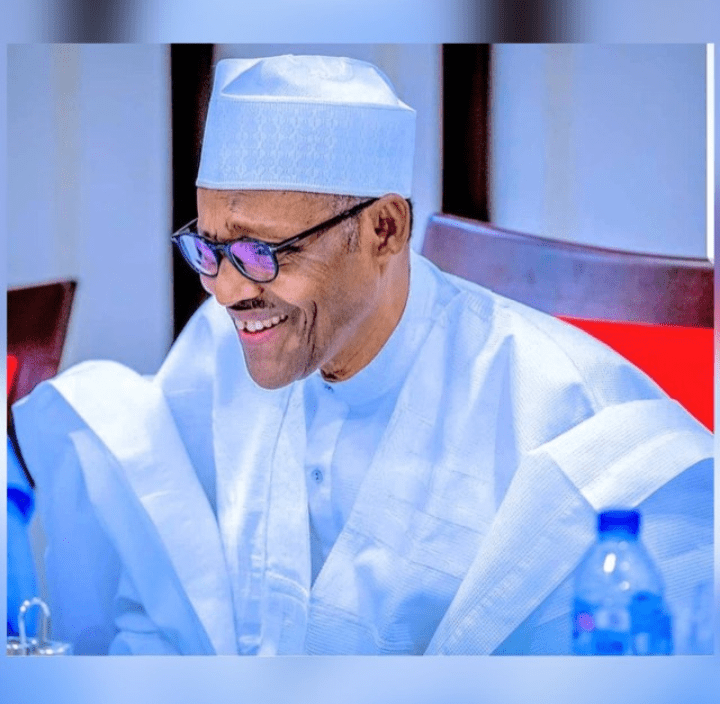
NATIONAL BROADCAST BY HIS EXCELLENCY MUHAMMADU BUHARI, PRESIDENT, FEDERAL REPUBLIC OF NIGERIA ON THE CHALLENGES OF THE CURRENCY SWAP AND STATE OF THE NATION, ON 16th FEBRUARY, 2023
My Dear Compatriots,
I have found it necessary to address you today, on the state of the nation and to render account on the efforts of our administration to sustain and strengthen our economy, enhance the fight against corruption and sustain our gains in the fight against terrorism and insecurity which has, undoubtedly, been impacted by several internal and external factors.
2.Particularly, I am addressing you, as your democratically elected President, to identify with you and express my sympathy, over the difficulties being experienced as we continue the implementation of new monetary policies, aimed at boosting our economy and tightening of the loopholes associated with money laundering.
3.Let me re-assure Nigerians, that strengthening our economy, enhancing security and blockage of leakages associated with illicit financial flows remain top priority of our administration. And I shall remain committed to my oath of protecting and advancing the interest of Nigerians and the nation, at all times.
4.In the last quarter of 2022, I authorised the Central Bank of Nigeria (CBN) to redesign the N200, N500, and N1000 Nigerian banknotes.
5.For a smooth transition, I similarly approved that the redesigned banknotes should circulate concurrently with the old bank notes, till 31 January 2023, before the old notes, cease to be legal tender.
6.In appreciation of the systemic and human difficulties encountered during implementation and in response to the appeal of all citizens, an extension of ten days was authorized till 10th February, 2023 for the completion of the process. All these activities are being carried out within the ambit of the Constitution, the relevant law under the CBN Act 2007 and in line with global best practices.
7.Fellow citizens, while I seek your understanding and patience during this transient phase of implementation, I feel obliged to avail you a few critical points underpinning the policy decision. These include:
a. The need to restore the statutory ability of the CBN to keep a firm control over money in circulation. In 2015 when this administration commenced its first term, Currency-in-Circulation was only N1.4trillion.
b. The proportion of currency outside banks grew from 78%in 2015 to 85% in 2022. As of October 2022, therefore, currency in circulation had risen to N3.23 trillion; out of which only N500 billion was within the Banking System while N2.7 trillion remained permanently outside the system; thereby distorting the financial policy and efficient management of inflation;
c. The huge volume of Bank Notes outside the banking system has proven to be practically unavailable for economic activities and by implication, retard the attainment of potential economic growth;
d. Economic growth projections make it imperative for government to aim at expanding financial inclusion in the country by reducing the number of the unbanked population; and
e. Given the prevailing security situation across the country, which keeps improving, it also becomes compelling for government to deepen its continuing support for security agencies to successfully combat banditry and ransom-taking in Nigeria
8.Notwithstanding the initial setbacks experienced, the evaluation and feedback mechanism set up has revealed that gains have emerged from the policy initiative.
9.I have been reliably informed that since the commencement of this program, about N2.1 trillion out of the banknotes previously held outside the banking system, had been successfully retrieved.
10.This represents about 80% of such funds. In the short to medium and long terms, therefore, it is expected that there would be:
a. A strengthening of our macro economic parameters;
b. Reduction of broad money supply leading to a deceleration of the velocity of money in the economy which should result in less pressures on domestic prices;
c. Lowering of Inflation as a result of the accompanying decline in money supply that will slow the pace of inflation;
d. Collapse of Illegal Economic Activities which would help to stem corruption and acquisition of money through illegal ways;
e. Exchange Rate stability;
f. Availability of Easy Loans and lowering of interest rates; and
g. Greater visibility and transparency of our financial actions translating to efficient enforcement of our anti- money laundering legislations.
11.I am not unaware of the obstacles placed on the path of innocent Nigerians by unscrupulous officials in the banking industry, entrusted with the process of implementation of the new monetary policy. I am deeply pained and sincerely sympathise with you all, over these unintended outcomes.
12.To stem this tide, I have directed the CBN to deploy all legitimate resources and legal means to ensure that our citizens are adequately educated on the policy; enjoy easy access to cash withdrawal through availability of appropriate amount of currency; and ability to make deposits.
13.I have similarly directed that the CBN should intensify collaboration with anti-corruption agencies, so as to ensure that any institution or person(s) found to have impeded or sabotaged the implementation should be made to bear the full weight of the law.
14.During the extended phase of the deadline for currency swap, I listened to invaluable pieces of advice from well meaning citizens and institutions across the nation.
15.I similarly consulted widely with representatives of the State Governors as well as the Council of State. Above all, as an administration that respects the rule of law, I have also noted that the subject matter is before the courts of our land and some pronouncements have been made.
- To further ease the supply pressures particularly to our citizens, I have given approval to the CBN that the old N200 bank notes be released back into circulation and that it should also be allowed to circulate as legal tender with the new N200, N500, and N1000 banknotes for 60 days from February 10, 2023 to April 10 2023 when the old N200 notes ceases to be legal tender.
17.In line with Section 20(3) of the CBN Act 2007, all existing old N1000 and N500 notes remain redeemable at the CBN and designated points.
18.Considering the health of our economy and the legacy we must bequeath to the next administration and future generations of Nigerians, I admonish every citizen to strive harder to make their deposits by taking advantage of the platforms and windows being provided by the CBN.
19.Let me assure Nigerians that our administration will continue to assess the implementation with a view to ensuring that Nigerians are not unnecessarily burdened. In this regard, the CBN shall ensure that new notes become more available and accessible to our citizens through the banks.
20.I wish to once more appeal for your understanding till we overcome this difficult transient phase within the shortest possible time.
21.Fellow citizens, on the 25th of February, 2023 the nation would be electing a new President and National Assembly members. I am aware that this new monetary policy has also contributed immensely to the minimization of the influence of money in politics.
22.This is a positive departure from the past and represents a bold legacy step by this administration, towards laying a strong foundation for free and fair elections.
23.I urge every citizen therefore, to go out to vote for their candidates of choice without fear, because security shall be provided and your vote shall count.
24.I however admonish you to eschew violence and avoid actions capable of disrupting the electoral processes. I wish us all a successful General Elections.
Thank you for listening. God bless the Federal Republic of Nigeria.



 Africa Security Investigation News