From Saving Bagega to Shaping Africa: Hamzat Lawal Marks 13 Years of Impact, Announces New Leadership at CODE

Maryam Aminu

Thirteen years ago, a young activist stood in a small Abuja room with nothing but an idea and an unyielding resolve to save lives. That idea the Save Bagega campaign, which exposed a deadly lead poisoning crisis in Zamfara State not only forced government action but also gave birth to Connected Development (CODE), now Africa’s leading citizen-led accountability organisation.

In a press conference on Monday in Abuja, the activist, Hamzat Lawal, marked CODE’s 13th anniversary with a reflection on a movement that has grown from one man’s cry for justice into a continental force spanning 12 African countries and more than 3,000 communities.

“Transparency is not a privilege; it is a right,” Lawal declared, recalling CODE’s battles against resistance, intimidation, and entrenched corruption. “We have shown that when citizens unite, they can change the course of history.”

Under his leadership, CODE and its flagship initiative, Follow The Money (FTM), have tracked over ₦400 billion in budgeted funds, ensuring schools, hospitals, and water projects reach marginalized communities. The organisation has spearheaded major reforms, from championing the Not Too Young To Run movement to launching the COVID-19 Transparency and Accountability Project (CTAP), which tracked pandemic spending across 12 countries.

L-R Mukhtar Modibbo Halilu, Secretary General – Follow The Money International Ijeoma Oforka, Chief Operating Officer, Hamzat Lawal – Founder, Connected Development (CODE) and Follow The Money, Hyeladzira Mshelia, Head of Office/Acting CEO and Kunle Babs, Global Consultant, Advocacy and Communications

The organisation’s work in the Niger Delta and collaborations on illicit financial flows have also amplified citizen voices on environmental justice and corruption beyond Nigeria’s borders. These efforts have earned CODE global recognition, including the ONE Africa Award, the UN SDG Mobilizer Award, and the Council of Europe Democracy Award.

Announcing a new chapter, Lawal revealed he has been awarded a Chevening Scholarship to pursue a Master’s degree in Governance, Development, and Public Policy at the University of Sussex, UK. As he temporarily steps aside, he named an Acting CEO for CODE and a Secretary General for Follow The Money International to sustain the organisation’s momentum.

Hyeladzira  Mshelia, Head of Office/Acting CEO
Mukhtar Modibbo Halilu Secretary General Follow The Money International

“These appointments represent continuity and renewal. CODE and Follow The Money are bigger than any one person,” Lawal said, assuring that the movement will expand to more countries, adopt new technologies for citizen oversight, and build a generation of young leaders committed to accountability.

“What started as a desperate plea to save Bagega has become a continental movement that saves lives, protects rights, and empowers voices,” he said. “This is the story of CODE, and we are only just beginning.”

Oil Price Recommendation for MTEF/DSP 2026-2028

Maryam Aminu

An Abuja-based economist, Chris Uwadoka, has called on the Federal Government to adopt a more robust, model-based approach to oil price forecasting in preparing the Medium-Term Expenditure Framework (MTEF) and Fiscal Strategy Paper (FSP) for 2026–2028.

Uwadoka, in an analysis of Nigeria’s budget benchmarks and actual oil prices between 2011 and 2024, noted that the country’s projections have consistently underestimated global crude oil prices, exposing the economy to fiscal imbalances.

According to him, Nigeria’s oil price benchmarks were set conservatively in 12 out of 14 years reviewed, with actual prices exceeding projections by an average of $19.7 per barrel, or 34 percent. He added that while this conservatism created buffers, it also led to distortions in revenue planning.

“Overestimation in years of sharp downturns, such as 2015 and 2020, triggered deficits and borrowing, while underestimation in boom years resulted in sudden surpluses that disrupted fiscal discipline,” he explained.

Uwadoka stressed that Nigeria’s reliance on simple historical averaging and consultations with agencies such as NNPC and international bodies was no longer sufficient to manage volatility in the global oil market.

He recommended that the Federal Government adopt a forecast combination approach similar to that used by the European Central Bank, blending futures prices, risk-adjusted futures, Bayesian Vector Autoregression (BVAR), and Dynamic Stochastic General Equilibrium (DSGE) models.

“This method reduces forecast errors by up to 30 percent, minimizes bias, and provides greater stability for medium-term planning,” he said, adding that local factors such as insecurity in the Niger Delta and oil theft should also be integrated into the models.

Using time series data, Uwadoka projected that the Federal Government may set conservative benchmarks of $70–75 per barrel for 2025, $68–73 for 2026, and $65–70 for 2027, aligning with its historical caution. However, he maintained that a model-based system could push forecasts closer to $75 and above, improving revenue accuracy.

Nigeria’s economy relies on crude oil for over 80 percent of export earnings and a large share of government revenue. The oil price benchmark remains a critical factor in the nation’s budgeting process, as enshrined in the Fiscal Responsibility Act.

Farila Sulaiman Ibrahim appointed Acting Country Representative- Nigeria as Kolawole Adeneken relieved

The World Sustainable Development Goals Organization-Nigeria (WSDGsO) is proud to announce the appointment of a Fulani Kano born, Her Excellency Farila Sulaiman Ibrahim as the Acting Country Representative for Nigeria.

The appointment comes following the relief of H.E. Engr. Kolawole Rasheed Adenekan from the position of the Nigeria country representative. The organisation is confident that Her Excellency Farila Ibrahim will bring exemplary leadership, extensive experience, and a fresh perspective that is crucial for advancing the sustainable development goals in Nigeria.

H.E. Farila Sulaiman Ibrahim is a Public Health graduate from the Maryam Abacha American University of Niger, the first English-speaking university in the Republic of Niger.

The distinguished figure in the field of sustainable development, until her appointment was the Deputy Country Representative of the organization with years of experience in various capacities related to environmental governance, social justice, community development while she has been a medical practitioner for a decade.

Throughout her career, she has demonstrated a strong commitment to addressing issues that align with the Sustainable Development Goals (SDGs) set forth by the United Nations (UN). As a passionate advocate for sustainable practices, H.E. Farila has worked with multiple non-governmental organisations, government agencies, and international bodies, holding several key positions that align with her expertise.

The decision to relieve Engr. Kolawole Rasheed Adenekan from his role was not taken lightly. Engr. Adenekan has contributed significantly while he was the country representative at the WSDGsO, steering several crucial projects and initiatives aimed at promoting sustainable practices in Nigeria.

However, it is the organisation’s belief that a change in leadership is necessary at this pivotal moment when Nigeria is facing increasing challenges related to climate change, urban development, and socio-economic inequalities.

H.E. Farila’s appointment heralds a new chapter in addressing these challenges. She is well-equipped to lead the WSDGsO’s initiatives in Nigeria, ensuring that they align effectively with national priorities and global sustainability agendas. Her strategic vision is seen as pivotal in galvanising the efforts of stakeholders across sectors to collaborate on implementing innovative solutions that will benefit the Nigerian populace.

According to the letter of appointment dated 20th of August, 2025, signed by the African Continental Governor, H.E. Alh. Yahya Muhammad Guregi, the organization appreciated Engr. Kolawole Rasheed Adenekan for a wonderful humanitarian activities piloted within the organization in his capacity as the country representative and wished him well in his future endeavors.

“To the Acting Country Representative, H.E Farila Sulaiman Ibrahim, congratulations to you. we are optimistic you will do more than the organization’s expectations. Congratulations once more”.

Korede Komaiya: Medically I Was Informed, I Would Not Live Beyond The Age Of 35

The senior pastor and founder of the Master’s Place International Church, Pastor Korede Komaiya has revealed that medical professionals once told him that he would not live beyond the age of 35.

The 54-year-old disclosed this in an Instagram post on Wednesday while sharing photos ahead of his 55th birthday.

“My gratitude knows no bounds. I saw bends that were like ends until God turned things around. I have escaped death over and over again. I was told medically that I wouldn’t live to be 35 years old, and now I’m just a few days away from 55,” he wrote.

He added that his survival is a testimony of divine mercy.

“I am a product of mercy. God always comes through for me, no matter the battle or my mistakes. No hatred, no betrayal, no siege of the wicked, and no assault of the evil ones has been able to stop my destiny,” he said. The cleric also reflected on his work in ministry.

“Today, God has made me a father to orphans, a father to orphans, a succour to widows, an eye to the blind, hope to the hopeless, and light to those in darkness. Only God deserves all the glory. Help me thank God! Gratitude mode activated,” he added.

Pastor Korede Komaiya founded, The Master’s Place International Church in Warri, Delta State, where he pastors alongside his wife, Esther.

The church was established in 2007.

Youth Ministry, National Defence College Launch Bold Leadership Drive for Nigerian Youth

Maryam Aminu

The Federal Ministry of Youth Development has teamed up with the National Defence College to chart a new course for youth leadership in Nigeria, unveiling a high-level conference aimed at equipping young Nigerians with the values, skills, and resilience needed to lead the nation into the future.

President Bola Ahmed Tinubu, represented by the Minister of Youth Development, Comrade Ayodele Olawande, declared the event open, describing it as “a bold step towards shaping the leadership architecture of our beloved country.” With youths making up over 70% of Nigeria’s population, the President stressed that the future of the nation already rests in their hands.

“The Nigeria we desire tomorrow depends on the leadership we build today,” Tinubu affirmed, while urging young participants to embrace values-based leadership and actively engage in tackling pressing global challenges such as cybersecurity, climate change, food security, and innovation.

First from left is Honourable Minister of Youth Development, Comrade Ayodele Olawande representing President Bola Tinubu, at Middle is Rear Admiral Jo Okosun, NDC Commandant, right is Zamfara State Governor, Mallam Dauda Lawal at the Conference in Abuja

The Minister of Youth Development, through his Chief of Staff, Mallam Abdullahi Mohamed, emphasized that Nigeria’s true wealth lies not in oil or gas but in the “vibrant energy and potential of our youth.”

He described the partnership with the National Defence College as both timely and vital in preparing a generation of disciplined, creative, and courageous leaders.

Speaker of the House of Representatives, Rt. Hon. Tajudeen Abbas, represented by Hon. Mohammed Jalo, reaffirmed parliament’s commitment to youth empowerment, while the Commandant of the National Defence College, Rear Admiral Jo Okosun, underscored that “the strength of a country lies in its youth, and by investing in them, the future of Nigeria is safe in their hands.”

The conference has drawn young leaders, policymakers, and experts from across the country, offering a platform to exchange ideas, build networks, and craft strategies to secure Nigeria’s future through empowered youth leadership.

FRC, NIPSS Applaud MDAs at Fiscal Transparency Training, Push for Stronger Compliance

Maryam Aminu

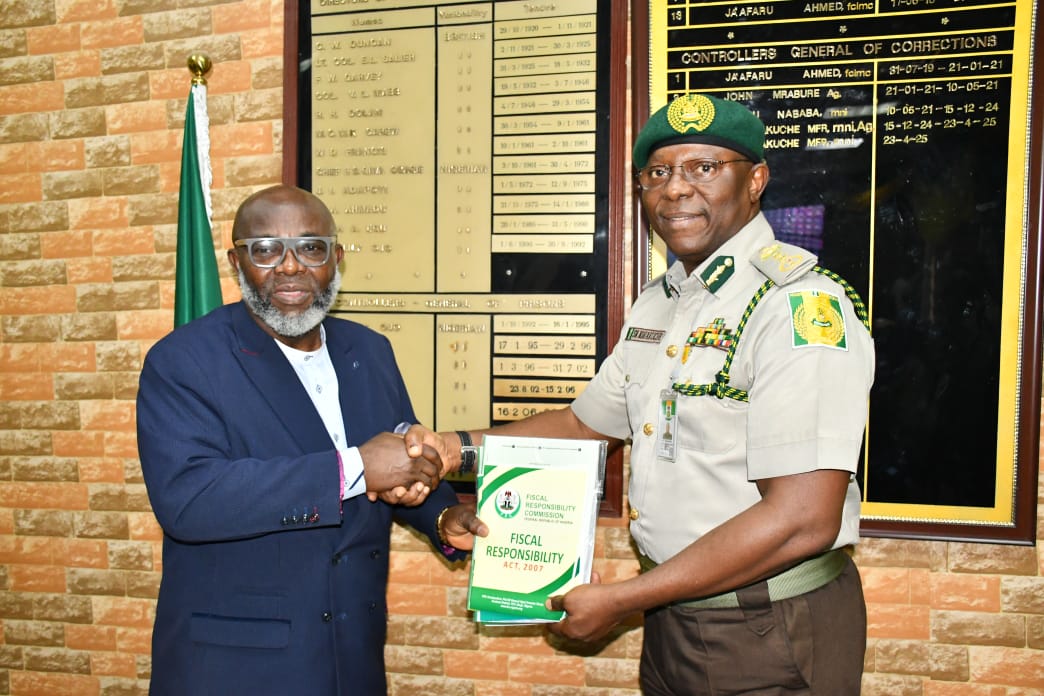
The Fiscal Responsibility Commission (FRC), in partnership with the National Institute for Policy and Strategic Studies (NIPSS), Kuru, and ThinkBig Consulting Limited, has wrapped up a high-level training program aimed at strengthening fiscal discipline, transparency, and accountability among Ministries, Departments, and Agencies (MDAs).

The week-long programme, themed “Strategies for Increased Fiscal Efficiency, Enhanced Government Revenue and Plugging Leakages in Nigerian Financial System,” brought together participants from across MDAs to explore reforms for improved financial management.

Speaking at the closing session, FRC Chairman, Victor Muruako, Esq., represented by his Special Adviser, Dr. Chris Uwadoka, commended the quality of engagement during the training, describing it as “high-impact and insightful.”

He urged MDAs to begin early preparations for annual audited financial statements and adhere strictly to the Commission’s remittance templates for Operating Surplus, stressing the need to entrench a culture of financial prudence.

Dr. Solomon Titus Gushibet, Senior Fellow and Operating Officer at the Centre for Financial Economics, NIPSS, who coordinated the training, said participants displayed exemplary commitment.

He confirmed that all attendees met the requirements for certification, noting that the nine thematic areas covered will aid reforms in public finance management.

Delivering the closing remarks on behalf of the NIPSS Director-General, Prof. Ayo Omotayo, Prof. Jane Omotayo Aane underscored the importance of strengthening public procurement processes. She decried cases of MDAs failing to meet contractual obligations, which she described as “an abuse of office,” and called on the FRC to step up oversight in procurement matters.

She assured participants of NIPSS’s continued partnership in building institutional reforms while urging them to implement the knowledge gained.

The training, observers noted, represents a critical step in advancing Nigeria’s fiscal responsibility framework, particularly at a time when the country is grappling with economic challenges.

Press release: CEDF Launches Phase 2 Loans for Nigerian Creatives And Entrepreneurs, See how to apply

The Federal Ministry of Art, Culture, Tourism, and the Creative Economy has officially launched Phase 2 of the Creative Economy Development Fund (CEDF).
This is a bold national initiative designed to accelerate Nigeria’s creative and cultural industries by providing access to finance, skills, and market opportunities.

Building on the success of Phase 1, which saw thousands of Nigerian creatives and entrepreneurs apply for support, Phase 2 expands both the scope and scale of the Fund. This phase is specifically targeted at businesses and enterprises seeking to unlock growth, scale innovation, and create sustainable jobs in Nigeria’s creative economy.

The CEDF sits at the heart of Nigeria’s Renewed Hope Agenda, providing the financial backbone for transforming the country’s creative assets into engines of inclusive economic growth. Phase 2 introduces a streamlined application process through the official portal . The platform now features an intuitive and simplified new interface, ensuring that applicants can easily navigate funding opportunities, submit proposals, and track their application status without unnecessary hurdles. Beyond funding access, the portal provides real-time updates, resource materials, and a transparent process to strengthen trust and accountability.

This Phase 2 Call prioritizes proposals from businesses seeking funding of up to $100,000. The Fund is open across multiple creative sub-sectors, reflecting the diversity of Nigeria’s creative economy, including Film, Television, and Animation, Gaming, XR, and Interactive Media, Music and Entertainment, Literature and Publishing, Visual Arts and Crafts, Fashion and Design, Culinary Arts and Gastronomy, Tourism, Heritage, and Cultural Experiences, ensuring that no subsector is left behind in Nigeria’s creative renaissance.

Phase 2 is designed to fuel innovation, create jobs, strengthen SMEs and MSMEs, drive exports, and institutionalize growth through digital tracking and reporting tools. The Fund aims to support businesses that leverage creativity and technology to deliver new cultural products and services, expand the employment base of the creative economy, provide financial lifelines to entrepreneurs, position Nigerian creative content and cultural goods as competitive exports, and embed mechanisms for monitoring, accountability, and sustainability.

The launch of Phase 2 of the CEDF marks a significant milestone in Nigeria’s creative economy development, and the Ministry encourages all eligible businesses and enterprises to apply for funding and support.
Apply through the official portal http://www.cedf.gov.ng.

NNEKA IKEM ANIBEZE, Ph.D.
SA MEDIA & PUBLICITY
FMACCE/PS/ 119
24-08-2025

RMAFC Investment Committee Engages NBET on Power Sector Debt, Revenue Allocation

Maryam Aminu

The Investment Committee of the Revenue Mobilisation Allocation and Fiscal Commission (RMAFC) has opened fresh talks with the Nigerian Bulk Electricity Trading PLC (NBET) as part of efforts to strengthen transparency and boost revenue management in Nigeria’s power sector.

Led by Hon. Ekene Enefe, Federal Commissioner representing Anambra State, the committee paid a courtesy visit to NBET headquarters in Abuja, underscoring its constitutional mandate to demand and obtain critical information from both government and private sector operators.

Hon. Enefe noted that the engagement was triggered by concerns raised during a recent session with the Niger Delta Power Holding Company (NDPHC), where NBET’s indebtedness was flagged.

“Since government intervention in the power sector is ongoing, RMAFC is reviewing the revenue allocation formula to guarantee adequate funding of critical projects, particularly infrastructure,” he explained.

Officials from RMAFC and Nigerian Bulk Electricity Trading PLC NBET, during the courtesy visit.

In response, NBET’s Managing Director/CEO, Mr. Johnson Akinnawo, described NBET as a “special trader” in Nigeria’s Electricity Supply Industry (NESI). He emphasized that NBET acts as a stabilizer in the sector purchasing power from GenCos and selling to DisCos while ensuring investor confidence through structured contracts.

On the debt issue, Akinnawo clarified that debt recovery is shared among agencies, with the Nigerian Electricity Regulatory Commission (NERC) and Central Bank of Nigeria (CBN) playing key monitoring roles.

He, however, assured RMAFC that NBET would provide a detailed list of indebted GenCos and facilitate broader stakeholder discussions to address the challenge.

L-R: Hon. Commissioner representing Yobe, Hon. Madu Aji Juluri; Managing Director, CEO. NBET Mr. Johnson Akinnawo; Chairman Investment Committee and Commissioner representing Anambra, Hon. Ekene Enefe and the Secretary Investment Committee, Mr. Peter Iyambri, during the visit to the NBET office.

FG, SEC Partner to Open Capital Market Opportunities for Nigerian Youth

Maryam Aminu

The Federal Government has taken a bold step to expand opportunities for Nigerian youth by signing a landmark partnership with the Securities and Exchange Commission (SEC) to promote financial innovation and inclusion.

At the MoU signing ceremony on Thursday, August 21, 2025, Minister of Youth Development, Comrade Ayodele Olawande, said the initiative is aimed at breaking barriers that have long excluded young people from the nation’s capital market.

“For too long, the capital market has been seen as a space reserved for the wealthy. Today, we are saying clearly that Nigerian youth deserve access too,” Olawande declared. “We want to empower them not just to seek jobs, but to create them to become entrepreneurs, investors, and employers of labour.”

Central to the plan is the Nigerian Youth Academy (NIYA), a platform that will deliver financial education and practical skills to young people across the country, regardless of background or location.

The Minister emphasized that government-private sector collaboration will be key to ensuring no youth is left behind.

“Our goal is to raise a generation of financially savvy, empowered young Nigerians who will shape the future prosperity of this nation,” he said.

Pictorial Story: Right to Left – The Honourable Minister, Federal Ministry of Youth Development, Comrade Ayodele Olawande, alongside the Permanent Secretary, Olubunmi Olusanya, during the MoU signing event.

SEC Director-General, Dr. Emomotimi Agama, praised the initiative, commending Olawande’s youthful and action-driven approach to governance.

He pledged SEC’s full support in providing young Nigerians with access to funding, investment opportunities, and financial literacy.

“This partnership marks the beginning of a meaningful legacy,” Dr. Agama said. “Together, we will ensure sustainable socio-economic impact and long-term national prosperity.”

The collaboration between the Ministry of Youth Development and SEC is expected to unlock new pathways for entrepreneurship, innovation, and financial independence among Nigeria’s youth population.

L–R: The Honourable Minister of Youth Development, Comrade Ayodele Olawande, and the Director-General of the Securities and Exchange Commission (SEC), Dr. Emomotimi Agama, displaying the signed Memorandum of Understanding (MoU). The partnership aims to empower Nigerian youth with access to financial education, investment opportunities, and the capital market as part of broader initiatives to promote entrepreneurship and sustainable development.

RMAFC Kicks Off Strategic Retreat in Kano to Review Pay Packages for Political, Public, Judicial Office Holders……

Maryam Aminu

The Revenue Mobilisation Allocation and Fiscal Commission (RMAFC) has begun a high-level retreat in Kano to harmonise reports and review remuneration packages for political, public, and judicial office holders across Nigeria.

Declaring the retreat open, Chairman of the Remuneration and Monetisation Committee, Hon. Mohammed Kabeer Usman also Federal Commissioner representing Gombe State stressed that the exercise is crucial to strengthening the nation’s governance framework.

He reminded participants that the 1999 Constitution empowers the Commission to determine appropriate remuneration for office holders, noting that the review process would reflect current economic realities while ensuring sustainability and fairness.

“The Commission has carefully considered memoranda from stakeholders, public hearings, ministerial submissions, and international best practices. This review is not just about figures but also about sustainability and affordability,” Usman said.

He disclosed that the Committee was mandated to harmonise its earlier report and addendum into a single comprehensive document to guide implementation.

A cross section of RMAFC Commissioners at the Retreat in Kano

The retreat, he added, must produce outcomes that are balanced and beneficial to the country, urging members to leverage their experience for the task ahead.

In attendance were RMAFC Federal Commissioners, including Hon. Adamu Fanda (Kano), Hon. Henry Nduka Awuregu, Hon. Aruviere Egharhevwa (Delta), Hon. Hassan Usman Mahmud (Kaduna), Hon. Hauwa Umar Aliyu (Jigawa), Prof. Steve Davies Ugbah (Benue), Hon. Abdulazeez Idris King (Kogi), Hon. Aliyu A. Abdulkadir (Nassarawa), and Hon. Nathaniel Adojutelegan (Ondo).

Also present was the Committee Secretary and Director of Fiscal Efficiency, Dr. Tanimu Adamu Aliyu, alongside other supporting staff.

The retreat is expected to produce a sustainable framework that will guide future remuneration for political, public, and judicial office holders nationwide.