Championing Change: Zeenat Adamu Joins The People’s Project to Drive Financial Strategy

Maryam Aminu

In a move that reinforces its commitment to transparency, growth, and youth inclusion, The People’s Project for Social and Climate Justice (TPP) has welcomed Zeenat Adamu as its new Finance Officer.

With more than seven years of experience in banking, fintech, nonprofit, and service sectors, Zeenat brings proven expertise in financial management and strategic operations. She has successfully managed budgets exceeding ₦100 million, mobilized over ₦10 million in project funding, and streamlined processes that improved efficiency by 97 percent in her previous role.

A graduate of the University of Abuja, Zeenat holds a Master’s degree in International Relations and Diplomacy and a Bachelor’s degree in Political Science. She is also a certified Project Management Professional (PMP) known for her skills in budgeting, policy implementation, and resource mobilization.

Her passion for youth development is evident through her leadership in organizing leadership and digital skills boot camps for girls aged 14–24 across Northern and Middle Belt Nigeria a vision that strongly aligns with TPP’s flagship initiative, Boys Champions.

Noel Ifeanyi Alumona, Founder and CEO of TPP, expressed his excitement about Zeenat’s appointment, saying
“Zeenat’s lived experience deeply resonates with the heart of our mission, especially the work we do at Boys Champions. Her understanding of the challenges faced by young people and her ability to translate that into systems of accountability and growth is inspiring. We are confident that her expertise will elevate our operations as we scale our impact.”

Reflecting on her new role, Zeenat said

“I am deeply inspired by the work of The People’s Project, especially its focus on empowering youth and marginalized communities. Joining this team is more than just a career step; it’s a calling to be part of a movement that is transforming lives and shaping a just future.”

As Finance Officer, Zeenat will oversee TPP’s financial strategy, ensuring that resources are effectively managed to support and expand the organization’s programs. Her leadership will be instrumental as TPP continues to champion human rights, social and climate justice, and inclusive growth across Africa and beyond.

The People’s Project (TPP) is a nonprofit organization registered in Nigeria and the United States. Its mission is to champion human rights, fight for social and climate justice, and strengthen democracy by ensuring that every community has a voice. Through initiatives such as Boys Champions, HOPE, Learning Without Limits, and the DearMen Podcast, TPP empowers marginalized groups and nurtures young leaders to build a fairer and more inclusive world.

WHO Welcomes New Country Representative to Nigeria, Presents Credentials to Foreign Affairs Ministry

Emmanuel Daudu

The World Health Organization (WHO) has officially welcomed Dr. Pavel Ursu as its new Country Representative to Nigeria, marking a new chapter in the organization’s partnership with the Federal Government. Dr. Ursu presented his credentials to the Minister of Foreign Affairs, Ambassador Yusuf Tuggar, in Abuja on Monday, signaling the start of what both parties described as a strengthened era of collaboration in public health and development.

Welcoming the new representative, Ambassador Tuggar commended WHO’s continued support for Nigeria’s health priorities, noting that the COVID-19 pandemic had exposed critical gaps in the nation’s health systems and underscored the urgency for local manufacturing of medical products.

“Health is not just a sector, it is the foundation for prosperity. A healthy population is empowered to seek opportunities and rise out of poverty,” Ambassador Tuggar said.

He emphasized that Nigeria’s focus on Universal Health Coverage (UHC) and health diplomacy aligns with the Ministry’s twin mandate of national development and international engagement, adding that “new realism” now defines global partnerships in a post-pandemic world one anchored on equity and resilience.

In his address, Dr. Ursu conveyed greetings from WHO Director-General, Dr. Tedros Adhanom Ghebreyesus, and the Regional Director for Africa, Dr. Mohamed Yakub Janabi.

He commended Nigeria’s leadership in global health, citing achievements such as the certification of wild poliovirus eradication and the recent immunization campaign that reached over 106 million children.

Highlighting Nigeria as home to WHO’s largest country office in Africa, Dr. Ursu reaffirmed the organization’s commitment to supporting the country’s vision for improved health outcomes. He noted that WHO will work with the Nigerian government to expand fiscal space for health and promote efficient, results-driven investments. He added that the organization would intensify efforts to ensure quality and affordable primary healthcare across all states and local government areas, while strengthening the country’s resilience to epidemics, climate shocks, and humanitarian crises.

Dr. Ursu also emphasized the importance of harnessing data and digital transformation to enable evidence-based health decisions, alongside advancing local manufacturing and innovation to position Nigeria as a regional hub for vaccine and medical technology production. He further highlighted the need to deepen health diplomacy and multisectoral engagement to amplify Nigeria’s role in global health platforms and regional partnerships.

“Nigeria’s strength lies in its people, innovation, and resolve to reform,” Dr. Ursu noted. “WHO will ensure that our partnership translates into measurable improvements in people’s lives.

Dr. Ursu brings over two decades of distinguished experience with WHO, spanning Europe, Central Asia, and the Middle East. Prior to his current appointment, he served as Director of the Department of Delivery for Impact at WHO Headquarters in Geneva, where he led key initiatives to strengthen global health systems.

His past roles include serving as WHO Representative in Tajikistan (2010–2015) and in Türkiye (2015–2020), where he received the WHO Director-General’s Award for leadership during the Syrian refugee crisis. He also served as Acting WHO Representative in Azerbaijan and Kazakhstan, and as Head of the WHO Country Office in Moldova.

A physician by training, Dr. Ursu holds a Master of Science and Postgraduate Diploma in Public Health from the London School of Hygiene and Tropical Medicine, a Master’s in Health Services Management, and a Diploma in High Impact Leadership from the University of Cambridge.

Dr. Ursu’s appointment comes as Nigeria intensifies efforts to strengthen primary healthcare, combat infectious and noncommunicable diseases, and boost health emergency preparedness.

“I am honoured to serve as WHO Representative to Nigeria and look forward to working closely with national authorities, development partners, and communities to advance health for all,” Dr. Ursu stated.

The World Health Organization reaffirmed its commitment to supporting Nigeria in achieving Universal Health Coverage and the health-related Sustainable Development Goals (SDGs), as both parties chart a path toward a healthier and more equitable future.

Stakeholders Condemn Gymnastics Federation President’s Blackmail Tactics, Commend NSC DG for Upholding Integrity

Stakeholders in the Nigerian gymnastics community have condemned the recent media publication credited to Kelvin Erhunmwunse, President of the Gymnastics Federation of Nigeria (GFN), describing his comments against the Director-General of the National Sports Commission (NSC), Hon. Bukola Olopade, as a deliberate act of blackmail aimed at diverting attention from his own illegitimate election and leadership failures.

According to credible sources within the sport, Mr. Kelvin’s recent outburst is a reactionary attempt to discredit the Sports Commission after its refusal to endorse his controversial third-term election, which has been widely condemned by stakeholders as a sham, riddled with malpractice, exclusion, and gender bias.

The flawed election, conducted under questionable circumstances, disenfranchised key constituencies including the National Association of Women in Sports (NAWIS), the Nigeria Association for Physical and Health Education, Recreation, Sports and Dance (NAPHER-SD), and the Paramilitary constituency, thereby violating the democratic structure of the Federation.

Stakeholders lamented that the GFN President – whose administration has been marked by poor inclusivity, gender discrimination, and stagnation in athlete development, now want to use media blackmail to malign the NSC DG simply because the Commission refused to validate his unlawful process.

One of the Key stakeholders in the Nigeria Gymnastics family and foremost Sports administrator Omowunmi Olalere said, “It is both ironic and hypocritical for a man who conducted a kangaroo election that silenced women and constitutional representatives to accuse the Sports Commission of interference,”.

“This is a calculated blackmail meant to pressure the DG into legitimizing an election that has already lost credibility.”

The stakeholders further commended Hon. Bukola Olopade, describing him as a reform-driven administrator committed to transparency, equity, and global best practices in sports governance.

They stated that the DG’s insistence on credible, inclusive, and accountable elections across all federations reflects President Bola Ahmed Tinubu’s Renewed Hope Agenda to restore integrity and professionalism to Nigeria’s sports sector.

The stakeholders however called on all meaning Sports loving Nigerians including the Nigeria Olympic Committee (NOC), and the International Gymnastics Community to stand by the NSC as it works to restore due process and fairness in Nigerian sports.

They insisted that Gymnastics in Nigeria can only thrive under transparent leadership and credible governance not under blackmail and manipulation and the DG’s stand for integrity must be Commended and not attacked.

RMAFC Moves to Redefine Nigeria’s Revenue Sharing System, Strengthen Fiscal Federalism

Maryam Aminu

A new dawn may be on the horizon for Nigeria’s fiscal framework as the Revenue Mobilisation Allocation and Fiscal Commission (RMAFC) intensifies efforts to deliver a modern, equitable, and data-driven revenue allocation formula that reflects the nation’s current economic and governance realities.

Speaking during a high-level panel discussion themed “Recalibrating Nigeria’s Revenue Allocation Formula,” held at the Transcorp Hilton Hotel, Abuja, the Chairman of RMAFC, Dr. Mohammed Bello Shehu, OFR, said the review is long overdue, noting that the existing formula approved in 1992 no longer captures the country’s fiscal responsibilities, population dynamics, or developmental needs.

Dr. Shehu emphasised that recent amendments to the RMAFC Act have empowered the Commission to engage directly with private sector entities, including oil companies, to verify and recover revenues due to the Federation.

He stressed that transparency and accountability are critical to achieving sustainable national development.

“Our goal is to design a formula that empowers subnational governments to meet their constitutional obligations effectively while maintaining national cohesion and macroeconomic stability,” he said. “The choices we make here will shape how governments deliver education, healthcare, and infrastructure to our people.”

Also speaking, Senator Yahaya Abdullahi, CON, Chairman of the Senate Committee on National Planning and Economic Affairs, underscored the importance of political will in driving fiscal reform, saying that “no matter how brilliant the ideas are, progress will remain elusive without political consensus and a shared national vision.”

Representing the Chairman of the Nigeria Governors’ Forum, Governor Abdulrahman Abdulrazaq of Kwara State, Dr. Abdulateef Shittu commended the Commission for creating a neutral platform for dialogue between the federal and subnational governments, pledging the Forum’s full support for a “just and workable formula.”

The Minister of Budget and Economic Planning, Senator Abubakar Atiku Bagudu, CON, described the initiative as a vital step toward national stability, stressing that “equity must begin with revenue mobilisation, not merely allocation.”

Similarly, Hajiya Hadiza Bala Usman, Special Adviser to the President on Policy Coordination, urged for a “courageous and conclusive review” that aligns fiscal reforms with Nigeria’s development priorities.

The panel session, moderated by veteran broadcaster Eugenia Abu, featured contributions from renowned experts, including Prof. Auwalu Yadudu, Dr. Iyobosa Uwugiaren, Prof. Nazifi Darma, and Prof. Muhammad Muttaka Usman. The discussion examined constitutional, legal, and economic dimensions of revenue allocation, with panelists advocating for a formula that encourages fiscal discipline, innovation, and accountability at the subnational level.

In his closing remarks, Alhaji Kabir Mashi, OON, Chairman of the Revenue Allocation Formula Committee, expressed gratitude to participants and assured that all recommendations will be integrated into a fair, balanced, and sustainable revenue-sharing model for Nigeria.

WHO Calls for Greater Investment in Adolescent Health as Nigeria Marks International Adolescent Health Week

Emmanuel Daudu

With a call for renewed commitment to youth well-being, the World Health Organization (WHO) has urged Nigeria to scale up investment and coordinated action in adolescent health, as the nation joins the global community to commemorate the 2025 International Adolescent Health Week (IAHW).

Delivering a goodwill message on behalf of the WHO Country Representative to Nigeria, Dr. Pavel Ursu, Dr. Mary Brantuo commended the Federal Government, the Federal Ministry of Health, and youth-led organizations for their dedication to improving the health and development of young Nigerians.

“Your commitment to improving adolescent health and well-being in Nigeria is truly commendable,” Dr. Brantuo stated, speaking at the event held on the 6th Floor of the Ministerial Conference Room, Federal Ministry of Health, Abuja.

Dr. Brantuo highlighted that adolescents aged 10–19 constitute about 30 million of Nigeria’s population, facing multifaceted health challenges including mental health issues, limited physical activity, and inadequate access to tailored healthcare services.

She revealed that mental health disorders affect 10–20% of adolescents globally, with most conditions beginning between ages 11 and 18. However, in Nigeria, low literacy, stigma, and poor service availability exacerbate the problem.

“Depression and psychosis remain among the most common mental health conditions affecting Nigerian youth,” she noted, attributing the rising trend to factors such as substance use, poverty, unemployment, and weakened family support systems.

The WHO representative emphasized the urgent need for integrated, people-centered adolescent health services covering promotive, preventive, curative, and rehabilitative care.

She called for cross-sectoral collaboration involving schools, communities, parents, and policymakers to create safe spaces for young people and promote both physical and mental resilience.

“By promoting resilience, we nurture a generation that is not just surviving, but flourishing,” she said.

Dr. Brantuo reaffirmed WHO’s commitment to supporting Nigeria under the Health Sector Renewal Investment Programme, and in implementing the WHO Regional Framework for Mental Health, which targets 80% of countries having strong mental health and psychosocial support systems by 2030.

“Together, we can ensure that physical and mental health support is available when it is most needed offering hope and healing to all adolescents and young people,” she concluded.

The International Adolescent Health Week is a global initiative that spotlights the health and development needs of young people, with this year’s commemoration aligning with World Mental Health Day October 10 a reminder of the urgent need to invest in the mental and physical well-being of Nigeria’s next generaton

Int’l Conference On ICT Insurance Systems: UNESCO Laureate Prof Sir Bashiru Aremu Hails Dr. Owolabi On Global Contributions

…..As VC CUICI, USA Expresses Joy Over Dr. Abass Owolabi’s Exploits in the Global Insurance Sector

….Aremu Commends Global Participants, Mewar International University, Abuja, On Support

Dr. Abass Owolabi, a renowned Insurance Broker and Managing Director/CEO, Hansworth W.A Insurance Brokers Limited, Abuja, Nigeria, has been commended by UNESCO Laureate, Prof. Sir Bashiru Aremu, on successful lectures and his excellent paper presentation at an international conference on ICT utilization in the modern world of Insurance Systems and the 21st Century e-commerce.

The Group of Journalists’ learnt this from the Chairman Board of Trustees, Africa Information Technology Consultancy Services (AITC), Prof Sir Bashiru Aremu today being Sunday, October 12, 2025 in a Telephone conversation with our reporter has commended the success of Dr Abass’s lectures on ICT’s roles in Insurance Systems while thanking global participants, the leadership of Mewar International University, Abuja, Nigeria on support.

Dr. Owolabi Abass Aderemi is a PhD holder and Managing Director/CEO, Hansworth (W.A) Insurance Brokers Ltd, Abuja, Nigeria. Dr. Abass Owolabi is a PhD holder whose Research thesis was on: “Nigerian Roles in the Development of International Organizations in Africa: ECOWAS as a Case Study” at Crown University Int’l Chartered Inc. in the USA. He is also a Fellow of the Nigerian Council of Registered Insurance Brokers (FCIB).

UNESCO Laureate who spoke to our reporter had commended Dr. Abass Owolabi, Ph.D, M.Phil, MBA, FIIN, FCIB on his recent paper presentation earlier this month of October. That is, Abass’s successful lectures on Insurance and ICT as carried out on an internet platform via Zoom. He also commended other Speakers, dignitaries, and participants who made the international conference colourful, as sponsored by AITC.

Speaking to our reporter, Aremu had stated that the conference as anchored on the theme: “The Importance of Information and Communication Technology (ICT) in the Modern World of Insurance,” highlighted today’s rapidly changing business environment, Information and Communication Technology (ICT) that has become the backbone of nearly all industries, including insurance.

Prof Aremu, who quoted Dr Abass Owolabi he stated: “Traditionally, the insurance sector was paper-driven, slow, and heavily dependent on face-to-face interactions. However, with the adoption of ICT, the industry has experienced a revolution in efficiency, accessibility, service delivery, and customer satisfaction. ICT is no longer just a support tool but a central driver of innovation, competitiveness, and growth in the modern insurance landscape”.

“ICT’s relevance in the modern world of Insurance systems is enormous. These included, amongst others: One, Enhancing Customer Service:- ICT has transformed how insurance companies interact with clients. Online platforms, mobile apps, chatbots, and call centers powered by ICT allow insurers to provide round-the-clock services. Policyholders can easily access policy details, make claims, and receive updates without physically visiting offices. This convenience enhances customer experience and builds long-term trust.

“Two, Efficiency in the integration of ICT enables insurance companies to streamline administrative tasks such as underwriting, policy issuance, claims processing, and record keeping. Automation reduces paperwork, eliminates delays, and minimizes human error. For example, claims that once took weeks can now be settled within days—or even instantly—with the help of artificial intelligence and digital databases.

“Three, Data Management and Analytics: Insurance thrives on information. ICT provides insurers with tools to collect, store, and analyze large volumes of data. Advanced analytics and big data enable companies to assess risks more accurately, design tailored insurance products, and detect fraudulent activities. Predictive modeling, powered by ICT, helps in pricing policies fairly and managing risks effectively”.

Four, Product Innovation and Customization:-Through ICT, insurers can develop innovative products that meet the diverse needs of customers. Usage-based insurance, such as telematics in motor insurance, is made possible by ICT tools. Customers now enjoy customized premiums based on their behavior, such as safe driving or healthy lifestyles, which encourages responsible habits while improving risk management for insurers”.

“Five, Global Connectivity and Market Expansion:-ICT enables insurance companies to operate beyond geographical boundaries. Online platforms and digital marketing allow insurers to reach new customers globally. For instance, cross-border insurance, international reinsurance, and online comparison sites are all facilitated by ICT, thereby expanding the market scope of insurers”.

“Six, Cost Reduction: By automating processes and reducing the reliance on physical infrastructure, ICT helps insurance companies cut operational costs. Digital platforms replace physical branches, while online marketing reduces the cost of traditional advertising. These savings allow insurers to offer competitive premiums to customers”.

“Seven, Fraud Detection and Risk Management: Insurance fraud is a major challenge in the industry. ICT tools such as artificial intelligence, biometrics, and blockchain enhance fraud detection by tracking suspicious activities, verifying identities, and ensuring secure transactions. This protects both the insurer and policyholders”.

“Eighth, Regulatory Compliance: Insurance companies must adhere to strict regulations. ICT systems help in monitoring compliance by keeping accurate digital records, generating reports, and ensuring that companies meet industry standards. Automated systems also reduce the risk of penalties and reputational damage”.

VC CUICI, USA, who commended the Nigerian-born Insurance Broker, expert, researcher, Dr Abass Owolabi to had helped in improving efficiency and customer satisfaction in the industry. He said: “Dr Abas Owolabi has helped towards driving innovation and reducing fraud in the insurance sector”. Aremu noted further that ICT has become an indispensable tool in the insurance sector. As technology continues to evolve, its role in shaping the future of insurance will only grow stronger.

In the words of UNESCO Laureate, Prof Sir Bashiru Aremu: “I sincerely commend my brother and friend, Dr. Abass Owolabi, on this recent Paper presentation on ‘Insurance Systems in the Modern World of ICT’. Dr. Abass Owolabi has contributed to global Insurance sector development as a world-class Insurance expert, Researcher, and educator. The importance of ICT in the modern world of Insurance cannot be overstated. It has revolutionized the way insurance companies operate, interact with customers, and manage risks”.

Imaan Sulaiman-Ibrahim Calls for Unity Through Music at CAN All-Female Choir Conference, Receives ‘Mother Teresa’ Praise

Maryam Aminu

The Minister of Women Affairs, Hon. (Dr.) Imaan Sulaiman-Ibrahim, has called on Nigerians to embrace music as a unifying force that transcends religion, culture, and social boundaries.

She made the call in Abuja on today while attending the First All-Female Choir Conference organised by the Christian Association of Nigeria (CAN), where she served as the Special Guest of Honour.

Dr. Imaan, who was warmly received by the Christian community despite being of a different faith, described the event as a powerful symbol of interfaith unity and mutual respect.

In her remarks, the Minister emphasised the importance of music as a bridge for peace and understanding, noting that it remains one of humanity’s greatest instruments for fostering unity.

“Music has no boundary and no religion. It is one of the strongest instruments that bridge differences and unite hearts,” she said.

She commended CAN for hosting the event and urged the association to sustain the initiative, describing music as “a measurable instrument for building unity and healing divisions.”

Dr. Imaan also spoke on the need for women empowerment, family harmony, and social cohesion, urging women to see themselves as partners in progress with their husbands rather than competitors.

“Women are natural builders. When we work together with our husbands and not against them, we strengthen the foundation of our families and, by extension, our nation,” she added.

Impressed by her humility and message of peace, CAN described the Minister as “the Mother Teresa of our time,” in recognition of her compassion and unwavering commitment to the welfare of women and vulnerable groups.

The conference featured soul-lifting choral renditions and prayers, commended CAN for creating a platform that promotes inclusivity and

The event concluded with renewed calls for women across the country to be champions of peace, unity, and moral strength in their homes and communities.

GAPU Commends Minister Imaan Sulaiman-Ibrahim for Empowering Over 1,200 Women Nationwide

Maryam Aminu

The Global Alliance for Peace and Unity (GAPU) has showered glowing commendations on the Honourable Minister of Women Affairs , Dr. Imaan Sulaiman-Ibrahim, for her remarkable empowerment initiative that has directly benefited over 1,200 women across the country.

In a statement issued by its President, Honorable Solomon Pevkyaa, GAPU described Dr. Sulaiman-Ibrahim as “a beacon of hope and an inspiring example of purposeful leadership.”

He lauded her tireless commitment to advancing gender equity, social inclusion, and national cohesion through impactful policies and people-centred programmes.

According to Comrade Pevkyaa, Dr. Imaan Sulaiman-Ibrahim’s consistent focus on empowering women reflects her deep understanding that sustainable peace and national development begin with giving women the tools to thrive. He noted that her leadership style embodies compassion, vision, and strategic foresight qualities that have made her a role model to countless young Nigerians.

“Dr. Imaan Sulaiman-Ibrahim has continued to distinguish herself as one of the most visionary leaders of our time,” Pevkyaa stated. “Her empowerment of over 1,200 women is not just a statistic; it is a legacy of transformation, hope, and resilience. She has proven that leadership, when driven by empathy and purpose, can change the narrative of communities and uplift generations.”

He further emphasized that the Minister’s drive to create opportunities for women aligns with GAPU’s mission of fostering peace and unity through inclusive growth. The organization, he said, stands firmly behind her efforts and is ready to partner with her ministry in promoting sustainable initiatives that strengthen families and communities across Nigeria.

GAPU also called on other government officials and development actors to emulate Dr. Sulaiman-Ibrahim’s exemplary model of leadership one anchored on service, accountability, and empowerment.

“Her name has become synonymous with progress, compassion, and impact,” Pevkyaa added.

“Nigeria needs more leaders like Dr. Imaan Sulaiman-Ibrahim leaders who not only speak of change but actively create it.”

FRC Chairman Seeks Stronger Synergy with Correctional Service to Deepen Fiscal Discipline and Institutional Efficiency

Maryam Aminu

The Executive Chairman of the Fiscal Responsibility Commission (FRC), Barrister Victor Muruako, has called for deeper institutional collaboration among public agencies to enhance transparency, accountability, and prudent financial management in Nigeria. He made this call during a courtesy visit to the Comptroller-General of the Nigerian Correctional Service (NCS), Comptroller Sylvester Ndidi Nwakuche, at the Service Headquarters in Abuja on Thursday.

In a demonstration of the Commission’s commitment to fostering inter-agency cooperation and promoting fiscal prudence, Barr. Muruako said the visit was aimed at strengthening institutional systems that support financial discipline and efficient resource utilization across the public sector.

“The purpose of this visit is not merely about oversight,” Muruako stated. “It is about building institutional systems that strengthen financial discipline, prevent waste, enhance transparency, and improve the quality of service delivery to Nigerians. The Fiscal Responsibility Commission remains committed to ensuring that every naira of public funds is judiciously applied for the benefit of citizens.”

He commended the NCS leadership for ongoing reforms that enhance correctional administration and rehabilitation, describing them as vital to national development. Muruako also underscored the role of the Correctional Service in improving non-oil revenue through its enterprises and vocational initiatives, which contribute to economic productivity and national stability.

Responding, Comptroller-General Nwakuche expressed appreciation for the FRC’s engagement, acknowledging the importance of fiscal responsibility in public administration. He highlighted ongoing reforms within the Service, including measures to strengthen internal revenue systems and improve operational efficiency despite fiscal constraints.

“We recognize the importance of fiscal responsibility in achieving our mandate,” Nwakuche said. “The Nigerian Correctional Service is determined to uphold the principles of accountability and efficient resource utilization in line with the objectives championed by the Fiscal Responsibility Commission.”

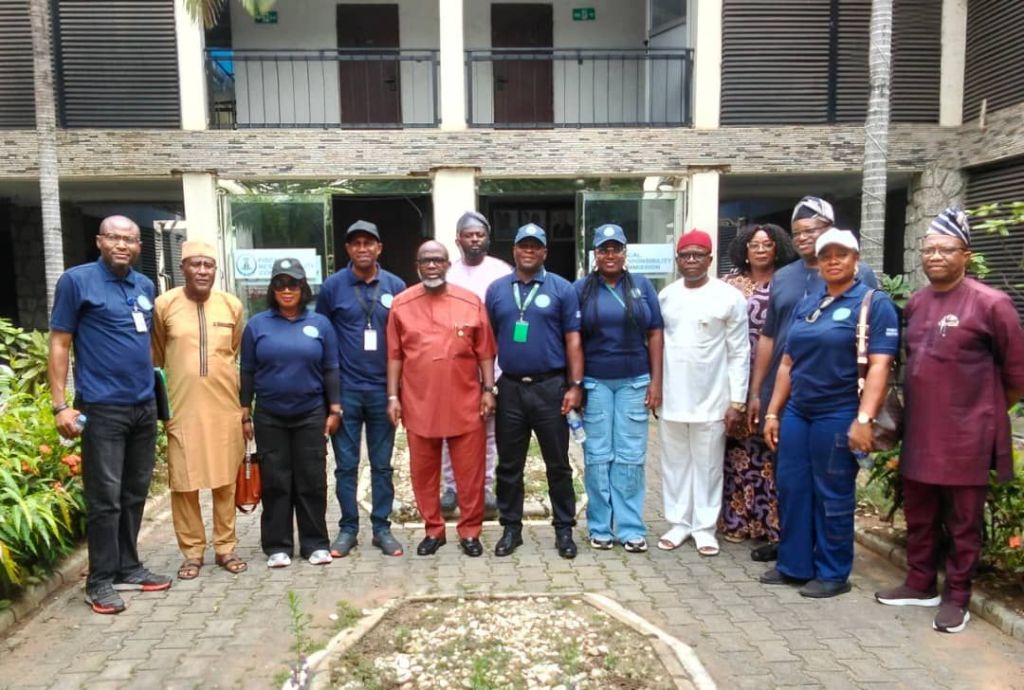
The visit concluded with the signing of the visitors’ register and a group photograph with senior officers of the NCS. Both leaders reaffirmed their commitment to sustaining collaboration that promotes fiscal discipline, institutional efficiency, and sustainable national development.

WHO Calls for Stronger Mental Health Systems in Emergencies as Nigeria Marks 2025 World Mental Health Day

Emmanuel Daudu

The World Health Organization (WHO) has reaffirmed its commitment to strengthening Nigeria’s mental health system, especially in conflict-affected regions, as the country joined the global community to mark the 2025 World Mental Health Day under the theme “Access to Services: Mental Health in Catastrophes and Emergencies.”

The WHO Nigeria Country Representative, Dr Pavel Ursu, made this known in a speech delivered on his behalf by Dr Mary Dewan, Technical Officer for Noncommunicable Diseases, during the Ministerial Press Conference held in Abuja to commemorate the Day.

Dr Ursu expressed delight at being part of this year’s event, which began with a two-day advocacy and stakeholder engagement in Maiduguri, Borno State, from October 6 to 7, culminating in the press briefing organized by the Federal Ministry of Health and Social Welfare.

He commended the Coordinating Minister of Health and Social Welfare, Professor Muhammad Ali Pate, and the team from the National Mental Health Programme for their leadership and commitment to the prevention and management of mental health conditions in Nigeria.

“I must begin by commending Professor Ali Pate and his team for their leadership and commitment on the prevention and management of mental health conditions in Nigeria,” he stated, while acknowledging the tireless efforts of all stakeholders working to advance mental health services across the country.

Speaking on this year’s theme, Dr Ursu noted that the commemoration serves as a powerful reminder that mental health must be safeguarded before, during, and after crises.

He explained that emergencies including conflicts, disease outbreaks, and natural disasters disrupt lives, fracture communities, and often leave long-term psychological scars.

“While nearly everyone affected by such crises experiences emotional distress, one in five will face a mental health condition requiring professional care,” he observed, adding that mental health and psychosocial support (MHPSS) services remain inadequately integrated into emergency preparedness and response across much of the African Region.

He also referenced the World Health Assembly’s landmark resolution of May 2024, which called for MHPSS to be embedded in all phases of emergency response, alongside the WHO Regional Framework guiding member states to strengthen mental health systems and disaster risk reduction.

Highlighting WHO’s continued support to Nigeria, Dr Ursu stated that the Organization has worked with the Federal Ministry of Health and Social Welfare and partners to develop policies and frameworks for the prevention and management of mental health disorders.

In the North-East, where humanitarian challenges persist, WHO collaborated with the governments of Borno, Adamawa, and Yobe States, as well as the Federal Neuropsychiatric Hospital and other stakeholders, to build the capacity of healthcare workers and integrate mental health services into primary and secondary healthcare systems.

Through these interventions, WHO also supported outreach programmes, the procurement of essential psychotropic medicines, and facilitated the renovation of the State Psychiatric Hospital in Maiduguri.

Additionally, the Organization supported the development of the Borno State Mental Health Strategic Framework, a key document guiding coordinated mental health response in the region.

“These efforts exemplify how targeted investment in mental health can build resilience and restore hope,” Dr Ursu remarked.

In conclusion, the WHO Country Representative urged stakeholders to renew their commitment to building stronger and more resilient health systems capable of delivering mental health services, especially in times of crisis.

“Let us continue to advocate for increased investments, coordinated action, and the full integration of mental health into every phase of emergency preparedness and response,” he said.
“Together, we can ensure that mental health support is not only available but truly accessible when it is most needed offering hope, healing, and dignity to all communities.”

The 2025 World Mental Health Day commemoration underscores the urgent need for sustained partnerships, adequate funding, and system-wide reforms to make mental health care accessible to all, especially those affected by emergencies.